
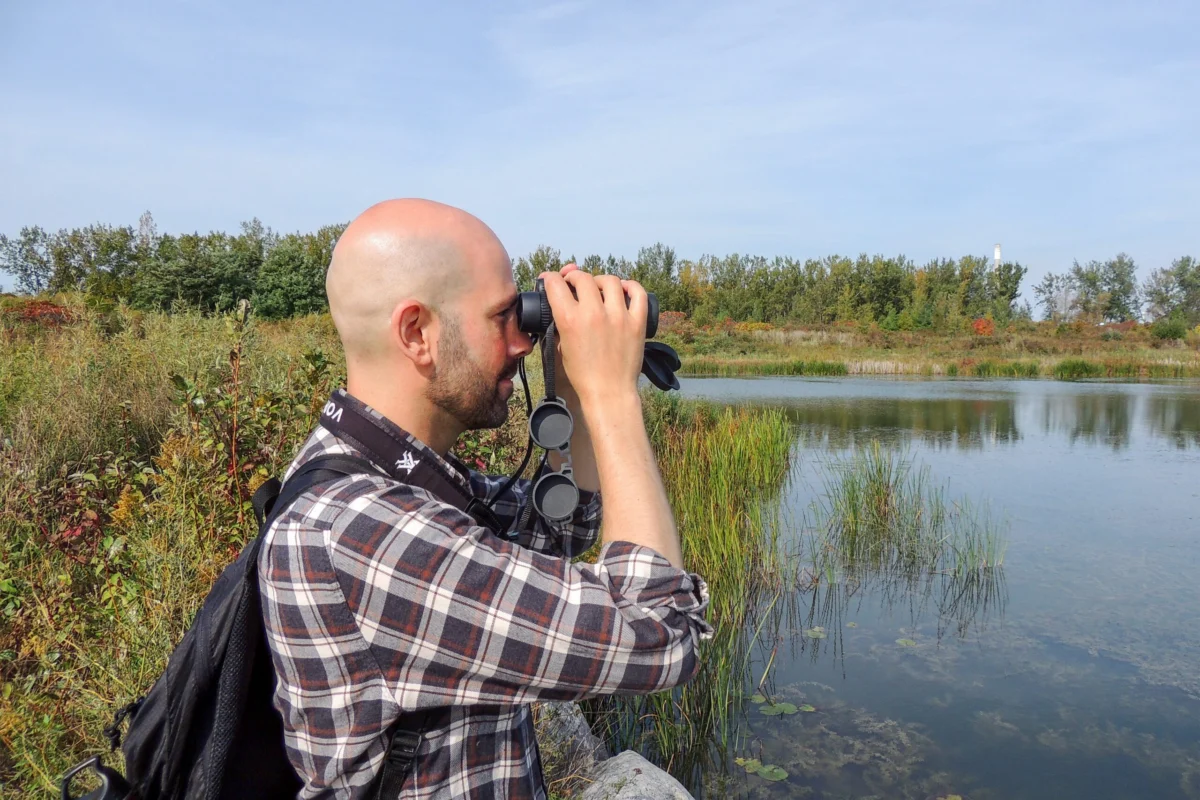
Erik Wing, a neuroscientist and passionate birder, has unveiled compelling research demonstrating how the pursuit of avian expertise can profoundly alter brain structure and function, potentially safeguarding cognitive health into old age. His latest study, published last month in the prestigious Journal of Neuroscience, reveals that the brains of experienced birders exhibit greater density in key regions associated with attention and perception compared to their novice counterparts. This groundbreaking work not only provides a scientific basis for what many birders intuitively feel but also hints at the potential for birding to serve as a powerful tool in mitigating age-related cognitive decline.
The Neuroscientist and the Birder: A Personal Journey into Research
Dr. Erik Wing’s unique perspective stems from his dual identity: a neuroscientist by profession and a dedicated birder by passion. He embodies the very subject he investigates, having personally observed the cognitive shifts within his own mind as his avian knowledge grew. This introspective awareness formed the genesis of his research. "My mom knows a lot about birds and always tried to get me interested," Wing recounts. "As kids, my brother and I flatly refused." It wasn’t until his twenties, amidst frequent hiking excursions, that birds finally captured his attention. Already immersed in graduate studies focusing on memory and learning, Wing began to consciously perceive his brain changing in response to the demands of identifying and categorizing avian species. This deeply personal experience propelled him to translate his subjective observations into rigorous scientific inquiry.
He notes the nuanced evolution of his learning process: "Initially, lots of things get confused, and everything is new. A few months later, you start to differentiate birds that used to confuse you, and you make better mistakes." This progression from broad confusion to refined distinction, making "better mistakes," is a hallmark of developing expertise and highlights the brain’s incredible capacity for adaptation and learning. Wing’s research fellowship at Baycrest Hospital in Toronto provided the ideal environment to explore these fascinating brain transformations, moving from anecdotal evidence to empirical data.
Unveiling Brain Architecture: The Study’s Core Findings
The recent study, conducted by Wing and his co-authors, represents a significant contribution to the fields of cognitive neuroscience and the science of expertise. Published in the Journal of Neuroscience, a leading peer-reviewed journal in the field, the research employed sophisticated neuroimaging techniques to compare the brains of expert birders with those of novices. Participants were meticulously matched for age, gender, and education level to ensure that observed differences could be attributed primarily to their birding experience.
The core methodology involved asking both groups to engage in a bird identification task. They were presented with a bird to memorize and then asked to identify it from a lineup of three similar species. To ensure the task was challenging for all participants, including seasoned experts, the researchers incorporated both local bird species and unfamiliar Old World species. Wing elaborated on the selection criteria: "We wanted birds that were hard for everybody, including experts. The notorious ‘little brown jobs’ were great for this." These "little brown jobs" (LBBs) are often small, drab, and visually similar bird species—such as certain sparrows, wrens, or Old World flycatchers and larks—that require keen observation of subtle field marks for accurate identification. While novices struggled with common local sparrows, experts found themselves challenged by the nuances of Old World species, creating a balanced difficulty level that allowed for meaningful comparisons.
Using two distinct types of Magnetic Resonance Imaging (MRI), the researchers peered into the brains of the participants. Structural MRI measured the density and organization of brain tissues, while functional MRI (fMRI) tracked brain activity in real time during the identification tasks. The structural MRI analysis yielded a striking discovery: expert birders exhibited denser gray matter in several brain regions crucial for attention and perception compared to novice birders. Gray matter density is often associated with the number of neurons, synaptic connections, and overall neural complexity in a given region. This suggests that the sustained cognitive demands of birding may lead to tangible, physical changes in the brain’s architecture, effectively rewiring it for enhanced processing of visual and auditory information. These regions are integral to tasks like pattern recognition, visual discrimination, and sustained focus—all critical components of successful bird identification.
Cognition in Action: Brain Activity During Identification
Beyond structural differences, the fMRI data provided insights into how these rewired brains operate dynamically. The study found that in experts, brain regions with structural differences also demonstrated heightened activity when participants were presented with unfamiliar bird species. These unfamiliar species, akin to the challenging "little brown jobs," demanded greater attentional resources and more detailed pattern analysis. The brains of expert birders responded by engaging these specialized regions more robustly, indicating a more efficient and activated neural network for complex identification tasks. In contrast, novice birders did not show this significant increase in activity in the same regions when faced with difficult identifications, suggesting their neural pathways were not yet as optimized for such specific cognitive demands.
This finding underscores a fundamental principle of neuroplasticity—the brain’s ability to reorganize itself by forming new neural connections throughout life. The continuous learning and discrimination required in birding appear to sculpt and refine these neural networks, making them more adept at processing the intricate details necessary for avian identification. The ability to differentiate between subtly varied species, often under challenging field conditions, hones an individual’s perceptual acuity and attentional control to an extraordinary degree.
Birding as a Shield Against Aging: A Tentative but Promising Link
Perhaps the most captivating, yet cautious, finding of the study pertains to the potential for birding to mitigate age-related cognitive decline. Wing acknowledges this as "the angle that got the most interest, but it’s also the most tentative." The research suggests that in brain regions supporting expert performance, older birdwatchers maintain a more compact and organized brain structure compared to age-matched novices. This observation implies that the sustained engagement with birding over many years might confer a protective effect on brain health, potentially slowing down the typical age-related atrophy or decline in certain cognitive functions.
However, Wing is quick to emphasize the correlational nature of this finding. While the data shows a relationship between birding expertise and maintained brain structure in older individuals, it does not yet definitively prove a direct causal link. To establish causality, a longitudinal study would be necessary, tracking a large cohort of individuals over several years or even decades. Such a study would observe how brain structure and cognitive function change within individuals as they adopt and progress in birding, providing a clearer trajectory of brain change linked directly to their experiences.
Despite this necessary scientific caution, the findings align with a broader understanding in neuroscience: that lifelong learning and mentally stimulating activities contribute to cognitive reserve. Cognitive reserve is the brain’s ability to cope with brain damage or disease by using alternative brain networks or by processing information more efficiently. Activities that build complex knowledge structures and require continuous learning, like birding, are believed to enhance this reserve, thereby protecting against the manifestations of age-related neurological conditions. Engaging the brain with new information, complex problem-solving, and intricate pattern recognition helps maintain neural pathways and even foster new ones, supporting overall brain resilience.
Why Birding? A Unique Cognitive Challenge
What makes birding such a particularly fertile ground for studying cognitive enhancement and brain health? Wing highlights several unique aspects that set it apart from many other hobbies. "Two people can look at the same bird and have entirely different experiences based on their knowledge," he explains. This demonstrates the profound impact of expertise on perception. Birding demands a constant tension between detecting subtle differences and recognizing broad similarities. One must differentiate between dozens of similar-looking sparrows (detecting differences) while also recognizing the same species in different plumages (breeding vs. non-breeding), across varying environments, or even through fleeting glimpses (detecting similarities under variability).
The sheer scale of the challenge is significant. There are over 10,000 bird species globally, with hundreds in any given region, each possessing unique field marks, songs, calls, behaviors, and habitat preferences. This vast and dynamic database of information requires an intricate system of classification, memory retrieval, and pattern matching. Furthermore, bird identification is often a multi-sensory experience. It involves not just visual cues but also auditory recognition (songs and calls), understanding flight patterns, and observing behavioral nuances. The "dynamic nature of ID, where you often get only a glimpse," adds another layer of complexity, requiring rapid processing and inference from incomplete data. "There aren’t many pursuits that combine all these factors," Wing concludes, underscoring birding’s exceptional capacity to challenge and stimulate the brain across multiple cognitive domains.
Beyond the Microscope: Practical Advice for Brain Health
Given the promising insights from his research, Wing offers practical advice for those looking to harness the cognitive benefits of birding, particularly for maintaining brain health. His recommendations extend beyond mere observation to emphasize the social and environmental aspects of the activity.
Firstly, he strongly advocates for "birding with friends or in groups, in addition to alone." The social aspect of birding provides an invaluable opportunity for learning and cognitive stimulation. Hearing what others are paying attention to—their identification strategies, observations, and shared knowledge—enriches one’s own learning process. More broadly, social relationships are widely recognized by neuroscientists and public health experts as one of the most critical components of cognitive and brain health, particularly in aging. Engaging in group activities like birding can be an excellent, semi-structured way to forge new connections and strengthen existing ones, thereby providing a dual benefit for both specialized cognitive skills and general brain wellness.
Secondly, Wing advises birders to "go birding in a variety of locations, even if it’s just different places in the local area." This practice helps to diversify one’s cognitive schema of a given species. If one only observes a species in a single environment, their mental "concept" of that bird might become too narrowly linked to that specific context. By observing birds in diverse habitats—from urban parks to forests, wetlands, or coastal areas—birders learn to recognize species regardless of environmental variability. This flexibility in recognition is a high-level cognitive skill that requires the brain to generalize and adapt, further enhancing neuroplasticity. It also fosters an appreciation for subtle regional variations within species, adding another layer of intricate detail to the learning process.
The Broader Landscape of Birding and Brain Health
Wing’s study contributes to a growing body of evidence supporting the cognitive benefits of engaging with nature and pursuing complex hobbies. Birding, in particular, has seen a surge in popularity, with millions worldwide actively participating. According to the U.S. Fish and Wildlife Service, over 45 million Americans engage in birdwatching annually, a number that reflects not just a passion for wildlife but also an intuitive understanding of the activity’s enriching qualities. Beyond the cognitive advantages highlighted by Wing, birding inherently encourages physical activity through walking and hiking, and fosters mental well-being through exposure to natural environments—both well-established factors in promoting overall brain health.
The implications of this research extend beyond the birding community. As global populations age, finding accessible and engaging ways to maintain cognitive function becomes increasingly critical. Activities like birding, which are low-cost, can be practiced across different fitness levels, and offer both intellectual stimulation and social opportunities, represent a powerful, non-pharmacological approach to healthy aging. The study opens doors for future investigations into "prescriptive nature" programs or integrating nature-based hobbies into public health initiatives aimed at promoting cognitive longevity.
Future Trajectories in Avian Neuroscience
Ironically, Wing himself admitted that his intense focus on the study temporarily reduced his time for real-life birding. However, this period of scientific immersion also sharpened his observational skills and broadened his research horizons. He realized that while the study focused on static bird pictures in an MRI, real-world birding involves a much richer tapestry of information: "Even just walking around the local park, you realize how much more there is to learn about bird behavior, flight motion, and auditory cues."
This realization is now shaping his future research directions. Wing intends to design new studies that explore how bird learning incorporates information beyond purely visual, static images. Investigating the neural mechanisms involved in processing dynamic flight patterns, complex bird songs, and intricate social behaviors will provide a more comprehensive understanding of how the brain integrates multi-sensory information to form robust avian expertise. Such research could further illuminate the profound and multifaceted ways in which birding, a seemingly simple pastime, profoundly enriches and rewires the human brain.
In conclusion, Erik Wing’s research provides compelling scientific validation for the cognitive benefits of birding. It illustrates how sustained engagement with a complex, dynamic, and multi-sensory activity can lead to measurable changes in brain structure and function, enhancing attention, perception, and potentially building resilience against age-related cognitive decline. As we look towards promoting healthier aging and fostering lifelong learning, the humble pursuit of birding emerges as a powerful and accessible pathway to a sharper, more vibrant mind.
