
The early March 2026 birding expedition across the diverse landscapes of Manitoba has concluded, marking a significant period of avian observation that underscored the province’s status as a critical wintering ground for northern species. Over the course of five days, from March 3 to March 7, a specialized group of ornithologists and enthusiasts traversed habitats ranging from open prairie and urban parks to dense boreal forests and coastal marshes. The expedition resulted in the successful documentation of several key owl species, including the Snowy Owl, Northern Hawk Owl, and Great Horned Owl, as well as the rare appearance of a Townsend’s Solitaire, a bird seldom seen in the Winnipeg region during the winter months.

Ornithological Context and Regional Significance
Manitoba serves as a unique ecological crossroads, particularly during the winter transition. The province’s geography allows for the convergence of prairie, boreal forest, and lake-side ecosystems, providing a variety of niches for resident and migratory birds. The March expedition was timed to coincide with the period when many owls are active in their breeding territories or are visible in open hunting grounds before the spring thaw significantly alters the landscape.
Central to the expedition’s educational component was the involvement of local experts. The program commenced with a technical briefing by Jim Duncan, a renowned authority on the Great Grey Owl (Strix nebulosa). Duncan’s presentation focused on the conservation status and behavioral patterns of the species, complemented by the presence of an educational ambassador bird, Oska. This initial session provided the necessary scientific framework for the field observations that followed, emphasizing the importance of habitat preservation in maintaining Manitoba’s owl populations.

Chronology of Field Observations: Days One and Two
Following the initial orientation on March 3, the expedition moved into the field on March 4, targeting the open agricultural lands south of Winnipeg. The town of Oak Bluff, known for its expansive fields that mimic the Arctic tundra, proved productive for Snowy Owl (Bubo scandiacus) sightings. Participants observed three distinct individuals. One notable specimen, perched in a large tree rather than the more common utility pole or signpost, was identified as a young male. This identification was based on the bird’s plumage; specifically, the heavy dark barring was beginning to recede, giving way to the stark white breast characteristic of mature males.
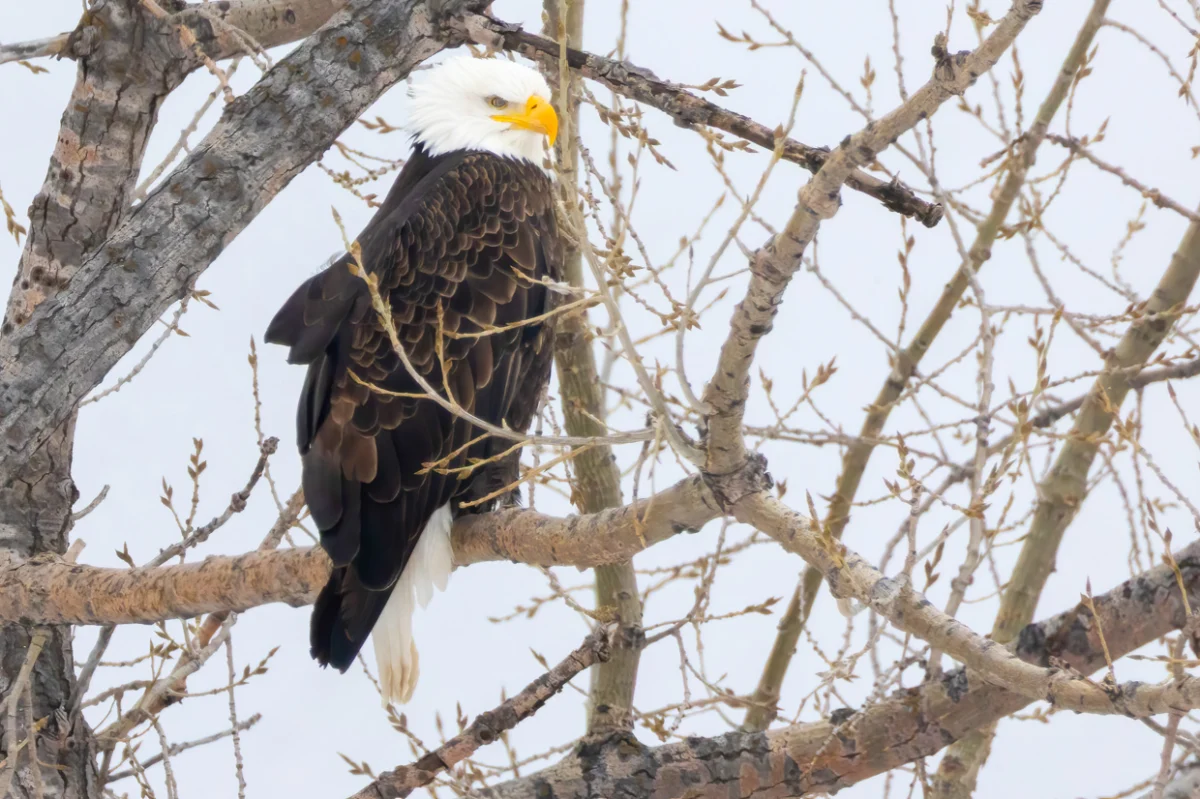
The itinerary then shifted to the urban-wildlife interface of Winnipeg. At Fort Whyte Alive, a 640-acre protected greenspace, the group observed a nesting pair of Bald Eagles (Haliaeetus leucocephalus). The female was documented on the nest while the male maintained a sentry position nearby, a behavior typical of the early nesting season in Manitoba. The site also facilitated observations of American Bison and Black-billed Magpies, the latter exhibiting high levels of social interaction in the facility’s public areas.

The afternoon of March 4 involved surveys of St. Vital Park and Harris Park. While the resident Eastern Screech-Owls and Barred Owls remained elusive—likely due to the high density of coniferous cover used for daytime roosting—the group recorded a Red-bellied Woodpecker. This species is of particular interest to regional birders as its range has been gradually expanding northward into Southern Manitoba over the last two decades. The day concluded at Bunn’s Creek, where a Great Horned Owl (Bubo virginianus) pair was observed. The female’s restless behavior on the nest suggested the presence of recently hatched owlets, which require constant brooding in the sub-zero temperatures of early March.
Rare Sightings and Boreal Exploration: Day Three
March 5 was defined by an opportunistic shift in the itinerary following a Rare Bird Alert. A Townsend’s Solitaire (Myadestes townsendi), a member of the thrush family typically found in the mountainous regions of Western North America, was reported at a private residence in Winnipeg. The group successfully located the bird within 30 minutes, documenting a rare "vagrant" occurrence that highlights the unpredictability of winter birding and the value of community-based citizen science.

The expedition then moved toward the boreal transition zone along Road 317. In a clear-cut area adjacent to an open field, the group located a Northern Hawk Owl (Surnia ulula). Unlike many other owl species, the Northern Hawk Owl is diurnal, hunting by day from conspicuous perches. This specific individual was observed utilizing the vantage points provided by the forestry operations to scan for small mammals.
Further north, in the Silver Falls area, the group encountered a high concentration of winter finches and resident boreal birds. Feeders in the region attracted Evening Grosbeaks, Black-capped Chickadees, and Blue Jays. A second Northern Hawk Owl was discovered along Maskwa Road, where it was being "mobbed" by a Black-capped Chickadee—a common defensive behavior where smaller birds attempt to harass and expose a predator to reduce the element of surprise.

The Hecla Island Survey and Conservation Analysis: Day Four
On March 6, the expedition focused on the Hecla-Grindstone Provincial Park, located on the shores of Lake Winnipeg. This region is a stronghold for boreal specialists. The group noted extensive "scaling" on coniferous trees, a diagnostic sign of the presence of American Three-toed and Black-backed Woodpeckers. These birds flake away large patches of bark to access wood-boring beetle larvae, leaving behind bright patches of inner wood that are visible from a distance.
Environmental conditions on Lake Winnipeg were harsh, with significant ice cover still present. On the ice of Grassy Narrows Marsh, the group observed a Meadow Vole—a risky movement for the rodent given the lack of cover from aerial predators. On Hecla Island itself, the group successfully located Boreal Chickadees (Poecile hudsonicus). These birds are notoriously difficult to observe compared to their Black-capped cousins, as they prefer the dense interior of spruce and fir trees and possess a quieter, raspier call.

The final major stop was Oak Hammock Marsh, a RAMSAR-recognized wetland of international importance. The facility, which serves as the headquarters for Ducks Unlimited Canada, provided a backdrop for discussing the intersection of avian conservation and land management. At the marsh’s feeders, the group documented dozens of Common Redpolls and two overwintering young male Red-winged Blackbirds. The presence of Red-winged Blackbirds in early March is an early indicator of the coming spring migration, though these individuals were likely "overwintering" rather than early migrants.
Supporting Data and Ecological Implications
The data collected during this five-day period contributes to the broader understanding of winter bird distribution in Manitoba. The sighting of the Townsend’s Solitaire and the Red-bellied Woodpecker aligns with documented trends of avian range shifts and vagrancy. Furthermore, the high frequency of owl sightings—Snowy, Northern Hawk, and Great Horned—suggests a stable prey base of small mammals (voles and shrews) in the region for the 2025-2026 winter season.

From an economic perspective, such expeditions underscore the growing importance of ecotourism in Manitoba. Birding tours attract international visitors and provide revenue to rural communities and provincial parks during the "shoulder" seasons. The collaboration between tour groups and local conservation hubs like Oak Hammock Marsh and Fort Whyte Alive reinforces the link between public education and habitat protection.
Conclusion and Future Outlook
The expedition concluded on March 7, with participants departing from Winnipeg. The 2026 "Manitoba Owls" tour successfully documented a diverse cross-section of the province’s winter avifauna, from rare vagrants to iconic boreal predators. The findings suggest that despite the challenges of winter weather and wind, the specialized habitats of Manitoba continue to support a robust and varied bird population.

As climate patterns continue to fluctuate, the monitoring of these species through organized expeditions remains a vital tool for ornithologists. The presence of sensitive species like the Boreal Chickadee and the Northern Hawk Owl serves as a biological indicator of the health of the northern forest ecosystems. The success of this tour highlights the continued necessity of maintaining protected areas like Hecla-Grindstone and Oak Hammock Marsh, ensuring that Manitoba remains a premier destination for both avian species and those who study them.
