
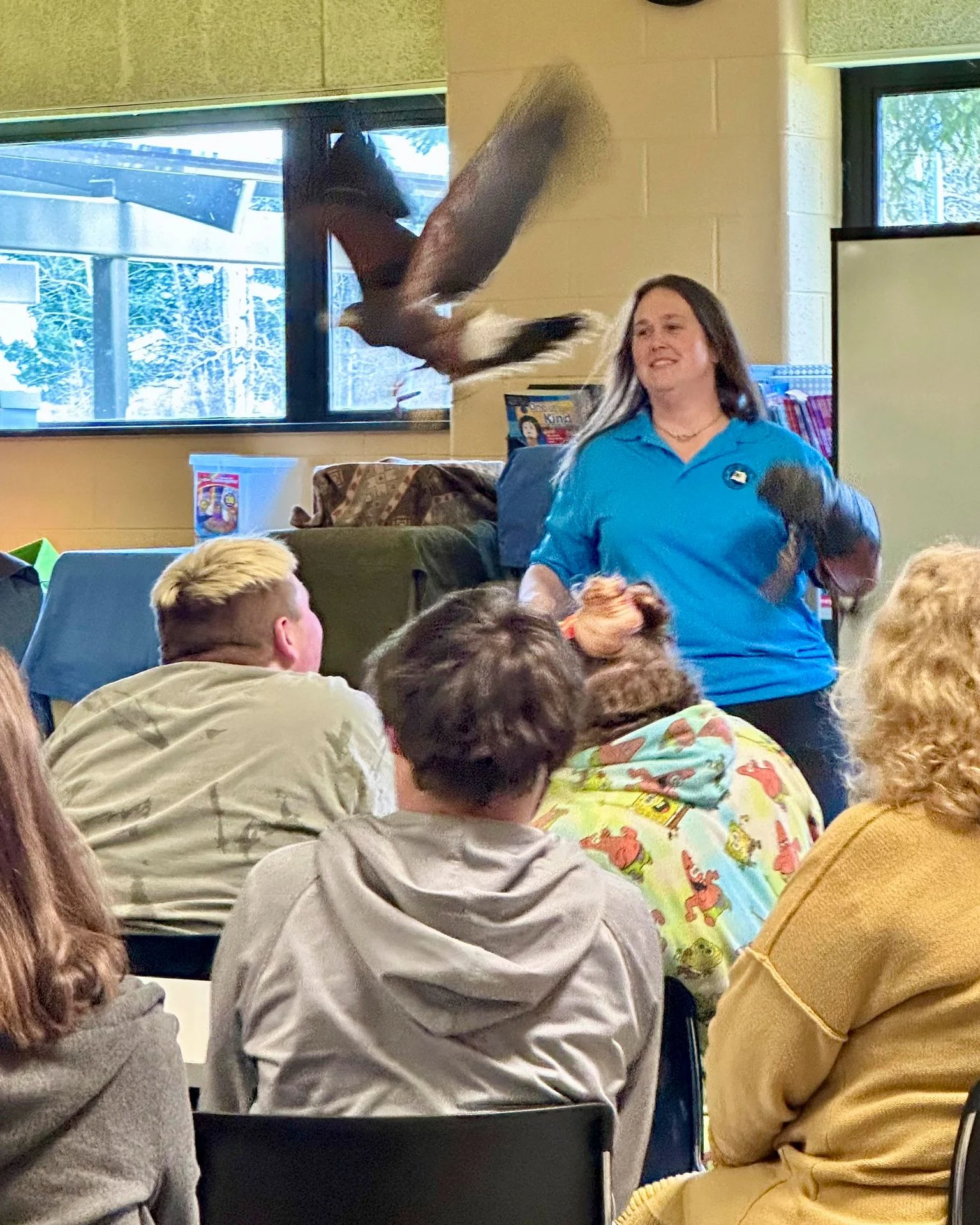
Students at the Hewes Educational Center recently experienced a captivating journey into the natural world as they welcomed educators from the Hawk Creek Wildlife Center Inc. This engaging visit, designed to foster a deeper understanding and appreciation for wildlife, brought a diverse array of animals directly to the students, illuminating their natural habitats and behaviors through expert-led presentations. The program’s success underscores the vital role of hands-on, interactive education in cultivating environmental stewardship among the next generation.
A Day of Discovery and Wonder
The educational program, a cornerstone of Hawk Creek Wildlife Center’s outreach efforts, aims to bring the wonders of the natural world to life for learners of all ages. At the Hewes Educational Center, two seasoned wildlife naturalists from Hawk Creek orchestrated a memorable experience for the students. Their presentation featured an impressive lineup of creatures, including majestic raptors, intriguing mammals, and fascinating reptiles. Each animal served as a living lesson, offering students a tangible connection to the biodiversity that inhabits our planet.
The naturalists meticulously detailed the ecological niches of each species, explaining their diets, migratory patterns, defense mechanisms, and the crucial roles they play within their ecosystems. This approach moves beyond simple identification, encouraging critical thinking about the interconnectedness of life. For instance, when introducing a raptor, the naturalists would not only describe its keen eyesight and hunting prowess but also explain its position as an apex predator, vital for controlling populations of smaller animals and maintaining the health of its environment. Similarly, discussions about mammals would often delve into their social structures, reproductive strategies, and adaptations to specific climates. The introduction of snakes, often subjects of misunderstanding, provided an opportunity to debunk myths and highlight their importance in controlling rodent populations and as a food source for other animals.
A particularly exhilarating moment, as reported by attendees, was when a raptor demonstrably soared directly over the students’ heads. This breathtaking display offered a visceral understanding of the bird’s aerial agility and power, leaving an indelible impression on the young audience. Such direct encounters are instrumental in transforming abstract concepts into concrete, memorable experiences, igniting curiosity and a sense of awe. The naturalists skillfully managed these interactions, ensuring both the safety of the students and the well-being of the animals, demonstrating best practices in wildlife handling and education.
The Mission of Hawk Creek Wildlife Center
Hawk Creek Wildlife Center Inc. is a non-profit organization dedicated to fostering compassion, saving species, and restoring balance within the environment. Their educational programs are a critical component of this mission, aiming to inspire a lifelong commitment to conservation. By bringing wildlife directly to schools and communities, the center breaks down barriers to understanding and provides unique learning opportunities that traditional classroom settings cannot replicate.
Founded with the belief that education is the most powerful tool for conservation, Hawk Creek focuses on presenting wildlife in a positive and informative light. Their approach emphasizes the intrinsic value of each species and the ecological services they provide. The center rescues, rehabilitates, and, when possible, releases injured and orphaned wildlife. For those animals that cannot be returned to the wild, Hawk Creek provides a permanent sanctuary, utilizing them in their educational outreach programs. This dual approach allows them to directly impact wildlife welfare while simultaneously educating the public.
The curriculum developed by Hawk Creek is carefully tailored to different age groups, ensuring that the scientific information is presented in an age-appropriate and engaging manner. For younger students, the focus might be on basic identification, animal sounds, and simple habitat needs. For older students, the programs delve into more complex topics such as ecological interdependence, conservation challenges, and human impact on wildlife. The visit to Hewes Educational Center likely incorporated elements suited to the students’ age range, maximizing their engagement and comprehension.

The Significance of Experiential Learning in Environmental Education
The visit from Hawk Creek exemplifies the power of experiential learning, a pedagogical approach that emphasizes learning through doing and reflection. In environmental education, this type of learning is particularly effective because it connects abstract ecological concepts to real-world experiences. Studies have consistently shown that direct interaction with nature and wildlife can lead to increased environmental awareness, a greater sense of responsibility, and a stronger desire to protect natural resources.
According to research published in journals such as "Environmental Education Research," students who participate in hands-on nature programs are more likely to develop positive attitudes towards the environment and engage in pro-environmental behaviors later in life. The ability to see, hear, and even feel the presence of wildlife creates a more profound connection than reading about it in a textbook. This connection can foster empathy and a sense of stewardship, crucial elements for addressing the environmental challenges of the 21st century.
The "wow" factor, such as the raptor flying overhead, serves as a powerful mnemonic device, embedding the learning experience in the students’ memories. This emotional engagement can be a catalyst for further inquiry and a lifelong interest in natural sciences. Furthermore, these programs can help demystify wildlife, reducing fear and promoting a more informed and respectful relationship with the natural world.
Background and Chronology of Educational Outreach
While the specific date of the visit to Hewes Educational Center is not provided, Hawk Creek Wildlife Center has a long-standing history of providing educational programs across various institutions. Their outreach typically involves scheduled visits that are booked in advance, allowing for careful planning by both the center and the host institution.
The typical process for a school requesting a visit would involve:
- Inquiry and Booking: The educational institution contacts Hawk Creek to inquire about program availability and offerings.
- Program Selection: Based on the age group and learning objectives, a suitable program is selected.
- Logistics and Preparation: Hawk Creek’s team confirms dates, times, and any specific needs for the visit, such as space requirements or audience size. Schools may also be provided with pre-visit materials to prepare students.
- The Visit: The wildlife naturalists arrive with the animals and deliver the educational program. This often includes interactive elements, Q&A sessions, and the direct animal encounters.
- Post-Visit Engagement: Schools may follow up with students through classroom activities, art projects, or further research inspired by the visit.
The impact of these visits is cumulative. Over time, as more students in a community have these enriching experiences, a broader shift in environmental consciousness can occur. Hawk Creek’s consistent presence in educational settings contributes to this long-term goal, building a foundation of environmental literacy across generations.
Supporting Data and Broader Impact
Hawk Creek Wildlife Center serves a wide geographic area, bringing their educational programs to numerous schools, libraries, and community events annually. While specific attendance figures for the Hewes Educational Center visit are not available, the center’s overall reach suggests that thousands of students benefit from their programs each year.
The economic impact of such organizations, while not always directly quantifiable, is significant in terms of human capital development. By inspiring young people to pursue careers in science, conservation, and environmental policy, these programs contribute to a future workforce equipped to tackle complex environmental issues. Moreover, by fostering a sense of connection to nature, they contribute to the overall well-being and mental health of the community.

The broader implications of this type of educational outreach are far-reaching. In an era of increasing urbanization and a growing disconnect from the natural world, programs like those offered by Hawk Creek are more critical than ever. They serve as a vital bridge, reminding students of their place within the larger web of life and the importance of protecting it.
Official Responses and Community Engagement
While direct quotes from officials at Hewes Educational Center or specific students were not included in the provided content, the positive sentiment is evident. Educational institutions partner with organizations like Hawk Creek precisely because of the profound impact these visits have on student learning and engagement. The selection of Hewes Educational Center for such a program suggests a commitment to providing its students with high-quality, enriching educational experiences.
The implied reaction from the students, characterized by the excitement of a raptor flying overhead, speaks volumes about the effectiveness of the program. Such moments are not merely entertaining; they are powerful learning opportunities that can shape perspectives and foster lifelong interests. The "Share This Story, Choose Your Platform!" call to action at the end of the original content further indicates a desire to disseminate the positive outcomes of the event and inspire other institutions to engage with Hawk Creek.
The author of the original piece, identified as Amanda, is associated with Hawk Creek Wildlife Center, likely serving in an outreach or communications role. Her contribution highlights the organization’s active role in documenting and promoting its educational endeavors. This transparency and commitment to sharing their work are indicative of an organization dedicated to its mission and eager to connect with its audience.
Analysis of Implications and Future Outlook
The visit by Hawk Creek Wildlife Center to Hewes Educational Center represents a successful implementation of a crucial educational strategy. In a world facing unprecedented environmental challenges, from climate change to biodiversity loss, nurturing an informed and compassionate next generation is paramount. Programs that foster a direct connection with wildlife and impart knowledge about ecological principles are essential for building a sustainable future.
The continued partnership between educational institutions and wildlife centers like Hawk Creek is vital. As technology advances and the digital world increasingly dominates, the need for tangible, nature-based learning experiences becomes even more pronounced. These interactions provide a grounding in the real world, fostering an understanding of natural systems that is fundamental to responsible citizenship and environmental stewardship.
Looking ahead, the model employed by Hawk Creek is likely to become increasingly important. As educators and policymakers recognize the limitations of purely academic learning, the demand for experiential and place-based education will grow. Organizations that can effectively bridge the gap between the classroom and the natural world, like Hawk Creek, will play a pivotal role in shaping the environmental consciousness of future generations. The success of this visit to Hewes Educational Center serves as a testament to the enduring power of bringing wildlife education to life, one inspiring encounter at a time.
