
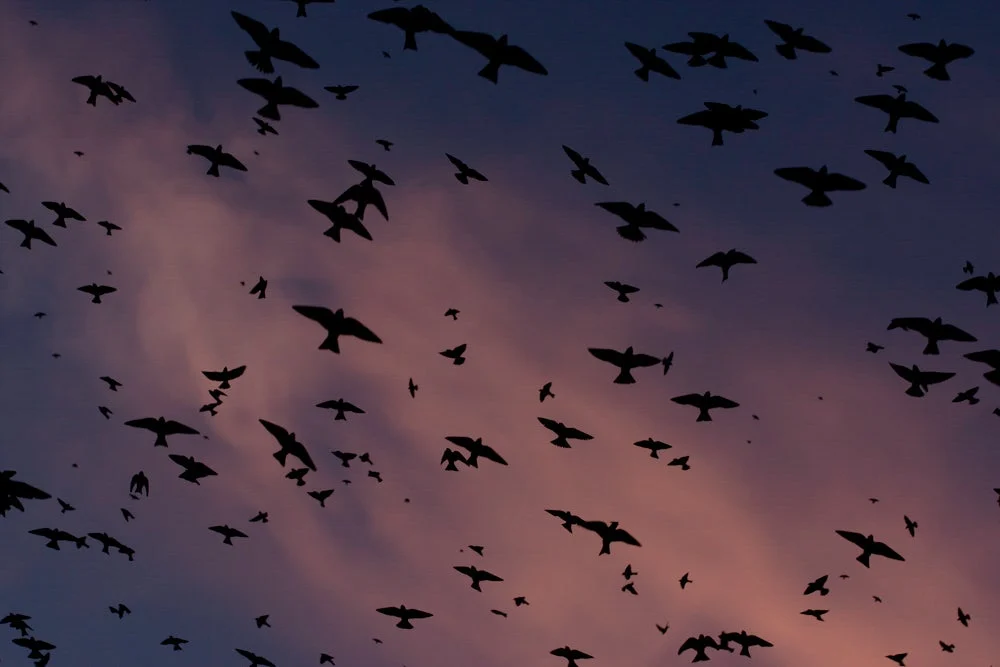
GARNER, NC – As the subtle yet undeniable indicators of spring become apparent across North Carolina, a far grander natural spectacle is unfolding in the skies above: the annual northward migration of billions of birds. These avian travelers are embarking on arduous journeys to their ancestral breeding grounds, driven by instinct to find suitable habitats for courting and nesting. However, their nocturnal voyages, critical for avoiding predators and utilizing stable atmospheric conditions, are increasingly fraught with peril, primarily due to human-induced light pollution. This spring, conservationists are intensifying calls for collective action, particularly through "Lights Out" initiatives, to mitigate a significant threat that claims over a billion bird lives annually across the United States alone.
The Perilous Journey: Understanding Avian Migration
Bird migration is one of the planet’s most remarkable biological phenomena, a testament to resilience and evolutionary adaptation. Driven by seasonal changes in food availability, climate, and breeding opportunities, billions of birds undertake journeys spanning hundreds to tens of thousands of miles each year. North Carolina, with its diverse ecosystems ranging from coastal plains to the Appalachian Mountains, serves as a crucial flyway, a vital stopover, and a breeding ground for a vast array of species. From warblers and thrushes to various waterfowl, these birds navigate using an intricate combination of cues: the Earth’s magnetic field, the position of the sun and stars, polarized light, and even olfactory signals.
A significant portion of these migrations, particularly for passerines (songbirds), occurs under the cover of darkness. Migrating at night offers several advantages: cooler temperatures reduce the energetic demands of flight, stable air masses provide smoother passage, and the darkness offers protection from diurnal predators like hawks and falcons. During these nocturnal flights, celestial navigation plays a critical role. Birds possess an extraordinary ability to orient themselves using star patterns, a skill honed over millennia. However, this ancient navigational system is now being severely disrupted by the relatively recent phenomenon of artificial light at night (ALAN).
The Silent Scourge: Light Pollution and Building Collisions
The statistics surrounding bird mortality from building collisions are stark and alarming. A recent study, widely cited by organizations like the NYC Bird Alliance, estimates that over one billion birds die each year in the U.S. alone from colliding with structures. This staggering figure places building collisions as one of the leading anthropogenic causes of bird mortality, second only to habitat loss and predation by domestic cats. The primary drivers behind these collisions are light pollution and reflective glass.
Artificial lights, particularly those emitted from urban and suburban environments, disorient migrating birds. Instead of navigating by the moon and stars, birds become attracted to and confused by bright, unshielded lights. They circle these light sources, sometimes for hours, expending critical energy reserves, making them exhausted and vulnerable. This phenomenon, known as "fatal attraction," pulls them off their migratory paths and into dangerous urban landscapes. Once disoriented, they are highly susceptible to colliding with windows, facades, and other architectural features, often with fatal consequences.
While iconic skyscrapers in metropolitan areas like New York, Chicago, and Toronto are frequently highlighted for their role in mass collision events, the threat extends far beyond these urban centers. "Since there are so many more single-family homes and structures spread out across the state, they actually pose a greater threat to our migratory birds, but also the greatest opportunities for folks to make a difference for birds in their own homes," stated Curtis Smalling, Executive Director of Audubon North Carolina. This observation underscores a critical point: cumulative impact from residential lighting, though individually less intense than a skyscraper, collectively presents an immense hazard across vast geographical areas. Modern architectural trends, favoring large expanses of reflective glass, further exacerbate the problem, as birds perceive these surfaces as open sky or continuous habitat, flying directly into them.
Beyond Collisions: A Broader Environmental Threat
The challenge posed by artificial light extends beyond direct collisions. Light pollution disrupts various aspects of avian life cycles. It can alter foraging behaviors, predator-prey dynamics, and even reproductive success. Birds that are drawn off course by city lights might miss critical stopover habitats, where they need to refuel and rest before continuing their journey. This can lead to exhaustion, starvation, and increased vulnerability to disease and predation.
Furthermore, migratory birds face an array of compounding pressures. Habitat loss and fragmentation, driven by relentless development and urbanization, eliminate crucial breeding, feeding, and resting grounds. Climate change introduces unpredictable shifts in weather patterns, alters the timing of seasonal events (phenology), and impacts food availability, creating mismatches between migration timing and the emergence of insect prey or ripening of fruits. The widespread use of pesticides, particularly neonicotinoids, decimates insect populations—a primary food source for many migratory birds—and can directly poison birds that consume contaminated insects or seeds. These factors, in concert with light pollution, create a gauntlet of threats that severely impact bird populations, many of which are already in decline.
"Lights Out, NC": A Call to Action
In response to these escalating threats, Audubon North Carolina, a state program of the National Audubon Society, has launched and vigorously promoted the "Lights Out, NC" initiative. Leveraging cutting-edge data from platforms like BirdCast, which provides real-time predictions of bird migration intensity, the campaign aims to protect millions of birds traversing the state’s airspace. BirdCast estimates that during peak migration periods from March through May, millions of birds will pass through North Carolina each night, with the vast majority undertaking their journeys after dusk.
The core of the "Lights Out, NC" campaign is simple yet profoundly impactful: asking everyone—residents, businesses, and municipalities—to turn off non-essential lights between 11 PM and 6 AM from March 1 through May 30. This period encompasses the peak of spring migration, when the highest numbers of birds are on the move. "Going lights out is a simple yet effective way everyone can make a significant difference for migrating birds," emphasized Smalling. The initiative provides actionable steps, making bird conservation accessible to everyone, regardless of their location or lifestyle.
A National and Global Movement: Precedent and Progress
The "Lights Out" concept is not unique to North Carolina; it is part of a growing national and international movement to address the impacts of light pollution on wildlife. Major cities across North America, including Toronto, Chicago, New York, and Houston, have successfully implemented "Lights Out" programs for decades, demonstrating tangible reductions in bird mortality. Toronto’s Fatal Light Awareness Program (FLAP) Canada, founded in 1993, was one of the first and remains a global leader, collaborating with building managers to dim lights and rescue injured birds. Chicago’s "Lights Out Chicago" program, initiated in 1995, has seen similar success, with participating buildings reporting significant decreases in bird collisions.
These programs often involve partnerships between conservation organizations, municipal governments, building owners, and volunteers. They typically include public awareness campaigns, guidelines for bird-friendly lighting, and, in some cases, the adoption of bird-friendly building design standards. The success of these initiatives provides a robust blueprint for states like North Carolina, demonstrating that collective action can yield measurable positive outcomes for avian populations. Beyond North America, the International Dark-Sky Association (IDA) works globally to preserve and protect the night environment, advocating for responsible lighting practices that benefit both wildlife and human well-being by reducing skyglow and energy waste.
Expert Perspectives and Stakeholder Engagement
The scientific community overwhelmingly supports "Lights Out" initiatives. Ornithologists and ecologists highlight that birds’ reliance on celestial cues makes them particularly vulnerable to artificial light. Dr. Sarah G. Evans, an avian ecologist specializing in migration, explains, "Birds evolved under natural light cycles, where the moon and stars were consistent navigational beacons. Artificial lights introduce novel stimuli that override these ancient cues, essentially creating an ecological trap." Her research often focuses on the physiological stress birds experience when disoriented, impacting their immune systems and overall fitness.
From an urban planning and architectural standpoint, the challenge lies in balancing human needs for safety and aesthetics with ecological responsibility. Architect David R. Miller, known for his work in sustainable design, notes, "Incorporating bird-friendly design elements, such as fritted glass, external screens, or angled windows, into new constructions is increasingly becoming a standard. For existing structures, retrofitting with films, decals, or even simple shade deployment can significantly reduce reflectivity and light spill." He suggests that municipalities could offer incentives for developers and homeowners who adopt bird-friendly practices, perhaps through tax credits or expedited permitting processes. Furthermore, the adoption of light ordinances that mandate shielded, downward-facing, and warm-spectrum lighting can drastically reduce skyglow and direct light pollution.
Community engagement is also paramount. Local leaders and businesses have a vital role to play. Many businesses have found that participating in "Lights Out" programs can align with broader corporate social responsibility goals, reduce energy consumption, and enhance their public image. "When our local businesses participate, it sends a strong message to the community about environmental stewardship," commented Mayor Patricia L. Jenkins of a small town actively promoting the initiative. "It’s a win-win: we save energy, and we protect our natural heritage." Energy companies also have a role, not only in promoting energy efficiency but also in advocating for smart lighting solutions that minimize ecological impact.
Technological innovations are also contributing to solutions. Advances in smart lighting systems allow for dynamic control of light intensity and timing, ensuring lights are only on when and where needed. Specialized bird-friendly glass, often featuring UV patterns visible to birds but not to the human eye, is becoming more prevalent. Research is even exploring acoustic deterrents or other sensory cues that could guide birds away from hazardous areas without causing further disorientation.
The Broader Ecological and Economic Implications
Protecting migratory birds extends far beyond mere aesthetic appreciation; it is crucial for maintaining ecological balance and supporting vital ecosystem services. Birds play indispensable roles in pest control, consuming vast quantities of insects that could otherwise damage agricultural crops and forests. They are vital pollinators for numerous plant species, and their role in seed dispersal helps regenerate forests and maintain plant diversity. A decline in bird populations can have cascading negative effects throughout ecosystems, impacting everything from insect populations to plant communities.
There are also significant economic implications. Birdwatching and ecotourism represent a multi-billion-dollar industry globally, attracting millions of enthusiasts. North Carolina, with its rich biodiversity and diverse habitats, is a prime destination for birdwatchers, contributing to local economies through tourism revenue, accommodation, and related services. The long-term decline of bird populations could severely impact this industry, alongside the less quantifiable but equally valuable cultural and recreational benefits birds provide. The cost of inaction—biodiversity loss, diminished ecosystem services, and potential economic setbacks—far outweighs the minimal effort required to dim our lights.
What Individuals Can Do: Practical Steps for Protection
Audubon North Carolina emphasizes that everyone can contribute to bird safety. The call to action is clear and straightforward:
- Turn Off Non-Essential Lights: From 11 PM to 6 AM, during peak migration, turn off all unnecessary indoor and outdoor lights. This includes decorative lights, landscape lighting, and office lights in unoccupied rooms.
- Use Motion Sensors and Timers: For essential outdoor lighting, install motion sensors so lights only activate when needed, or use timers to ensure they are off during critical migration hours.
- Shield Outdoor Lights: Ensure all outdoor fixtures are fully shielded and downward-facing, directing light only where it is needed and preventing upward light spill into the sky. Use warm-spectrum bulbs (under 3000 Kelvin) which are less disruptive to nocturnal animals.
- Address Reflective Windows: For homes and businesses, consider applying bird-friendly window treatments such as external screens, decals (especially UV-reflective ones), films, or even drawing blinds and curtains at night to reduce light escaping and reflections during the day.
- Support Conservation Efforts: Donate to or volunteer with organizations like Audubon North Carolina, which are actively working on bird conservation, habitat protection, and public awareness campaigns.
- Advocate for Bird-Friendly Policies: Encourage local governments and building authorities to adopt bird-friendly building codes and lighting ordinances.
Looking Ahead: Sustaining Conservation Efforts
The spring migration is a powerful reminder of the interconnectedness of life on Earth and humanity’s profound impact on the natural world. While the "Lights Out, NC" campaign offers an immediate, tangible solution to one critical threat, sustained conservation efforts require a multifaceted approach. Ongoing scientific research into migration patterns, light pollution effects, and effective mitigation strategies is essential. Long-term commitment from individuals, communities, and governments to reduce light pollution, protect and restore habitats, and combat climate change is imperative.
Audubon North Carolina, with offices in Durham, Boone, Corolla, and Wilmington, remains at the forefront of these efforts. As a state program of the National Audubon Society, it continues its mission to protect birds and the places they need, today and tomorrow, through science, advocacy, education, and on-the-ground conservation. The National Audubon Society, a nonprofit conservation organization since 1905, operates throughout the Americas, working tirelessly to ensure a future where birds thrive. The simple act of turning off a light is a small gesture with potentially immense consequences, a beacon of hope in the fight to safeguard these remarkable travelers of the sky.
