
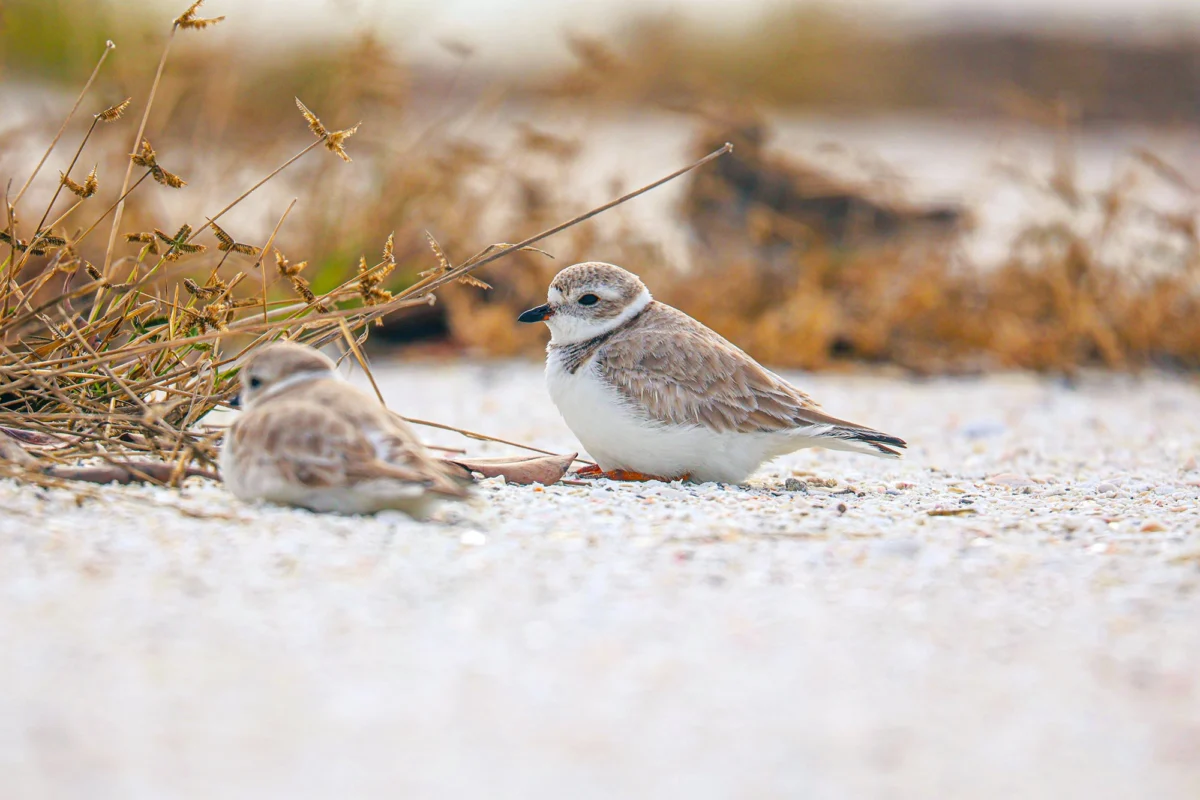
Banding represents a cornerstone in avian conservation, serving as an indispensable tool for scientists to decipher the complex lives of migratory birds. Programs like those administered by the U.S. Geological Survey (USGS) Bird Banding Laboratory (BBL) provide biologists with invaluable data, illuminating critical aspects of natural history, including population dynamics, age structures, intricate migration routes, and broader movement patterns. Across the United States, numerous banding initiatives contribute to this scientific endeavor, with one of the most prominent focusing on the conservation of the imperiled Piping Plover ( Charadrius melodus ). This small shorebird, characterized by its distinctive broken neck-band, is meticulously monitored through three distinct banding programs, each tailored to its specific breeding populations.
Piping Plover: A Fragile Icon of North American Coasts
The Piping Plover, a species listed as federally threatened or endangered across its range, faces persistent challenges from habitat loss, disturbance, and the impacts of climate change. Its survival hinges on the health of dynamic coastal and riparian ecosystems. Understanding its ecology is paramount for effective conservation, and banding has proven to be an unparalleled method for gathering the necessary insights. The species is divided into three geographically distinct breeding populations, each with unique characteristics and conservation statuses.
Atlantic Population: Adapting to Coastal Dynamics
Stretching along the eastern seaboard from the sandy shores of North Carolina northward to the rugged coastlines of Maine, and even extending into Canadian provinces like Quebec and Newfoundland, the Atlantic population represents the largest contingent of breeding Piping Plovers. Numbering approximately 1,800 breeding pairs in recent estimates, these birds are critical indicators of the health of Atlantic coastal ecosystems. Their breeding success is often challenged by human recreation, coastal development, and increasingly, by the effects of sea-level rise and intensified storm events that erode their fragile nesting habitats on beaches, dunes, and barrier islands. Despite these pressures, consistent monitoring and banding efforts have allowed scientists to track individual birds, identify key breeding sites, and understand the fidelity of pairs returning to specific territories year after year. This data is vital for guiding protective measures such as the establishment of protected nesting areas and managing human access during critical breeding periods.
Great Plains Population: Following the Riverine Lifelines
The second largest population of Piping Plovers, the Great Plains contingent, occupies a vast interior breeding range. From the sandbars and alkali wetlands of Nebraska, extending through North and South Dakota, and into the Canadian provinces of Manitoba, Saskatchewan, and Alberta, these plovers primarily utilize the dynamic habitats shaped by the Missouri River and its numerous tributaries. Unlike their coastal counterparts, these birds nest on sparsely vegetated sand and gravel beaches, islands, and barren shorelines of large rivers and lakes. Their existence is intrinsically linked to the fluctuating water levels of these river systems, which create and maintain the open, disturbed habitats they require. Approximately 2,500 breeding pairs are estimated for this population. Banding efforts in this region are crucial for understanding how these birds adapt to hydrological changes, dam operations, and agricultural practices that can impact their riverine breeding grounds. Insights into their movements between different river segments and their reproductive success provide vital information for water management policies and habitat restoration initiatives.
Great Lakes Population: A Battle Against Extinction
The Great Lakes population of Piping Plovers stands as the most critically endangered of the three, teetering on the brink of extinction. With a precarious existence centered primarily around Michigan’s Great Lakes shores, particularly Lake Michigan, the population hovered around just 70 breeding pairs in recent years. This dramatic decline from historical numbers highlights severe habitat loss and degradation, coupled with intense human disturbance. While Michigan remains the stronghold, recent conservation successes have seen scattered pairs beginning to expand their breeding range into other Great Lakes states, a testament to intensive recovery efforts. Banding in this population is arguably the most critical, providing fine-scale data on individual survival, reproductive output, and dispersal patterns that inform urgent, targeted conservation actions. Every banded bird in the Great Lakes carries immense significance, contributing directly to the recovery strategy for a population that serves as a powerful symbol of endangered species protection.
Regardless of their specific breeding locales, all Piping Plovers within the contiguous United States embark on a significant southward migration as winter approaches. They converge on shared wintering grounds along the Atlantic and Gulf coasts, spanning from the Carolinas through Texas, as well as throughout the Caribbean islands. Each winter, these birds, representing all three distinct breeding populations, gather on preferred sandy beaches and mudflats, often in remarkably high densities. Until coordinated banding efforts became widespread in the 1990s, scientists faced a significant knowledge gap, unable to definitively determine the breeding origins of the plovers wintering on popular beaches, such as those found in Florida. This lack of information hampered efforts to protect specific populations, as conservationists could not trace wintering birds back to their threatened breeding grounds. The advent of systematic banding programs fundamentally altered this dynamic, providing the necessary data to link these disparate life stages.
The Meticulous Science of Bird Banding
Bird banding, also known as ringing in many parts of the world, is a systematic process of attaching small, individually numbered metal or colored plastic bands to the legs of wild birds. This technique, first widely adopted in the early 20th century, has evolved into a sophisticated scientific endeavor that underpins much of our understanding of avian ecology.
A Legacy of Data: The USGS Bird Banding Laboratory
At the heart of North American banding efforts is the USGS Bird Banding Laboratory (BBL), established in 1920. The BBL serves as the central repository for all bird banding data in the United States and Canada, managing a vast database that contains millions of records. Each year, the BBL issues hundreds of thousands of bands to authorized banders, who are rigorously trained and permitted scientists and ornithologists. The BBL’s role extends beyond simply issuing bands; it processes data, provides analytical support, and facilitates the exchange of information between researchers and the public. Its comprehensive database is an invaluable resource for studying long-term population trends, assessing the impacts of environmental change, and developing science-based conservation strategies for numerous avian species.
Methodology: From Nestling to Nomad
Ornithologists and other avian scientists typically capture birds using methods designed to minimize stress and injury, such as mist nets for adult birds or specialized traps for chicks and fledglings. Once captured, each bird undergoes a swift, standardized process. Trained banders record vital statistics including species, age (often determined by plumage characteristics or skull ossification), sex (if discernible), and specific capture location and date. A uniquely numbered aluminum band is then carefully fitted to one leg, ensuring it does not impede the bird’s movement or flight. For species like the Piping Plover, which are the focus of intensive, individualized study, an additional color-coded band or flag is often applied. These auxiliary markers are crucial because they allow for identification of individuals from a distance using binoculars or spotting scopes, without needing to recapture the bird. In the case of Piping Plovers, the color of this secondary band or flag is specifically assigned to its breeding location – a system that allows researchers to identify, at a glance, whether a bird originated from the Atlantic, Great Plains, or Great Lakes population. This method significantly enhances the efficiency and scope of data collection, enabling researchers to track birds throughout their life cycle, from their natal grounds to their distant wintering habitats and back again.
Beyond the Band: Data Analysis and Population Dynamics
The data collected through banding programs is not merely anecdotal; it forms the bedrock for rigorous scientific analysis. When a banded bird is re-sighted or recaptured, that “encounter” provides a critical piece of information: the bird’s location at a specific time, its age since banding, and potentially its reproductive status. By accumulating thousands of such encounters over decades, scientists can build sophisticated demographic models. These models allow for the calculation of annual survival rates, estimates of reproductive success, and precise mapping of migration corridors and wintering range fidelity. For endangered species like the Piping Plover, such data is indispensable for understanding which life stages are most vulnerable, where conservation efforts need to be concentrated, and whether recovery actions are achieving their intended outcomes. The ability to track individual birds provides insights into site fidelity (returning to the same breeding or wintering sites), dispersal patterns of young birds, and even the impacts of specific environmental events, such as oil spills or severe storms, on individual survival and population resilience.
Chronicle of a Nine-Year Journey: The Saga of Plover 62Z
The power of bird banding is perhaps best illustrated through the story of individual birds, whose epic journeys underscore the vital connection between scientific data and personal experience. A recent encounter in the eastern Florida Panhandle vividly demonstrated this scientific marvel and the unexpected personal connections it can foster.
July 2016: A New Life in North Dakota
The narrative of Plover 62Z began in July 2016. As a fragile chick, barely a few weeks old, it was carefully captured by a banding crew on the shores of Lake Sakakawea in North Dakota. This vast reservoir, formed by the Garrison Dam on the Missouri River, provides critical breeding habitat for the Great Plains Piping Plovers. During its brief capture, Plover 62Z received its distinctive yellow leg flag, imprinted with the unique code "62Z," a beacon identifying it as a member of the Great Plains population. This initial act of banding marked the official beginning of its recorded life history, setting the stage for a remarkable journey of survival and migration. From that moment, 62Z became a data point, an individual contributing to the collective scientific understanding of its species.
The Unveiling in Florida: A Yellow Flag in the Panhandle
Years later, in early January of the current year, a biologist conducting surveys at the Flag Island Critical Wildlife Area in the eastern Florida Panhandle observed a Piping Plover with a yellow flag. While orange-banded Great Lakes Plovers are relatively common in this wintering area, a yellow-flagged bird from the Great Plains population is a rare and notable sighting. The biologist, recognizing the significance of the yellow marker, immediately documented the bird with photographs, ensuring clarity for deciphering the unique alphanumeric code. The images clearly revealed the code: 62Z.
This sighting initiated a crucial step in the banding process: reporting the banded bird online to the Banded Bird Laboratory. This public reporting system is a cornerstone of citizen science, allowing anyone who observes a banded bird to contribute directly to conservation efforts. The information provided – species, band code, date, and location of sighting – is then cross-referenced with the BBL’s extensive database. The subsequent reply confirmed the bird’s origins: Plover 62Z was indeed banded as a chick on Lake Sakakawea, North Dakota, in July 2016.
Longevity and Resilience: What 62Z Represents
Two details immediately stood out from the BBL’s report. First, Plover 62Z was at least nine years old. This fact is particularly remarkable given that the average lifespan for Piping Plovers is typically estimated to be between five and seven years. To have survived for nearly a decade, enduring countless migrations, harsh weather conditions, and the ever-present threats of predation and habitat degradation, speaks volumes about the individual bird’s resilience and adaptability. Such longevity in a breeding bird contributes significantly to the population’s genetic diversity and reproductive output over time.
Even more striking was the realization that Plover 62Z had hatched on Lake Sakakawea, precisely in an area where the biologist had monitored Piping Plovers during the summer of 2022. The specific location was identified as a group of islands situated just west of the Lake Audubon Causeway, which delineates Lake Audubon from Lake Sakakawea. This geographic overlap created a profound personal connection, transforming a scientific data point into a tangible link between a researcher’s past work and a living, migrating individual. The biologist had undoubtedly walked every foot of the very islands where Plover 62Z had hatched six years prior to their arrival, surveying for nests and monitoring the health of the plover population. While direct confirmation of a prior encounter with 62Z itself remained elusive, the possibility of having observed its siblings nesting in the same natal area in 2022 was very high, given the strong site fidelity of Piping Plovers to their natal breeding grounds.
This serendipitous reunion, thousands of miles from the plover’s birthplace, underscored the shared journey of both bird and human. Plover 62Z had undertaken numerous arduous migrations from the northern Great Plains to the Atlantic or Gulf coasts and back, a testament to its intrinsic migratory drive. Similarly, the biologist had traversed thousands of miles since leaving North Dakota, pursuing seasonal conservation roles in diverse landscapes from Utah and southern Florida to Wisconsin and the remote Northwestern Hawaiian Islands, before arriving in northern Florida. The encounter on a small sandbar in January served as a powerful, real-world illustration of the vast distances covered and the intricate web of connections that bind species, ecosystems, and dedicated conservationists.
Unlocking Conservation Strategies: The Broad Impact of Banding Data
The story of Plover 62Z is not just an isolated anecdote; it is a microcosm of the profound impact that bird banding has on conservation at a much broader scale. The data gleaned from banding efforts directly informs and shapes critical conservation strategies for species worldwide.
Informing Habitat Protection and Management
One of the most immediate and significant applications of banding data is in identifying and prioritizing critical habitats. By tracking where birds breed, stage during migration, and spend their winters, scientists can pinpoint essential areas that require protection or specific management interventions. For Piping Plovers, banding has unequivocally demonstrated the interconnectedness of their diverse habitats – from the riverine sandbars of the Great Plains to the coastal beaches of the Atlantic and the barrier islands of the Gulf. This understanding allows conservation agencies to advocate for land acquisitions, establish protected areas, and implement specific management practices, such as seasonal beach closures or habitat restoration projects, that directly benefit the species throughout its annual cycle.
Guiding Policy and Resource Allocation
The robust datasets generated by banding programs are instrumental in shaping environmental policy and guiding the allocation of limited conservation resources. Information on population trends, survival rates, and the impacts of various threats provides the scientific basis for regulatory decisions under frameworks like the Endangered Species Act. For instance, data showing declining survival rates in a specific wintering area might prompt investigations into pollution or disturbance factors in that region, leading to new regulations or enforcement actions. Conversely, evidence of high site fidelity to certain breeding grounds reinforces the need for sustained protection of those specific sites. These data-driven insights ensure that conservation efforts are strategic, effective, and responsive to the actual needs of the species.
Adapting to Environmental Change
In an era defined by rapid environmental change, including climate change, banding data offers a crucial baseline and monitoring tool. By tracking changes in migration timing, shifts in breeding or wintering ranges, and alterations in reproductive success over decades, scientists can identify how species are responding to warming temperatures, altered precipitation patterns, and rising sea levels. For migratory shorebirds like the Piping Plover, understanding these adaptive responses is vital for predicting future vulnerabilities and developing proactive conservation measures, such as creating new suitable habitats or adapting management plans to accommodate phenological shifts.
The Power of Citizen Science: Every Sighting Matters
The efficacy of bird banding programs relies not solely on the dedicated work of professional scientists but also significantly on the collective efforts of the public. Citizen science plays an indispensable role, as every sighting of a banded bird by an informed observer contributes a valuable piece of data to the scientific puzzle. When individuals report a banded bird, they are not just satisfying their curiosity about an individual; they are actively participating in a vast, continent-wide data collection effort that fuels conservation.
The process is straightforward: upon observing a bird with a band or flag, note the color, location on the leg, and any alphanumeric codes. Then, submit a sighting report to the Banded Bird Laboratory, typically through their online portal. This simple act triggers a cascade of scientific inquiry. The BBL validates the report, cross-references the band number, and provides the observer with detailed information about the bird’s banding history, including its age, where and when it was originally banded, and potentially its previous movements. This feedback loop not only enriches the observer’s personal understanding but also integrates their data point into the larger scientific framework, enhancing our collective knowledge of species’ movements, longevity, and population health.
Conclusion: A Future Forged by Data and Dedication
Bird banding stands as a testament to the enduring power of meticulous scientific observation and collaborative effort in conservation. From providing foundational knowledge about avian natural histories to informing critical policy decisions and inspiring personal connections to the natural world, its impact is undeniable. The journey of a single Piping Plover, Plover 62Z, from the sandbars of North Dakota to the shores of Florida, serves as a poignant reminder of the intricate lives of migratory birds and the vast distances they traverse. It also underscores the profound value of every data point, every observation, and every dedicated individual, whether a professional biologist or an engaged citizen, in the ongoing endeavor to protect and preserve our planet’s avian diversity. The next time a bird graces your view on a beach or in a park, take a moment to look for a band. Your report could be the next crucial piece in the intricate puzzle of conservation, potentially leading to your own profound connection with a feathered traveler and directly contributing to a future where these remarkable species continue their age-old migrations.
