
As New York State vigorously pursues its ambitious clean energy objectives, a significant environmental dilemma has emerged, pitting renewable energy development against the urgent need to conserve rapidly declining grassland bird populations. This intricate conflict is particularly pronounced in the 13,000-acre Washington County Grasslands, a unique and irreplaceable ecosystem now facing direct threats from large-scale solar projects, notably the proposed Fort Edward Solar Project. The delicate balance between mitigating climate change and protecting biodiversity is being tested in a landscape recognized as one of the state’s last strongholds for several vulnerable avian species.
The urgency of the situation for grassland birds cannot be overstated. The seminal "State of the Birds 2025" report, a collaborative effort by a consortium of leading scientific and conservation organizations, painted a stark picture of an ongoing ecological emergency. It revealed that grassland bird species represent the fastest-declining avian group across North America, with populations plummeting by more more than 40% since 1970. This represents a loss of billions of individual birds over five decades, driven primarily by pervasive habitat loss and degradation. The report highlighted the relentless conversion of grasslands for agriculture, urban sprawl, and increasingly, infrastructure development, as primary culprits. Species like the Eastern Meadowlark, Bobolink, Grasshopper Sparrow, and the specifically impacted short-eared owl and northern harrier, are all experiencing severe declines, pushing some to the brink of state-level endangerment or threatened status.
New York’s Clean Energy Mandate and its Footprint
New York State has positioned itself as a national leader in climate action through the Climate Leadership and Community Protection Act (CLCPA), enacted in 2019. This landmark legislation mandates an ambitious transition to clean energy, including achieving 70% renewable electricity by 2030 and 100% zero-emission electricity by 2040. To meet these aggressive targets, the state has prioritized the development of large-scale renewable energy projects, including significant solar farms. The Office of Renewable Energy Siting (ORES) was established to streamline and expedite the permitting process for these major facilities, aiming to accelerate the transition away from fossil fuels. While the overarching goal of reducing carbon emissions is widely supported by environmental groups, the practical implementation of these projects, particularly their siting, has ignited intense debate and exposed a "green-on-green" conflict.
The very success of the CLCPA hinges on deploying vast amounts of renewable infrastructure, which inherently requires substantial land use. Solar panel arrays, while clean in operation, demand large, relatively flat, and often open tracts of land – precisely the kind of landscape that serves as critical habitat for grassland birds. This convergence of land requirements creates an unavoidable tension: how to develop renewable energy at scale without inadvertently destroying the very ecosystems that other environmental mandates seek to protect.
The Washington County Grasslands: A Haven Under Threat
The Washington County Grasslands, spanning approximately 13,000 acres, stands as a prime example of this escalating conflict. This expansive region in eastern New York is not merely a collection of fields; it is a rare and vital ecological landscape, recognized nationally and statewide for its exceptional biodiversity value. It serves as one of the last remaining large, intact grassland ecosystems in New York, providing essential wintering and breeding habitat for a suite of imperiled grassland birds.
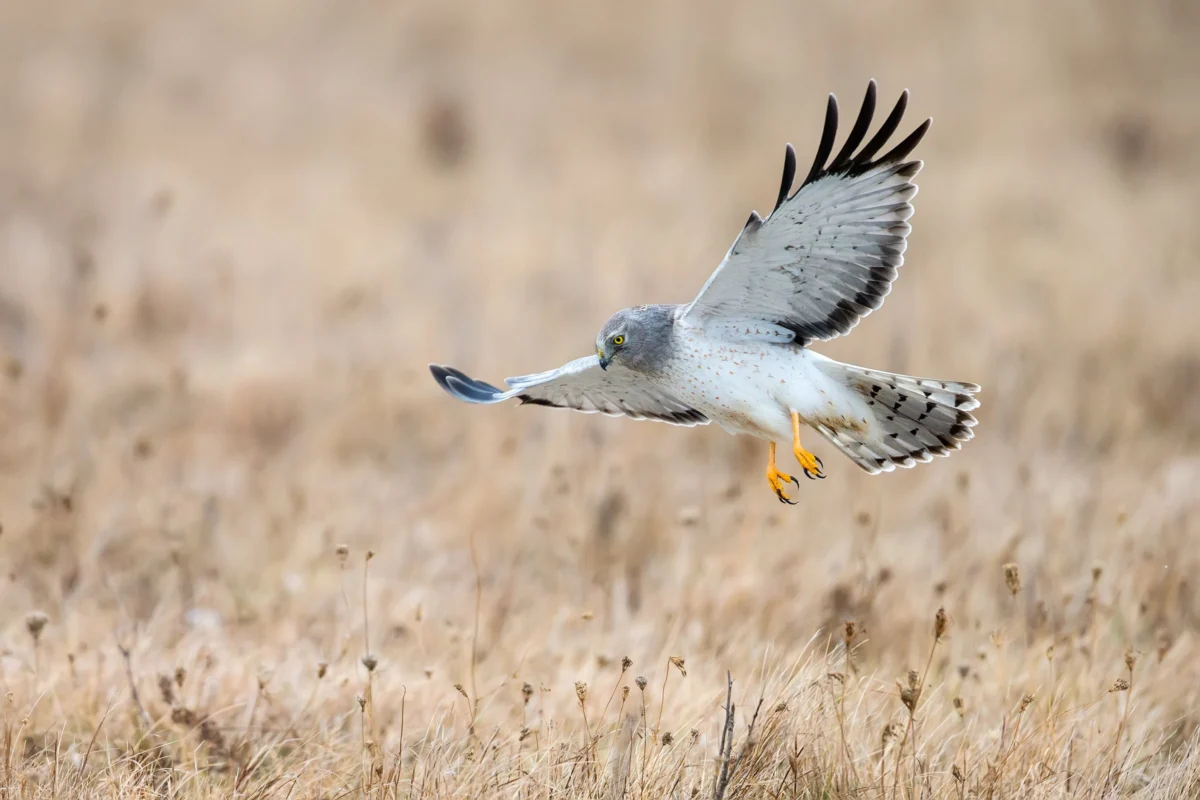
Among the most critically impacted species are the state-endangered short-eared owl (Asio flammeus) and the threatened northern harrier (Circus hudsonius). These raptors are iconic inhabitants of open grasslands, relying on these vast, unobstructed landscapes for hunting voles and small mammals, and for nesting. Their ecological needs render them exceptionally sensitive to habitat fragmentation. Scientific literature consistently demonstrates that even minor visual or structural disturbances, such as the introduction of tall trees, utility poles, or, critically, solar panel arrays, can render surrounding habitat unusable for these area-sensitive species. They exhibit avoidance behavior, abandoning or avoiding fields where the landscape’s open character is compromised. This sensitivity is rooted in their hunting strategies, which require clear sightlines and unobstructed flight paths, and their vulnerability to increased predation risk if artificial structures provide perching sites for avian predators.
The ecological significance of the Washington County Grasslands is underscored by its numerous conservation designations:
- National Audubon Society’s Fort Edward Grasslands Important Bird Area (IBA): IBAs are sites identified as globally important for the conservation of bird populations. This designation highlights the area’s role in supporting significant numbers of grassland birds, particularly during migration and wintering periods.
- New York State Department of Environmental Conservation (DEC) Washington County Grasslands Grassland Bird Conservation Center: This state-level designation recognizes the area as a priority for grassland bird conservation and management.
- New York State Open Space Plan: Inclusion in this plan signifies the state’s commitment to preserving the ecological, scenic, and recreational values of the area.
- State-designated Wintering Raptor Concentration Area: This designation specifically acknowledges the area’s crucial role as a wintering ground for large numbers of raptors, including short-eared owls and northern harriers, which congregate here due to abundant prey and suitable habitat.
Few landscapes in New York carry such a comprehensive level of ecological significance and conservation recognition, making the potential impact of development here particularly alarming to environmental advocates.
The Fort Edward Solar Project: Details and Concerns
The proposed Fort Edward Solar Project, developed by Boralex, a Quebec-based energy company, directly threatens this irreplaceable habitat. The project’s current design places solar panel arrays in a manner that would encircle the core of the Washington County Grasslands Wildlife Management Area (WMA) to the south, east, and west. This configuration is projected to directly eliminate more than 500 acres of occupied habitat – habitat that is not simply "good" but explicitly designated as priority habitat within multiple conservation plans.
Conservationists and ornithologists warn that this encirclement strategy could have devastating consequences. By breaking up the landscape with large solar arrays, the project risks displacing vulnerable short-eared owls and northern harriers from the WMA’s periphery and forcing birds to cross over or near the arrays to access the higher-quality habitat within the management area. Such movements would expose them to increased risks of collision with structures, altered foraging success due to visual barriers, and heightened predation due to the introduction of new perching sites for predators. The cumulative effect of habitat loss, fragmentation, and disturbance could severely undermine the long-term viability of these imperiled populations in New York.
A Flawed Regulatory Framework and Inadequate Mitigation
Despite the Washington County Grasslands’ undisputed ecological significance and numerous conservation designations, the Fort Edward Solar Project is currently required to adhere only to the minimum mitigation requirements set forth by the Office of Renewable Energy Siting (ORES). This regulatory framework, designed to balance energy development with environmental protection, has been widely criticized by conservation groups as insufficient for high-value habitats.
ORES’s formula for mitigation mandates a conservation ratio of only 0.4 acres for every acre of breeding habitat destroyed, and a mere 0.2 acres for every acre of wintering habitat destroyed. This means that, under the current plan, only 20% to 40% of the affected habitat would be "conserved" – and even then, only for a temporary period of 30 years. For a site as ecologically critical and irreplaceable as the Washington County Grasslands, conservation organizations argue that this level of mitigation is woefully inadequate. The permanent loss of hundreds of acres of prime habitat cannot be offset by temporary, fractional mitigation in other areas, especially given the site-specific needs of area-sensitive species.
Chronology of Escalating Concerns
The conflict surrounding the Fort Edward Solar Project has unfolded over several years, intensifying as the project moved through the permitting process:
- 1970: Baseline year for the "State of the Birds" report, marking the beginning of the steep decline in grassland bird populations.
- Early 2000s – 2010s: Establishment and designation of the Washington County Grasslands as an Important Bird Area, a state conservation center, and a wintering raptor concentration area, solidifying its ecological importance.
- 2019: Passage of the CLCPA, setting aggressive renewable energy targets for New York.
- 2020: Creation of ORES to streamline permitting for large-scale renewable energy projects.
- 2021-2023 (Approximate): Boralex initiates the Fort Edward Solar Project proposal, beginning environmental reviews and public scoping periods. Conservation groups and local communities raise initial concerns about siting.
- 2025: Publication of the "State of the Birds" report, further underscoring the severe plight of grassland birds, adding weight to conservation arguments.
- Late 2025 – Early 2026 (Approximate): A critical ruling by ORES denies "party status" to the Grassland Bird Trust, a key conservation organization deeply involved in managing and protecting the Washington County Grasslands.
- March 15, 2026: The opinion piece, co-authored with the Southern Adirondack Audubon Society, appears in the Times Union, bringing the issue to broader public attention and framing it as a critical decision point for New York’s environmental leadership.
The Grassland Bird Trust’s Struggle for Standing
A pivotal development in this saga was the recent ruling that denied "party status" to the Grassland Bird Trust. This conservation organization possesses extensive, on-the-ground experience in managing grassland bird habitat within the Washington County Grasslands, making their expertise invaluable to any environmental review. In the context of ORES proceedings, party status grants an entity the ability to formally present evidence, cross-examine witnesses, submit expert testimony, and directly participate in legal arguments and appeals.
By denying party status, the ruling effectively marginalizes the Grassland Bird Trust, preventing them from directly advocating for robust habitat protection within the formal regulatory process. Instead, they are relegated to seeking "voluntary concessions" from Boralex, the developer. This outcome significantly weakens the voice of local, specialized conservation expertise and raises concerns about the fairness and thoroughness of the environmental review process. Conservation advocates argue that excluding such a knowledgeable stakeholder undermines the stated goal of balanced decision-making.
This ruling also directly disregarded hundreds of public comments submitted by concerned community members, scientific experts, and prominent Northeast-based conservation organizations. These included the National Audubon Society, the New York State Ornithological Association, and multiple local Audubon chapters, all of whom articulated strong opposition to the project’s current siting and inadequate mitigation plans. Their collective message was clear: while supporting renewable energy, it must be developed responsibly, avoiding, minimizing, and meaningfully mitigating impacts to irreplaceable bird habitats.
Statements and Reactions (Inferred)
- Audubon and Conservation Coalition: "While we staunchly support New York’s transition to renewable energy, it cannot come at the expense of our most vulnerable and irreplaceable ecosystems. The Washington County Grasslands are a state treasure, a lifeline for endangered birds, and the current project siting and mitigation are simply unacceptable. We urge Boralex to reconsider and the state to strengthen its siting guidelines for critical habitats."
- Grassland Bird Trust: "Our decades of direct experience managing these grasslands and protecting these birds provide unique insights that are critical to this process. Denying us party status silences a vital voice for conservation and sets a dangerous precedent. We implore Boralex to voluntarily adopt superior mitigation strategies that truly safeguard this unique habitat."
- Boralex (Developer): "Boralex is committed to developing clean energy projects that contribute to New York’s climate goals while adhering to all state environmental regulations. We are working closely with ORES and other stakeholders to ensure the Fort Edward Solar Project is sited and designed responsibly. We are open to continued dialogue with community groups and will implement all approved mitigation measures."
- Office of Renewable Energy Siting (ORES) / State Officials: "The ORES process is designed to facilitate the rapid and responsible development of renewable energy in New York, balancing the imperative of climate action with environmental protection. All decisions, including those regarding party status and mitigation, are made in accordance with established legal frameworks and scientific guidelines. Our aim is to achieve the state’s ambitious clean energy targets while ensuring robust environmental review."
Broader Implications and Precedent
The Fort Edward Solar Project serves as a critical test case for New York’s commitment to both climate leadership and biodiversity conservation. This "green-on-green" conflict highlights the complex challenges inherent in scaling up renewable energy infrastructure. The outcome of this project will set a significant precedent for future large-scale renewable developments across the state and potentially the nation.
The implications are far-reaching:
- Siting Standards: The case calls into question the adequacy of current ORES siting regulations, particularly concerning areas designated as highly sensitive or critical habitat. There is a clear need for more robust, proactive siting guidelines that prioritize avoidance of irreplaceable habitats from the outset, rather than relying on minimum mitigation after significant impacts have occurred.
- Balancing Act: New York’s ability to be a true leader in both climate action and biodiversity protection depends on its capacity to integrate these goals. The current conflict suggests a potential disconnect, where climate goals might inadvertently overshadow biodiversity concerns.
- Role of Local Expertise: The denial of party status to the Grassland Bird Trust underscores the importance of empowering local conservation organizations and experts within regulatory processes. Their specialized knowledge is crucial for identifying site-specific risks and developing effective, context-appropriate mitigation strategies.
- Public Trust: Overriding widespread public and expert opposition in such a sensitive area risks eroding public trust in the state’s environmental review processes and its commitment to comprehensive environmental protection.
- Long-term Legacy: If critical habitats like the Washington County Grasslands are compromised, the long-term ecological legacy for New York could be diminished, threatening species that are already struggling.
The situation in Washington County necessitates a re-evaluation of how New York approaches renewable energy development in ecologically sensitive areas. It is a powerful reminder that while the transition to clean energy is vital for climate health, it must proceed with careful consideration for the living landscapes it impacts. Protecting these grasslands means protecting the birds that define them and preserving a living legacy that New York, in its pursuit of a sustainable future, simply cannot afford to lose. The challenge for New York now is to demonstrate that renewable energy and wildlife conservation can indeed advance together, in harmony, rather than in conflict.
