
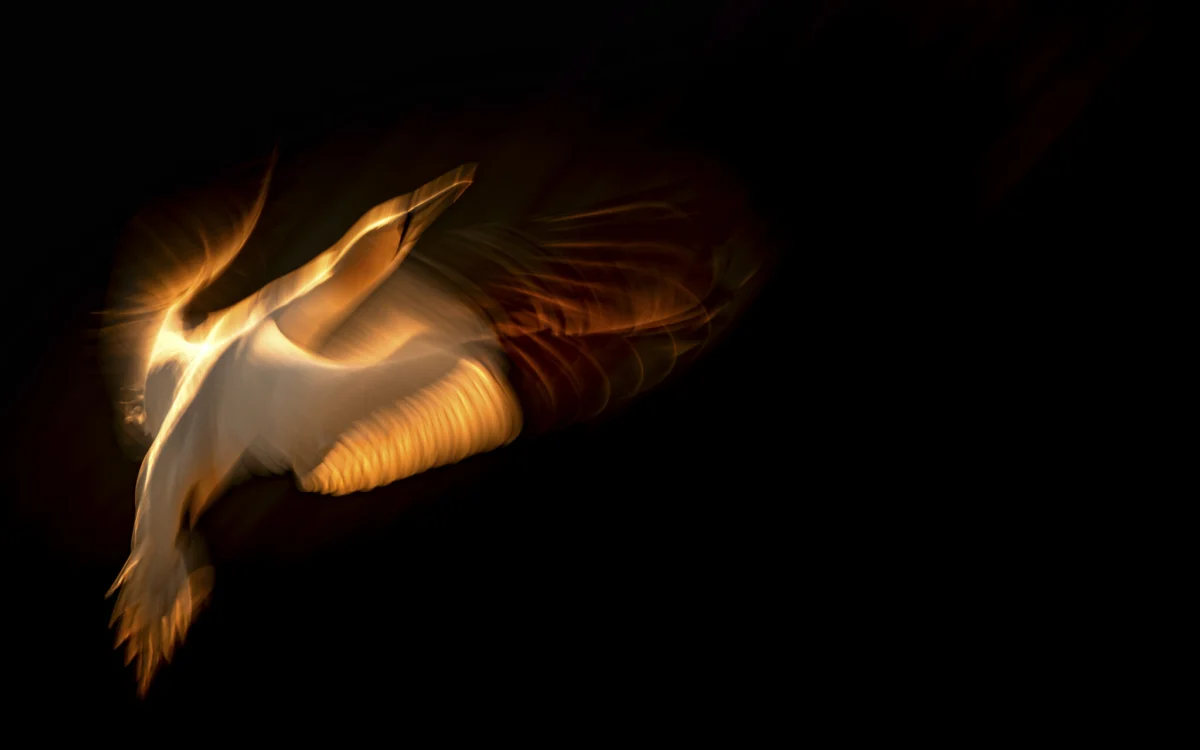
In a field often dominated by the pursuit of technical perfection, acclaimed wildlife photographer Rachel Bigsby is championing a distinctive philosophy she terms "natural artistry." Her approach to capturing seabirds transcends mere documentation, focusing instead on conveying the visceral experience of being present with these wild creatures, translating their inherent essence into evocative imagery that speaks to the soul. For Bigsby, the act of pressing the shutter is less about freezing a moment in time and more about immortalizing a profound connection, a "sentence being written in a language older than any of us."
The Philosophy of "Natural Artistry": Beyond the Lens
Bigsby’s core belief posits that wildlife photography is not simply the act of capturing an image, but "the art of witnessing." It is a profound process of "learning the grammar of nature through patience and presence," with the ultimate goal of translating that understanding into something palpable for an audience who was not physically there. Her concept of "natural artistry" is meticulously defined, differentiating it from an imposed style or aesthetic. Instead, she argues that this artistry is intrinsically present in nature itself, waiting to be revealed.

This inherent artistry, according to Bigsby, manifests in myriad forms: the effortless grace of a seabird riding turbulent winds, the intricate dance of light across individual feathers, the palpable stillness preceding a dive, or the overwhelming, unified chaos of a storm-tossed colony. It is not confined to conventional beauty but seeks to unearth the deeper "essence" – the untold story of a species expressed through a complex interplay of light, movement, texture, colour, behaviour, environment, and perspective. Her guiding principle is clear: "I do not want to photograph seabirds as objects. I want to photograph what it feels like to be near them." This stance challenges traditional wildlife photography paradigms that often prioritize clinical sharpness and pristine compositions, advocating instead for an emotional and sensory immersion.
A Deep-Rooted Connection: Bigsby’s Journey into the Wild
Bigsby’s profound connection with the natural world predates her photographic career, tracing back to formative experiences that instilled a deep sense of reverence. Her late grandfather, a dedicated naturalist and fisherman, was instrumental in teaching her "not just to look, but to truly see," imparting attention and respect for the environment rather than a mere collection of facts. This foundational education was further solidified at the age of six when she joined the Scout Association. Weekends spent navigating rugged trails and deciphering weathered maps fostered a practical intimacy with the outdoors, transforming "scenery" into a living companion and solidifying nature as her primary classroom.
Photography entered her life more subtly. A childhood friend introduced her to the medium, prompting early experiments with an iPod camera. These initial forays, capturing the way morning light illuminated dewdrops or the stark silhouette of a dandelion, laid the groundwork for her visual exploration. While her friend’s interest waned, Bigsby’s commitment deepened, culminating in a pivotal encounter that irrevocably shaped her path. The sight of a Northern Fulmar gliding effortlessly along cliffs near her home captivated her, its "oceanic mastery" and "defiance of gravity" igniting an urgent curiosity. Researching its connection to the legendary Albatross, a bird of childhood dreams, cemented her destiny. From that moment, seabirds ceased to be merely a photographic subject; they became her entire world.

The acquisition of her first DSLR camera marked a significant expansion of her horizons, leading to encounters with new species and colonies and fostering deeper questions about the natural world. Her images began to gain public recognition, opening doors to opportunities that underscored the non-linear nature of her chosen path. She actively sought out volunteering roles, exchanging labour – from scrubbing compost toilets on remote islands and scything bracken in summer heat to repairing weathered doors – for unparalleled access to seabird colonies. These experiences, often after the day’s work was done and the colonies returned to their own rhythms, were crucial. Bigsby spent countless hours observing, listening, and learning, dedicating significant time to understanding seabird behaviours, biology, and ecology before ever lifting her camera. This immersive, non-photographic period is, in her view, the bedrock of her work’s credibility, enabling her to capture authentic narratives rather than superficial observations.
Challenging Conventions: Embracing Imperfection and Atmosphere
Bigsby consciously pushes back against the conventional metrics of "perfect" wildlife photography, which often prioritizes technical elements like razor-sharp focus, clean backgrounds, and adherence to textbook compositions. She contends that an excessive pursuit of such perfection can lead to images that are "competent and forgettable," depicting what a bird looks like but failing to convey what it is. Her own artistic revelation came from an image that defied these traditional standards: a soft-focus Atlantic Puffin in flight, captured with a slow shutter speed against a cluttered background. The golden light piercing its delicate wings, blurring its movement into a "whisper of motion," dissolved the subject into pure atmosphere. This image, which "looked like a feeling" rather than a checklist, became a profound turning point, underscoring that photography is as much about storytelling and emotion as it is about documentation.
The unpredictable and often chaotic reality of the wild further informs Bigsby’s artistic choices. Seabirds, governed by weather, tide, hunger, fear, devotion, and instinct, do not conform to ideal conditions for photographers. Their world is inherently fluid and alive, prompting Bigsby to question why her images should pretend otherwise. A pivotal experience involved a week of volunteering on an island plagued by relentless rain, fog, and mist. Initially heartbroken by the "bad weather," she eventually realized her frustration stemmed from trying to impose an artificial idea of perfection onto nature. For the birds, these were not "bad conditions," but simply "life."

This realization led to a transformative shift: instead of resisting, she began collaborating with the environment. The fog became a "blank page," the whiteness a "canvas," inadvertently leading her to develop a distinctive high-key imagery that became part of her visual signature. This organic evolution, born from honest responsiveness to her surroundings rather than a premeditated style, profoundly altered her perception of light. It taught her that the most meaningful images often emerge when one ceases to demand specific conditions and instead notices and works with "what is already there."
The Language of Light, Texture, and Environment
For Rachel Bigsby, light is not a mere technical setting but "the emotional spine of an image." While a subject’s existence is constant, light fundamentally shapes its perception, its emotional resonance, and its lasting impression. She recalls a poignant moment on the Shetland cliffs where the first light illuminated only the highest rock peaks, glowing against the dark abyss. A single Gannet then ascended from shadow into this illumination, its white wings appearing like a brushstroke against the black cliff. This moment, she asserts, taught her that light is not just about clarity but about drama, making mood visible.
Colour, similarly, serves an emotional purpose rather than an aesthetic one. Bigsby rarely seeks bold colours for their own sake, instead considering how they contribute to the scene’s emotional tone. She notes how the subtle, stormy tones of Northern Fulmars – slate-grey, soft, and sea-shaped – can be overwhelmed by a bright blue background. Conversely, a chalk-white cliff or dark grey rock can perfectly cradle their palette, allowing their inherent mood to emerge. When colour becomes a distraction, she intentionally opts for monochrome, viewing black and white not as a shortcut to seriousness, but as a deliberate decision to draw attention to the fundamental "bones of the image": shape, light, and texture.

Texture, in Bigsby’s work, imbues a photograph with tangibility, allowing the viewer to "feel salt in the air." Shape provides intentionality, transforming wildlife into design through curves, arcs, symmetry, and contrast. Crucially, she emphasizes that the environment is never just a backdrop; it is "character." A bird devoid of its context remains "just" an animal, but when honestly situated within its world, it becomes a story—a narrative of scale, struggle, intimacy, resilience, and fragility. This includes acknowledging difficult truths, braiding beauty with grief and life with loss. The natural world, she argues, is not a postcard, but a complex reality, and photography can capture this complexity truthfully, respectfully, and intentionally without exploitation.
Patience and Presence: Decoding the Seabird’s World
Bigsby defines patience not merely as waiting, but as "knowing what you are waiting for." This profound understanding stems from an extensive study of seabird behaviour, which she likens to learning a new language. By recognizing patterns and cues – a tightening posture, a lifted glance, a repeated gesture – the wild transforms from random occurrences into a readable narrative. This allows her photography to become an act of intention rather than mere luck.
Her method involves countless hours observing seemingly ordinary behaviours: preening, shifting, calling, settling, and rising. Yet, it is within these minute changes that the signals for what comes next are often found. This deep observational practice fosters a symbiotic relationship between photographer and subject, shifting from "taking" to "listening." When one listens long enough, Bigsby asserts, moments that feel like gifts emerge: reunion rituals, courtship exchanges, synchronized movements between bonded birds, or sudden instances of softness amidst colony chaos. These are not merely "behaviours" but profound stories of devotion, endurance, and survival played out on the unforgiving, wind-swept cliff edges. This intimate engagement with seabirds is why they remain her muse, embodying freedom and resilience, sculpted by time and tide, and connecting her to the very edge of the world.

Implications for Conservation and Engagement
Rachel Bigsby’s "natural artistry" carries significant implications for wildlife conservation and public engagement. In an era where biodiversity loss is a pressing global concern, seabirds serve as vital indicators of ocean health, facing threats from climate change, plastic pollution, overfishing, and habitat degradation. By presenting these creatures not as scientific specimens or idealized subjects, but as beings imbued with deep emotion and living within complex, often harsh, realities, Bigsby fosters a more profound empathy in her audience. Her emphasis on truthfulness, respect, and intentionality in her imagery aligns with ethical conservation photography, which seeks to educate and inspire action without sensationalism or exploitation.
Her work implicitly argues that a more artistic and emotional connection to nature can be a powerful tool for conservation. While scientific data is crucial, evocative imagery that captures the "feeling" of being near these birds can resonate more deeply with the public, transforming abstract threats into tangible concerns. By showcasing the beauty intertwined with struggle, the resilience amidst fragility, Bigsby’s photographs serve as a poignant reminder of what stands to be lost, fostering a sense of stewardship. This approach moves beyond simply documenting species to communicating their inherent value and the urgency of their plight, inviting viewers to care not just about what a seabird is, but who it is within its ecosystem.
A Call for Authenticity: Inspiring Future Photographers

While acknowledging the undeniable importance of technical proficiency, Bigsby firmly places camera settings as mere "scaffolding" – tools that can produce an image but cannot imbue it with soul. The enduring quality of a photograph, she argues, is not determined by a dial setting, but by the photographer’s unique perspective, emotional connection, and way of seeing. She challenges the often-dogmatic insistence on rules within the photography community, asserting that the most memorable and impactful images are rarely those that rigidly adhere to conventions. Instead, they are the ones that carry honesty and evoke genuine feeling.
Ultimately, Rachel Bigsby hopes her work grants others "permission" to create photographs that hold personal meaning, even if they deviate from established expectations. In a world saturated with formulaic imagery, there is a distinct need for photographs "made by heart," images that both educate through their beauty and honour the wild by truthfully representing it. Her advice to aspiring photographers is simple yet profound: "Go gently. Look closely. Wait longer than you think you should. Let the weather shape the frame rather than ruin it. Photograph the world not only as it is, but as it feels." In doing so, she champions the irreplaceable value of individual vision, reminding us that "No one else sees like you do." Her artistic journey serves as a powerful testament to the transformative potential of nature photography when guided by deep empathy, unwavering patience, and an authentic pursuit of natural artistry.
