
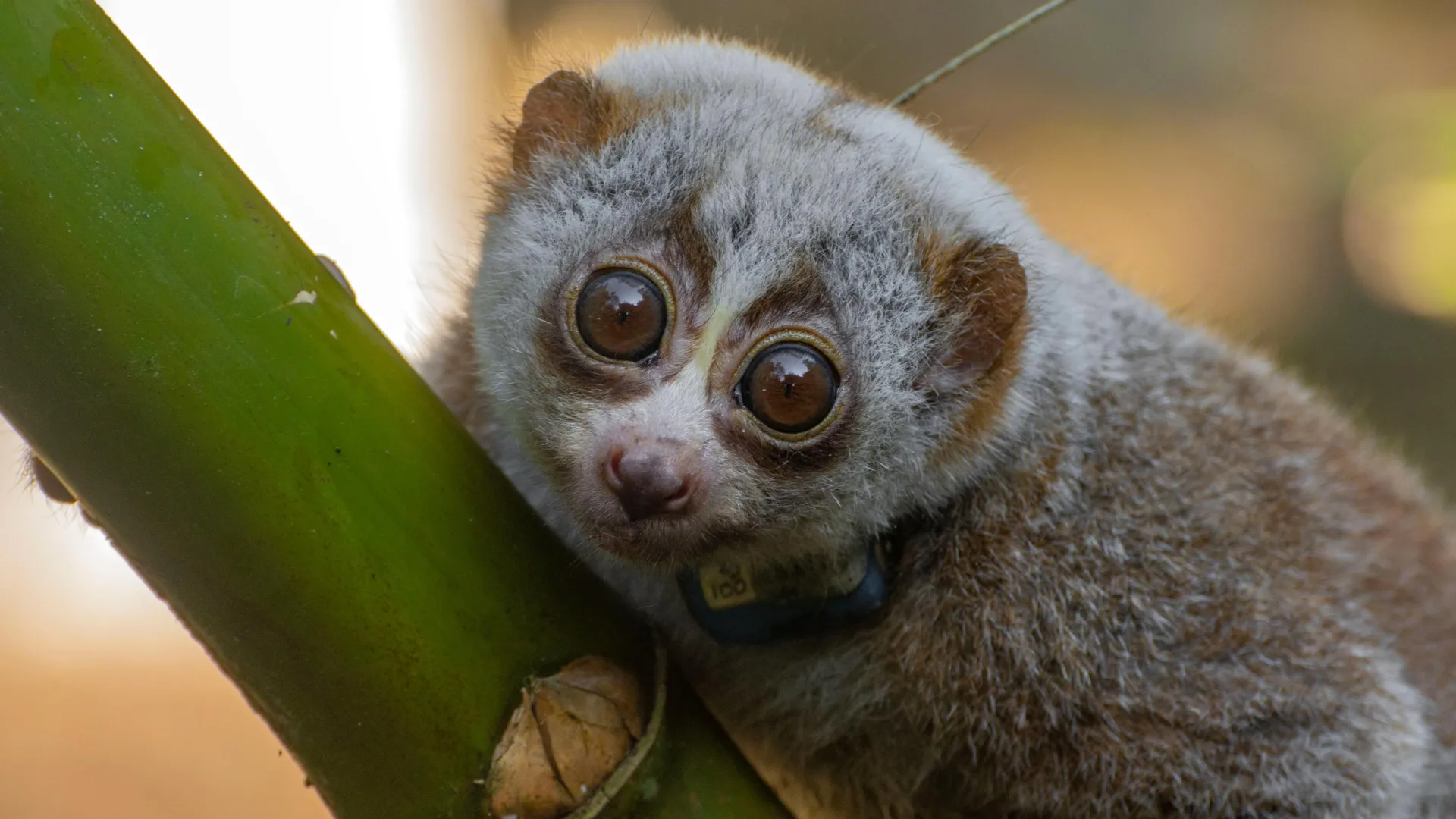
A recent scientific study has cast a critical light on the common assumption that returning rescued wildlife to natural habitats invariably leads to success. The research, focusing on the Bengal slow loris, suggests that in many situations, animals released after periods in captivity face severe risks, with the wild potentially transforming into what researchers starkly describe as a "death trap." This challenging revelation underscores the complex realities of wildlife conservation, particularly for vulnerable species subjected to the illegal pet trade.
The groundbreaking findings, published in the esteemed journal Global Ecology and Conservation, detail the meticulous work carried out by primatologist Professor Anna Nekaris OBE of Anglia Ruskin University, in collaboration with conservation group Plumploris e.V. and the University of Western Australia. Their investigative efforts meticulously tracked the post-release fate of Bengal slow lorises (Nycticebus bengalensis) in Bangladesh, revealing a grim prognosis for a majority of the released individuals.
The Plight of the Slow Loris: A Global Conservation Concern
Slow lorises, renowned for their strikingly large, emotive eyes and seemingly gentle demeanor, possess an unfortunate allure that has rendered them highly sought after in the illegal wildlife trade. These captivating features, ironically, contribute to their profound vulnerability, positioning them among the most heavily trafficked primates globally. The demand fuels a brutal industry where lorises are often subjected to cruel capture methods, illegal sale, and severe mistreatment, including having their venomous teeth painfully extracted or clipped to make them "safe" pets.
The International Union for Conservation of Nature (IUCN) lists all slow loris species across its various classifications—Critically Endangered, Endangered, or Vulnerable—highlighting their precarious existence. This threatened status is a direct consequence of rampant habitat destruction, primarily driven by deforestation for agriculture and development, and the relentless pressure from the illegal pet and traditional medicine trades. Consequently, these primates are frequently subjects of rescue operations by dedicated conservationists and wildlife authorities, with subsequent release into the wild forming a cornerstone of efforts aimed at bolstering dwindling wild populations. These reintroduction programs are often perceived as a vital, restorative measure to compensate for human-induced pressures on their populations.
Tracking Bengal Slow Lorises: A Glimpse into Post-Release Realities
Despite the noble intentions underpinning these release programs, the new research illuminates a stark and often tragic reality. The scientists employed a sophisticated methodology, fitting nine Bengal slow lorises with radio collars to precisely monitor their movements and survival after their release into a national park located in northeastern Bangladesh. This particular park had previously been utilized for similar wildlife releases, making it a pertinent site for evaluating the long-term efficacy of such interventions.
The results were unequivocally stark and profoundly concerning. A mere two of the nine animals managed to survive after their return to the forest environment. The mortality rate was alarmingly swift for a significant portion of the cohort: three lorises perished within a mere ten days of their release, while an additional four succumbed within six months. Researchers were able to recover four of the seven deceased animals, and the forensic examination of these bodies yielded critical insights. All recovered carcasses displayed clear evidence of having been killed by other slow lorises, pointing to a severe and unforeseen challenge in their re-integration.
Territorial Conflicts and the Lethal Power of Venomous Bites
The study’s findings brought to the forefront a crucial, yet often underestimated, aspect of slow loris biology: their extreme territoriality. Slow lorises are fiercely protective of their established home ranges, and encounters with intruders can escalate rapidly into violent confrontations. Furthermore, slow lorises hold a unique and perilous distinction as the world’s only venomous primates. They possess specialized brachial glands in their elbows that produce a potent toxin, which they can lick and combine with saliva, delivering a painful and often debilitating venomous bite through modified canine teeth.
The recovered animals bore unequivocal signs of these deadly encounters, exhibiting obvious bite wounds concentrated on critical areas such as the head, face, and digits. This pattern of injury strongly implicated lethal territorial disputes as the primary cause of death for the majority of the released lorises. The intensity of these intraspecific conflicts suggests that the released animals, unfamiliar with the nuances of wild loris social structures and territorial boundaries, were ill-equipped to navigate the resident populations.
Beyond the immediate causes of death, the research also uncovered significant correlations between an animal’s time in captivity and its post-release survival. Animals that had endured longer periods in human care tended to survive for fewer days after being released, suggesting a diminished capacity to adapt to the rigors and challenges of the wild. Observations also indicated that the released lorises displayed heightened levels of movement and appeared more alert than their wild counterparts typically do, possibly reflecting a state of chronic stress or a desperate search for suitable, uncontested territory.
Intriguingly, the two animals that defied the odds and survived exhibited a distinct behavioral pattern: they traveled across significantly larger areas compared to those that perished. This observation strongly implies that their survival was predicated upon their ability to vacate established territories and effectively evade direct confrontations with resident slow lorises. This nomadic strategy likely allowed them to bypass the intense territorial aggression that proved fatal for their less fortunate counterparts.
The Broader Challenge of Wildlife Release: Beyond Charismatic Megafauna
The study highlights a critical disparity in conservation practices. Large and charismatic animals, such as big cats or rhinos, typically benefit from intensive, long-term monitoring after their release, often involving satellite tracking, ground teams, and substantial financial investment. This comprehensive oversight allows conservationists to meticulously assess reintroduction success, identify challenges, and intervene when necessary.
In stark contrast, many smaller species, like the slow loris, frequently do not receive such rigorous post-release tracking. The logistical complexities, cost implications, and often the sheer number of individuals involved in smaller species releases mean that their fates frequently remain unknown. This lack of data creates significant blind spots in conservation strategies, as evidenced by the loris study. Without robust monitoring, release programs might inadvertently be contributing to animal mortality rather than population recovery, all under the guise of "success."
Expert Voices and Urgent Calls for Change
The researchers involved in the study unequivocally stress that truly successful wildlife releases demand meticulous planning, extending far beyond the initial act of liberation. A comprehensive evaluation of the suitability of the proposed release site, coupled with a thorough assessment of each individual animal’s physical and behavioral condition, is paramount. This includes detailed habitat assessments to ascertain resource availability and, crucially, the existing density of resident populations. Furthermore, the development and implementation of species-specific rehabilitation guidelines and robust, long-term monitoring protocols are essential to significantly improve the chances of success and ensure ethical conservation outcomes.
Professor Anna Nekaris OBE, the senior author of the study and a distinguished Professor of Ecology, Conservation and Environment at Anglia Ruskin University in Cambridge, England, as well as the head of the renowned Little Fireface Project, articulated the prevailing misconception: "It’s often assumed that returning confiscated or rescued animals to the wild is always a positive conservation story. Our research, however, demonstrates a grim truth: for highly territorial species like slow lorises, releasing them into areas that are already densely populated can, tragically, become a death trap."
Professor Nekaris further elaborated on the societal pressures influencing these decisions: "Many rescued endangered species are often released because the public expects it, and it feels like the ‘right’ thing to do. However, for animals such as the Bengal slow loris, this is not always the optimal course of action. Without fully comprehending the animal’s innate behavior, its specific experiences during its time spent in captivity, and critically, the density of resident populations at the proposed release site, well-intentioned reintroductions may paradoxically do more harm than good." Her statements underscore the ethical imperative to move beyond simplistic notions of "rescue and release" towards scientifically informed and species-specific strategies.
Hassan Al-Razi, the lead author of the study and the team leader of Plumploris e.V. Bangladesh, provided a localized yet universally relevant perspective on the issue. He noted, "Rescue and release have become an increasingly common practice in Bangladesh, driven by the commendable efforts to save wild animals, including slow lorises, from various threats." However, he quickly pointed out the systemic flaws: "In far too many cases, these releases are conducted inappropriately. For forest-dwelling species, release sites are often selected based on logistical convenience rather than genuine ecological suitability. As a result, certain forests have, in effect, become unintentional dumping grounds for rescued animals, and are no longer appropriate or safe release sites."
Al-Razi’s observations highlight a critical administrative and logistical challenge prevalent in many regions grappling with wildlife conservation. The pressure to quickly clear rescued animals, coupled with limited resources and expertise, can lead to hurried decisions that disregard crucial ecological principles. He cautioned that while their research specifically focused on the Bengal slow loris and clearly demonstrated the dire consequences of such practices, "we believe similar patterns and detrimental outcomes likely affect many other species," suggesting a pervasive problem that extends beyond primates.
Implications for Conservation Policy and Future Action
The findings of this study carry profound implications for global wildlife conservation policies and practices. They necessitate a fundamental re-evaluation of current rescue, rehabilitation, and release protocols, particularly for territorial and less-understood species.
- Enhanced Pre-Release Assessment: There is an urgent need for more rigorous and scientifically informed pre-release assessments. This must include comprehensive ecological surveys of potential release sites to determine carrying capacity, resource availability, and, critically, the density and social dynamics of existing wild populations.
- Individualized Rehabilitation: Rehabilitation programs must be tailored to the specific needs of each species and individual animal, focusing on restoring natural behaviors, foraging skills, and fear responses to predators and conspecifics. The duration and intensity of captivity, and its potential impact on an animal’s ability to survive in the wild, must be a key consideration.
- Mandatory Post-Release Monitoring: For all species, but especially for smaller, less charismatic ones, long-term, intensive post-release monitoring must become a standard practice. This data is invaluable for assessing the true success rates of reintroductions, identifying unforeseen challenges, and refining future conservation strategies.
- Ethical Considerations and Public Education: The study raises ethical questions about the responsibility of conservationists when releasing animals into potentially fatal situations. It also highlights the need for greater public education regarding the complexities of wildlife conservation, tempering expectations of instant success and fostering support for scientifically sound, albeit sometimes less glamorous, approaches. Public demand for "successful" releases should not override the welfare and survival prospects of the animals.
- Policy Reform and International Collaboration: Governments and wildlife agencies in countries affected by the illegal wildlife trade must collaborate with scientific institutions and conservation groups to develop and enforce stricter guidelines for wildlife releases. This includes allocating adequate resources for research, monitoring, and specialized training for rescue and rehabilitation personnel. International cooperation is also crucial to dismantle the illegal wildlife trade networks that fuel the demand for species like the slow loris in the first place.
In conclusion, the study on Bengal slow lorises serves as a poignant and urgent wake-up call. It compels the conservation community to move beyond well-intentioned but potentially harmful practices towards a more nuanced, data-driven, and ecologically informed approach to wildlife reintroductions. The ultimate goal of conservation is not merely to rescue an animal from immediate danger, but to ensure its long-term survival and contribution to healthy wild populations. Achieving this requires a critical, ongoing assessment of our methods, an unwavering commitment to scientific rigor, and a willingness to confront uncomfortable truths for the sake of the species we strive to protect. The wild, for these vulnerable lorises, should be a sanctuary, not a death trap.
