
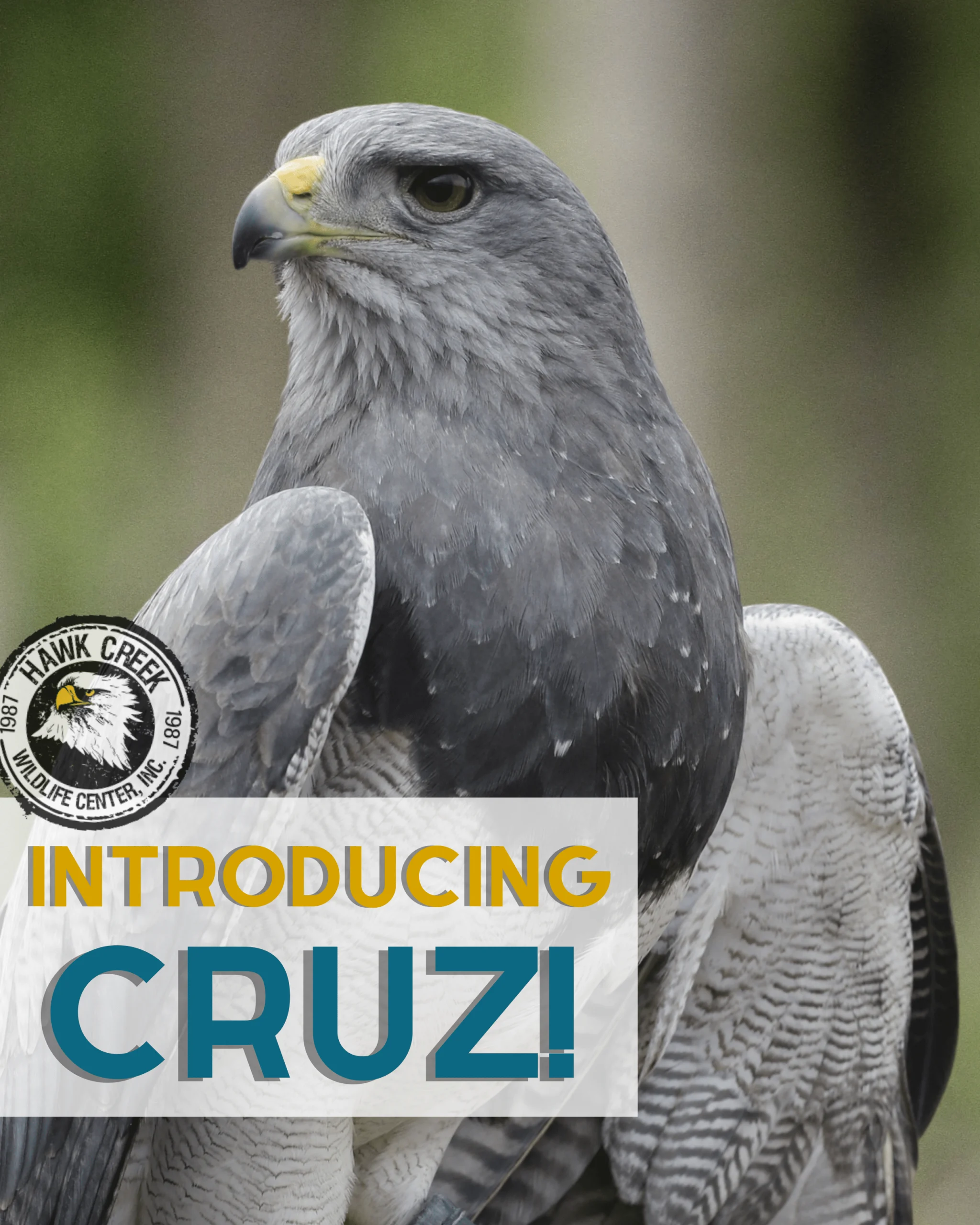
Hawk Creek is proud to announce the arrival of its newest avian resident, a magnificent raptor known by a multitude of names across its native range: the Black-chested Buzzard-eagle, Chilean Blue Eagle, Patagonian Eagle, or Gray Buzzard Eagle. Here at the sanctuary, this remarkable species has been affectionately named Cruz. This introduction signifies a significant expansion of Hawk Creek’s conservation efforts and educational outreach, offering the local community and visitors an unparalleled opportunity to observe a species rarely encountered in the United States. The arrival of Cruz is a direct result of a vital partnership with Sia, a leading eagle conservation organization based in Oklahoma, further solidifying Hawk Creek’s commitment to global avian welfare and education.
A New Apex Predator Joins the Hawk Creek Family
Cruz, the Black-chested Buzzard-eagle, represents a species of considerable ecological importance, inhabiting the elevated, open terrains of South America. These majestic birds are characterized by their impressive wingspans and their aerial prowess, spending a significant portion of their day soaring through the skies in pursuit of prey. Their diet primarily consists of small mammals, such as degus, and notably, invasive European hares, playing a crucial role in the ecological balance of their native habitats. The introduction of Cruz to Hawk Creek is not merely the addition of a new animal; it is an invitation to understand the intricate relationships within South American ecosystems and the vital role raptors play as apex predators.
The Black-chested Buzzard-eagle (scientific name Geranoaetus melanoleucus) is a large bird of prey belonging to the family Accipitridae. Native to a wide swathe of South America, from Venezuela and Colombia south to Tierra del Fuego, these eagles are found in diverse environments, including grasslands, savannas, shrublands, and open woodlands. Their adaptability to various open habitats underscores their resilience and their ecological significance. Adult birds are typically dark slate-gray above with a distinctive blackish chest, contrasting with a white belly. Their powerful talons and sharp beaks are perfectly adapted for capturing and dispatching their prey, which includes a variety of mammals, birds, and reptiles.
The Significance of the Sia Partnership
Hawk Creek’s ability to host Cruz is a testament to its collaborative approach to conservation, particularly its robust partnership with Sia in Oklahoma. Sia, an organization deeply committed to the preservation of eagles and other birds of prey, works on a global scale to support and implement conservation programs. This collaboration allows Hawk Creek to bring species to its sanctuary that are seldom, if ever, seen in the United States, thereby broadening the educational scope for its visitors.
The partnership with Sia is more than just an exchange of animals; it’s a shared vision for the future of avian conservation. Sia, whose full name is the Comanche Ethno-Ornithological Initiative, is dedicated to understanding and protecting raptors through a blend of scientific research, community engagement, and cultural understanding. Their work often involves collaborations with indigenous communities, recognizing the deep historical and spiritual connections many cultures have with these powerful birds.
This initiative aims to bridge the gap between scientific understanding and traditional ecological knowledge, fostering a holistic approach to conservation. By partnering with Sia, Hawk Creek gains access to a network of expertise and resources that are instrumental in the care and presentation of exotic avian species. It also amplifies the impact of both organizations, allowing them to reach a wider audience and advocate more effectively for raptor conservation worldwide.
A Glimpse into South American Avian Diversity
Cruz joins a distinguished roster of avian ambassadors at Hawk Creek, further enriching the sanctuary’s offerings. Previously, through the same partnership with Sia, Hawk Creek introduced Jara, a Short-toed Snake Eagle (Circaetus gallicus), and Onyx, a Verreaux’s Eagle (Aquila verreauxii). The Short-toed Snake Eagle, as its name suggests, specializes in hunting snakes, a niche that requires incredible agility and keen eyesight. Verreaux’s Eagles, on the other hand, are renowned for their prowess in hunting rock hyraxes in the mountainous regions of Africa and the Middle East, showcasing a different facet of raptor specialization.
The inclusion of these diverse species provides visitors with a unique educational opportunity to learn about the varied adaptations and ecological roles of raptors across different continents. Each bird tells a story of its native environment, its evolutionary journey, and the challenges it faces in the wild. By observing these magnificent creatures up close, visitors can develop a deeper appreciation for avian biodiversity and the importance of conservation efforts.
The Wild Earth Event: A Deep Dive into Eagle Conservation
To further illuminate the world of eagle conservation and celebrate the arrival of Cruz, Hawk Creek is hosting a special event titled "Wild Earth" on May 13th. A significant highlight of this event will be the presence of William "Two-Raven" Voelker, a renowned global eagle conservationist and a key figure at Sia. Voelker, also known by his Comanche name Waha Thuweeka, brings a wealth of knowledge and a unique perspective to avian conservation, drawing from both scientific research and cultural insights.
Voelker’s participation underscores the depth of the partnership between Hawk Creek and Sia and the shared commitment to educating the public. His expertise is invaluable in understanding the complex threats facing eagle populations globally, including habitat loss, pollution, and direct persecution. Attendees will have the rare opportunity to engage directly with a leading expert, gaining insights into the challenges and successes of conservation initiatives.
The "Wild Earth" event is designed to be an immersive educational experience. Beyond simply showcasing the birds, the event aims to foster a dialogue about conservation strategies, the interconnectedness of ecosystems, and the human role in protecting these vital species. It serves as a platform to inspire action and empower individuals to become advocates for wildlife. The date, May 13th, falls within a period of active breeding seasons for many raptor species in their native ranges, making discussions about their life cycles and conservation needs particularly relevant.
Supporting Data: The Ecological Role of Buzzard-Eagles
The introduction of Cruz highlights the ecological significance of the Black-chested Buzzard-eagle. In its native South America, these eagles are crucial predators that help regulate populations of their prey. For instance, degus, a common prey item, are small rodents that can reproduce rapidly. By preying on degus, buzzard-eagles prevent overpopulation and potential damage to vegetation.
The inclusion of European hares in their diet is also noteworthy. European hares are an introduced species in many parts of South America and can outcompete native herbivores and disrupt local ecosystems. The presence of a predator like the Black-chested Buzzard-eagle that effectively preys on these invasive animals demonstrates their role in maintaining ecological balance and potentially mitigating the impact of introduced species. This predatory behavior contributes to the overall health and stability of the grassland and savanna ecosystems where they reside.
Data from ornithological studies indicate that the home range of a Black-chested Buzzard-eagle can vary significantly depending on prey availability and habitat, but generally encompasses several square kilometers. Their hunting strategy often involves soaring at considerable heights, using their exceptional eyesight to spot prey on the ground, followed by a swift, steep dive. This efficient hunting method is key to their survival and their role in the food web.
A Broader Impact: Inspiring Future Conservationists
The arrival of Cruz and the "Wild Earth" event represent more than just an educational program; they are catalysts for broader conservation awareness. By providing tangible connections to species from distant lands, Hawk Creek inspires a sense of global responsibility. The stories of these eagles, their struggles, and the dedicated efforts to protect them can ignite a passion for wildlife conservation in individuals of all ages.
The partnership with Sia, with its roots in the Comanche Ethno-Ornithological Initiative, also offers a valuable lesson in the importance of diverse perspectives in conservation. Voelker’s involvement highlights how combining scientific rigor with traditional ecological knowledge can lead to more effective and culturally sensitive conservation strategies. This approach recognizes that humans are not separate from nature but are integral parts of it, and that understanding our relationship with the natural world is paramount to its preservation.
The implications of such initiatives extend beyond the immediate educational impact. They contribute to a growing global movement that recognizes the intrinsic value of biodiversity and the urgent need for its protection. By making these often-unseen species accessible, Hawk Creek and Sia are helping to build a constituency for conservation, fostering a generation of informed and engaged citizens who will champion the cause of wildlife preservation for years to come. The presence of Cruz serves as a powerful, living symbol of the interconnectedness of our planet’s ecosystems and the vital importance of preserving them.
