
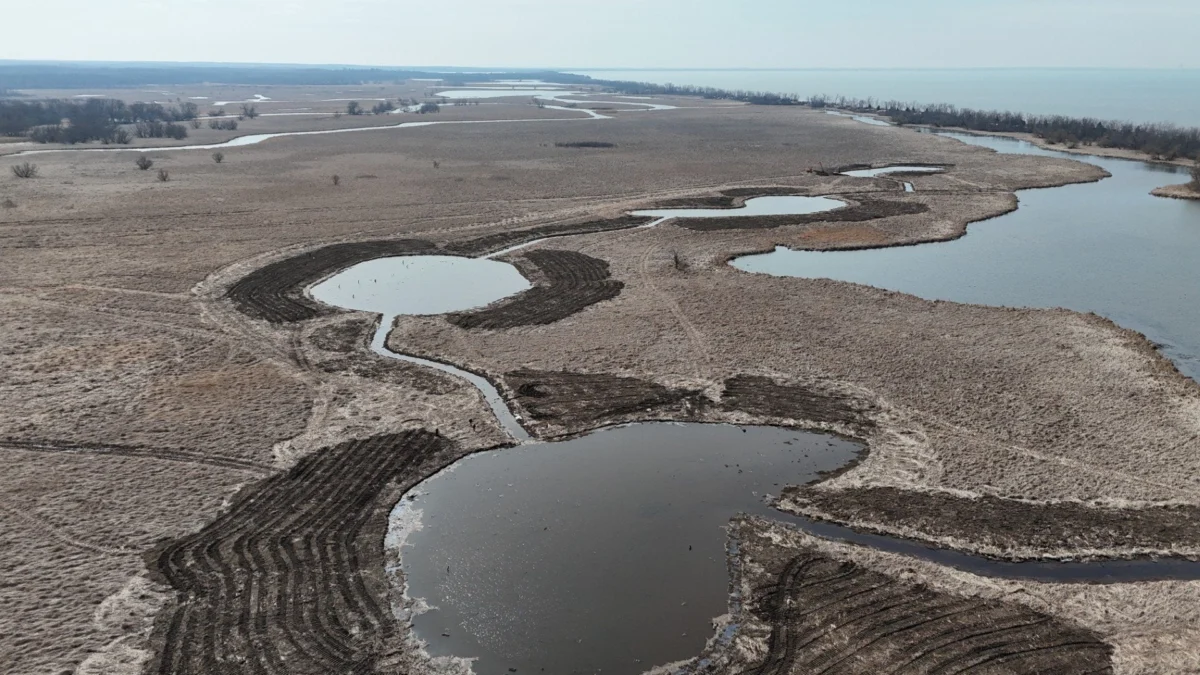
Construction has officially commenced on a transformative 50-acre wetland enhancement project within the Lakeview Wildlife Management Area (WMA) in Ellisburg, Jefferson County, New York, a collaborative effort announced today, March 31, 2026, by the New York State Department of Environmental Conservation (DEC) Commissioner Amanda Lefton, the National Audubon Society, and Ducks Unlimited. This ambitious initiative is poised to deliver significant ecological benefits, including the creation of vital spawning and nursery habitats for economically and ecologically important fish species such as northern pike, while also establishing new breeding grounds for a diverse array of waterfowl and imperiled marsh birds, notably the elusive Sora and the State-endangered Black Tern. Beyond its ecological imperative, the project aims to substantially enhance public recreational opportunities within the WMA, enriching experiences for waterfowl hunters, bird watchers, anglers, and kayakers alike, aligning with broader state efforts to connect New Yorkers with the outdoors.
Addressing Wetland Degradation in a Critical Ecosystem
The Lakeview WMA, a sprawling 3,461-acre expanse situated along the eastern shoreline of Lake Ontario, represents a cornerstone of New York State’s natural heritage. It forms an integral part of the largest natural freshwater barrier beach system in the state, boasting a rich mosaic of habitats that encompass open fields, shrub lands, woodlands, diverse wetlands, and its signature natural barrier beach. This area is not merely a local treasure but a vital component of the Great Lakes basin, a globally significant freshwater ecosystem that has faced considerable environmental challenges over decades. Wetlands, particularly those within the Great Lakes region, are among the most productive and biologically diverse ecosystems on Earth, providing critical functions such as water purification, flood attenuation, carbon sequestration, and serving as indispensable nurseries for fish and wildlife. However, these invaluable habitats have suffered extensive degradation and loss due to agricultural conversion, urban development, invasive species encroachment, and altered hydrological regimes. Estimates suggest that New York State has lost a substantial percentage of its historical wetland acreage, underscoring the urgency and importance of restoration projects like the one at Lakeview.
The current project builds upon a growing recognition of the intrinsic value of these ecosystems and the need for proactive conservation. For years, parts of the Lakeview WMA’s wetlands, like many across the region, have been overtaken by dense, monoculture stands of invasive cattails (primarily Typha angustifolia and Typha x glauca). While native cattails are a natural component of wetlands, invasive species can outcompete native vegetation, reducing biodiversity, altering water flow, and creating uniform habitats that lack the structural complexity required by many specialized wetland-dependent species, including the Black Tern and Sora. This reduction in habitat heterogeneity directly impacts the ability of these areas to support diverse fish populations, nesting waterfowl, and secretive marsh birds, which rely on a complex mosaic of open water, emergent vegetation, and varied water depths for foraging, nesting, and shelter.
The Strategic "Channeling and Potholing" Technique
The core of this enhancement project involves the sophisticated application of a restoration technique known as "channeling and potholing." This method, developed and refined by wetland conservation experts, employs specialized large equipment to strategically excavate and reconfigure wetland topography. The process creates a dynamic network of channels, shallow pools (potholes), and islands within areas previously dominated by dense cattail monocultures. The primary objective is to restore natural hydrology, promoting better water circulation and hydraulic connectivity throughout the marsh. By breaking up the impenetrable mats of invasive cattails, the technique introduces greater depth heterogeneity, creating a more diverse mix of open water and emergent vegetation. This varied structure is crucial for a multitude of reasons:
- Improved Fish Habitat: The newly created channels and potholes provide essential spawning and nursery grounds for fish like the northern pike (Esox lucius). Northern pike are a highly valued sport fish and an important apex predator in freshwater ecosystems. They require shallow, vegetated areas with slow-moving water for successful reproduction in early spring. The enhanced connectivity allows adult pike to access these crucial spawning grounds more easily, and the protected, vegetated areas offer safe havens for developing fry and juveniles.
- Diverse Bird Habitat: Migrating and nesting waterfowl, such as various duck species, benefit from the interspersion of open water and dense vegetation, which provides both foraging areas and secluded nesting sites. Secretive marsh birds, including the Sora (Porzana carolina) and the State-endangered Black Tern (Chlidonias niger), are particularly sensitive to habitat structure. Sora prefer dense emergent vegetation near open water, using the channels for movement and foraging. The Black Tern, a species of special concern whose populations have plummeted across its range due to habitat loss, requires specific nesting platforms typically composed of floating vegetation in open water. The "potholing" technique creates these critical microhabitats, mimicking the natural marsh conditions that these species depend upon.
- Enhanced Biodiversity: Beyond target species, the increased habitat complexity supports a broader range of wetland flora and fauna, including amphibians, reptiles (like turtles), and a variety of invertebrates, which form the base of the food web. The return of native plant species, facilitated by the removal of invasive cattails and improved light penetration, further enriches the ecosystem.
A Collaborative Approach to Conservation
The success of this project is a testament to the power of collaborative conservation, bringing together governmental agencies, non-profit organizations, and federal funding sources.
- New York State Department of Environmental Conservation (DEC): As the primary state agency responsible for environmental protection and natural resource management, DEC provides regulatory oversight, scientific expertise, and land management capabilities for the WMA. Commissioner Amanda Lefton emphasized the strategic importance of this work, stating, "Through strategic channeling and habitat restoration at Lakeview Wildlife Management Area, DEC, Audubon, and Ducks Unlimited are restoring natural hydrology, improving spawning habitats for fish, and creating diverse breeding areas for marsh birds and waterfowl. This work demonstrates how restoring ecosystems can expand opportunities for New Yorkers to enjoy the outdoors, and connects to Governor Hochul’s ‘Get Offline, Get Outside’ campaign designed to improve mental and physical health by encouraging New Yorkers to step away from their screens in favor of outside activities." This statement underscores the dual benefits of ecological restoration and public engagement, a hallmark of modern conservation strategies.
- National Audubon Society: A leading bird conservation organization, Audubon brings extensive scientific knowledge of bird ecology, habitat requirements, and monitoring protocols. Andy Hinickle, Senior Manager of Wetland Conservation for Audubon Great Lakes, highlighted the scientific rigor underpinning the project: "Audubon is proud to once again partner with the New York State Department of Environmental Conservation and Ducks Unlimited to enhance critical breeding and migratory habitat at Lakeview Wildlife Management Area. Together, we are restoring the health and resilience of this dynamic marsh—ensuring it continues to support birds, fish, and wildlife that depend on these ecosystems. With support from the Great Lakes Restoration Initiative through the National Fish and Wildlife Foundation, this next phase builds on our earlier work with more refined, science-driven habitat improvements. By creating gradual depth transitions from cattail mats to open water, we are mimicking natural marsh conditions—resulting in more diverse vegetation, improved foraging habitat for secretive marsh birds, waterfowl, and wading birds, and better access for turtles and amphibians. This is what effective, collaborative conservation looks like—delivering real, lasting benefits for wildlife and the health of the Great Lakes."
- Ducks Unlimited (DU): Recognized globally for its expertise in wetland conservation and restoration, DU provides critical on-the-ground project management, engineering, and construction capabilities. Matthew Wagner, Ducks Unlimited Regional Biologist for New York and Vermont, noted the continuation of long-term efforts: "We’re excited to continue progress at Lakeview Wildlife Management Area since our last enhancement project in 2024. The work Ducks Unlimited and our partners have completed at Lakeview WMA will enhance nesting, breeding, and foraging areas for waterfowl and wetland-dependent species. We look forward to continuing relationships with conservation partners to address quality habitat in these critical migration areas."
A Chronology of Restoration and Funding
The current 50-acre project is not an isolated effort but a significant continuation of ongoing conservation work at Lakeview WMA. Ducks Unlimited, in particular, completed a previous enhancement project in the area in 2024, laying the groundwork for further improvements. These phased approaches are common in large-scale ecological restoration, allowing for lessons learned and adaptive management strategies.
The funding for this critical undertaking is primarily sourced from the Great Lakes Restoration Initiative (GLRI) and the U.S. Environmental Protection Agency (EPA) through the National Fish and Wildlife Foundation (NFWF). The GLRI, launched in 2010, is a landmark federal program dedicated to protecting and restoring the largest system of fresh surface water on Earth. It has channeled billions of dollars into projects aimed at cleaning up toxic hot spots, combating invasive species, preventing nutrient pollution, and restoring habitat across the eight Great Lakes states. The involvement of the EPA and NFWF underscores the national significance of the Lakeview project, recognizing its contribution to the overall health and resilience of the Great Lakes basin. These federal investments leverage the expertise and resources of state agencies and non-profit partners, creating a powerful synergy for conservation.
Construction on the current 50-acre phase officially began today, March 31, 2026. While the original text indicated an "early 2026" completion, given the announcement of commencement in late March 2026, it is more logically anticipated that construction activities will proceed throughout the remainder of 2026, with an expected conclusion in early 2027, weather permitting. During this period, signage has been prominently posted in affected locations within the WMA to alert visitors to project activities and temporary restrictions. For safety, immediate construction areas will be temporarily closed to public access when heavy equipment is operating.
Broader Implications and Future Outlook
The Lakeview WMA wetland enhancement project carries profound implications, extending beyond the immediate ecological benefits to influence socio-economic well-being, public health, and future conservation strategies.
- Ecological Resilience and Climate Change Mitigation: Healthy, diverse wetlands are inherently more resilient to environmental disturbances, including the impacts of climate change. They act as natural sponges, absorbing excess water during heavy rainfall and mitigating flood risks, while slowly releasing water during dry periods, helping to maintain base flows. Furthermore, wetlands are highly effective carbon sinks, sequestering significant amounts of atmospheric carbon dioxide in their soils and vegetation, thereby contributing to climate change mitigation efforts. This project enhances the WMA’s capacity to perform these vital ecosystem services.
- Economic Benefits from Recreation: The enhanced recreational opportunities at Lakeview WMA are expected to boost local economies. Waterfowl hunting, bird watching, fishing, and kayaking attract visitors from across the region and beyond. These activities support local businesses such as bait and tackle shops, outfitters, restaurants, and lodging establishments. The WMA already serves as a significant tourist draw, and improved habitats will likely increase visitor numbers and satisfaction. The "Get Offline, Get Outside" campaign championed by Governor Hochul further emphasizes the state’s commitment to promoting outdoor activities for mental and physical health, positioning projects like this as critical infrastructure for public well-being.
- A Model for Future Conservation: The collaborative model employed at Lakeview, involving state agencies, national non-profits, and federal funding, serves as a blueprint for addressing complex environmental challenges. It demonstrates that effective conservation often requires diverse expertise, shared resources, and a long-term vision. The scientific approach, particularly the focus on mimicking natural marsh conditions and the adaptive management shown by building on previous projects, provides valuable lessons for future wetland restoration efforts across the Great Lakes basin and beyond.
- Conservation of Imperiled Species: The specific focus on State-endangered species like the Black Tern highlights the project’s critical role in preventing biodiversity loss. The Black Tern, once a common sight, has seen its populations decline drastically due to habitat loss and degradation. Providing suitable breeding and foraging habitat is paramount to its recovery. Similarly, the restoration benefits for Sora and other marsh birds contribute to the overall health of wetland bird populations, many of which are experiencing declines.
- Public Education and Engagement: Projects of this scale naturally generate public interest, offering valuable opportunities for environmental education. Visitors to Lakeview WMA will be able to witness firsthand the positive impacts of wetland restoration, fostering a deeper appreciation for nature and encouraging responsible stewardship. The temporary closures, while an inconvenience, also serve to highlight the active work being done to improve the environment for all.
In conclusion, the commencement of this 50-acre wetland enhancement project at Lakeview Wildlife Management Area represents a significant investment in the ecological health and recreational future of New York State. Through strategic interventions, robust partnerships, and dedicated funding, this initiative is set to revitalize a critical wetland ecosystem, ensuring it continues to thrive as a haven for diverse wildlife and a cherished outdoor destination for generations to come. The project stands as a powerful example of how targeted, science-driven conservation can yield substantial benefits for both nature and people.
