
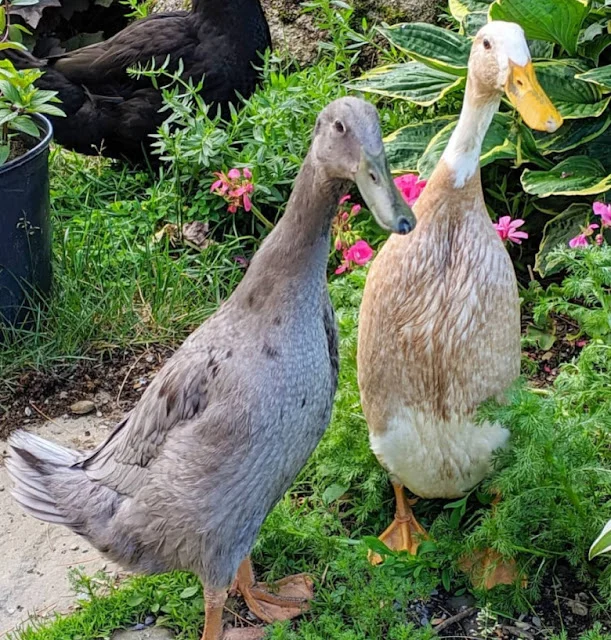
The Indian Runner duck, a distinct variety of Anas platyrhynchos domesticus, represents one of the most anatomically unique and historically significant breeds in the domestic avian world. Unlike the traditional waddling gait associated with most waterfowl, the Indian Runner is defined by its vertical posture and its ability to run with a fluid, human-like stride. This evolutionary adaptation is not merely a cosmetic curiosity but the result of centuries of selective breeding in Southeast Asia, where the birds were developed to serve as mobile biological pest control units within the complex ecosystems of rice paddies. Today, the breed is undergoing a resurgence in popularity, driven by its prolific egg-laying capabilities and its utility in sustainable, regenerative agriculture.

Historical Origins and the Darwinian Connection
The lineage of the Indian Runner duck can be traced back more than 2,000 years to the islands of Indonesia and parts of Indochina. Archaeological evidence, including ancient stone carvings found in the region, depicts upright ducks that bear a striking resemblance to the modern Runner. For centuries, these ducks were an integral part of the agrarian economy. Local farmers practiced a system of nomadic herding; ducks were driven to the rice fields at dawn to forage on snails, slugs, and insects that would otherwise damage the crops. By evening, the birds were herded back to enclosures, having provided both pest management and natural fertilization through their droppings.
The breed’s introduction to the Western world occurred in the mid-19th century. Shipments of the birds arrived in the United Kingdom around 1835, where their unusual silhouette immediately captured the attention of naturalists and poultry fanciers alike. Notably, Charles Darwin, the father of evolutionary biology, took a keen interest in the breed. Darwin referred to them as "penguin ducks" due to their erect stance and narrow bodies. His observations of the Indian Runner contributed to his broader studies on the variation of animals under domestication, illustrating how human-led selection could radically alter the skeletal structure and gait of a species from its wild Mallard ancestors.

By the late 1800s, the breed had migrated to the United States, gaining official recognition by the American Poultry Association in 1898. Its arrival revolutionized the duck industry, which had previously focused primarily on meat production. The Runner duck proved that waterfowl could rival chickens in egg productivity, leading to a shift in how small-scale farmers managed their flocks.
Anatomical Morphology and Locomotion
The defining characteristic of the Indian Runner is its vertical orientation, typically held at an angle of 50 to 80 degrees relative to the ground. When startled or highly alert, the birds can achieve a 90-degree upright stance. This posture is made possible by the unique placement of their legs, which are set much further back on the body than those of a standard Mallard or Pekin duck.

Classified as a "light" breed, adult Indian Runners generally weigh between 3 and 5 pounds. Their bodies are elongated and cylindrical, often described by breeders as "soda bottle" or "bowling pin" shaped. This streamlined physiology, combined with the rear-mounted leg placement, allows them to run rather than waddle. While most ducks expend significant energy rocking side-to-side to maintain balance on land, the Runner moves with a rapid, straight-line efficiency.
Despite their agility on land, Indian Runners are flightless. Their wings are disproportionately small and lack the muscular power required to lift their body weight into sustained flight. However, they remain excellent swimmers and retain the high-energy temperament of their wild ancestors. This combination of traits—high mobility on land and an inability to fly away—makes them exceptionally well-suited for controlled agricultural environments and backyard homesteads.

Prolific Egg Production and Commercial Viability
From a commercial and self-sufficiency perspective, the Indian Runner is prized for its reproductive efficiency. While many domestic duck breeds lay only seasonally, a healthy Indian Runner female can produce between 180 and 250 eggs per year. In some elite breeding lines, individuals have been recorded laying upwards of 300 eggs annually, a feat that rivals high-production chicken breeds like the Leghorn.
The eggs are typically medium to large, weighing approximately 70 to 80 grams. The shell color varies depending on the specific strain, ranging from a stark, porcelain white to a subtle light green or blue. Beyond the sheer volume of production, duck eggs are increasingly sought after in the culinary world for their high fat content and richer flavor profile, which makes them superior for baking and gourmet applications.

The breeding habits of the Indian Runner reflect their history as "working" birds. Because they were bred for mobility and constant foraging, they have largely lost the "broody" instinct found in other breeds. A broody duck is one that insists on sitting on a nest to hatch eggs; Indian Runners rarely exhibit this behavior, preferring to remain active and on the move. While this is an advantage for egg collection, it necessitates the use of incubators or "foster" mothers (such as Muscovy ducks or chickens) if a farmer intends to hatch new ducklings.
Agricultural Utility: Integrated Pest Management
The most significant modern application of the Indian Runner duck is in the field of Integrated Pest Management (IPM). As global agriculture moves away from synthetic pesticides due to environmental and health concerns, the "duck-and-rice" or "duck-and-vineyard" model is seeing a global revival.

In South Africa’s Stellenbosch wine region, for example, the Vergenoegd Löw Wine Estate famously employs a "workforce" of over 1,000 Indian Runner ducks. These birds are released into the vineyards daily to hunt for white dune snails, a persistent pest that can devastate grapevines. By using ducks, the estate has significantly reduced its reliance on chemical molluscicides, protecting the local water table and enhancing the biodiversity of the vineyard.
The ducks are particularly effective because of their high metabolism and narrow bodies. They can navigate between tightly planted rows of crops without causing the trampling damage that larger livestock might inflict. Furthermore, their manure serves as a high-nitrogen fertilizer, closing the nutrient loop in a sustainable farming system. This symbiotic relationship—where the ducks receive a high-protein diet from the pests and the farmer receives pest control and fertilizer—is a cornerstone of regenerative agriculture.

Diversity of Varieties and Conservation Status
The Indian Runner is the most diverse duck breed in terms of color patterns. The Poultry Club of Great Britain and the American Poultry Association recognize a wide array of varieties, including:
- Fawn and White: The most traditional and widely recognized pattern.
- White: Often used in commercial egg operations.
- Chocolate, Black, and Blue: Solid-colored varieties prized by exhibition breeders.
- Mallard and Trout: Patterns that mimic the ancestral wild coloration.
Currently, the Indian Runner is listed in the "Recovering" category by The Livestock Conservancy. This designation indicates that while the breed was once in decline due to the industrialization of poultry farming and the dominance of the Pekin duck, its numbers are now steadily increasing. The preservation of the Indian Runner is considered vital for maintaining genetic diversity in domestic waterfowl, ensuring that the traits of disease resistance, high egg production, and foraging agility are not lost to the uniformity of modern factory farming.

Behavioral Traits and Domestic Management
In terms of temperament, Indian Runners are often characterized as high-strung or skittish compared to the more sedentary meat breeds. They possess a strong flocking instinct; when one bird moves, the entire group follows in a synchronized, "soldier-like" fashion. This behavior makes them easy to herd but requires handlers to move slowly and predictably to avoid causing panic.
For domestic keepers, the Runner duck offers a sociable and entertaining addition to a farm. They are highly curious and will spend the majority of their daylight hours investigating every corner of their enclosure for hidden insects. Because of their high energy levels, they require more space than other breeds to prevent stress. A secure, predator-proof enclosure is essential, as their inability to fly makes them vulnerable to foxes, dogs, and birds of prey.

Broader Ecological Impact and Future Outlook
The resurgence of the Indian Runner duck is emblematic of a larger shift in global food systems toward decentralized and ecological farming. As climate change alters pest cycles and increases the cost of chemical inputs, the biological solutions provided by heritage breeds like the Runner become increasingly valuable.
The breed’s impact extends beyond the farm. In educational settings, Indian Runners serve as a primary example of how selective breeding can adapt a species to a specific niche—in this case, the transition from a water-reliant flyer to a land-based runner. Their role in history, from the ancient paddies of Java to the scientific notebooks of Charles Darwin, secures their place as one of the most important domesticated animals in human history.

As more small-scale farmers and commercial vineyards adopt these "bowling pins with legs," the Indian Runner duck is poised to move from a backyard novelty to a central player in the future of sustainable food production. Their unique combination of aesthetic charm, record-breaking egg production, and ecological utility ensures that this ancient breed will continue to run through the fields of the 21st century.
