
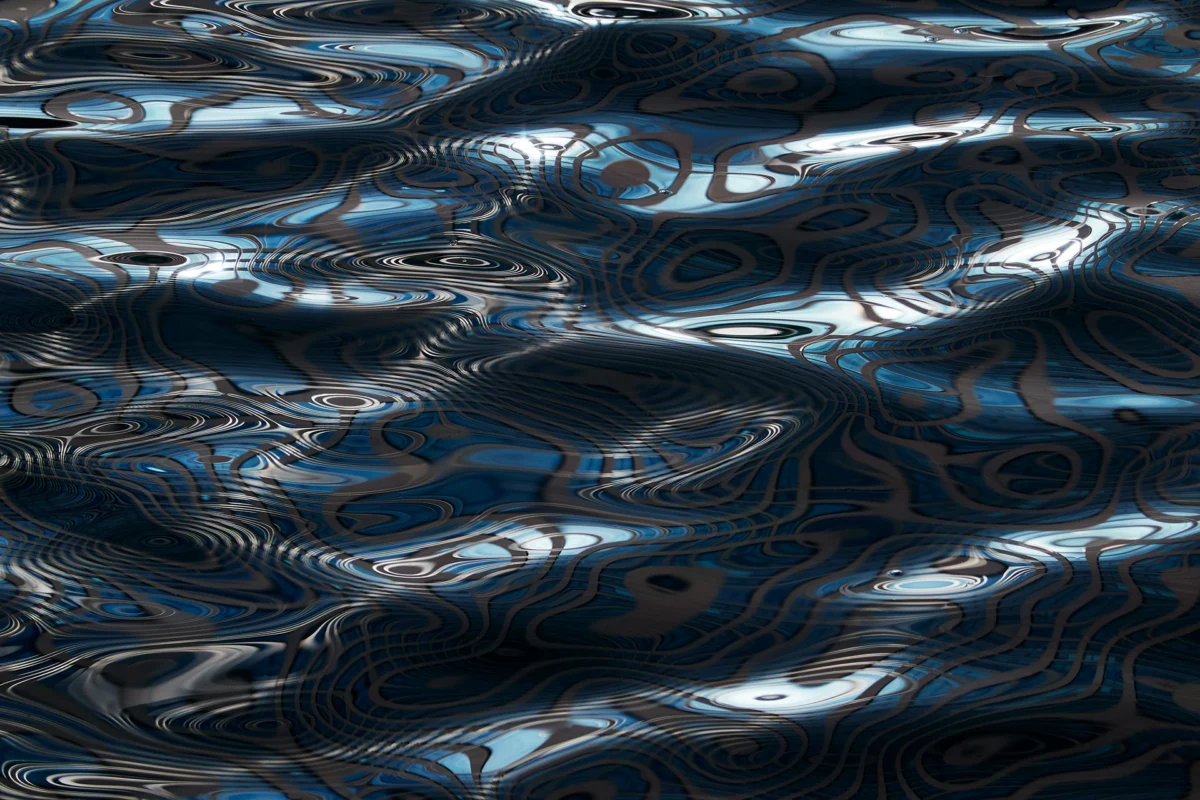
When encountering images from the "Fleeting Reflections" series for the first time, viewers often surmise a sophisticated reliance on digital manipulation, particularly Photoshop. However, the creator of this captivating body of work consistently asserts that these intricate and often painterly abstractions are captured entirely in-camera. This dedication to authentic, unadulterated photographic capture — relying on the interplay of light, glass, steel, and water — forms the bedrock of a project meticulously developed over more than a decade in the bustling financial district of Canary Wharf, London. It is a testament to the power of sustained observation, disciplined practice, and profound patience, challenging conventional notions of what constitutes impactful abstract and nature photography.
Canary Wharf: An Unconventional Muse for Abstract Art
Canary Wharf, renowned globally as a nexus of commerce and modern architecture, might seem an unlikely canvas for abstract, nature-inspired photography. Its towering edifices of glass and steel, the constant ebb and flow of urban life, and the docklands’ utilitarian waters present a stark contrast to the dramatic landscapes typically associated with nature photography. Yet, for the artist behind "Fleeting Reflections," this densely urbanized environment has become an inexhaustible source of visual wonder. Rather than viewing the district as a mere collection of buildings, the photographer perceives it as an elaborate "set of light sources," where sunlight, artificial illumination, and ambient atmospheric conditions converge to project a dynamic palette of colours, lines, and forms onto the water’s surface.

This urban-aquatic interface is where the magic truly unfolds. The wind, a natural sculptor, continuously reconfigures these reflected lights into an ever-changing tapestry of waves, ripples, ribbons, and fractured patterns. Passing boats leave trails that smear and distort reflections, transforming sharp architectural lines into fluid, hand-drawn gestures. Even transient elements like diesel slicks introduce iridescent interference patterns that vanish as quickly as they appear, offering ephemeral bursts of colour and texture. It is this constant state of flux, this inherent dynamism of the urban waterscape, that provides the rich, raw material for the "Fleeting Reflections" series. The artist’s role, as described, is not to impose a vision but to "listen" to this environment, capturing its fleeting expressions with meticulous attention.
The Foundational Pillars: Accessibility, Repeatability, and Patience
The sustained success and artistic depth of "Fleeting Reflections" are rooted in three fundamental principles that defy many prevailing assumptions in contemporary photography: accessibility, repeatability, and patience. These are not merely technical considerations but philosophical commitments that underscore the entire creative process.
-
Accessibility: The Proximity Advantage

A quiet yet pervasive myth in nature photography posits that truly compelling images necessitate journeys to remote, untouched wildernesses or spectacular natural wonders. The "Fleeting Reflections" series powerfully refutes this. The entirety of this extensive project has emerged from a mere square mile of water within Canary Wharf. The profound advantage here is sheer accessibility. The location is easily reachable, allowing for frequent, spontaneous visits. The photographer does not require costly flights, special permits, extended leaves of absence, or arduous pre-dawn hikes. Instead, creative opportunities arise even during brief 40-minute windows, or under conventionally "bad" lighting conditions, such as heavy rain that transforms the water’s surface into hammered metal.
This ease of access is far from trivial; it is absolutely fundamental. It enables the photographer to develop an intimate familiarity with the subject, moving beyond superficial observations to uncover deeper nuances. Regular engagement fosters an understanding of how light, weather, and human activity perpetually reshape the environment. This constant, unburdened presence allows for an honest and thorough study of the subject, stripping away the pressure often associated with capturing "the perfect shot" in a limited timeframe at a distant location. It demonstrates that creative depth often correlates directly with the depth of engagement, which accessibility facilitates.
-
Repeatability: The Ever-Changing Canvas
The second pillar, repeatability, emphasizes the importance of choosing a subject that possesses an inherent capacity for continuous transformation, surprise, and the generation of new possibilities with each encounter. The docks of Canary Wharf exemplify this quality. No two moments are ever precisely alike. A calm morning might yield long, serene stretches of reflected colour, whereas a blustery afternoon can shatter those same reflections into jagged, serrated lines reminiscent of abstract expressionist paintings or even the iconic waveform of Joy Division’s Unknown Pleasures. The momentary passage of a vessel can instantly smear and soften reflections, imbuing them with an organic, hand-drawn quality. These transient phenomena, like the fleeting iridescent sheen of diesel on the water, might last only minutes and never reappear in the same configuration.

This dynamic environment allows the artist to revisit the "same" scene hundreds, if not thousands, of times, yet consistently produce fresh work. The act becomes less about photographing static architecture and more about documenting the "behaviour" of light and water. This constant variability directly informs the in-camera techniques employed, such as fast burst rates to capture micro-moments of water’s ephemeral patterns before they collapse, and multiple exposure modes to layer gestures and deepen the inherent abstraction. The shifting palette of colours with the weather, the bending geometry with the wind, and the changing mood with the tide provide an inexhaustible supply of raw material. Without such repeatability, the photographic output might be limited to mere postcards; with it, a substantial and evolving body of work emerges.
-
Patience: The Unseen Engine of Creation
Perhaps the most underestimated and crucial pillar is patience. This attribute permeates every stage of the "Fleeting Reflections" project, beginning long before the shutter is pressed. It involves waiting for the confluence of suitable weather conditions and available time. Hard sunlight on still water yields vastly different results from flat light during a drizzle, and not every combination is creatively useful. Consequently, the photographer often walks for miles, meticulously checking angles and observing the water, sometimes finding nothing that aligns with the day’s conditions.
Even when conditions are promising, patience transforms into a rigorous physical and mental exercise. The artist may remain at a single location for up to four hours, capturing as many as 3,000 frames of what, to an casual observer, might appear to be "the same scene." This intensive, sustained observation is driven by the quest for that precise, elusive instant when colour, rhythm, structure, and tension coalesce perfectly. This cannot be rushed; it demands sustained presence and keen observational acumen.

The demand for patience continues post-capture. Thousands of nearly identical-looking images are downloaded, initiating a slow, deliberate culling process on an iMac. This phase is where discipline is paramount. The photographer purposefully sifts through the vast archive, seeking the exact frame where every element aligns, rigorously rejecting the overwhelming majority. The "keep rate" is notably low, reflecting a commitment to only the most impactful and refined images.
Furthermore, the processing itself is characterized by restraint. Working primarily in Capture One, the photographer employs only global adjustments such as levels, clarity, sharpness, and contrast. There is an explicit avoidance of manipulating shapes in Photoshop, a deliberate choice rooted in a philosophical and aesthetic commitment to honesty. The aim is not to "create" forms but to "reveal what was already there in the water," allowing the artist to genuinely affirm, "this happened."
A Chronology of Maturation and Public Recognition
The journey of "Fleeting Reflections" from a personal obsession to a publicly acclaimed body of work exemplifies the longest form of patience: allowing the work to mature organically. For several years, the project remained largely private, a continuous cycle of shooting, refining, and learning to discern essential visual elements from mere noise. It took approximately seven years of dedicated, quiet work before the artist felt the project had achieved sufficient coherence and depth to be presented to a publisher.

This protracted period of development culminated in the publication of the first volume, Fleeting Reflections, in 2017 by Triplekite. This milestone marked the project’s formal introduction to a wider audience, leading to its exhibition at the Greenwich Gallery in 2017 and subsequently at the Anise Gallery in London in 2019. The series’ continued evolution and sustained creative output led to the release of a second volume, Fleeting Reflections II, in 2023.
These public milestones, while signifying recognition and success, belie the true scale of the underlying effort. They are, in the artist’s own words, merely the "visible tip of the project." Beneath this surface lies thousands of hours dedicated to walking, watching, waiting, shooting, editing, rejecting, and persistently returning to the subject. This narrative underscores that significant artistic achievements are often the product of slow, deliberate, and obsessive dedication rather than rapid, linear progression.
Broader Implications for Contemporary Photography
The "Fleeting Reflections" series offers profound implications for the broader photographic community, challenging several paradigms and offering a compelling alternative model for creative practice.

-
Challenging the Digital Manipulation Narrative: In an era where digital tools like Photoshop are ubiquitous and often integral to image creation, the "Fleeting Reflections" project stands as a powerful testament to the enduring potential of in-camera capture. By achieving such complex and evocative abstractions without post-capture manipulation of forms, the work reaffirms the camera’s capacity as a direct observational and expressive instrument. This approach resonates deeply with photographers and viewers who value authenticity and the unadulterated photographic moment, offering a counter-narrative to the increasingly blurred lines between photography and digital art.
-
Redefining "Nature" and "Abstract" Photography: The series broadens the scope of both nature and abstract photography. It demonstrates that "nature" is not confined to pristine wildernesses but can be found and interpreted within highly urbanized environments. The interplay of man-made structures and natural forces (light, wind, water) creates a unique urban ecosystem that is rich with abstract potential. This expands the definition of what constitutes a worthy subject, encouraging photographers to seek beauty and complexity in their immediate surroundings.
-
The Value of Local Exploration: Perhaps the most actionable insight for aspiring and established photographers alike is the emphasis on local exploration. The project asserts that one does not need a dramatic landscape or exotic locale to create personal and distinctive work. Instead, access, repeatability, and patience applied to an everyday, accessible subject — be it a canal, a harbour wall, a city marsh, or even rainwater pooling in a car park — can yield profound results. This democratizes the pursuit of meaningful photography, shifting the focus from travel and equipment to sustained engagement and deep observation.
-
The Discipline of Seeing: Ultimately, "Fleeting Reflections" champions the discipline of seeing. It argues that patience is not a passive waiting but a highly active decision to invest oneself in a subject for as long as it takes to truly understand it. Over time, this intense attention becomes palpable in the photographs. While viewers might initially be drawn to the vibrant colours and intriguing shapes, what they are truly encountering is the profound level of attention and sustained commitment poured into each image. The work serves as a powerful reminder that the most compelling art often emerges not from grand gestures, but from meticulous, long-term dedication to observing the subtle, fleeting beauty in the ordinary.

The "Fleeting Reflections" series, through its meticulous methodology and compelling visual output, stands as a significant contribution to contemporary photography. It reasserts the power of the photographer’s eye, the value of sustained engagement with a chosen subject, and the profound artistic potential hidden within accessible, everyday environments.
