
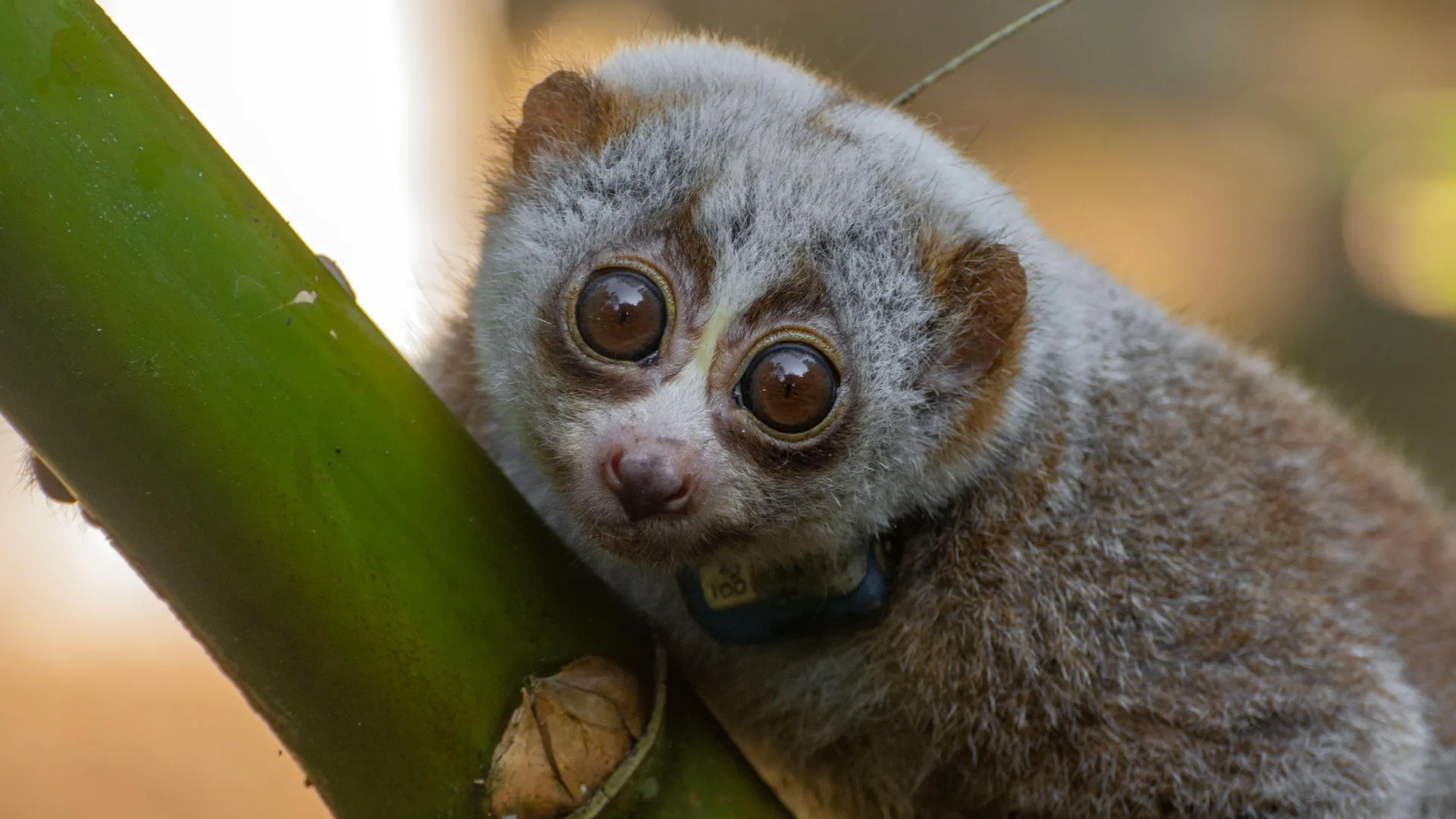
A new scientific study suggests that returning rescued wildlife to natural habitats does not always end in success. In some situations, animals released after time in captivity face serious risks, and the wild can become what researchers describe as a "death trap." This alarming finding, detailed in the journal Global Ecology and Conservation, sheds critical light on the complex challenges inherent in wildlife reintroduction programs, particularly for highly territorial and venomous species such as the slow loris. The research, a collaborative effort led by primatologist Professor Anna Nekaris OBE of Anglia Ruskin University, alongside collaborators from the conservation group Plumploris e.V. and the University of Western Australia, meticulously examined the post-release fate of Bengal slow lorises (Nycticebus bengalensis) in Bangladesh, revealing a sobering reality for these often-trafficked primates.
The Unsettling Findings from Bangladesh
The study’s methodology involved fitting nine Bengal slow lorises with radio collars to meticulously track their movements and survival rates following their release into a national park in northeastern Bangladesh. This particular park had previously been utilized for wildlife releases, suggesting a perceived suitability that the new research profoundly challenges. The results were stark and deeply concerning: only two of the nine animals survived after returning to the forest. A devastating three individuals perished within a mere 10 days of their release, while another four succumbed to unknown causes within six months. This represents an alarming mortality rate of nearly 78% within half a year.
Further investigation into these tragic outcomes provided crucial insights. Researchers successfully recovered four of the seven deceased animals’ bodies, and forensic examination revealed unequivocal evidence: all showed signs of having been killed by other slow lorises. These findings directly contradict the common assumption that releasing rescued animals back into their natural environment is an inherently positive act of conservation, underscoring the critical need for a more nuanced and scientifically informed approach to reintroduction.
The Allure and Peril of the Slow Loris
Slow lorises, with their distinctly large, captivating eyes and seemingly gentle facial features, possess an undeniable charm that has, regrettably, made them highly sought after in the illegal wildlife trade. This unfortunate demand has propelled them to rank among the most heavily trafficked primates globally. These nocturnal primates, native to Southeast Asia, are often captured from the wild, subjected to horrific conditions during transport, and sold as exotic pets in clandestine markets, often having their teeth painfully clipped to prevent venomous bites to their handlers or owners. This cruel practice not only inflicts immense suffering but also severely compromises their ability to survive if ever returned to the wild, as their unique dentition is crucial for both feeding and defense.
The conservation status of all slow loris species is dire, with the International Union for Conservation of Nature (IUCN) Red List categorizing them as Critically Endangered, Endangered, or Vulnerable. The Bengal slow loris (Nycticebus bengalensis), the focus of this study, is listed as Endangered, signifying a very high risk of extinction in the wild. Given their threatened status and the relentless pressure from the illegal trade, slow lorises are frequently the subjects of rescue operations by conservation groups and government agencies. These rescued individuals are then often earmarked for release into the wild as part of broader conservation efforts aimed at bolstering or rebuilding dwindling wild populations. However, the recent findings cast a long shadow over the efficacy and ethical implications of such well-intentioned interventions without adequate planning and post-release support.
The Venomous Truth: Territoriality and Fatal Conflicts
A key factor contributing to the high mortality rate observed in the study lies in the unique biology and behavior of slow lorises. These primates are not only extremely territorial, fiercely defending their established home ranges from intruders, but they are also the world’s only venomous primates. Their venom is produced by a gland on their upper arm, which they lick to mix with saliva, creating a potent cocktail. This venom is then delivered through specialized comb-like lower incisors during a bite. While the venom can cause anaphylactic shock in humans, its primary purpose in the wild is defense against predators and, critically, aggression towards conspecifics during territorial disputes.
The recovered bodies of the deceased lorises presented clear evidence of this deadly territoriality. They exhibited obvious bite wounds on the head, face, and digits—areas typically targeted in inter-loris conflicts. This forensic evidence strongly indicates that these fatal encounters with resident slow loris populations were directly responsible for their deaths. The released animals, likely disoriented and lacking established territories, inadvertently encroached upon the domains of wild lorises, triggering aggressive and ultimately lethal confrontations. This highlights a profound oversight in many release programs: the failure to adequately assess the existing population density and territorial dynamics of the release site.
The Shadow of Captivity: A Hindrance to Survival
The research also uncovered a critical correlation between the duration of an animal’s captivity and its post-release survival prospects. Animals that had spent longer periods in captivity tended to survive for fewer days after being released, suggesting that prolonged time away from their natural environment significantly compromises their ability to adapt and thrive in the wild. Captivity can lead to a loss of essential wild instincts, such as foraging skills, predator recognition, and the ability to navigate complex social structures or avoid territorial conflicts.
Furthermore, the study observed distinct behavioral differences between the released lorises and their wild counterparts. The released individuals moved around more extensively and appeared to be more alert than wild Bengal slow lorises typically are. This heightened activity and vigilance could be interpreted as a sign of stress, disorientation, or a desperate search for suitable, unoccupied territory. In contrast, the two animals that miraculously survived the release traveled across significantly larger areas than those that perished. This behavioral pattern strongly suggests that their survival hinged on their ability to avoid confrontations by traversing vast distances to leave established territories and minimize interactions with resident, venomous lorises. This highlights the immense challenge faced by captive-bred or long-term captive animals in finding a niche in an already populated ecosystem.
A Broader Conservation Challenge: Inadequate Monitoring and "Dumping Grounds"
The issues brought to light by this slow loris study are not isolated. While large and charismatic animals, such as big cats, elephants, or rhinos, often receive intensive monitoring post-release due to their public appeal and conservation significance, many smaller species, including a vast array of primates, birds, and reptiles, are frequently released with minimal or no follow-up. This critical lack of post-release tracking means that the actual outcomes of countless reintroduction programs often remain unknown, creating a significant blind spot in conservation efforts. Without data on survival rates, dispersal patterns, and integration into wild populations, conservationists cannot effectively evaluate the success of their programs or refine methodologies.
Hassan Al-Razi, lead author of the study and team leader of Plumploris e.V. Bangladesh, underscored this broader systemic issue. He noted that "rescue and release have become an increasingly common practice in Bangladesh," affecting many wild animals, not just slow lorises. However, Al-Razi critically pointed out that "in many cases, these releases are conducted inappropriately." He lamented that for forest-dwelling species, release sites are often chosen based on "logistical convenience rather than ecological suitability." This practice has led to a concerning phenomenon where "certain forests have effectively become dumping grounds for rescued animals and and are no longer appropriate release sites," increasing the pressure on existing wild populations and likely leading to similar tragic outcomes across various species.
Calls for a Paradigm Shift in Wildlife Reintroduction
The researchers stress unequivocally that truly successful wildlife releases demand meticulous planning and a significant departure from current ad-hoc practices. Professor Anna Nekaris OBE, Senior author and head of the Little Fireface Project, articulated this urgency: "It’s assumed that returning confiscated or rescued animals to the wild is always a positive conservation story. Our research shows that for highly territorial species like slow lorises, releasing them into areas that are already densely populated can be a death trap."
She further elaborated on the disconnect between public expectation and scientific reality: "Many rescued endangered species are often released because the public expects it, but for animals such as the Bengal slow loris, this is not always the best course of action. Without fully understanding the animal’s behaviour, its time spent in captivity and the density of resident populations at the release site, reintroductions may do more harm than good."
To improve the chances of success, a multi-faceted approach is essential:
- Detailed Habitat Assessments: Before any release, comprehensive evaluations of potential sites are critical. This includes assessing the carrying capacity of the habitat (how many animals it can sustainably support), the availability of suitable food resources, the presence and density of existing slow loris populations, and the presence of natural predators.
- Individual Animal Suitability: Each animal designated for release must undergo a thorough assessment of its health, physical condition, and behavioral readiness. This involves evaluating its ability to forage independently, recognize and avoid predators, and navigate its environment. The duration of its captivity and any specific rehabilitation training it received should also be carefully considered.
- Tailored Rehabilitation Guidelines: Pre-release conditioning programs, specifically designed for the species in question, can significantly enhance survival prospects. For slow lorises, this might involve re-teaching foraging skills, exposing them to natural predators in a controlled environment, and gradually acclimatizing them to wild conditions.
- Long-Term Monitoring: The study forcefully argues against the common practice of releasing animals without follow-up. Implementing robust, long-term monitoring strategies using technologies like radio telemetry, GPS trackers, or even camera traps is crucial to understanding post-release survival, dispersal, and integration. While resource-intensive, such monitoring provides invaluable data to refine future release protocols and justify conservation investments.
The Global Landscape of Wildlife Trafficking and Conservation
The illegal wildlife trade is a global crisis, estimated to be worth billions of dollars annually, ranking among the largest illicit trades alongside drugs, arms, and human trafficking. Organizations like CITES (Convention on International Trade in Endangered Species of Wild Fauna and Flora) work to regulate international trade in endangered species, but enforcement remains a monumental challenge. The sheer volume of animals confiscated from the trade places immense pressure on rescue centers and sanctuaries worldwide. These facilities often operate with limited resources, struggling to provide adequate long-term care for hundreds or thousands of animals, let alone conduct the kind of rigorous pre-release assessment and post-release monitoring that this study advocates for.
The ethical dilemma is profound: is it more humane to keep a slow loris in a sanctuary, where its basic needs are met but it can never truly be wild, or to release it into an environment where its chances of survival are precariously low? This research compels the conservation community to confront this question head-on, advocating for evidence-based decision-making over well-intentioned but potentially harmful actions.
Policy Implications and Future Directions
The findings of this study carry significant implications for national conservation policies, particularly in countries like Bangladesh, where wildlife rescue and release programs are commonplace. There is an urgent need for government agencies, NGOs, and research institutions to collaborate in developing and implementing standardized, scientifically rigorous protocols for wildlife reintroduction. This includes establishing clear guidelines for site selection, pre-release conditioning, and mandatory post-release monitoring for all species, not just the large and charismatic ones.
Funding structures also need to be re-evaluated. Currently, much of the conservation funding and public donations are directed towards the dramatic act of rescuing animals. However, this study highlights the critical need to allocate substantial resources towards the often-overlooked and more expensive phases of comprehensive pre-release assessment, rehabilitation, and long-term monitoring. Public education also plays a vital role in managing expectations, ensuring that the public understands that "rescue" does not automatically equate to a "happy ending" in the wild, and that true conservation success requires sustained, scientific effort.
In conclusion, while the act of returning rescued wildlife to its natural habitat is often celebrated as a triumph of conservation, this groundbreaking research into Bengal slow loris releases provides a stark and necessary reality check. It underscores that good intentions alone are insufficient. For highly territorial and specialized species, particularly those impacted by the trauma of illegal trade and captivity, release into an unassessed, potentially overpopulated habitat can indeed transform the wild into a "death trap." Moving forward, a paradigm shift is essential: one that prioritizes meticulous scientific planning, species-specific rehabilitation, thorough habitat assessments, and sustained post-release monitoring to ensure that conservation efforts truly contribute to the survival and well-being of endangered species. Only then can we ensure that our efforts to save these vulnerable creatures do more good than harm.
