
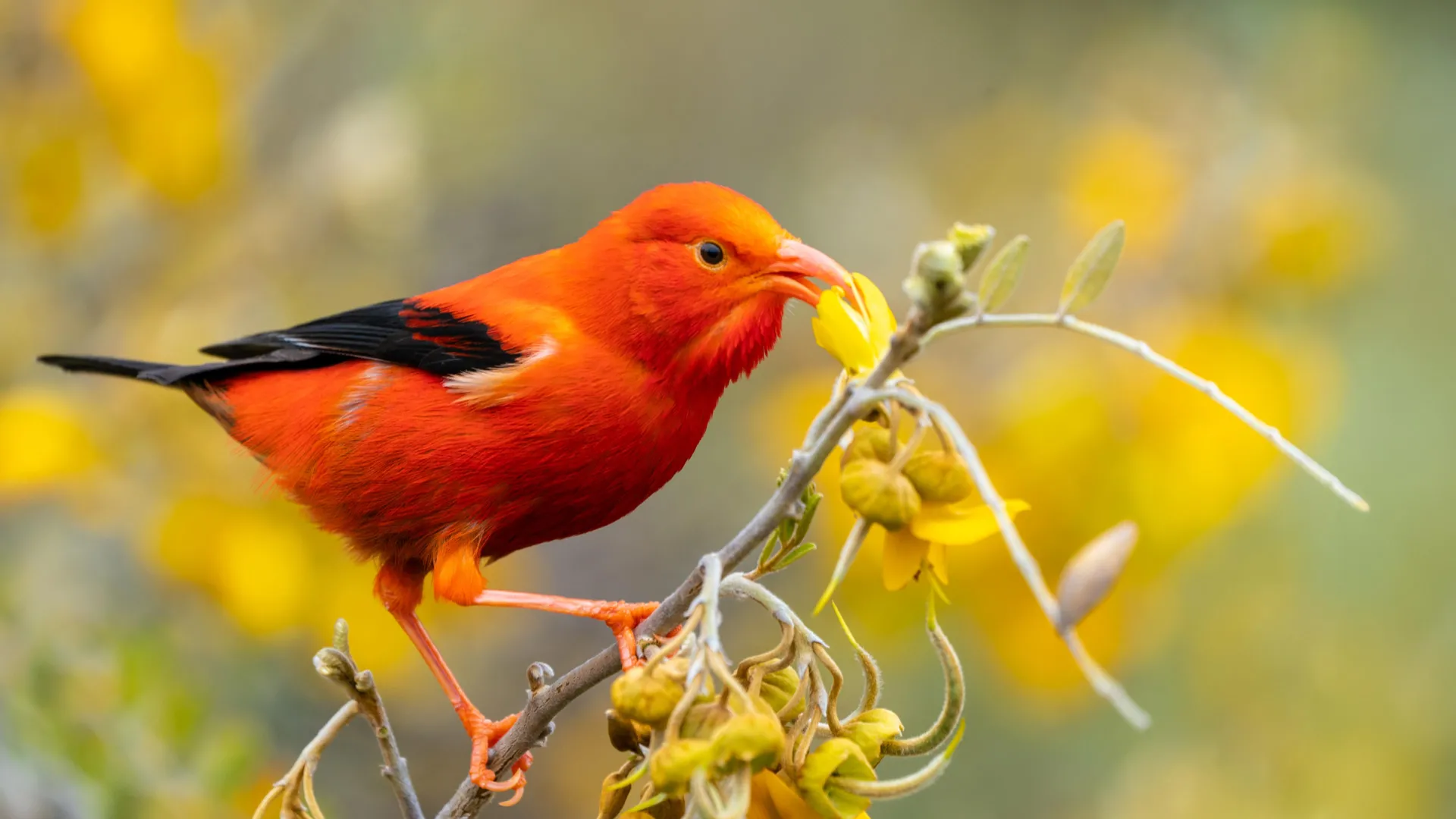
A groundbreaking new study led by a researcher at the University of Hawaiʻi at Mānoa has unveiled a sobering reality for the islands’ imperiled avifauna: almost every forest bird species in Hawaiʻi possesses the capacity to transmit avian malaria. This pervasive ability to spread infection offers a critical explanation for the disease’s ubiquitous presence across mosquito-inhabited areas throughout the Hawaiian archipelago, underscoring the immense challenges faced by conservation efforts striving to preserve some of the world’s most unique and endangered birds.
The comprehensive findings, meticulously detailed and published on February 10 in the prestigious journal Nature Communications, represent a monumental leap in understanding the dynamics of avian malaria in Hawaiʻi. Researchers detected the insidious parasite, Plasmodium relictum, at an alarming 63 out of 64 locations sampled statewide. These sites encompassed a diverse array of forest ecosystems, each characterized by distinct mixes of native and introduced bird species, indicating that the parasite’s reach is not confined to specific ecological niches or avian communities. The illness, caused by this highly adaptable generalist parasite, has long been recognized as a primary driver behind the precipitous declines and tragic extinctions of Hawaiʻi’s iconic native honeycreepers, a family of birds unparalleled in their evolutionary radiation and ecological significance.
Christa M. Seidl, who spearheaded this pivotal research as part of her doctoral studies at the University of California, Santa Cruz, and now serves as the mosquito research and control coordinator for the Maui Forest Bird Recovery Project, articulated the gravity of the study’s revelations. "Avian malaria has taken a devastating toll on Hawaiʻi’s native forest birds, and this study shows why the disease has been so difficult to contain," Seidl stated. "When so many bird species can quietly sustain transmission, it narrows the options for protecting native birds and makes mosquito control not just helpful, but absolutely essential." Her words resonate with an urgent call to action, highlighting the need for robust, innovative interventions to stem the tide of this ecological catastrophe.
The Avian Malaria Threat: A Historical Context in Hawaiʻi
To fully grasp the implications of these new findings, it is crucial to understand the historical context of avian malaria in Hawaiʻi. The Hawaiian Islands, due to their extreme isolation, fostered an unparalleled evolutionary laboratory, giving rise to an extraordinary array of endemic species, including more than 100 species of honeycreepers, each exquisitely adapted to specific ecological niches. Lacking exposure to many continental pathogens, these native birds evolved without natural immunities, rendering them exceptionally vulnerable to introduced diseases.
The arrival of avian malaria in Hawaiʻi is intrinsically linked to two significant introductions: the southern house mosquito (Culex quinquefasciatus) and non-native bird species. Culex quinquefasciatus was inadvertently introduced to the islands around 1826, likely via whaling ships. It quickly established itself in the warm, humid lowlands, proliferating in stagnant water sources. While the mosquito itself was a nuisance, it became a vector for disease only after the introduction of its pathogen. Beginning in the late 19th and early 20th centuries, numerous species of non-native birds were brought to Hawaiʻi, some intentionally for aesthetic reasons, others accidentally. Many of these introduced birds carried Plasmodium relictum, a parasite to which they had evolved some level of resistance. When these infected birds were bitten by the newly established Culex quinquefasciatus, the parasite cycle was completed, unleashing a silent epidemic upon the naïve native bird populations.
Early observations of native bird declines were often attributed to habitat loss or predation, but by the mid-20th century, scientists began to connect the dots to avian malaria. Research intensified, confirming Plasmodium relictum as the primary causative agent and Culex quinquefasciatus as the principal vector. For decades, the conventional wisdom held that higher-elevation forests served as refugia for native birds, as cooler temperatures at these altitudes limited mosquito survival and reproduction. However, as this new study and other concurrent research indicate, this historical buffer is rapidly eroding due to climate change. The chronological progression of these introductions and the subsequent disease spread paints a grim picture of escalating vulnerability, culminating in the current crisis.
The Unprecedented Vulnerability of Native Honeycreepers
Avian malaria operates by attacking the red blood cells of infected birds, leading to a cascade of debilitating effects including anemia, organ failure, and significantly reduced survival rates. For Hawaiʻi’s endemic birds, the consequences have been nothing short of catastrophic. The ʻIʻiwi (Drepanis coccinea), a stunning scarlet honeycreeper, faces an approximate 90 percent mortality rate if infected. This vibrant bird, a cultural icon and a vital pollinator, has seen its populations plummet, retreating to ever-higher, cooler elevations. Similarly, the ʻAkikiki (Oreomystis bairdi), a small, critically endangered honeycreeper endemic to Kauaʻi, is now considered functionally extinct in the wild, with its demise largely attributed to the relentless onslaught of avian malaria. What few individuals remain are largely confined to captive breeding programs, a desperate last resort to prevent total extinction.
Other species, like the Kiwikiu (Maui Parrotbill, Pseudonestor xanthophrys) and the ʻApapane (Himatione sanguinea), also suffer significantly from the disease, though with varying degrees of susceptibility. The ʻApapane, being somewhat more resistant, often serves as a reservoir species, capable of carrying the parasite for extended periods without succumbing, thereby contributing to the perpetuation of the disease cycle. This variability in host response has made the conservation puzzle even more complex, but the new study reveals an even more insidious aspect of the parasite’s strategy. The loss of these unique birds would not only diminish global biodiversity but also disrupt the intricate ecological relationships they have formed with native Hawaiian plants over millennia.
Chronic Infections Drive Ongoing Transmission Across Diverse Avian Hosts
One of the most profound revelations of the Seidl study is the mechanism behind the pervasive spread of avian malaria. Unlike many infectious diseases that rely on a limited number of "super-spreaders" or specific host species to maintain transmission, this research demonstrates that avian malaria in Hawaiʻi operates differently. A vast majority of forest birds—encompassing both native and introduced species—are at least moderately capable of infecting southern house mosquitoes. Crucially, the study found that even birds harboring very small, often subclinical, amounts of the parasite in their blood were still able to transmit the infection to mosquitoes. This finding shatters previous assumptions that only visibly sick or heavily infected birds were significant contributors to the disease’s spread.
The researchers conducted an extensive examination of blood samples from over 4,000 birds collected across the four main islands of Kauaʻi, Oʻahu, Maui, and Hawaiʻi Island. These comprehensive field data were then meticulously paired with rigorous laboratory experiments designed to quantify how readily mosquitoes became infected after feeding on these birds. The results were stark: native and introduced birds frequently exhibited similar levels of infectiousness, unequivocally demonstrating that both groups play a substantial role in perpetuating the parasite’s life cycle. This broad host range makes the parasite incredibly resilient to attempts at control.
"We often understandably think first of the birds when we think of avian malaria, but the parasite needs mosquitoes to reproduce and our work highlights just how good it has gotten at infecting them through many different birds," Seidl explained, emphasizing the parasite’s evolutionary cunning. This adaptability allows Plasmodium relictum to leverage the entire avian community as a network for transmission, ensuring its persistence even in varied forest environments. The fact that the disease was detected in 63 of 64 locations, despite varying bird compositions, powerfully illustrates this adaptability.
A further critical insight from the study is the discovery that birds can harbor chronic infections for extended periods—months, or even years. During this protracted phase, an infected bird may exhibit only mild symptoms, or even appear outwardly healthy, yet it remains fully capable of transmitting the parasite to feeding mosquitoes. The researchers estimate that this long-lasting, low to moderate infectious stage is the primary engine driving most of the statewide transmission of avian malaria. This chronic carriage, often unnoticed by human observers, creates a persistent reservoir of infection that is incredibly difficult to disrupt through conventional means, making the battle against the disease far more complex than previously understood.
Climate Change: A Shrinking Sanctuary for Vulnerable Species
The parasite’s remarkable ability to infect a broad spectrum of bird species provides a compelling explanation for the widespread distribution of avian malaria throughout Hawaiʻi. The study’s findings grimly suggest that very few, if any, mosquito-infested habitats across the islands remain truly free of transmission risk. This already dire situation is being exacerbated by the accelerating impacts of climate change.
As global temperatures continue to rise, Hawaiʻi’s higher-elevation forests, once considered safe havens for vulnerable native birds due to their cooler, mosquito-unfriendly climates, are now increasingly under threat. Warming trends allow Culex quinquefasciatus mosquitoes to expand their range into these previously inaccessible altitudes. With the mosquitoes come the parasites, systematically eroding the last remaining refugia for species like the ʻIʻiwi and Kiwikiu. This upward march of the disease is pushing native birds towards the literal tops of mountains, leaving them with nowhere else to retreat. Scientists project that without aggressive intervention, many of Hawaiʻi’s remaining forest bird species could face extinction within the next decade or two as their habitats become entirely inundated by the disease. Data from the National Oceanic and Atmospheric Administration (NOAA) indicates a consistent warming trend in Hawaiʻi, with average temperatures increasing over the past century, a trend that directly correlates with the observed upward migration of mosquitoes.
The Hawaiian Islands are often described as a microcosm for global climate change impacts, and the avian malaria crisis is a stark illustration. The unique vulnerability of its endemic species, coupled with the rapid environmental shifts, presents an urgent case study for conservation strategies in a warming world. Conservationists warn that the window of opportunity to save these species is rapidly closing, emphasizing the need for immediate and decisive action.
Conservation Imperatives: The "Birds, Not Mosquitoes" Initiative
Given the severity of the threat and the widespread nature of transmission revealed by this study, the need for effective mosquito control has become paramount. The study’s authors and their affiliated organizations are deeply involved in the "Birds, Not Mosquitoes" initiative, a critical collaboration of academic institutions, state and federal agencies, non-profit organizations, and industry partners. This coalition is dedicated to advancing and implementing innovative mosquito control strategies specifically tailored to the unique challenges of Hawaiian bird conservation.
Traditional methods of mosquito control, such as widespread pesticide application, are generally deemed unsuitable for Hawaiʻi’s delicate ecosystems due to potential non-target impacts. Therefore, the "Birds, Not Mosquitoes" initiative is focusing on cutting-edge, environmentally sound approaches. Prominent among these is the Incompatible Insect Technique (IIT), which utilizes naturally occurring bacteria, Wolbachia, to suppress mosquito populations. Male mosquitoes carrying specific strains of Wolbachia are released into the wild. When these males mate with wild females that do not carry the same Wolbachia strain, the eggs do not hatch, effectively preventing reproduction. This species-specific approach offers a targeted, self-sustaining method to reduce Culex quinquefasciatus populations without harming other insects or the broader environment. Recent pilot projects on Maui and Kauaʻi have shown promising results in reducing mosquito numbers in targeted areas, providing a glimmer of hope.
The Maui Forest Bird Recovery Project, operating under the umbrella of the Pacific Cooperative Studies Unit within the College of Natural Sciences at the University of Hawaiʻi, is a key player in this collaborative effort. Their work, including the rigorous capture and handling of birds by trained ornithologists under strict state and federal permits for studies like Seidl’s, provides the essential data needed to guide these conservation strategies. The insights gained from Seidl’s research will directly inform the deployment of IIT and other control measures, directing resources to areas where they can have the most significant impact, especially in the remaining high-elevation refugia. The University of Hawaiʻi at Mānoa, as a leading research institution in the state, plays a crucial role in providing the scientific backbone for these innovative conservation solutions.
Broader Ecological Ramifications and the Path Forward
The potential loss of Hawaiʻi’s forest birds extends far beyond the individual species. Honeycreepers play vital roles in their ecosystems, acting as pollinators, seed dispersers, and insectivores. Their disappearance would trigger cascading effects, impacting native plant communities and altering forest structure and function. For instance, the ʻIʻiwi is a key pollinator for native lobeliads, a unique group of plants with specialized floral structures. The extinction of these birds would represent an irreplaceable loss of biodiversity, a diminishment of natural heritage, and a stark reminder of humanity’s impact on fragile island ecosystems. The Hawaiian Islands, already grappling with one of the highest extinction rates globally, cannot afford further ecological collapse.
The Seidl study serves as a stark warning but also as a critical roadmap. By unequivocally demonstrating the widespread transmission capability and the pervasive role of chronic infections, it clarifies that piecemeal approaches will not suffice. A comprehensive, landscape-scale strategy for mosquito suppression is not merely advisable but indispensable for the survival of Hawaiʻi’s forest birds. The "Birds, Not Mosquitoes" initiative, armed with this new understanding, is poised to accelerate the implementation of advanced vector control technologies.
The ongoing battle against avian malaria in Hawaiʻi represents one of the most urgent conservation challenges of our time. The scientific community, government agencies, and local communities are racing against the clock, striving to apply innovative solutions to protect these unique avian treasures. The hope is that through concerted effort, strategic intervention, and sustained commitment, Hawaiʻi’s skies will once again be filled with the songs and vibrant colors of its extraordinary native forest birds, spared from the silent, pervasive threat of avian malaria. The future of these birds now hinges on the success of these proactive and scientifically informed conservation efforts, representing a crucial test case for global biodiversity protection in the face of climate change and introduced diseases.
