
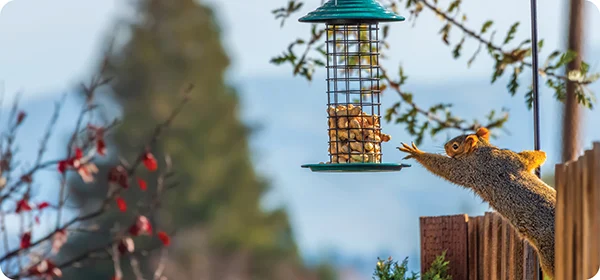
The age-old struggle between backyard bird enthusiasts and their often-uninvited critter guests has become a familiar narrative for many nature lovers. From the acrobatic prowess of squirrels to the persistent flocks of starlings, these visitors can quickly deplete valuable birdseed and damage expensive feeders, testing the patience of even the most dedicated hobbyist. Fortunately, a growing awareness and the availability of specialized solutions are empowering individuals to reclaim their feeders and ensure a more equitable dining experience for their feathered friends. This article explores the common challenges posed by backyard wildlife and outlines effective strategies, backed by expert advice, to mitigate these issues.
The Uninvited Guests: Understanding the Challenge
The allure of a well-stocked bird feeder is undeniable, not just for birds but for a variety of backyard wildlife. Squirrels, in particular, are renowned for their intelligence, agility, and insatiable appetite for birdseed. Their ability to navigate complex environments and their sheer determination often make them formidable adversaries for feeder owners. Reports from wildlife management organizations suggest that unchecked squirrel populations can consume up to 25% of the seed offered at backyard feeders, representing a significant financial and resource drain for hobbyists. Beyond squirrels, larger bird species, often labeled as "nuisance birds," can also dominate feeders, consuming food intended for smaller, more desirable species and driving them away. These congregations can become so significant that they prevent preferred birds from accessing food altogether.
Strategic Defense: Baffling Squirrels and Other Mammals
For many, the primary battleground is the persistent squirrel. Their ability to leap considerable distances and climb even seemingly smooth surfaces makes them a constant challenge. Wild Birds Unlimited, a leading retailer in backyard bird feeding supplies, emphasizes the importance of physical barriers and strategic placement to deter these agile mammals.
Pole-Mounted Feeder Protection
For feeders mounted on poles, the "stovepipe baffle" has emerged as a highly effective defense mechanism. These smooth, wide metal cylinders, typically measuring 6 to 8 inches in diameter, are designed to be placed on the pole below the feeder. The key to their success lies in their smooth surface and diameter, which prevents squirrels from gripping or climbing over them. For optimal effectiveness, the baffle should be installed at least five feet above the ground. Furthermore, the entire pole system should be situated at least 10 feet away from any potential launch points, such as trees, bushes, fences, or the edges of buildings. This distance ensures that squirrels cannot simply leap from an adjacent structure onto the feeder. When implemented correctly, this setup effectively transforms any pole-mounted feeder into a squirrel-proof bird feeder.
Hanging Feeder Safeguards
Feeders hung from trees or shepherd’s hooks present a different set of challenges. In these scenarios, squirrels may attempt to access the feeder by climbing down the hanging wire or chain. The solution here often involves a "domed squirrel baffle." This type of baffle is designed to hang above the feeder, with its wide, convex surface acting as a physical barrier. When a squirrel attempts to descend from above, it encounters the dome, which deflects it away from the feeder. Proper positioning is crucial; the dome should be directly above the feeder, ensuring no gaps through which a determined critter can squeeze.

The Caged Approach
Another innovative solution involves retrofitting feeders with exclusion cages. These cages, essentially wire mesh enclosures with openings sized for specific bird species, surround the feeder. The mesh is large enough to allow smaller birds to pass through and access the food, but too small for squirrels, chipmunks, or larger nuisance birds to enter. These cages come in various sizes and configurations, catering to different feeder types and bird sizes, offering a versatile approach to critter exclusion.
Addressing the "Nuisance Bird" Phenomenon
The term "nuisance bird" is subjective, but in the context of backyard bird feeding, it typically refers to species that congregate in large numbers, consuming excessive amounts of food and displacing smaller, preferred birds. Common culprits include starlings, grackles, and house sparrows. The strategy to manage these populations revolves around making the feeders and food less appealing to them while simultaneously enhancing their attractiveness to desired species.
Food Selection: A Culinary Divide
The type of seed offered plays a pivotal role in attracting or deterring certain birds. Many "nuisance" birds, such as grackles and starlings, are particularly fond of cracked corn and millet. By eliminating these high-appeal ingredients from feeder mixes, enthusiasts can significantly reduce their presence. Conversely, safflower seed has emerged as a favored alternative. While blackbirds may be deterred by its bitter taste, many desirable songbirds, including cardinals, finches, and chickadees, readily consume it.
Pure suet cakes, without added fillers or grains, are another excellent option for targeting specific birds. Starlings, for instance, tend to ignore plain suet, whereas woodpeckers, nuthatches, and chickadees find it highly attractive. This selective appeal allows for a more targeted feeding experience.
Feeder Design: Engineering for Exclusivity
Feeder manufacturers have developed several innovative designs specifically engineered to exclude larger birds.
- Weight-Sensitive Feeders: These feeders feature a mechanism that closes off the feeding ports when a bird of a certain weight lands on the perch. This effectively allows smaller birds to feed while preventing heavier birds from accessing the seed.
- Cage Feeders: As mentioned earlier, feeders with built-in cages provide a physical barrier, allowing only smaller birds to reach the food.
- Short or No Perch Feeders: Many feeders are designed with short perches, or even without perches at all, which can make it difficult for larger birds to balance and feed comfortably. Small birds, being more agile, can often adapt to these designs more easily.
Expert Advice and Resources
For individuals seeking personalized guidance, visiting a local Wild Birds Unlimited store is highly recommended. Their Certified Bird Feeding Specialists are trained to provide expert advice tailored to specific backyard challenges. These specialists can assess individual situations, recommend appropriate feeders, baffles, and food types, and offer practical tips for successful critter management.

Beyond in-store consultations, the "Nature Centered Podcast" from Wild Birds Unlimited offers a wealth of information on a variety of nature-related topics, including critter solutions. Episode 76, specifically titled "Critter Solutions," delves deeper into the strategies discussed here, providing listeners with further insights and actionable advice.
Broader Implications: Fostering a Balanced Ecosystem
The efforts to manage critter populations at backyard feeders extend beyond mere personal convenience. By implementing these strategies, individuals contribute to a more balanced backyard ecosystem. It ensures that a wider variety of bird species can thrive, benefiting from consistent food sources. This practice also promotes a greater understanding and appreciation for the complex interactions within nature. While it’s important to deter unwanted guests from feeders, it’s also crucial to remember that these animals have natural behaviors and needs. Providing designated food sources for squirrels, such as dedicated squirrel feeders with appropriate food, can sometimes help redirect their attention away from bird feeders. This approach fosters coexistence rather than outright conflict.
The continuous development of innovative products and the sharing of expert knowledge underscore a growing commitment within the bird feeding community to create enjoyable and sustainable backyard habitats. By understanding the challenges and employing effective solutions, enthusiasts can continue to find joy in observing their feathered visitors without succumbing to the frustrations of unwelcome critter raids. The goal is not to eliminate wildlife from our backyards, but rather to create a harmonious environment where all creatures, including our beloved birds, can coexist and thrive.
