

Woodpeckers are truly wonderful, captivating backyard visitors renowned for their entertaining antics and consistent presence at feeders. However, their resilience in the face of a demanding lifestyle, which could be described as a constant state of hard labor, truly elevates them to a wondrous status. This remarkable durability is a testament to an astonishing array of evolutionary adaptations that enable them to thrive in conditions that would likely prove insurmountable for most avian species.
The Punishing Existence of a Woodpecker
The daily life of a woodpecker involves activities that demand exceptional physical fortitude. When excavating nesting cavities or foraging for insects, a woodpecker’s head can impact a tree’s surface at speeds reaching up to 13 miles per hour. The resultant force of these impacts, estimated to be around 10 G’s, is substantial. For context, this level of force would induce severe brain trauma in most other bird species. Human brains, which are significantly larger and more complex, are notably three times more susceptible to concussions at such speeds than a woodpecker’s brain. This analogy underscores the immense physical stress these birds endure with every strike, akin to repeatedly running headfirst into a solid object at considerable velocity.
Anatomical Marvels: Adaptations for Survival
Scientists have extensively studied the woodpecker’s extraordinary ability to withstand these repeated, high-impact forces. Their survival is attributed to a unique suite of anatomical and physiological adaptations, primarily centered around their skull structure.
Specialized Skull Architecture
A woodpecker’s skull is a marvel of bio-engineering. It is constructed from lightweight, spongy bone that is permeated with air spaces. Despite its apparent lightness, this bone is remarkably strong, reinforced by an intricate network of bony support struts. This internal scaffolding system distributes and absorbs the shock of impact, preventing catastrophic structural failure.
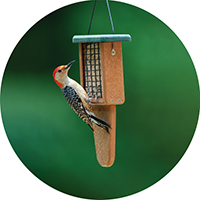
Crucially, the woodpecker’s skull is disproportionately small in relation to the size of its brain. This anatomical characteristic creates a minimal gap between the brain and the skull. This close fit significantly reduces the brain’s ability to move or "rattle" within the cranial cavity during forceful impacts, thereby minimizing the risk of internal damage and concussion. This is a critical protective mechanism that distinguishes woodpeckers from many other bird species.
Bill Resilience and Self-Sharpening Mechanism
The relentless pecking raises a logical question: how do woodpeckers avoid wearing down their bills to a useless stub? While wear and tear are inevitable, woodpeckers possess a remarkable regenerative capability at the tip of their beaks. Specialized cells at the bill’s end continuously replace material that is lost through abrasion. This constant renewal process ensures that the chisel-pointed bill remains robust and resilient. Furthermore, the woodpecker’s bill is designed to self-sharpen with every forceful blow, maintaining its efficacy as a tool for excavation and foraging. This perpetual maintenance of their primary tool is essential for their survival and ecological niche.
Protective Measures Against Debris
The vigorous activity of excavating wood inevitably generates a significant amount of airborne debris, including wood chips and dust. To protect their delicate sensory organs, woodpeckers have evolved sophisticated, built-in protective systems analogous to safety equipment.
The "Dust Mask" Feathers
Stiff, bristle-like feathers grow densely over the nostrils. These specialized feathers act as a natural "dust mask," effectively filtering out small wood particles and preventing them from entering the respiratory system. This barrier is vital for maintaining respiratory health and preventing irritation or infection.

The "Safety Goggles" Eyelid
In addition to nasal protection, woodpeckers possess a unique third eyelid. This transparent membrane, often referred to as a nictitating membrane, can be rapidly drawn across the eye. This "safety goggle" provides a crucial layer of protection against flying debris, safeguarding the cornea and preventing eye injuries during their intense work. This dual-layer protection system is a testament to the rigorous environmental pressures these birds face.
The Ecological Role and Appeal of Woodpeckers
Beyond their physical adaptations, woodpeckers play a vital role in forest ecosystems. Their cavity excavation provides essential nesting sites for a multitude of other bird species, small mammals, and insects that cannot create their own shelters. This ecological service makes them keystone species in many woodland environments.
Their presence in backyards is also highly valued by bird enthusiasts. Woodpeckers are often seen as indicators of a healthy environment, and their distinctive drumming and foraging behaviors add a dynamic element to garden ecosystems. Their intelligence and adaptability have allowed them to thrive even in suburban and urban environments, provided suitable habitat and food sources are available.
Attracting Woodpeckers to Your Backyard
For those wishing to observe these remarkable birds up close, providing appropriate food sources is key. Wild Birds Unlimited (WBU) offers a range of specialized products designed to attract various woodpecker species. These include:

- WBU Suet: High-energy suet cakes are a favorite of many woodpeckers, providing essential fats and proteins.
- No-Melt Dough: Similar to suet, this dough-based food remains stable in warmer temperatures, offering a consistent food source.
- Bark Butter Products: These specially formulated spreads mimic the natural insect-rich bark of trees, appealing to woodpeckers’ foraging preferences.
- Shelled Peanuts: A rich source of protein and fat, shelled peanuts are a highly sought-after food for many woodpecker species.
- TreeNutty® Plus Blend: This seed mix often includes nuts and seeds that are particularly attractive to woodpeckers.
- Woodpecker Cylinder: These specialized seed cylinders are designed to dispense food gradually, encouraging prolonged feeding activity.
By offering these nutritious options, backyard observers can significantly increase their chances of witnessing the fascinating behaviors and experiencing the vibrant presence of woodpeckers.
A Deeper Dive into Woodpecker Wonders
The adaptations of woodpeckers extend beyond the immediate physical protections for pecking. Their specialized feet, for example, are zygodactyl, meaning they have two toes pointing forward and two pointing backward. This arrangement provides exceptional grip and stability on vertical surfaces like tree trunks, allowing them to perch and move with agility. Their stiff tail feathers also act as a prop, providing an additional point of support when climbing and pecking.
Their hearing is also remarkably acute, enabling them to detect the subtle sounds of insect larvae moving beneath the bark, guiding their foraging efforts. The woodpecker’s long, barbed tongue, often extending far beyond the bill, is perfectly adapted for extracting insects from deep within wood crevices and boreholes. Some species have tongues that can even wrap around their skull when retracted, demonstrating the extraordinary specialization of this organ.
Historical Context and Scientific Fascination
The study of woodpeckers has a long history, dating back to early naturalists who marveled at their unique behaviors and physical attributes. Their ability to survive constant head trauma was particularly intriguing, prompting detailed anatomical and physiological investigations. Over the decades, scientific research has illuminated the intricate mechanisms that allow these birds to thrive.

The ongoing fascination with woodpeckers is reflected in popular culture and scientific literature. Documentaries, nature photography, and ornithological studies continue to reveal new insights into their lives. The recent focus on their resilience in the face of intense physical activity serves as a powerful reminder of the incredible diversity and ingenuity of the natural world.
Broader Implications and Future Research
The study of woodpecker adaptations offers valuable lessons for biomimicry and engineering. Understanding how their skull structure dissipates impact forces could inspire the design of advanced protective gear and impact-resistant materials. The regenerative properties of their bills might also offer insights into self-healing technologies.
Furthermore, as habitats continue to face pressures from development and climate change, understanding the specific needs of woodpecker populations becomes increasingly important for conservation efforts. Continued research into their dietary requirements, nesting preferences, and responses to environmental changes will be crucial for ensuring their long-term survival. The conservation of woodpecker species also contributes to the overall health and biodiversity of forest ecosystems, benefiting countless other species that rely on the habitats they help create and maintain.
The dedication of organizations like Wild Birds Unlimited in providing resources and educational content highlights the public’s interest in these captivating birds and the broader natural world. Their efforts to connect people with nature underscore the importance of backyard wildlife observation as a means of fostering appreciation and understanding of ecological principles. The ongoing exploration of woodpecker wonders promises to continue inspiring awe and scientific discovery for years to come.
