
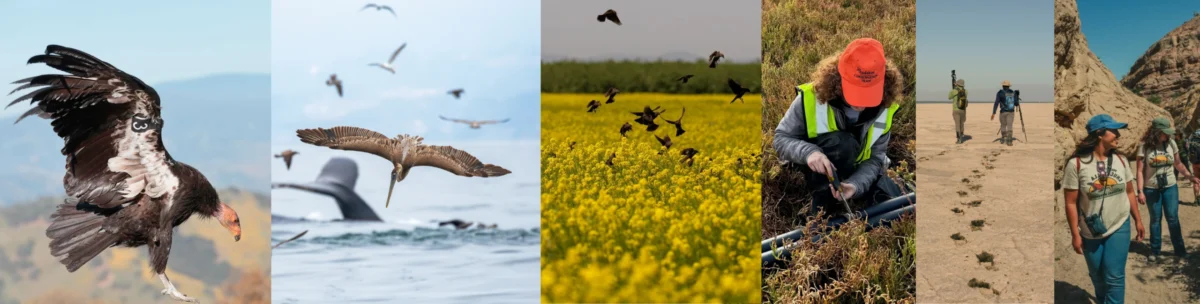
Audubon California, poised to mark its 30th anniversary as an official state office in 2026, stands as a testament to a conservation legacy that spans far longer than three decades. Long before its formal establishment in 1996, the Audubon movement had already begun to champion the protection of vital habitats, drive significant conservation victories, and advocate tirelessly for birds and the communities intertwined with California’s diverse ecosystems. This upcoming anniversary provides a poignant opportunity to reflect on the remarkable milestones and transformative achievements that have profoundly reshaped the landscape of conservation across the Golden State, from the high desert to the Pacific coast.
Early Foundations: Establishing a Presence and Vision
The seeds of Audubon’s influence in California were sown at the dawn of the 20th century, reflecting a growing national awareness of the need for environmental stewardship. In 1904, following the publication of renowned field biologist Joseph Grinnell’s pioneering Pasadena bird list, the first local Audubon chapter in California was founded as "California Audubon." This organization, which would later adopt the name Pasadena Audubon Society in 1909 to distinguish itself, quickly became a hub for early bird enthusiasts and conservationists, holding its inaugural outdoor meeting in the Arroyo Seco and identifying 22 bird species. This early activism laid the groundwork for a burgeoning network of local chapters committed to local birdlife.
The movement gained further traction in 1939 with the creation and operation of the San Gabriel River Wildlife Sanctuary in Whittier Narrows by the Los Angeles Audubon Society. This initiative soon evolved into the Audubon Center of Southern California by 1942, established by the National Audubon Society as part of a significant membership drive that fostered the launch of several new California chapters. Though later transitioning into the Whittier Narrows Nature Center, operated by the County of Los Angeles, it served as a crucial precursor to future Audubon urban centers, notably the Audubon Center at Debs Park.
By 1957, Audubon’s commitment to direct habitat protection solidified with the establishment of the Richardson Bay Audubon Center & Sanctuary. This strategic acquisition secured a critical Bay habitat, ensuring a lasting sanctuary for bird conservation, ecological stewardship, and community engagement. The expanding regional footprint led to the establishment of Audubon’s Western Regional Office in Sacramento in 1968, a move that fundamentally strengthened and sustained its presence in California’s policy and conservation arenas. In 1973, the extraordinary Southern California landscape of Starr Ranch came under National Audubon stewardship, becoming a pivotal site for research, restoration, and education, further cementing Audubon’s dedication to land preservation.
Legislative Cornerstones: Protecting California’s Environment
The early 1970s marked a pivotal era for environmental legislation in California, with Audubon playing a crucial role in advocating for and upholding foundational laws. The California Environmental Quality Act (CEQA) was established in 1970, creating a statewide process to review environmental impacts, consider alternatives, and reduce harm before development projects could proceed. For Audubon California, CEQA has consistently served as an indispensable legal instrument for safeguarding birds, wildlife, and communities from adverse development, a principle that Audubon California, in collaboration with its chapters, continues to champion and defend.
Similarly, the California Endangered Species Act (CESA), initially enacted in 1970 and updated in 1984, provided a robust state framework for protecting species teetering on the brink of extinction. CESA remains a vital safeguard for avian species such as the Tricolored Blackbird, California Least Tern, and Least Bell’s Vireo, underscoring the state’s commitment to biodiversity. In 1975, the Bobelaine Sanctuary was established through a generous donation from Bob and Elaine Crandall, preserving rare Central Valley riparian habitat along the Feather River. Today, it is recognized as a "State Ecological Reserve" and an Important Bird Area, highlighting its critical role in habitat conservation.
The California Coastal Act of 1976 represented another monumental achievement, establishing one of California’s most significant conservation frameworks. This act was designed to protect public access to the coast and safeguard invaluable coastal habitats and wildlife. Audubon’s support for this vision predates the act itself, with local chapters like Santa Barbara Audubon actively engaging members in 1972 around Proposition 20, the ballot initiative that laid the groundwork for the Coastal Act. Audubon California has consistently supported and defended the Coastal Act’s promise, and in 2026, it is actively supporting legislative resolutions honoring its 50th anniversary. Further expanding Audubon’s sanctuary system, the Williams Sisters Ranch Sanctuary was established in 1976 through their donation, protecting a 1,200-acre historic cattle ranch along Skyline Drive in Woodside, contributing a working landscape to Audubon’s network.
Landmark Victories and Habitat Preservation
The 1980s witnessed some of Audubon’s most high-profile and impactful legal and conservation triumphs. In 1983, a landmark Supreme Court win secured the future of Mono Lake. The lake’s unique ecosystem, critical for millions of migratory and nesting birds, faced collapse after the City of Los Angeles began diverting four of its five main creeks in 1941. Over four decades, the lake’s level dropped by 45 feet, leading to a drastic increase in salinity that threatened its brine shrimp population, a primary food source for birds. The National Audubon Society, alongside the Mono Lake Committee, filed suit, resulting in an unprecedented 1983 California Supreme Court ruling. The court declared it the state’s duty to safeguard the environment for all, even if it meant re-evaluating long-held water rights. This decision was a groundbreaking victory for the environmental movement, stabilizing Mono Lake’s level and setting a powerful legal precedent.
By 1987, the California Condor, North America’s largest land bird, hovered on the brink of extinction. Audubon played a crucial role in advocating for the controversial but ultimately successful decision to bring the last remaining wild birds into captivity. This critical step initiated a robust breeding program, leading to the species’ recovery and reintroduction into the wild. Condor #20, for example, captured in 1985, became one of the last wild-born birds before the breeding program began. He later sired over 30 chicks released into the wild and was himself released in 2015, now the oldest living condor in the wild, embodying the success of this monumental effort. In 1989, the Wattis Sanctuary was established in Colusa, expanding Audubon’s network of protected lands in California’s Sacramento Valley.
Expanding Influence: Protecting Coasts, Deserts, and Rivers
The Audubon network’s advocacy extended to species-specific protections, notably for the Marbled Murrelet. In 1988, the National Audubon Society petitioned for federal protection, leading to its 1992 listing as threatened under the Endangered Species Act due to habitat loss in old-growth forests. The Redwood Region Audubon Society further secured state endangered status under CESA. In 1993, Audubon also helped ensure crucial safeguards for the Western Snowy Plover along the Pacific Coast.
The year 1996 marked a significant organizational milestone with the formal establishment of Audubon California. This created a dedicated statewide entity focused on bird conservation, habitat protection, and environmental policy across the entire state, consolidating efforts and amplifying impact. The Kern River Preserve was established in 1997, protecting a vital riparian landscape in the southern San Joaquin Valley, crucial for migratory birds and resident wildlife.
The early 2000s saw a renewed focus on urban conservation and collaborative initiatives. The first Audubon Urban Center was established at Debs Park in 2003, bringing nature and conservation education to an urban setting. In 2006, Audubon California established its Bay Area Office, significantly expanding regional capacity for restoration, policy, and partnership work in the San Francisco Bay. The Bobcat Ranch, established in 2007, protected a working landscape that supports birds, biodiversity, and conservation on private lands, demonstrating Audubon’s commitment to diverse conservation strategies.
In 2008, Audubon California played a key role in launching a collaborative path forward at Owens Lake, a crucial stopover for millions of migratory birds at the base of California’s Inyo Mountains. Andrea Jones of Audubon California recounted the persistent advocacy of Mike Prather (Eastern Sierra Bird Alliance), whose "urgency, persistence, and personal commitment" in 2006 spurred Audubon California to dedicate staff and resources, leading to significant conservation progress. The same year, Audubon California was instrumental in securing the landmark Tejon Ranch Conservation and Land Use Agreement. This agreement, with conservation partners, protected up to 240,000 acres of vital grasslands, oak woodlands, streams, and desert habitats. These landscapes support iconic species such as the Bald Eagle, Golden Eagle, Western Burrowing Owl, Swainson’s Hawk, the state-threatened Tricolored Blackbird, and the federally endangered San Joaquin kit fox. Audubon California holds third-party enforcement rights for the conservation easements, ensuring the long-term protection of this vast area.
Innovative Approaches to Conservation: Water and Working Lands
The 2010s saw Audubon California pioneering innovative conservation strategies. In 2012, Audubon California and Mendocino Coast Audubon led efforts to establish the North Coast Marine Protected Areas (MPAs), a network of over 100 protected ocean areas and special closure zones from the Oregon border to Point Arena. These protections safeguarded seabirds, shorebirds, and crucial coastal bird habitat. Following the 2007 Cosco Busan oil spill, Audubon California identified Aramburu Island in Richardson Bay as a critical refuge. This led to the Aramburu Island shoreline protection and ecological enhancement project, completed in 2012, which stabilized eroding shorelines, improved habitat, and strengthened resilience to sea level rise. Thousands of native plants have since been installed, supported by thousands of volunteer hours.
Audubon California also launched the "I’m for the River" campaign in 2012, partnering with local chapters to build public support for the San Joaquin River Restoration Program, approved by Congress in 2009. This grassroots advocacy focused on restoring habitat, clean water, and public access along one of California’s most altered river systems.
In 2014, Audubon supported the Sustainable Groundwater Management Act (SGMA), a landmark law requiring sustainable groundwater management by 2040. SGMA created a framework for balancing groundwater use with the long-term health of farms, wetlands, and wildlife habitat, with local Groundwater Sustainability Agencies now developing plans to achieve 20-year sustainability. The same year saw the launch of the BirdReturns pilot program, a collaborative initiative of the Migratory Bird Conservation Partnership (Audubon California, The Nature Conservancy, and Point Blue Conservation Science). This program provided crucial habitat during severe drought, offering an innovative approach to create temporary wetlands where migratory birds needed them most. Also in 2014, the Richardson Bay Youth Leaders program was launched, fostering environmental knowledge, leadership skills, and deeper connections to local conservation among young people.
Forward-Looking Policy and Future Resilience
The Salton Sea, a critical stopover for millions of migratory birds, became a major focus with the establishment of the Salton Sea Program in 2016. Building on years of prior engagement, Audubon California deepened its commitment to this rapidly changing ecosystem, collaborating with partners to ensure habitat restoration strategies address both avian and human needs. The Quality of Life Act (QSA) in 2003, while quantifying Colorado River water rights, also led to reduced inflows to the Salton Sea. Audubon California advocated for stronger mitigation during the 2003 State Water Resources Control Board transfer hearings, urging regulators to protect future restoration options. The Salton Sea Program established an office in 2018, bolstering on-the-ground capacity for science, advocacy, restoration, and partnership. In 2020, Audubon secured federal support for restoration near Bombay Beach, leveraging emergent wetlands to improve habitat and reduce harmful dust. A 2020 report identified over 6,700 acres of emerging vegetation, offering low-effort habitat and dust suppression solutions.
Also in 2016, Measure AA, endorsed by Audubon California and local chapters, passed, delivering sustained regional funding to accelerate San Francisco Bay wetland restoration. This property tax, one of the first in the U.S. addressing climate change adaptation, supports bird habitat and strengthens shoreline resilience. The Desert Renewable Energy Conservation Plan (DRECP), finalized in 2016 after eight years of Audubon advocacy, established a framework for renewable energy development across California’s desert while protecting over 20 Important Bird Areas and safeguarding species like the Golden Eagle and Burrowing Owl.
In 2017, after an 18-month campaign including a lawsuit, Audubon California successfully led efforts to protect Humboldt Bay habitat. The California Coastal Commission denied the original proposed expansion of oyster farming into sensitive bird habitat and eelgrass beds. A revised project later that year reduced and consolidated operations, lessening disturbance in one of the Pacific Flyway’s most important estuaries, which supports up to 60% of Pacific Black Brant and nearly 10% of all wintering shorebirds along the Pacific Coast in the U.S.
The year 2019 saw significant policy wins for migratory birds and threatened species. Audubon supported AB 454, which created a crucial California backstop for migratory bird protections amidst federal instability. Furthermore, the Tricolored Blackbird was formally added to California’s list of threatened species under CESA. Mike Lynes, Audubon California’s Policy Director, highlighted the urgent advocacy efforts, including explaining the species’ colonial nesting behavior to a swing-vote commissioner the night before the vote, underscoring the determination to protect these vulnerable birds. The 2019 CESA listing marked a major milestone in a long advocacy effort by Audubon California and partners.
California’s Audubon Conservation Ranching (ACR) Program launched in 2019, pairing bird-friendly grazing practices with certification and market recognition. This program, with Bobcat Ranch as its first demonstration site, uses regenerative grazing to sequester carbon, increase grassland climate resiliency, and improve bird habitat, partnering with sustainable ranches committed to conservation. In 2020, California’s 30×30 Executive Order (EO) elevated nature-based solutions and biodiversity protection. Audubon California sponsored AB 3030, which laid the groundwork for Governor Newsom’s October 2020 executive order committing California to conserve 30% of its lands and coastal waters by 2030, aligning with an international movement and recognizing Indigenous stewardship. The Sonoma Creek Enhancement Project in 2020 also restored hundreds of acres of tidal marsh habitat in the North Bay, demonstrating climate-resilient restoration design.
Recent years have continued this trajectory of strategic expansion and policy leadership. In 2023, Audubon California rebranded its Salton Sea Program as the Salton Sea & Desert Program, reflecting a broader regional conservation vision, including the local team’s work on the Chuckwalla National Monument Campaign. Audubon California also joined the historic Intermountain West Shorebird Survey, leading efforts at the Salton Sea starting in 2022. In August 2023, the Salton Sea survey documented approximately 250,000 shorebirds in a single day, underscoring its immense importance within this broader regional effort.
The year 2024 saw the launch of Audubon California’s inaugural Coastal Leadership Program cohort in Los Angeles County, supporting emerging leaders through skill-building and community connection focused on coastal environmental challenges. Politically, Audubon California co-sponsored Assembly Bill 2875, establishing a policy of "no net loss" of wetlands in the state and committing California to long-term gains in wetland quantity and quality. This bill passed in response to the 2023 Supreme Court decision in Sackett vs. EPA, which rolled back federal wetland protections. Audubon California also supported Senate Bill 583, creating the Salton Sea Conservancy Act, setting the stage for long-term restoration and governance tied to bond funding. California voters further approved Proposition 4, a $10 billion Climate Bond supported by Audubon California, unlocking major new funding for climate resilience, habitat restoration, and community protection.
Looking ahead to 2025, the Chuckwalla National Monument was designated on January 14, protecting a vast California desert landscape vital for birds, wildlife, cultural resources, and climate resilience. Rhian Reyes of Audubon California was honored to speak at the White House designation event and introduce President Joe Biden, a testament to Audubon’s instrumental role. BirdReturns celebrates 10 years, having provided over 180,000 acres of habitat through partnerships with over 210 wetland managers and farmers, supporting hundreds of thousands of birds. During the 2021 drought, CDFW supported its expansion across the Central Valley and Suisun Marsh, allocating $15 million. Permanent protections for California’s migratory birds were solidified with the passage of AB 454 in 2025, reinstating and making permanent the California Migratory Bird Protection Act amidst federal rollbacks. The inaugural Salton Sea Leadership Program launched, connecting participants with hands-on learning and advocacy skills. A new Audubon California science brief highlighted how shifting conditions at the Salton Sea create new opportunities for shorebirds and wetlands, informing restoration. The Habitat Conservation Fund was extended through 2035 by SB 427, continuing its legacy of protecting over 1.2 million acres. AB 1319 strengthened the California Endangered Species Act, enabling the state to respond more quickly when federal protections fall short, a commitment Audubon California continues to uphold.
As 2026 unfolds, Audubon California’s Conservation Ranching program continues to form new alliances, reaching diverse audiences by bringing together ranchers, bird experts, food advocates, and conservationists through its "Grazed on Bird-Friendly Land" certification. This program highlights how healthy working lands support birds, resilient food systems, and long-term stewardship of California’s rangelands. Furthermore, the bipartisan Fiscal Year 2026 appropriations package allocated $4 million for the Bombay Beach Wetland Restoration Project at the Salton Sea. This critical investment, in partnership with Audubon and state/federal agencies, will stabilize and expand wetland habitat, improve conditions for migratory birds, reduce harmful dust, and expand public access for birdwatching and outdoor gathering.
A Legacy of Collective Action and Enduring Commitment
Audubon California proudly reflects on its many decades of dedicated work and profound conservation impact across the Golden State. The cumulative effect of these milestones underscores the transformative power of long-term conservation, driven by robust science, strategic partnerships, unwavering advocacy, and strong community leadership. As the state office celebrates its 30th anniversary, it also commemorates the countless individuals and groups who make this vital work possible: its 49 impressive local chapters, brilliant partners, passionate staff, tireless volunteers, and committed supporters. This enduring collaborative spirit ensures that Audubon California will continue to build a brighter future for birds and people, together, across one of the world’s most ecologically diverse regions.
