
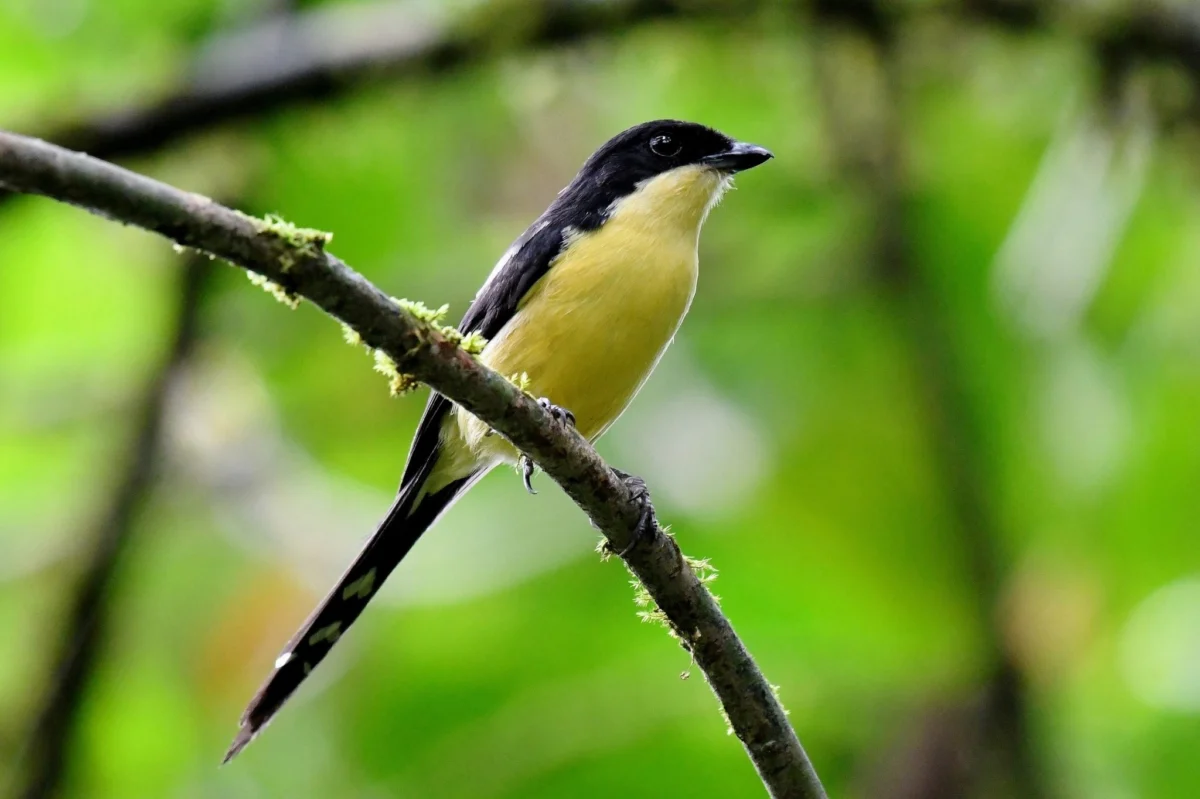
Global Birdfair 2026 has announced its dedicated support for BirdLife International’s vital conservation work in São Tomé, aiming to safeguard the island nation’s unique endemic bird species from the brink of extinction. This significant commitment will bolster ongoing efforts to protect the Dwarf Ibis, São Tomé Grosbeak, and Newton’s Fiscal – three critically endangered species found nowhere else on Earth – ensuring the preservation of a truly extraordinary natural heritage. The partnership marks a pivotal moment in the fight against biodiversity loss in one of the world’s most unique ecological hotspots.
São Tomé and Príncipe: A Cradle of Endemism
Nestled in the Gulf of Guinea, off the western coast of Central Africa, São Tomé and Príncipe is an archipelago renowned for its exceptional biodiversity. Formed by ancient volcanic activity, these islands have remained isolated for millions of years, fostering the evolution of a remarkable array of species found exclusively within their lush, verdant ecosystems. This biological isolation has earned the islands the moniker "African Galápagos," particularly for their avian inhabitants. The dense, humid forests, cloud-shrouded peaks, and pristine coastal areas provide diverse habitats for a wealth of flora and fauna, many of which are highly specialized and extremely vulnerable to external pressures.
However, this very uniqueness also renders São Tomé’s wildlife exceptionally fragile. Island ecosystems are inherently delicate, with species often having small population sizes and limited geographic ranges, making them highly susceptible to habitat degradation, invasive species, and climate change impacts. The conservation of São Tomé and Príncipe’s natural legacy is not merely a regional concern but a global imperative, representing a significant portion of the planet’s irreplaceable biodiversity.
The Avian Jewels on the Brink
At the heart of Global Birdfair 2026’s initiative are three iconic avian species, each facing an existential crisis:
-
The Dwarf Ibis (Bostrychia bocagei): This elusive forest dweller is one of the smallest ibis species globally, characterized by its dark plumage, green iridescence, and a distinctive, haunting call that echoes through the dense undergrowth. Listed as Critically Endangered on the IUCN Red List, its population is estimated to be fewer than 2,000 individuals. Its shy nature and specific habitat requirements within the island’s primary rainforests make it particularly vulnerable to any form of disturbance or habitat alteration. Research indicates its distribution is patchy, primarily confined to the southwestern parts of São Tomé, further underscoring its precarious existence.
-
The São Tomé Grosbeak (Crithagra concolor): Once thought lost to science for over a century, this large, enigmatic finch was dramatically rediscovered in 1991. Its unique, robust bill is adapted for cracking the hard seeds of native forest trees. With an estimated population of possibly fewer than 250 mature individuals, the São Tomé Grosbeak is one of Africa’s rarest birds. Its fragmented populations persist in remote, undisturbed forest pockets, highlighting its extreme sensitivity to human encroachment and forest degradation. Its continued survival is a testament to the resilience of nature but also a stark reminder of the urgent need for comprehensive protection.
-
Newton’s Fiscal (Lanius newtoni): A striking black-and-white shrike, Newton’s Fiscal is a predatory bird typically found along the forest ridges in the central highlands of São Tomé. Its sharp contrast in plumage and its habit of perching conspicuously make it a visually distinct species. Like the Grosbeak, its population is critically low, with estimates suggesting fewer than 250 individuals remain. This makes it not only one of the rarest birds on the African continent but also one of the most threatened shrikes globally. Its specialized hunting behavior and dependence on intact forest canopy for both foraging and breeding expose it to the full impact of habitat loss and changes in prey availability.
The Critically Endangered classification by the IUCN (International Union for Conservation of Nature) signifies an extremely high risk of extinction in the wild. This designation is based on rigorous scientific criteria, including dramatic population decline, limited geographic range, and extremely small population sizes, all of which apply acutely to these three species.
The Multifaceted Threats to Survival

Despite being legally protected under São Toméan law, these endemic birds face a relentless onslaught of threats that continuously erode their chances of long-term survival:
-
Habitat Loss and Fragmentation: This is arguably the most significant threat. Agricultural expansion, particularly for cocoa, coffee, and more recently, palm oil plantations, has led to widespread deforestation. Timber extraction, both legal and illegal, further exacerbates this, directly destroying the primary forest habitats these species depend on. The conversion of natural forests into monoculture plantations not only removes crucial foraging and nesting sites but also fragments remaining forest patches, isolating populations and reducing genetic diversity.
-
Hunting and Disturbance: While technically illegal, hunting pressure for subsistence and traditional practices persists. Even non-target hunting can inadvertently harm these rare species. Human disturbance from logging activities, farming, and general forest access can disrupt breeding cycles and force birds out of optimal habitats, particularly for shy species like the Dwarf Ibis.
-
Invasive Species: The introduction of non-native species poses a severe threat to island ecosystems. Feral cats, rats, and even monkeys (some of which are also introduced) prey on eggs, chicks, and adult birds, competing for food resources and disrupting delicate ecological balances. Island species, having evolved without such predators, often lack effective defense mechanisms, making them particularly vulnerable.
-
Limited Knowledge and Capacity: A significant challenge has been the lack of comprehensive data on the precise distribution, population dynamics, and specific ecological requirements of these extremely rare birds. This knowledge gap hinders the development of highly targeted and effective conservation strategies. Furthermore, local capacity for sustained monitoring, anti-poaching efforts, and protected area management has historically been limited.
A Proactive Chronology of Conservation
BirdLife International, a global partnership of conservation organizations, has been a leading force in São Toméan conservation for several years, recognizing the islands’ exceptional biodiversity and the urgent need for intervention.
-
Early Engagement (Pre-2018): BirdLife and its partners, including local NGOs and government agencies, laid the groundwork for conservation efforts, conducting preliminary surveys and advocating for protected areas. The designation of national parks, such as the Ôbo Natural Park, which covers a significant portion of São Tomé’s forested interior, was a crucial step.
-
Intensified Efforts (Since 2018): BirdLife formally intensified its work in São Tomé and Príncipe in 2018. The focus expanded beyond mere protected area designation to strengthening their effective management. This involved working closely with national authorities to develop and implement management plans, train park rangers, and establish monitoring protocols. Crucially, the program also began to integrate sustainable livelihood initiatives, recognizing that conservation success is inextricably linked to the well-being of local communities. By offering alternatives to destructive practices, BirdLife aimed to reduce human pressure on critical habitats.
-
The Transformative 2022-2024 Community Engagement Project: This period marked a groundbreaking shift in approach, demonstrating the power of grassroots involvement. Instead of viewing local communities, particularly hunters, as adversaries, the project engaged them as essential partners. The initiative focused on:
- "Agents of Change": A total of 75 local hunters, possessing unparalleled knowledge of the forest terrain and wildlife, were recruited and trained. They transitioned from potentially contributing to the problem to becoming active participants in its solution. Their roles now include locating rare species, assisting researchers, and reporting illegal hunting activities. This radical shift in perception empowered them to see themselves as stewards of their natural heritage.
- Legal Reform: Working collaboratively with national authorities, biologists, and civil society, the project facilitated a comprehensive review of existing hunting laws. This participatory process aimed to modernize and update legislation, making it more effective, enforceable, and aligned with contemporary conservation principles. A roadmap for its improvement and updating was a key outcome.
- Sustainable Livelihoods and Mentoring: A dedicated mentoring program was established for 25 selected hunters, providing them with training in developing alternative economic activities. This included basic management and financial skills, exploring ventures such as eco-tourism guiding, sustainable agriculture, or small-scale artisanal crafts.
- Business Plan Competition: To catalyze practical implementation, a competition was held for the best alternative business ideas. The five most promising proposals received technical and financial support to develop and execute their business plans. This not only provided direct economic benefits to participating families but also served as a tangible demonstration of how conservation can align with and even enhance human well-being, moving beyond mere restriction to fostering sustainable prosperity.
This multi-faceted project between 2022 and 2024 proved that effective conservation in human-dominated landscapes requires deep community engagement and the creation of mutually beneficial solutions.
Global Birdfair 2026: A New Chapter of Support

The selection of São Tomé’s endemic birds as the focus of Global Birdfair 2026 underscores the global recognition of their critical status and the proven efficacy of BirdLife International’s community-centric approach. Global Birdfair is one of the world’s premier events for birdwatching and conservation, attracting thousands of enthusiasts, experts, and organizations from across the globe. Its annual focus on a specific conservation project provides a significant fundraising platform and raises international awareness for urgent causes.
The funds and attention generated by Global Birdfair 2026 will be channeled into a new phase of conservation efforts, building directly on the momentum established by the previous initiatives. The project’s primary objectives include:
- Filling Critical Knowledge Gaps: Researchers will deploy advanced monitoring techniques, including bioacoustics and camera traps, alongside traditional field surveys, to gain a more precise understanding of the distribution, population sizes, breeding ecology, and habitat requirements of the Dwarf Ibis, São Tomé Grosbeak, and Newton’s Fiscal. This robust scientific data is essential for informing targeted conservation interventions and adapting strategies as conditions evolve.
- Strengthening Local Capacity: The project will expand training programs for park rangers, local biologists, and community members. This includes advanced training in species identification, population monitoring techniques, anti-poaching patrols, and habitat restoration methods. The goal is to build a self-sufficient local workforce capable of sustained, effective conservation.
- Enhanced Research and Monitoring: Beyond basic surveys, the project will support in-depth ecological studies to understand threats more comprehensively, such as the impact of specific invasive species or the effectiveness of different habitat restoration techniques. This will ensure that conservation actions are evidence-based and maximally impactful.
- Deepening Community Involvement: Building on the success of the "Agents of Change" program, the project will seek to expand its reach, involving more community members in conservation activities. This includes further development of sustainable livelihood alternatives, educational outreach programs in schools, and fostering a stronger sense of shared responsibility for the island’s unique wildlife. The aim is to embed conservation firmly within the cultural fabric of São Tomé.
- Policy Advocacy and Enforcement: Continued collaboration with the São Toméan government will be crucial to ensure that updated hunting laws are effectively enforced and that protected areas receive adequate resources and legal backing. This includes advocating for the creation of buffer zones around critical habitats to minimize edge effects and human-wildlife conflict.
Statements from Key Stakeholders
Speaking on the announcement, a spokesperson for BirdLife International emphasized the significance of the partnership: "The support from Global Birdfair 2026 is absolutely vital for the future of São Tomé’s unique avian treasures. It allows us to scale up our proven, community-led conservation methods and address critical knowledge gaps. This commitment is a beacon of hope for these magnificent birds and the entire island ecosystem. We are immensely grateful for their dedication to this urgent cause."
An organizer for Global Birdfair 2026 added, "We are incredibly proud to dedicate our efforts to São Tomé this year. The innovative approach taken by BirdLife International, particularly the success of the ‘Agents of Change’ program, is a testament to what can be achieved when conservation is rooted in local partnership and empowerment. We urge the global birding community and all wildlife enthusiasts to join us in supporting this crucial initiative and ensure these extraordinary species survive for generations to come."
A local community leader, representing the "Agents of Change," reflected on the impact: "Before, many of us saw the forest primarily for what it could provide through hunting or timber. Now, with the training and support, we see it as our heritage, a source of pride, and a key to our sustainable future. We are not just protecting birds; we are protecting our land, our traditions, and our children’s livelihoods."
A representative from São Tomé’s Ministry of Environment and Sustainable Development affirmed the national commitment: "This renewed collaboration with BirdLife International and the support from Global Birdfair 2026 are crucial for our national conservation strategy. It significantly strengthens our capacity to protect our unique biodiversity, enforce environmental laws, and promote sustainable development across our islands. Such international partnerships are indispensable for achieving our conservation goals."
Broader Implications and a Global Call to Action
The conservation efforts in São Tomé extend far beyond the survival of three bird species. They represent a microcosm of the global challenge to protect biodiversity in the face of escalating human pressures. The success of this project offers several broader implications:
- A Model for Island Conservation: The community-centric approach, particularly the engagement of former hunters as conservation agents, provides a powerful model that can be replicated in other island ecosystems and biodiversity hotspots facing similar human-wildlife conflicts. It demonstrates that local knowledge and participation are not just beneficial but essential for long-term success.
- Sustainable Development Linkage: By integrating sustainable livelihoods with conservation, the project illustrates how protecting nature can directly contribute to human well-being, economic stability, and poverty reduction. This aligns perfectly with the United Nations Sustainable Development Goals, particularly those related to life on land and responsible consumption and production.
- Global Biodiversity Resilience: Saving these highly endemic species contributes directly to global biodiversity targets and strengthens the overall resilience of the planet’s ecosystems. Island endemics are often the first to disappear, making their protection a critical indicator of broader conservation health.
- The Power of International Collaboration: The partnership between a global conservation leader like BirdLife International and a high-profile event like Global Birdfair, combined with strong local engagement and government support, underscores the indispensable role of international collaboration in tackling complex environmental challenges.
The Dwarf Ibis, the São Tomé Grosbeak, and Newton’s Fiscal are more than just rare species; they are living symbols of São Tomé’s extraordinary natural heritage. Protecting them means safeguarding the integrity of the island’s pristine forests, the health of its unique ecosystems, and the well-being of the communities that share their landscape. With the dedicated support from Global Birdfair 2026, coupled with continued collaboration, scientific inquiry, and the unwavering commitment of local communities, there is renewed hope that the haunting call of the Dwarf Ibis, the quiet presence of the São Tomé Grosbeak, and the watchful silhouette of Newton’s Fiscal will continue to grace the forests of São Tomé for generations to come. Together, the global conservation community can ensure that these magnificent, critically endangered birds survive and thrive, enriching not only São Tomé but the entire planet.
