
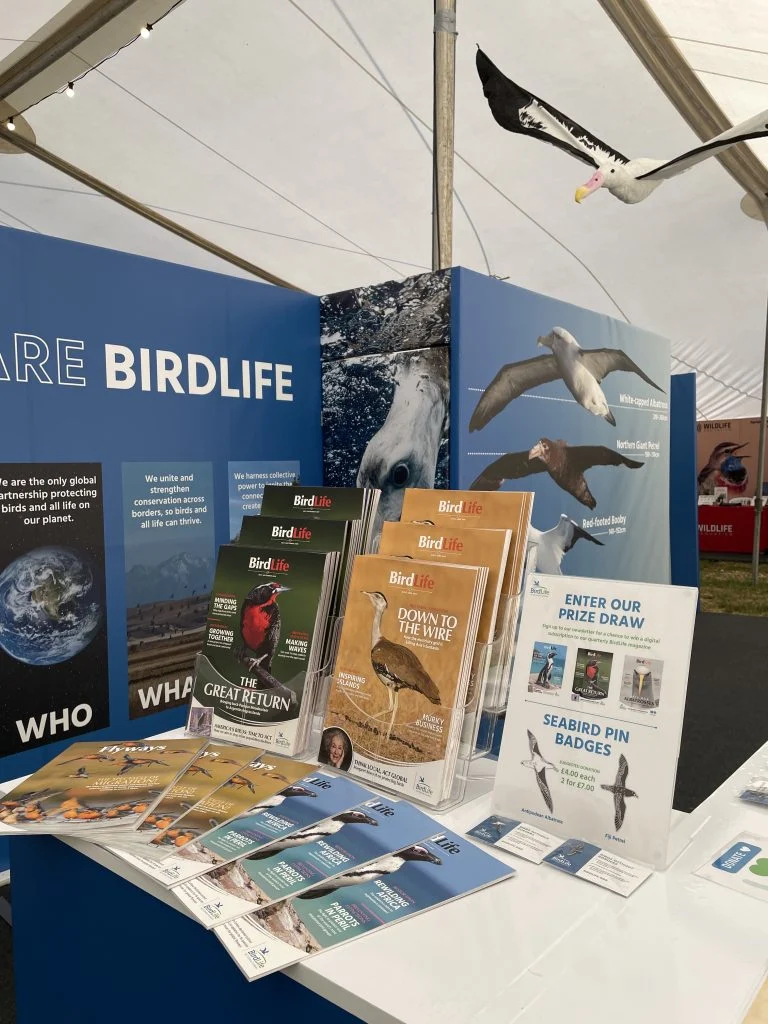
The world’s largest annual celebration of birds, Global Birdfair 2026, is set to take place at Rutland Water, UK, from the 10th to the 12th of July 2026, rallying immense support for global bird conservation. This year, the monumental event will direct its substantial fundraising efforts towards BirdLife International’s crucial work to protect endemic bird species in the island nation of São Tomé and Príncipe, striving to avert imminent extinctions within this unique biodiversity hotspot.
The Urgent Plight of São Tomé’s Critically Endangered Avifauna
São Tomé and Príncipe, an enchanting archipelago nestled in the Gulf of Guinea off the western equatorial coast of Africa, is a sanctuary of unparalleled biodiversity. Its lush, ancient forests harbour an extraordinary array of life, including several species found nowhere else on Earth. Among these, a trio of avian jewels stands on the precipice of extinction, drawing the urgent focus of the international conservation community. The Dwarf Ibis (Bostrychia bocagei), the São Tomé Grosbeak (Crithagra concolor), and Newton’s Fiscal (Lanius newtoni) are not merely birds; they are living testaments to the island’s evolutionary history, each representing a distinct lineage that has adapted over millennia to this isolated environment. All three are listed as Critically Endangered on the IUCN Red List, a stark indicator of their perilous situation.
The Dwarf Ibis, a diminutive and enigmatic wader, is an exceptionally rare forest ibis, largely confined to the dense, humid primary forests of São Tomé Island. Its elusive nature makes population estimates challenging, but what is clear is that its habitat is shrinking and fragmented. Similarly, the São Tomé Grosbeak, a large, robust finch, possesses a powerful bill uniquely adapted to cracking the hard nuts of certain forest trees. Its specialized diet and habitat requirements render it particularly vulnerable to environmental changes. Newton’s Fiscal, a striking shrike species, occupies a crucial niche as a predator within the island’s forest ecosystems. The survival of these three species, along with numerous other endemic plants and animals, is intrinsically linked to the health and integrity of São Tomé’s remaining forest cover. Their critically endangered status underscores a broader ecological crisis driven primarily by habitat loss due due to agricultural expansion, logging, and the impacts of climate change, exacerbated by the presence of invasive species. Without immediate and sustained intervention, the world risks losing these irreplaceable natural treasures forever.
Global Birdfair: A Legacy of Uniting for Conservation

Global Birdfair stands as a beacon for bird conservation, evolving from its humble beginnings as the British Birdwatching Fair in 1989. Conceived by Tim Appleton MBE and the late Martin Davies, the event rapidly grew from a modest gathering of birdwatchers and equipment manufacturers into the world’s premier birding event. Over the decades, it has become an indispensable platform where conservationists, researchers, birding enthusiasts, industry leaders, and the general public converge to celebrate avian life, share knowledge, and, critically, raise vital funds for conservation projects worldwide. The fair’s unique model involves selecting a specific, high-priority conservation beneficiary each year, ensuring that a significant portion of the proceeds directly funds tangible, on-the-ground efforts. This direct funding model has, over its history, channelled millions of pounds into critical projects across every continent, making a tangible difference to species and habitats under threat.
The event’s transformation into Global Birdfair in recent years reflects its expanded international scope and renewed commitment to addressing conservation challenges on a planetary scale. Rutland Water, a vast reservoir and nature reserve in Leicestershire, UK, provides an ideal backdrop, offering a diverse array of habitats that attract numerous bird species, allowing attendees to combine their fair experience with actual birdwatching opportunities. The fair is not merely an exhibition; it is a vibrant festival of nature, offering a packed programme of expert talks, workshops, guided walks, art exhibitions, and opportunities to discover the latest in optics, outdoor gear, and wildlife travel. Its reputation as the "birdwatching Olympics" is well-earned, drawing participants and exhibitors from dozens of countries annually.
Tim Appleton MBE, co-founder and current organiser alongside Penny Robinson, embodies the dedication that has sustained this event for over three decades. Their unwavering passion for birds and commitment to conservation have been the driving force behind the fair’s success and its enduring impact. "Every year, we are humbled by the support from the global birding community," states Tim Appleton. "Global Birdfair is more than just an event; it’s a movement. It’s a testament to what can be achieved when people come together with a shared purpose. Our focus on São Tomé and Príncipe for 2026 highlights the urgent need to protect island endemics, which are disproportionately vulnerable to extinction."
Penny Robinson adds, "The beauty of Global Birdfair lies in its ability to connect people with critical conservation issues. By focusing on São Tomé, we are not only raising funds but also raising global awareness for these incredible, yet often overlooked, species and their unique island home. It’s a powerful demonstration that every ticket purchased contributes directly to saving a species."
Targeted Conservation Action: The São Tomé Project
The project supported by Global Birdfair 2026 is a meticulously designed initiative by BirdLife International and its local partners, aimed at delivering comprehensive conservation outcomes for São Tomé and Príncipe’s endemic birds. Its multi-faceted approach addresses the root causes of their decline, focusing on three critical pillars: filling knowledge gaps, strengthening local capacity, and fostering community engagement.

Firstly, "filling critical knowledge gaps" is paramount. Despite their iconic status, detailed scientific understanding of these critically endangered species remains surprisingly limited. Researchers will undertake extensive field surveys to accurately determine current population sizes, precise geographic distributions, breeding success rates, and specific ecological requirements. This involves employing advanced methodologies, including acoustic monitoring for elusive species like the Dwarf Ibis, mist-netting for demographic data, and habitat mapping using GIS technology. Understanding their migratory patterns (if any local movements occur), preferred microhabitats, and specific threats (e.g., predation by invasive species like rats or feral cats, specific diseases, or human disturbance) is crucial for developing effective, targeted conservation strategies. This foundational data will provide an evidence-based framework for all subsequent conservation actions.
Secondly, "strengthening local capacity" is a cornerstone of sustainable conservation. True long-term success hinges on empowering local communities and institutions to lead and sustain conservation efforts. The project will invest heavily in training local researchers, conservationists, and park rangers in modern ecological survey techniques, species monitoring protocols, and habitat management practices. This includes providing essential equipment, access to scientific literature, and opportunities for professional development. By enhancing the skills and resources of São Toméan professionals, the project ensures that conservation initiatives are culturally relevant, locally driven, and resilient to future challenges. This also contributes to the professionalization of conservation within the country, building a lasting legacy beyond the immediate project timeframe.
Thirdly, "community engagement" is vital. Conservation cannot succeed without the active participation and support of the people who share the landscape with these species. The project will involve local communities, including farmers, landowners, and indigenous groups, in conservation activities. This may include participatory mapping of critical habitats, developing sustainable land-use practices that minimize impact on bird populations, and establishing community-managed conservation areas. Educational programmes will be launched in local schools and communities to raise awareness about the unique biodiversity of São Tomé and Príncipe, the importance of its endemic birds, and the benefits of their conservation – both ecological and socio-economic, such as potential for ecotourism. By fostering a sense of ownership and pride in their natural heritage, the project aims to create a network of local stewards dedicated to protecting their unique environment.
BirdLife International, a global partnership of conservation organisations operating in over 120 countries, brings unparalleled expertise to this project. Their experience in island conservation, particularly in identifying and protecting Important Bird and Biodiversity Areas (IBAs), makes them an ideal partner for the São Tomé initiative. "Island ecosystems are incredibly fragile and represent some of the most critical battlegrounds for biodiversity conservation," explains a spokesperson for BirdLife International. "The support from Global Birdfair is absolutely transformative. It allows us to implement targeted, science-based interventions that are essential for pulling these species back from the brink. More importantly, it empowers the people of São Tomé and Príncipe to become the frontline guardians of their extraordinary natural heritage, ensuring a future where both nature and communities thrive."
Experiencing Global Birdfair 2026: An Immersive Journey
Global Birdfair 2026 promises an enriching and interactive experience for attendees of all ages and levels of birding expertise. Beyond the core exhibition halls, a carefully curated programme of activities is designed to educate, inspire, and engage. Visitors will have the unique opportunity to "Learn all about the Dwarf Ibis and meet our São Tomé experts," offering direct insights into the species and the challenges they face. These experts, often researchers and conservationists directly involved in the field, will share first-hand accounts and cutting-edge findings.

Interactive stands will allow visitors to "Discover more about endemic birds and how to prevent their extinction," featuring engaging displays, multimedia presentations, and opportunities to learn about conservation techniques. A particularly innovative feature will be the "Relax in our very own ‘pod’ and listen to the sound of the São Tomé forest," providing an immersive auditory experience that transports visitors to the heart of the island’s vibrant ecosystem, highlighting the rich soundscape that these birds inhabit. This sensory engagement aims to deepen visitors’ emotional connection to the cause.
Furthermore, the "Go on a migratory journey around Global Birdfair to meet our partners and collect stamps in your Flyways Passport to get an exclusive pin badge" offers a fun and educational activity, encouraging attendees to explore the entire fair, learn about different conservation organisations and their work across various flyways, and collect tangible mementos of their journey. This gamified approach fosters engagement and broader understanding of global bird migration and conservation networks. Every aspect of the fair is designed to reinforce the central message: that collective action can make a profound difference.
Broader Implications for Global Conservation
The success of Global Birdfair and its targeted conservation projects, such as the São Tomé initiative, carries significant implications for global conservation efforts. Firstly, it demonstrates the power of focused fundraising within a passionate community. By channelling resources directly to specific, high-priority projects, the fair ensures transparency and accountability, inspiring greater donor confidence. Secondly, it elevates awareness for often-overlooked biodiversity hotspots. Islands, in particular, despite covering less than 5% of the Earth’s land area, harbour a disproportionate share of global biodiversity and suffer the majority of extinctions. By spotlighting São Tomé, Global Birdfair brings much-needed international attention and resources to a region where they can have a truly transformative impact.
Moreover, the fair’s emphasis on capacity building and community involvement in São Tomé aligns with best practices in sustainable conservation. It recognizes that effective, long-term conservation must be locally driven and integrated into the socio-economic fabric of the region. This approach not only protects species but also empowers communities, potentially fostering ecotourism opportunities and promoting sustainable resource management, leading to a healthier environment for both wildlife and people. The event serves as a powerful reminder that global solidarity is essential for tackling complex environmental challenges, connecting bird enthusiasts in the UK with the fate of rare birds thousands of miles away. It underscores the interconnectedness of ecosystems and the shared responsibility humanity holds for preserving the planet’s natural heritage.
As Global Birdfair 2026 prepares to open its gates, the spotlight will shine brightly on São Tomé and Príncipe. The collective energy, enthusiasm, and financial support generated at Rutland Water will directly translate into a lifeline for the Dwarf Ibis, the São Tomé Grosbeak, and Newton’s Fiscal. It is a powerful testament to the idea that with dedicated effort, strategic investment, and global collaboration, extinction is not an inevitable fate for our planet’s most vulnerable species. The efforts of Tim Appleton, Penny Robinson, the entire Global Birdfair team, and every attendee contribute directly to writing a more hopeful future for São Tomé’s extraordinary birds and the ecosystems they represent.
