
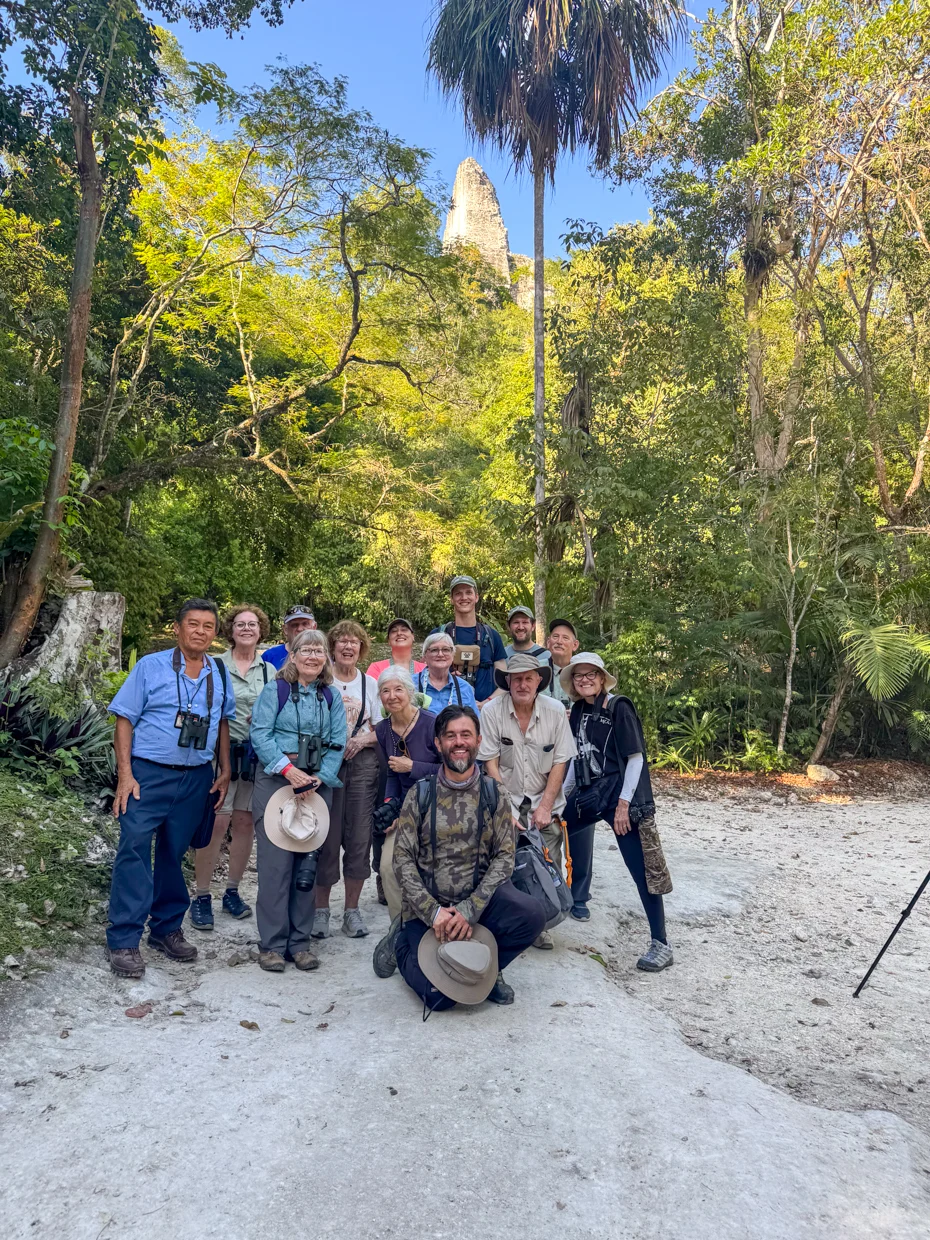
The 2026 expedition of the Belize and Tikal adventure, organized by Eagle-Eye Tours, concluded on March 13, marking a significant milestone for regional ecotourism and avian research. Led by seasoned ornithological experts Matthew Fuirst and Oscar Zúñiga Meza, a group of fourteen international birders completed an eleven-day circuit through some of the most ecologically diverse habitats in Central America. The journey, which spanned from the coastal marshes of Belize City to the dense subtropical rainforests of Guatemala’s Tikal National Park, resulted in the documentation of 271 distinct bird species, highlighting the critical importance of the Mesoamerican Biological Corridor.

The expedition served not only as a premiere birdwatching event but also as a field assessment of the current health of various ecosystems. By traversing diverse terrains—including pine savannas, montane forests, and lowland wetlands—the group provided a snapshot of the region’s biodiversity during the peak of the spring migration and nesting season.
The Coastal Gateway and Initial Biological Survey
The expedition commenced on March 3 in Belize City, a location that serves as a vital transition zone between marine and terrestrial environments. The initial phase of the tour focused on the immediate environs of the city and the Monkey Bay Wildlife Sanctuary. Early observations in the suburban outskirts of Belize City yielded sightings of the Ruddy Crake (Laterallus ruber), a species often elusive due to its preference for dense marsh vegetation.

As the group moved toward the Belize Welcome Sign, the focus shifted to pelagic and coastal species. Despite inclement weather, participants documented Magnificent Frigatebirds, Brown Pelicans, and Sandwich Terns. These sightings are consistent with long-term data suggesting that the Belizean coastline remains a stable foraging ground for large marine birds, even as urban development continues to expand.
The transition to Monkey Bay Wildlife Sanctuary on March 4 provided a shift into riparian and broadleaf forest habitats. The recent rainfall in the area had stimulated insect activity, leading to high visibility for insectivorous species. Key sightings included the Red-legged Honeycreeper and the Scarlet-rumped Tanager. The presence of the Lesser Swallow-tailed Swift and the Golden-olive Woodpecker underscored the sanctuary’s role as a refuge for species that require intact canopy structures and healthy insect populations.

Ecological Transitions in the Maya Mountain Foothills
From March 4 to March 7, the expedition was based at the Jade Jungle Resort, formerly known as Pook’s Hill. This 300-acre private reserve is situated in the foothills of the Maya Mountains, providing a unique altitudinal gradient that supports a high degree of species richness. The resort’s proximity to primary rainforest allowed for the observation of "mixed-species flocks," a phenomenon where different bird species forage together to increase protection from predators and improve foraging efficiency.
During this period, the group recorded the Spectacled Owl (Pulsatrix perspicillata), a large tropical owl that serves as an apex predator in these forests. Further exploration of the botanical gardens and surrounding trails yielded sightings of the Gartered Violaceous Trogon and the Pale-billed Woodpecker. The highlight of the montane segment occurred during a day trip to the Mountain Pine Ridge Forest Reserve. This area is characterized by its unique soil composition and stands of Honduras Pine (Pinus caribaea), which support specialized avian communities.

In a rare occurrence, the group sighted a male Lovely Cotinga (Cotinga amabilis). This species is known for its brilliant turquoise plumage and is notoriously difficult to locate due to its preference for the high canopy of undisturbed forests. The sighting was classified as a "lifer" for the local guides, suggesting that even in well-studied areas, the Lovely Cotinga remains an infrequent and highly prized observation. The day concluded with a visit to the Green Hills Butterfly Ranch, where nine species of hummingbirds were identified, including the Wedge-tailed Sabrewing and the Green-breasted Mango, demonstrating the importance of floral diversity in supporting high-metabolism avian species.
The Intersection of Archeology and Ornithology in Tikal
On March 7, the expedition crossed the border into Guatemala to enter Tikal National Park, a UNESCO World Heritage site. Tikal is globally recognized for its monumental Mayan architecture, but it is equally significant as a 575-square-kilometer protected rainforest. For the scientific community, Tikal represents one of the most successful examples of cultural and natural heritage integration.

The group’s survey of the park from March 7 to March 10 focused on the relationship between the ancient stone structures and the surrounding jungle. The park’s "army ant swarms" provided a unique opportunity to observe specialized "ant-following" birds. Species such as the Gray-throated Chat, Ruddy Woodcreeper, and Northern Barred Woodcreeper were observed feeding on insects flushed out by the moving columns of ants. This ecological interaction is a hallmark of healthy neotropical forests.
The most significant find in Tikal was the Orange-breasted Falcon (Falco deiroleucus). This species is one of the rarest raptors in the Americas, with a fragmented population that relies on high cliffs or tall forest emergents for nesting. The observation of two falcons foraging near Temple IV provides evidence of the continued suitability of Tikal as a nesting site for this critically range-restricted species. Additionally, the presence of the Ocellated Turkey (Meleagris ocellata), a regional endemic, highlighted the success of the park’s anti-poaching measures, as these birds showed little fear of human observers.

Beyond avian life, the park’s mammalian populations were well-represented. Observations of Central American Spider Monkeys, Black Howler Monkeys, and White-nosed Coatis suggest a robust food web within the Tikal core zone.
Wetland Conservation at Crooked Tree Wildlife Sanctuary
The final leg of the journey, from March 10 to March 13, took place at the Crooked Tree Wildlife Sanctuary in Belize. Established in 1984 by the Belize Audubon Society, Crooked Tree is a RAMSAR site of international importance. The sanctuary is a complex of inland lagoons, swamps, and waterways that provide critical habitat for both resident and migratory waterbirds.

The group conducted boat surveys of the lagoon, which revealed an abundance of Snail Kites and Black-collared Hawks. The highlight of the wetland survey was the Jabiru (Jabiru myceteria), the largest stork in the Americas. The Jabiru is a flagship species for wetland conservation in Belize; its presence is a key indicator of the health of the aquatic ecosystem and the availability of large fish and amphibians.
The expedition also explored the pine savanna habitats surrounding Crooked Tree. These drier areas yielded sightings of the Yucatan Jay and the Yucatan Woodpecker, both of which are endemic to the Yucatan Peninsula region. The observation of a Ferruginous Pygmy Owl being "mobbed" by smaller songbirds provided a clear demonstration of interspecies defensive behavior.

Broader Implications and Economic Impact
The successful completion of the 2026 Belize and Tikal tour underscores the growing importance of ecotourism as a viable economic driver for Central American nations. According to data from the Belize Tourism Board, birdwatching is one of the fastest-growing niches in the travel sector, attracting high-value visitors who contribute directly to the maintenance of protected areas through park fees and the employment of local guides.
From a conservation perspective, the documentation of 271 species over eleven days serves as a vital data point for ongoing monitoring efforts. The sighting of rare species like the Lovely Cotinga and the Orange-breasted Falcon reinforces the necessity of maintaining large, contiguous blocks of forest. Experts suggest that the "borderless" nature of avian migration requires continued international cooperation between Belize and Guatemala to ensure that the Maya Forest remains a functional biological unit.

The participants’ findings have been uploaded to global databases such as eBird, a project of the Cornell Lab of Ornithology. This citizen-science data is used by researchers worldwide to track population trends, migration timing, and the impacts of climate change on avian distributions.
In conclusion, the Eagle-Eye Tours 2026 expedition provided more than just a recreational experience for fourteen birders; it facilitated a deep dive into the complex ecological tapestry of the Maya heartland. As habitats across the globe face increasing pressure from human activity, the pristine corridors of Tikal and the protected waters of Crooked Tree remain essential bastions for the survival of the region’s spectacular avian heritage. The expedition ended on a high note, with the Jabiru’s iconic "flyby" symbolizing the enduring wildness of the Central American landscape.
