
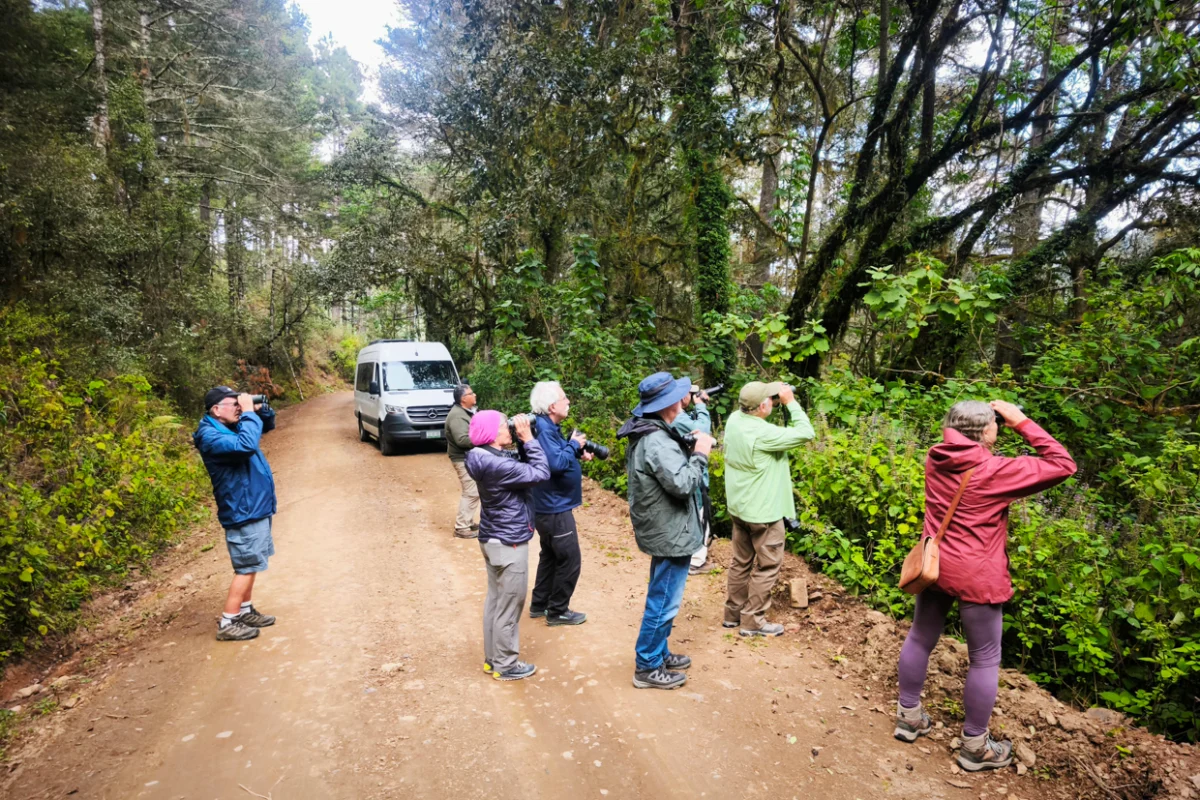
The southern Mexican states of Oaxaca and Chiapas represent one of the most ecologically diverse corridors in the Western Hemisphere, serving as a critical nexus for both endemic resident species and neotropical migratory birds. A recent 14-day ornithological expedition through these regions documented a staggering 360 avian species observed and an additional 18 species identified by vocalization. This survey, conducted across a variety of altitudinal zones ranging from high-altitude cloud forests to coastal mangroves and tropical rainforests, highlights the biological importance of the Mesoamerican Biological Corridor. The findings emphasize not only the region’s high rate of endemism but also the pressing need for continued habitat preservation in the face of environmental shifts.

The Ornithological Significance of Southern Mexico
Mexico is home to over 1,100 bird species, roughly 10% of the world’s avian diversity. Oaxaca and Chiapas are particularly significant due to their complex topography. The convergence of the Sierra Madre del Sur and the Sierra Madre de Chiapas creates isolated pockets of habitat where speciation has flourished. The recent expedition focused on several Endemic Bird Areas (EBAs) as defined by BirdLife International, including the Balsas Endemic Province and the Central American Highlands.

The expedition began in Oaxaca City, situated in the Central Valleys at an elevation of approximately 1,550 meters. The initial observations at the Hotel Victoria on the slopes of Cerro Fortín provided immediate evidence of the region’s role as a wintering ground for migratory species. Participants recorded the Virginia’s Warbler (Leiothlypis virginiae), a species that breeds in the Southwestern United States and winters in the scrub forests of Mexico. The presence of the Dusky Hummingbird (Phaeoptila sordida), a Mexican endemic, underscored the immediate accessibility of unique biodiversity within urban-adjacent green spaces.

The Oaxaca Highlands: Xeric Scrub and Zapotec Heritage
The survey moved toward the Zapotec archaeological site of Yagul, where the environment is dominated by xeric scrub and endemic columnar cacti such as Myrtillocactus schenkii. This habitat is essential for the Blue Mockingbird (Melanotis caerulescens). While often elusive, the species was observed singing in the open, a behavior that allows researchers to better understand its territorial displays. Other significant endemics recorded in this dry forest ecosystem included the Gray-breasted Woodpecker (Melanerpes hypopolius), Boucard’s Wren (Campylorhynchus jocosus), and the White-throated Towhee (Melozone albicollis).

Transitioning to the humid oak forests near Teotitlán del Valle and the road to Benito Juárez, the expedition documented a shift in hummingbird diversity. The availability of nectar-rich Salvia species supported sightings of the Mexican Violetear, Rivoli’s Hummingbird, and the Blue-throated Mountain-gem. A notable highlight was the Red Warbler (Cardellina rubra), a striking endemic of the Mexican highlands known for its vibrant plumage and preference for high-altitude coniferous and oak-pine forests.

The integration of cultural heritage with biological survey was exemplified by visits to the "Bug in the Rug" weaving workshop and the Tule tree in Santa María del Tule. The latter, a Moctezuma cypress (Taxodium mucronatum) estimated to be over 1,400 years old, serves as a micro-ecosystem of its own, providing roosting sites for the American Barn Owl (Tyto alba).

High-Altitude Pine-Oak Forests and the Sierra Madre del Sur
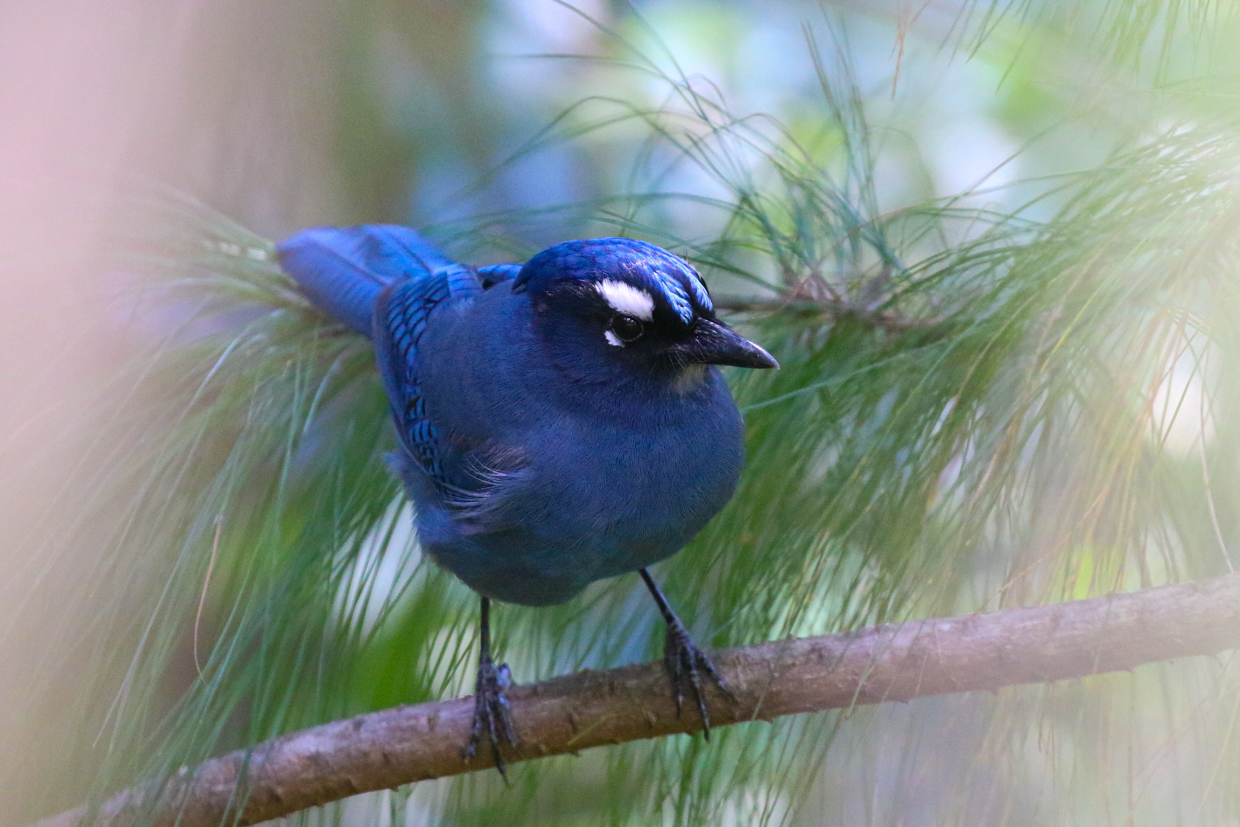
The expedition ascended into the humid pine-oak forests of Cerro San Felipe (La Cumbre Ixtepeji) and the Sierra Madre del Sur. These forests are characterized by ancient oaks draped in moss, epiphytes, and bromeliads, creating a high-moisture environment essential for specialized species. The survey successfully located the Dwarf Jay (Cyanolyca nanus), a "vulnerable" species according to the IUCN Red List. This jay is highly dependent on pristine pine-oak and cloud forests, and its presence is often considered an indicator of forest health.

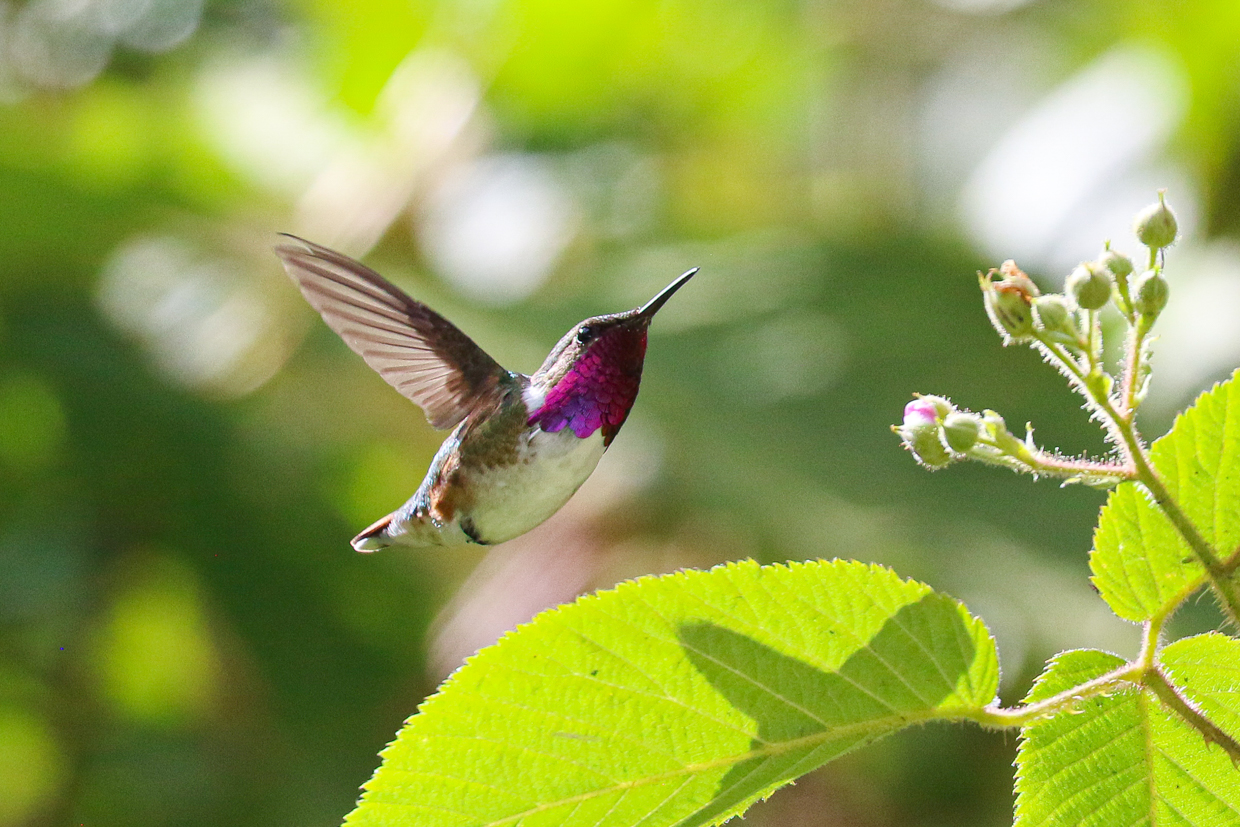
In the Sierra Madre del Sur, the team observed the Garnet-throated Hummingbird and the Bumblebee Hummingbird, the latter being one of the smallest avian species in the world. A significant non-avian find in this region was the Oaxaca Arboreal Alligator Lizard (Abronia oaxacae), an endemic reptile with fewer than ten formal records in this specific mountain range, highlighting the untapped potential for herpetological research in these forests.
Coastal Transitions and the Isthmus of Tehuantepec
As the expedition descended toward the Pacific slope, the vegetation transitioned into tropical dry forests and shade-grown coffee plantations. This mosaic of land use provides critical habitat for the Northern Emerald-Toucanet and the Grey-crowned Woodpecker. Upon reaching the lowlands of Huatulco National Park, the species composition shifted dramatically toward Western Mexican endemics.

Observations in Huatulco included the Turquoise-crowned Hummingbird, Citreoline Trogon, and the Orange-fronted Parakeet. The park’s dry forest canopy also facilitated the sighting of a Zone-tailed Hawk (Buteo albonotatus) predating a Black Iguana, a vivid display of the predator-prey dynamics in the tropical deciduous forest.

The Isthmus of Tehuantepec, the narrowest point between the Gulf of Mexico and the Pacific Ocean, is notorious for its powerful winds. These winds influence the structure of the low-altitude dry forests, which rarely exceed four meters in height. Despite the challenging gusts, the team identified the Rose-bellied Bunting (Passerina rositae), a species restricted to a very small range in the Isthmus. At one point, 30 individuals were counted, a significant observation for a species listed as "Near Threatened" due to habitat loss.

The Wetlands and Mangroves of Chiapas
The expedition’s entry into Chiapas focused on the La Encrucijada Biosphere Reserve. This site contains some of the tallest mangroves on the Pacific coast of the Americas. Utilizing boat-based survey methods, the team recorded specialized aquatic and riparian species, including the Sungrebe (Heliornis fulica), Agami Heron (Agamia agami), and the American Pygmy Kingfisher. The Northern Potoo (Nyctibius jamaicensis), a nocturnal insectivore that relies on perfect camouflage against tree bark, was a primary target for the lowland survey.

In the cattle pastures and jungle patches of Mapastepec, the team noted the presence of the Giant Wren (Campylorhynchus chiapensis). This species is a Chiapas endemic with a restricted range, making it a high-priority bird for conservationists monitoring the impact of agricultural expansion on native bird populations.

The Highlands of San Cristóbal de las Casas and Sumidero Canyon
Moving into the "Los Altos de Chiapas," the survey explored the pine-oak highlands near San Cristóbal de las Casas. In the Montetik Park and Tzontehuitz cloud forests, the team encountered the Pink-headed Warbler (Cardellina versicolor). This species is endemic to the highlands of Chiapas and western Guatemala and is a favorite among ornithologists for its unique pinkish-red coloration.

The Sumidero Canyon, with its 1,300-meter vertical walls, provided a unique altitudinal transect. The expedition documented the Belted Flycatcher (Xenotriccus callizonus), a rare and elusive species associated with bamboo thickets. An unusual behavioral observation was recorded for the Russet-crowned Motmot, involving complex interactions and apparent courtship feeding between three adults, a behavior that warrants further ethological study.

The Rainforests of Palenque and the Gulf Slope
The final phase of the expedition took place in the tropical rainforests of Palenque and the El Ocote Biosphere Reserve. The rainforest environment is characterized by high humidity and dense canopy layers, supporting species like the Keel-billed Toucan, Montezuma Oropendola, and Scarlet Macaw. The Palenque archaeological site, while a major cultural monument of the Mayan civilization, also serves as a protected enclave for rainforest biodiversity.
During the survey of the Palenque ruins, the team observed the Slaty-tailed Trogon and the Red-legged Honeycreeper. The presence of Howler Monkeys (Alouatta palliata) provided the acoustic backdrop for the avian survey, emphasizing the integrity of the local trophic levels. The expedition concluded in the marshes of Tabasco near Villahermosa, where the team located the Pinnated Bittern (Botaurus pinnatus), a secretive wetland bird that is increasingly rare due to the drainage of swampy areas for development.

Analysis of Implications and Conservation Outlook
The documentation of 378 species over 14 days serves as a powerful testament to the biological richness of Southern Mexico. However, the expedition also highlighted several environmental challenges. The prevalence of migratory warblers, such as the Nashville, MacGillivray’s, and Hermit Warblers, underscores Mexico’s role as an indispensable wintering ground. Any habitat loss in Oaxaca or Chiapas directly impacts bird populations as far north as Canada and Alaska.

Furthermore, the sighting of several "at-risk" species, including the Dwarf Jay and the Rose-bellied Bunting, suggests that while protected areas like Huatulco National Park and the El Ocote Biosphere Reserve are vital, they must be part of a larger, connected landscape. Ecotourism, as demonstrated by this expedition, provides an economic incentive for local communities—such as the weavers of Teotitlán or the guides in San Cristóbal—to protect their natural resources.

The data gathered during this survey has been contributed to the eBird database, a global citizen-science project managed by the Cornell Lab of Ornithology. This information assists researchers in tracking population trends and shifting ranges in response to climate change. As Southern Mexico continues to face pressures from agricultural expansion and infrastructure development, these ornithological records provide the baseline data necessary for informed conservation strategies and the preservation of Mexico’s avian heritage.
