
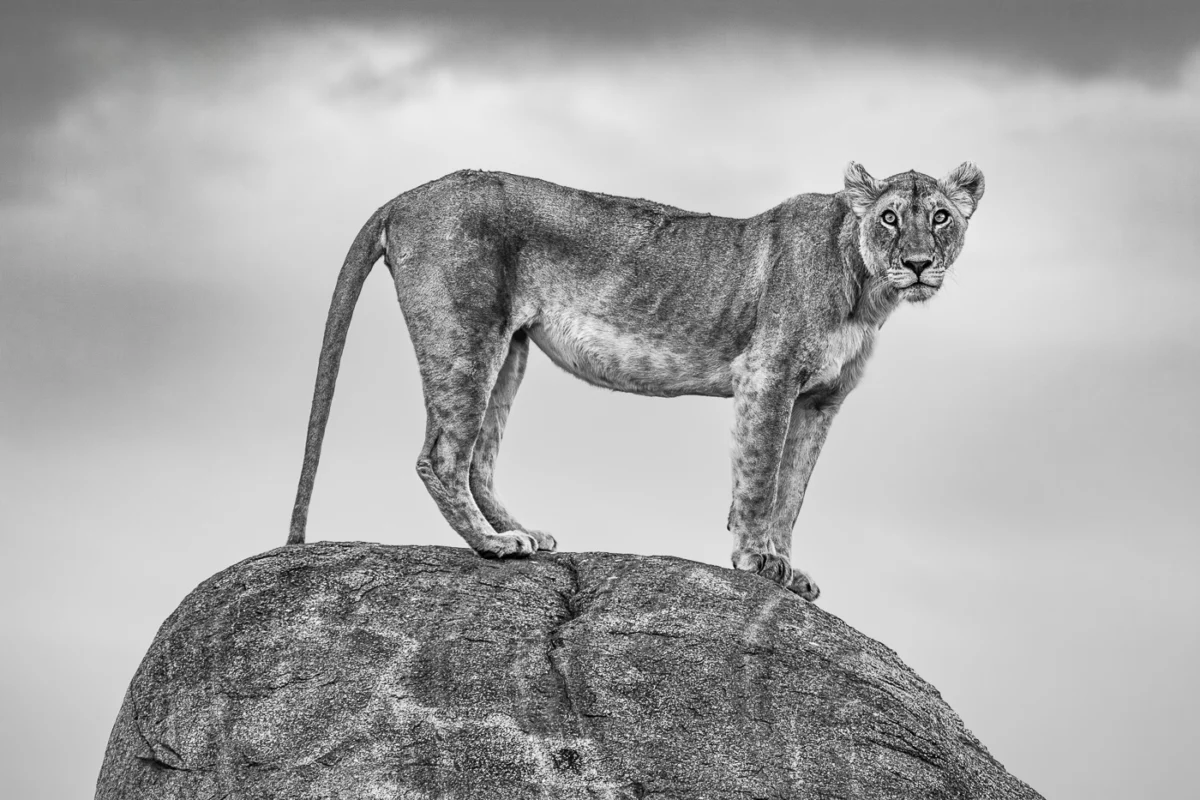
The captivating world of wildlife photography finds a profound voice in the work of Gabi Guiard, an artist who has masterfully transitioned from the dynamic realm of graphic design and art direction to the serene yet powerful pursuit of capturing nature’s spirit in black and white. Guiard’s journey is a testament to the enduring allure of the natural world and the transformative power of a singular artistic vision, where the absence of color reveals a deeper, more resonant truth about her subjects. Her distinctive approach, characterized by a commitment to the essential, a masterful command of composition, and a profound sensitivity, offers viewers an intimate, timeless connection to the wild.

Guiard’s innate connection to wildlife was forged in childhood, a primal fascination with animal behavior and presence that shaped her perception of the world. While her professional path initially led her through the vibrant, often saturated landscape of advertising, honing her skills in graphic design and art direction, the seeds of her true calling were being sown. Her admiration for the iconic black-and-white fashion and advertising photographers of her era gradually ignited an interest in photography itself. This burgeoning passion eventually merged with her lifelong love for wildlife, creating a unique synergy that allowed her to apply her extensive artistic knowledge to the raw, untamed beauty of nature. The transition was not merely a career change but a profound reorientation, enabling her to express her deepest passions and artistic convictions through the lens.
Black and White: A Language of the Soul

For Guiard, black and white is far more than an aesthetic choice; it is a fundamental language, a medium through which she articulates stories, emotions, and her personal experience of nature. Unlike many contemporary wildlife photographers who leverage the full spectrum of color to showcase the vibrant diversity of ecosystems, Guiard deliberately strips away chromatic distractions. Her decision is not driven by a desire for a superficially "artistic" or "classic" look but by a disciplined focus on the core essence of her subjects. By eliminating color, Guiard meticulously removes layers of visual information, compelling the viewer to engage with the elemental qualities of texture, form, and contrast. This monochrome palette, she explains, is an exercise in honesty, revealing "what remains when everything superfluous disappears."
Psychological studies on visual perception often highlight how color can trigger immediate, often superficial, emotional responses. By removing this element, black-and-white photography forces a more analytical and contemplative engagement. The viewer’s brain actively seeks patterns, shapes, and tonal variations, leading to a deeper appreciation of the subject’s form and emotional content. In Guiard’s hands, this translates into an intimate dialogue, where the stark interplay of light and shadow speaks volumes, allowing the intrinsic character of the animal and its environment to emerge with startling clarity.

The Essential Over the Superfluous: A Philosophy of Simplification
Central to Guiard’s artistic credo is the conviction that "the important thing is not to show everything, but to show what truly matters." This philosophy of simplification dictates her every photographic decision. She strives to distil reality to its most essential components, allowing the wild character of nature to command central stage. In her images, a solitary gaze, a powerful silhouette, or a subtle gesture is often sufficient to convey a complete narrative. This minimalist approach invites viewers to connect with the raw strength and profound stillness of the moment, as if they could "hear the silence of the instant."

This "less is more" principle, a cornerstone of many artistic movements, finds potent expression in Guiard’s work. By judiciously removing extraneous visual elements, she creates an uncluttered path for the viewer’s eye, directing attention to the heart of the image. This could be a single, impactful gesture, the dramatic interplay of a shadow, the intensity of an animal’s look, or the elegant sweep of a line. The apparent visual emptiness or "noise-free space" within her compositions is not a void but an invitation—a canvas upon which each viewer can project their own emotions, memories, and interpretations, thereby completing the photograph on a deeply personal level. This intentional restraint is a powerful tool, fostering a connection that transcends mere observation, transforming it into an immersive, introspective experience.
Composition: The Unseen Architect of Meaning

In Guiard’s monochrome world, composition serves as the undisputed backbone of every photograph. It is not merely the arrangement of elements within the frame but the deliberate act of guiding the viewer’s gaze towards the story she intends to tell. In the absence of color, which often serves as a primary visual cue in traditional photography, compositional elements such as lines, shapes, and negative space assume an even greater critical weight. The precise placement of an animal within its natural environment, the delicate balance between areas of light and shadow, or the impactful silence of an empty expanse—all these elements coalesce to forge a harmonious yet often tension-filled visual narrative.
Guiard frequently embraces simplicity in her compositions, diligently avoiding superfluous elements that might dilute the central message. A diagonal line skillfully leading the eye to a lion’s intense gaze, the graceful curve of a tree branch framing a majestic silhouette, or the expansive negative space enveloping a subject can be profoundly effective in generating a sense of strength and intimacy. This deliberate structuring ensures that the image resonates deeply, transcending the immediate visual information. For Guiard, effective composition is not about rigidly adhering to established rules, but about understanding when and how to artfully transgress them to evoke a more profound emotional response. It is the invisible scaffolding that allows an image to breathe, simultaneously imbuing it with undeniable power and presence.

Contrast: A Painter’s Brush in Light and Shadow
Guiard describes light and shadow as her "two brushes," the fundamental tools with which she paints each image. This dramatic interplay of contrast is far more than a mere aesthetic choice; it is a vital communicative instrument. Through the strategic use of blacks, she conceals what she deems unnecessary, guiding the viewer away from distractions. Conversely, the carefully rendered lights reveal precisely what she intends for the viewer to perceive and feel. In black-and-white photography, shadows are not simply the absence of light; they carry as much expressive weight and narrative significance as the illuminated subjects themselves, often contributing to the mood, depth, and overall dramatic impact of the scene.

The technical mastery of contrast in monochrome photography is crucial. It involves understanding how different light conditions translate into a grayscale spectrum, and how to manipulate these tones during post-processing to achieve the desired effect. High contrast can create drama and intensity, drawing sharp distinctions between elements, while subtle gradations of gray can evoke softness, mystery, and a sense of timelessness. Guiard expertly wields this spectrum, ensuring that her images possess a rich tonal range that enhances textures and forms, allowing them to speak with unparalleled clarity and emotional depth.
Emotion: The Heartbeat Behind Every Image

While Guiard’s work is rooted in the meticulous observation of wildlife, her ultimate quest is the evocation of emotion. Her ambition extends beyond merely depicting an animal or a landscape; she seeks to convey a deeper sentiment—be it power, solitude, majesty, or even profound fragility. She views her subjects, particularly lions, not merely as biological specimens but as "kings and queens of a territory that breathes at its own rhythm." Each photograph, in her estimation, endeavors to preserve a fragment of their unique story: a calm, piercing gaze that belies immense strength, or a serene, dignified gesture that speaks of an ancient lineage.
Black and white, she contends, serves to intensify this narrative, compelling the viewer to focus on the truly significant elements of the scene. The removal of color allows the emotional core of the image to surface unimpeded, fostering a direct, unfiltered connection with the subject’s inner world. This approach aligns with the long-standing tradition of expressive photography, where the artist aims to transcend literal representation to touch the viewer’s soul.

The Timelessness of Black and White: A Legacy of Enduring Impact
Another compelling reason for Guiard’s steadfast commitment to black and white is its inherent magical quality: the ability to render images timeless. A photograph captured today, stripped of color, could effortlessly pass for one taken decades ago, and it will retain its impactful resonance for decades to come. This enduring quality allows Guiard to present nature as an eternal entity, a powerful mirror reflecting humanity’s past, present, and future.

The timeless nature of black-and-white photography is a well-documented phenomenon in art history. Iconic images from the early days of photography to modern masterpieces often transcend their specific historical contexts precisely because they are rendered in monochrome. By foregoing the transient details of contemporary color, Guiard creates a universal space where viewers are invited to project their own memories and emotions onto the scene. Each black-and-white photograph thus transforms into an intimate, silent dialogue between the visual narrative and its observer, fostering a deep, personal engagement that resonates across generations.
Technique and Sensitivity: A Harmonious Blend

Guiard readily acknowledges the undeniable role of technique in her craft: the diligent search for optimal light, the meticulous construction of composition, and the unwavering attention to detail. However, she asserts that the true meaning and power of her work derive from the profound sensitivity with which she observes the world. For her, it is paramount to discern what elements to highlight and what to deliberately relegate to the shadows, when to activate the shutter, and, crucially, when to simply remain silent and observe.
This delicate balance between technical proficiency and intuitive sensitivity is the hallmark of truly impactful art. Technique without sensitivity, Guiard posits, results in images that are merely descriptive, devoid of deeper meaning. It is only when these two forces converge that a photograph is born—one capable of stirring emotion, inspiring contemplation, and inviting profound reflection. Her practice embodies the philosophy that the camera is not merely a recording device but an extension of the artist’s eye and soul, capturing not just light, but the very essence of life.

Guiding Principles of a Monochrome Vision
Gabi Guiard’s compelling body of work is anchored in a set of clear and unwavering principles:

- Embracing the Essential: A steadfast commitment to simplification, stripping away all superfluous elements to reveal the core truth and wild character of her subjects. This "less is more" approach ensures clarity and impact.
- Black and White as a Communicative Language: Utilizing the monochrome palette not as a stylistic filter but as a deliberate artistic choice to convey emotion, tell stories, and evoke a deeper, more introspective connection with nature.
- Composition as the Structural Foundation: Employing precise and thoughtful composition to guide the viewer’s eye, creating harmony and tension through lines, shapes, light, and shadow, thereby enhancing the narrative power of each image.
- Emotional Resonance Through Contrast: Harnessing the dramatic interplay of light and shadow to create mood, depth, and a profound emotional connection, allowing the hidden and revealed elements to speak with equal eloquence.
For Gabi Guiard, working in black and white transcends mere artistic preference; it is a vital, intentional choice. It is her profound way of inviting silence into a visually noisy world, enabling her to truly listen to what nature communicates. In this profound silence, she discovers the most authentic and powerful images, those that resonate most deeply with her own artistic spirit and convey the timeless majesty of the wild. Her work stands as a powerful reminder that sometimes, by taking something away, we gain a far richer, more enduring perspective.
