
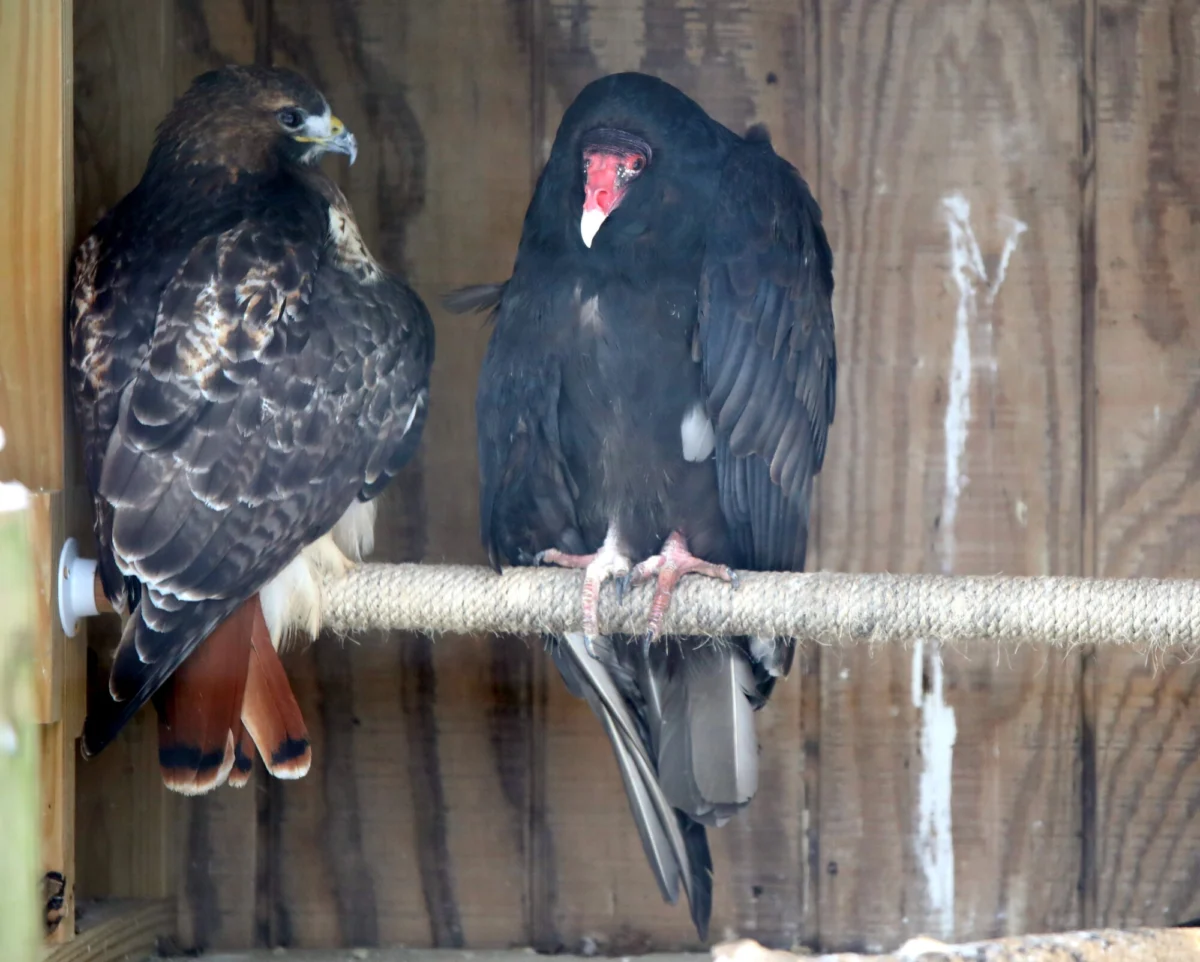
The profound capacity for connection transcends species, offering heartwarming testament to the universal nature of companionship. In the carefully curated environment of the Elmwood Park Zoo in Norristown, Pennsylvania, a remarkable bond has blossomed between Stan, a 20-year-old Turkey Vulture, and Hunter, a 22-year-old Red-tailed Hawk. These two magnificent birds of prey, brought together by circumstances of injury and rescue, have defied the typical solitary nature of their species, forging a deep and enduring friendship that has captivated zoo staff and visitors alike for over a decade. Their story highlights the unexpected ways in which shared experiences and mutual acceptance can create lasting alliances, even between creatures often perceived as natural adversaries.
A Shared Sanctuary: The Genesis of an Unconventional Friendship
Stan and Hunter’s lives converged at the Elmwood Park Zoo as a result of injuries sustained in the wild, rendering them unable to survive independently. Both birds arrived with significant damage to their wings, necessitating their permanent residency at the zoo for specialized care and rehabilitation. This shared vulnerability, coupled with their placement in the same expansive aviary, laid the groundwork for an extraordinary interspecies friendship.
Hunter, a Red-tailed Hawk, was the first to arrive at the zoo in July 2005. She was transferred from a rehabilitation center that has since ceased operations. Her injury was severe: an air-rifle pellet had become lodged in her right wing, causing a fracture to her humerus. Despite the best efforts of her initial caregivers, the bone never healed correctly, leaving her with a permanently impaired wing and limited flight capabilities.
Stan, a Turkey Vulture, joined Hunter at the zoo the following month, in August 2005. She was brought to Tri-State Bird Rescue & Research, a respected avian conservation organization in Newark, Delaware, after being discovered by the Newark Police Department. Similar to Hunter, Stan bore the evidence of human-inflicted harm: a pellet embedded in her right wing. This injury likely resulted in fractures to her radius and ulna, which, like Hunter’s, did not heal properly, severely curtailing her ability to fly.
The Foundation of Friendship: Shared Trauma and Mutual Support
The common thread of permanent flight impairment appears to have been a pivotal factor in the development of Stan and Hunter’s remarkable bond. Unable to rely on their natural predatory or scavenging flight patterns, they found solace and companionship in each other’s presence within the confines of their shared aviary. Over the past ten years, zoo staff have observed an increasing level of interdependence and affection between the two birds, leading them to be officially considered a "bonded pair."
This designation by zoo personnel signifies more than just cohabitation; it reflects observed behaviors that indicate a deep connection and mutual reliance. When food is provided, Hunter, despite her predatory instincts, has been observed to share her provisions with Stan. This act of generosity is particularly striking given the natural competitive dynamics between raptors and scavengers.
Further evidence of their close bond is seen in their mutual grooming habits, a behavior known as allopreening. Allopreening is a social activity among birds, typically seen between mated pairs or members of a close social group, where individuals groom each other’s feathers. This behavior strengthens social bonds and reinforces trust.
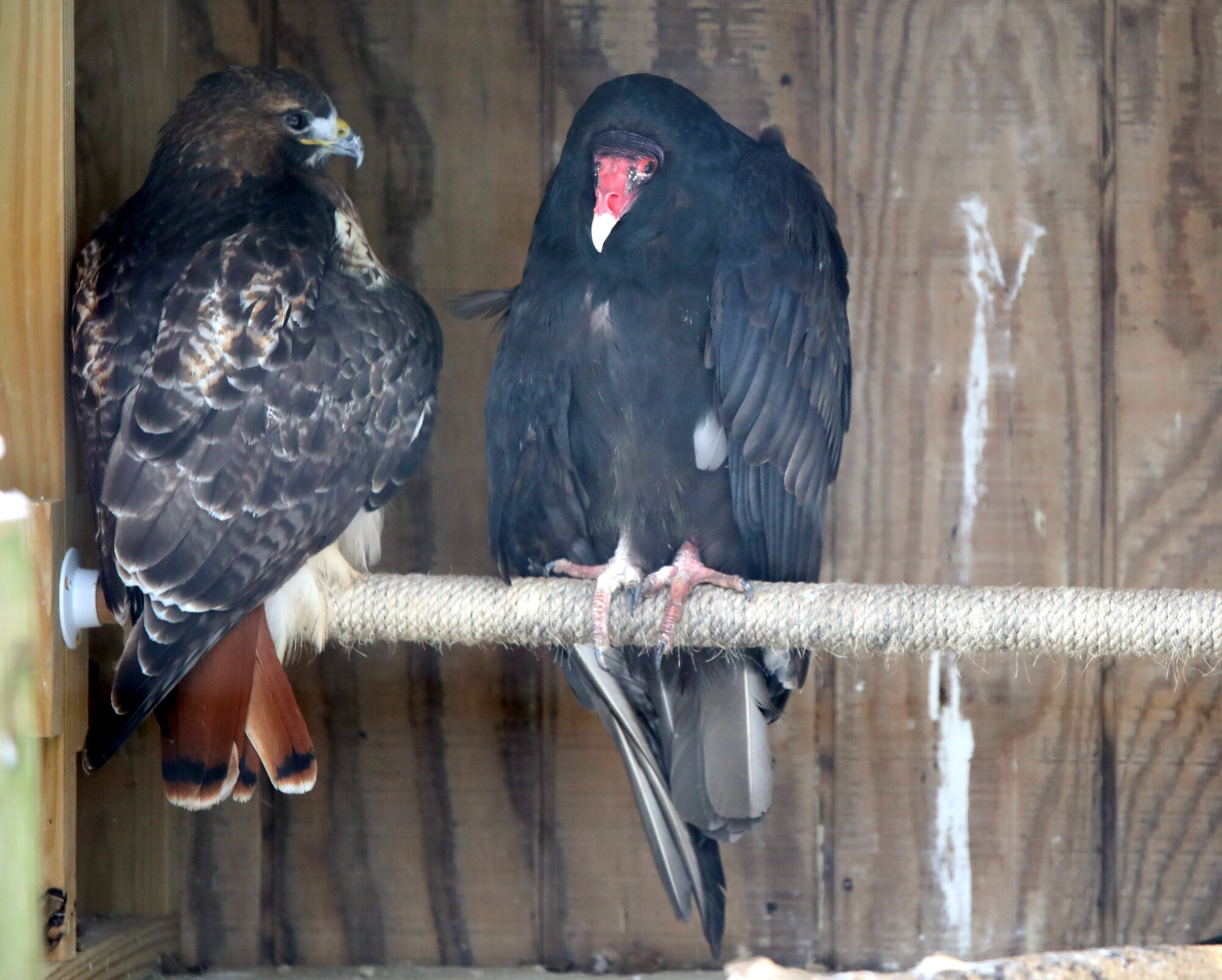
Perhaps one of the most touching demonstrations of their connection is Stan’s protective behavior towards Hunter. During periods when Hunter lays eggs, Stan has been observed to sit on them, exhibiting a surrogate maternal instinct. This behavior, while unusual, underscores the profound level of care and commitment they share.
A Unique Social Dynamic: Factors Contributing to Their Bond
The Elmwood Park Zoo’s decision to house Stan and Hunter together, without other birds of their respective species, may have significantly contributed to the strength and uniqueness of their bond. In the wild, Turkey Vultures and Red-tailed Hawks are not typically seen in close social proximity. Vultures are primarily scavengers, relying on their keen sense of smell to locate carcasses, while Red-tailed Hawks are active predators, hunting small mammals, birds, and reptiles. Their natural ecological roles often place them in competition for resources, rather than fostering cooperation.
However, within the controlled environment of the zoo, and with their shared physical limitations, the absence of interspecies competition for resources and mates allowed for a different social dynamic to emerge. They became each other’s primary social interaction, fostering a sense of security and companionship that might not have developed in a wild setting or a more diverse aviary. This environment provided them with a safe space to be themselves, free from the pressures of their natural social structures.
Expert Perspectives and Conservation Implications
Dr. Eleanor Vance, a leading ornithologist specializing in avian social behavior, commented on the significance of such interspecies friendships. "While interspecies friendships are not unheard of in the animal kingdom, particularly in managed care settings where social structures are altered, the bond between a vulture and a hawk is particularly noteworthy," Dr. Vance stated. "It challenges our preconceived notions of predator-prey relationships and highlights the adaptive nature of social bonding. The fact that these individuals, both with significant disabilities, have found such profound comfort and support in each other is a testament to the power of companionship."
The story of Stan and Hunter also serves as a poignant reminder of the impact of human activities on wildlife. The presence of air-rifle pellets as the cause of their injuries underscores the ongoing threats faced by wild birds due to careless or malicious human actions. Their rescue and rehabilitation by dedicated organizations and zoos provide a second chance at life, demonstrating the crucial role of conservation efforts.
Broader Impact and Future Outlook
The enduring friendship of Stan and Hunter has become a cherished attraction at the Elmwood Park Zoo, offering visitors a unique opportunity to witness an extraordinary example of interspecies connection. Their story resonates with people from all walks of life, promoting empathy and a deeper appreciation for the natural world and its inhabitants.
Zoo officials have indicated their commitment to continuing to provide the best possible care for Stan and Hunter, ensuring their environment remains conducive to their well-being and the continuation of their remarkable bond. The success of their cohabitation serves as a valuable case study for other zoological institutions considering similar arrangements, emphasizing the importance of careful observation, understanding of species-specific needs, and a commitment to fostering positive social interactions.
As Stan and Hunter continue to share their lives, their friendship stands as a beacon of hope and a powerful illustration of the unexpected and beautiful connections that can form when individuals, regardless of their background or species, find acceptance and solace in one another. Their story is a powerful reminder that friendship knows no bounds, and that even in the face of adversity, the capacity for love and companionship can flourish in the most unlikely of circumstances. The Elmwood Park Zoo’s aviary is not just a home for these two birds; it is a living testament to the extraordinary resilience and interconnectedness of life.
