
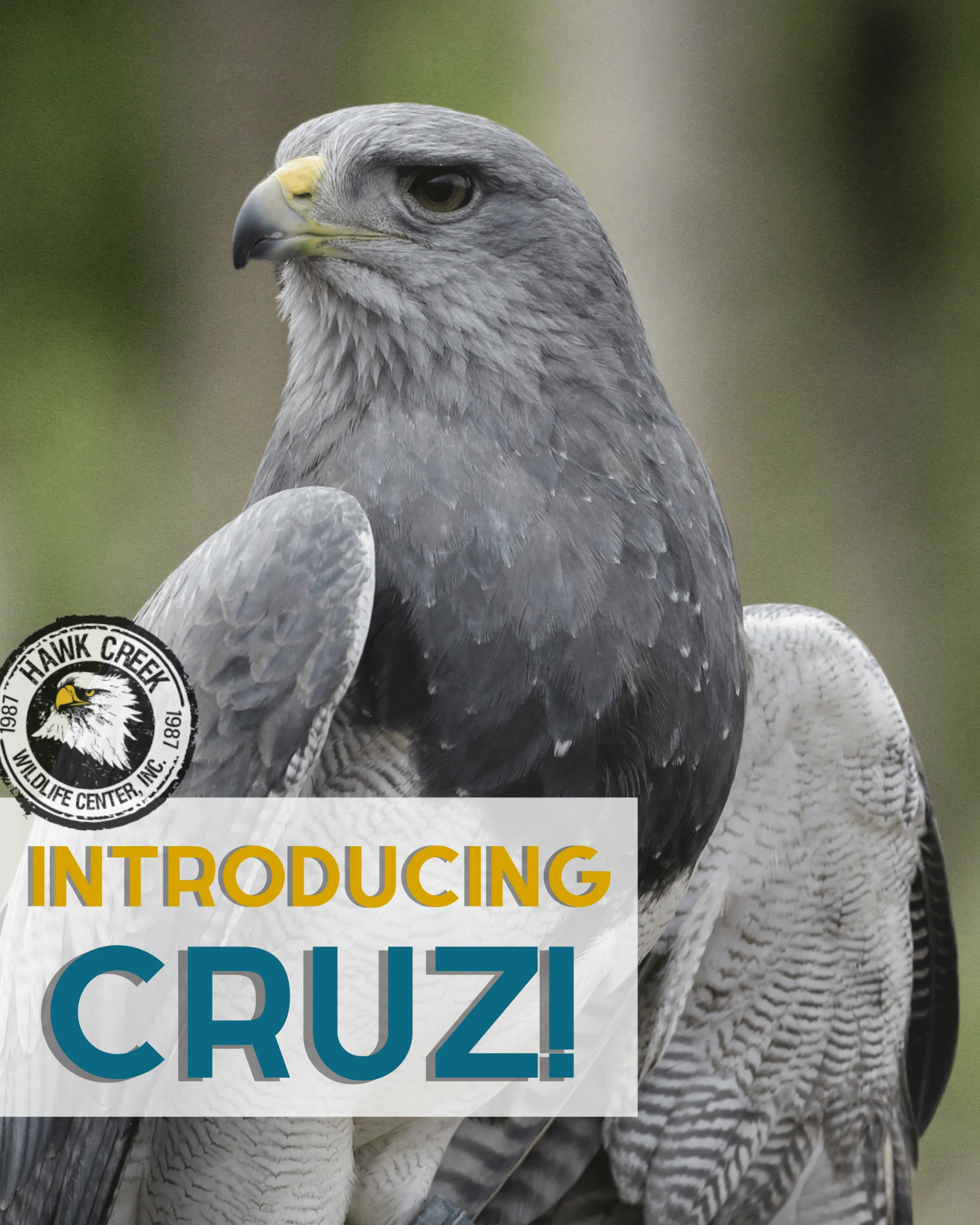
Hawk Creek Nature Center has officially introduced its newest avian resident, a magnificent Black-chested Buzzard-eagle, affectionately named Cruz by the center’s staff and volunteers. This impressive raptor, also known by a variety of other regional names including the Chilean Blue Eagle, Patagonian Eagle, and Gray Buzzard Eagle, represents a significant addition to Hawk Creek’s educational outreach and underscores the organization’s commitment to global biodiversity. Cruz’s arrival is a testament to a burgeoning partnership focused on bringing awareness to lesser-known, yet critically important, avian species to the broader public, particularly those rarely observed within the United States.
A Glimpse into the Life of Cruz and His Species
Cruz, the Black-chested Buzzard-eagle, hails from the expansive, high-altitude open country of South America. These formidable birds of prey are characterized by their impressive wingspans and keen eyesight, which they utilize for extensive aerial hunting. Their diet primarily consists of small mammals, such as degus, a rodent native to the region, and notably, invasive European hares, which they skillfully detect and capture from their elevated vantage points. The species’ ecological role in controlling prey populations, particularly invasive species, highlights their importance within their native ecosystems.
The Black-chested Buzzard-eagle (scientific name Geranoaetus melanoleucus) is a large bird of prey found in Argentina, Bolivia, Brazil, Chile, Paraguay, Peru, and Uruguay. They typically inhabit mountainous regions, plateaus, and open savannas, preferring areas with sufficient perching sites and open hunting grounds. Their breeding season, which varies by geographic location but often occurs between August and March, involves elaborate courtship displays and the construction of large nests, typically in trees or on cliff ledges. The chicks, usually one or two, are dependent on their parents for several months after hatching, requiring significant hunting success from the adults. Their conservation status, while not globally endangered, faces localized pressures from habitat loss and human encroachment in certain parts of their range.
The Foundation of Partnership: Sia and Global Eagle Conservation
The acquisition of Cruz and his subsequent integration into Hawk Creek’s educational programs are the direct result of a vital partnership with leading eagle conservationists at Sia, located in Oklahoma. Sia, which stands for the Comanche Ethno-Ornithological Initiative, is a pioneering organization dedicated to the conservation of eagles and other raptors through a multifaceted approach that combines scientific research, community engagement, and cultural preservation.
This collaboration is not new; Hawk Creek has been actively supporting various eagle conservation initiatives globally through its association with Sia. This partnership allows Hawk Creek to provide the local community with unique opportunities to learn about and appreciate eagle species that are not typically found in the United States. Previous introductions facilitated by this alliance include Jara, a Short-toed Snake Eagle (Circaetus gallicus), known for its specialized hunting of reptiles, and Onyx, a Verreaux’s Eagle (Aquila verreauxii), a striking black eagle native to Africa and the Arabian Peninsula. These introductions serve to broaden public understanding of raptor diversity and the specific conservation challenges faced by different species across continents.
Wild Earth Event: A Deep Dive into Eagle Conservation
The arrival of Cruz will be a focal point at Hawk Creek’s upcoming Wild Earth event, scheduled for May 13th. This event promises an immersive experience for attendees interested in the natural world, with a particular emphasis on avian conservation. A significant highlight of the event will be a presentation by Waha Thuweeka, also widely known as William “Two-Raven” Voelker, a prominent Global Eagle Conservationist affiliated with Sia.
Voelker, a respected figure within the field of ethno-ornithology, will share his extensive knowledge and passion for eagle conservation. His presentation is expected to delve into the ecological significance of eagles, the threats they face, and the innovative strategies being employed to protect these apex predators. Drawing from his work with the Comanche Ethno-Ornithological Initiative, Voelker will likely illuminate the intricate relationship between indigenous cultures and raptor conservation, emphasizing the importance of traditional ecological knowledge in modern conservation efforts. The event is anticipated to attract a diverse audience, including environmental enthusiasts, educators, students, and families, all eager to learn more about the vital work being done to safeguard eagle populations worldwide.
Chronology of Partnership and Avian Introductions
The journey that led to Cruz’s arrival at Hawk Creek Nature Center can be traced back to the establishment of a collaborative relationship between the two organizations. While the exact date of the initial partnership formation is not publicly detailed, it is understood to have been developed over several years, driven by a shared vision for raptor conservation and education.
- Early Stages (Estimated): Discussions and initial collaborations between Hawk Creek Nature Center and Sia likely began as a means to share resources and expertise in raptor rehabilitation and public education. This phase would have involved identifying common conservation goals and potential areas for joint projects.
- Development of Global Conservation Support: Over time, the partnership evolved to encompass support for broader global conservation efforts. This involved Hawk Creek contributing to or participating in initiatives championed by Sia, aimed at protecting raptor species in their native habitats.
- Introduction of Exotic Species for Education: A key outcome of the strengthened partnership has been the ability for Hawk Creek to host and exhibit raptor species that are not native to the United States, but are of significant conservation interest. This strategic decision aims to provide a unique educational platform for the public.
- Previous Introductions: Prior to Cruz, Hawk Creek, through its partnership with Sia, successfully introduced other remarkable eagle species. Jara, the Short-toed Snake Eagle, and Onyx, the Verreaux’s Eagle, have previously been presented to the public, each offering distinct insights into the diversity of raptor adaptations and conservation needs across different continents.
- Anticipated Event on May 13th: The current introduction of Cruz culminates in the upcoming Wild Earth event, where his presence will be amplified by the educational insights of William “Two-Raven” Voelker. This event marks a significant milestone in the ongoing educational outreach facilitated by the Sia partnership.
Supporting Data and Conservation Context
The introduction of species like Cruz, Jara, and Onyx serves a critical educational purpose. In the United States, the most iconic raptor is the Bald Eagle (Haliaeetus leucocephalus), which has seen a remarkable recovery due to dedicated conservation efforts, moving from endangered status to a symbol of conservation success. However, this success story can sometimes overshadow the plight of numerous other eagle and raptor species globally, many of which face more immediate and complex threats.
- Habitat Loss and Degradation: Globally, raptor populations are significantly impacted by the destruction and fragmentation of their natural habitats due to agriculture, urbanization, and resource extraction. The elevated open areas favored by the Black-chested Buzzard-eagle, for instance, are susceptible to changes in land use.
- Prey Availability: Declines in prey populations, whether due to environmental changes, disease, or the introduction of invasive species, directly affect the survival and reproductive success of raptors. Cruz’s role in controlling invasive European hares highlights the interconnectedness of ecosystems.
- Pollution and Poisoning: Pesticides, herbicides, and other environmental contaminants can accumulate in the food chain, posing a severe threat to raptors that are at the top of these chains. Lead poisoning from ingesting ammunition fragments in hunted carcasses is another significant issue for many large eagles.
- Human-Wildlife Conflict: In some regions, raptors may be persecuted due to perceived threats to livestock or game birds, or for use in traditional practices.
- Climate Change: Shifting weather patterns and extreme weather events can disrupt breeding cycles, alter prey distribution, and impact habitat suitability for raptor species.
The work of organizations like Sia, in collaboration with nature centers such as Hawk Creek, is crucial in raising awareness about these multifaceted challenges. By showcasing diverse eagle species and educating the public about their ecological roles and conservation needs, these initiatives foster a greater appreciation for biodiversity and inspire support for conservation action. The introduction of Cruz, a species rarely seen outside its native South America, offers a tangible connection to the global nature of conservation challenges and successes.
Official Responses and Expert Perspectives
William “Two-Raven” Voelker, through his extensive work with Sia and the Comanche Ethno-Ornithological Initiative, is a key figure in this collaborative effort. While a direct quote from him regarding Cruz’s arrival was not provided in the initial announcement, his anticipated presence at the Wild Earth event speaks volumes about the importance he places on such educational outreach. Voelker’s philosophy often emphasizes the holistic understanding of birds of prey, integrating scientific observation with the deep cultural significance they hold for many indigenous communities.
His work with the Comanche Ethno-Ornithological Initiative, for example, highlights the symbiotic relationship between cultural heritage and environmental stewardship. By understanding the historical and spiritual connections between indigenous peoples and raptors, conservation efforts can be made more effective and culturally sensitive. His presentations are known for their ability to bridge scientific data with compelling narratives, making complex conservation issues accessible and engaging for a wide audience.
The leadership at Hawk Creek Nature Center has consistently expressed their commitment to providing educational experiences that connect people with the natural world. Introducing species like Cruz aligns perfectly with their mission to foster environmental awareness and inspire a sense of responsibility towards wildlife conservation. The center’s ability to host such exotic species is a testament to the strength of their partnerships and their dedication to expanding the educational horizons for their community.
Broader Impact and Implications
The introduction of Cruz and the ongoing partnership between Hawk Creek and Sia have several far-reaching implications for conservation and education.
Firstly, it democratizes access to knowledge about global biodiversity. For many in the United States, the only exposure to large eagles might be through documentaries or images of the Bald Eagle. By bringing species like the Black-chested Buzzard-eagle, Short-toed Snake Eagle, and Verreaux’s Eagle into educational settings, Hawk Creek is providing a more comprehensive understanding of the avian world and the diverse threats and conservation strategies employed globally. This exposure can spark curiosity and a passion for conservation in individuals who might not otherwise encounter these species.
Secondly, such collaborations foster a sense of global interconnectedness in conservation efforts. They demonstrate that the challenges faced by wildlife are not confined by national borders and that international cooperation is essential for effective conservation. The support Hawk Creek provides to global programs, facilitated by Sia, illustrates how local institutions can contribute to worldwide conservation goals.
Thirdly, the event on May 13th, featuring William “Two-Raven” Voelker, is poised to significantly impact public understanding of ethno-ornithology and the integration of traditional knowledge into modern conservation science. This approach recognizes that indigenous communities often possess invaluable insights into local ecosystems and the behavior of wildlife, developed over centuries of observation and interaction. By highlighting this perspective, the event encourages a more inclusive and nuanced approach to conservation.
Finally, the presence of Cruz and other non-native raptors at Hawk Creek serves as a living example of the importance of habitat preservation and responsible land management. While these birds are cared for in a controlled environment, their native habitats are facing pressures. Educating the public about these species implicitly raises awareness about the need to protect diverse ecosystems worldwide, from the high plains of South America to the savannas of Africa. The success of these conservation initiatives, exemplified by the ongoing work of Sia and its partners, offers hope and a model for future efforts to protect the planet’s rich and varied wildlife.
