
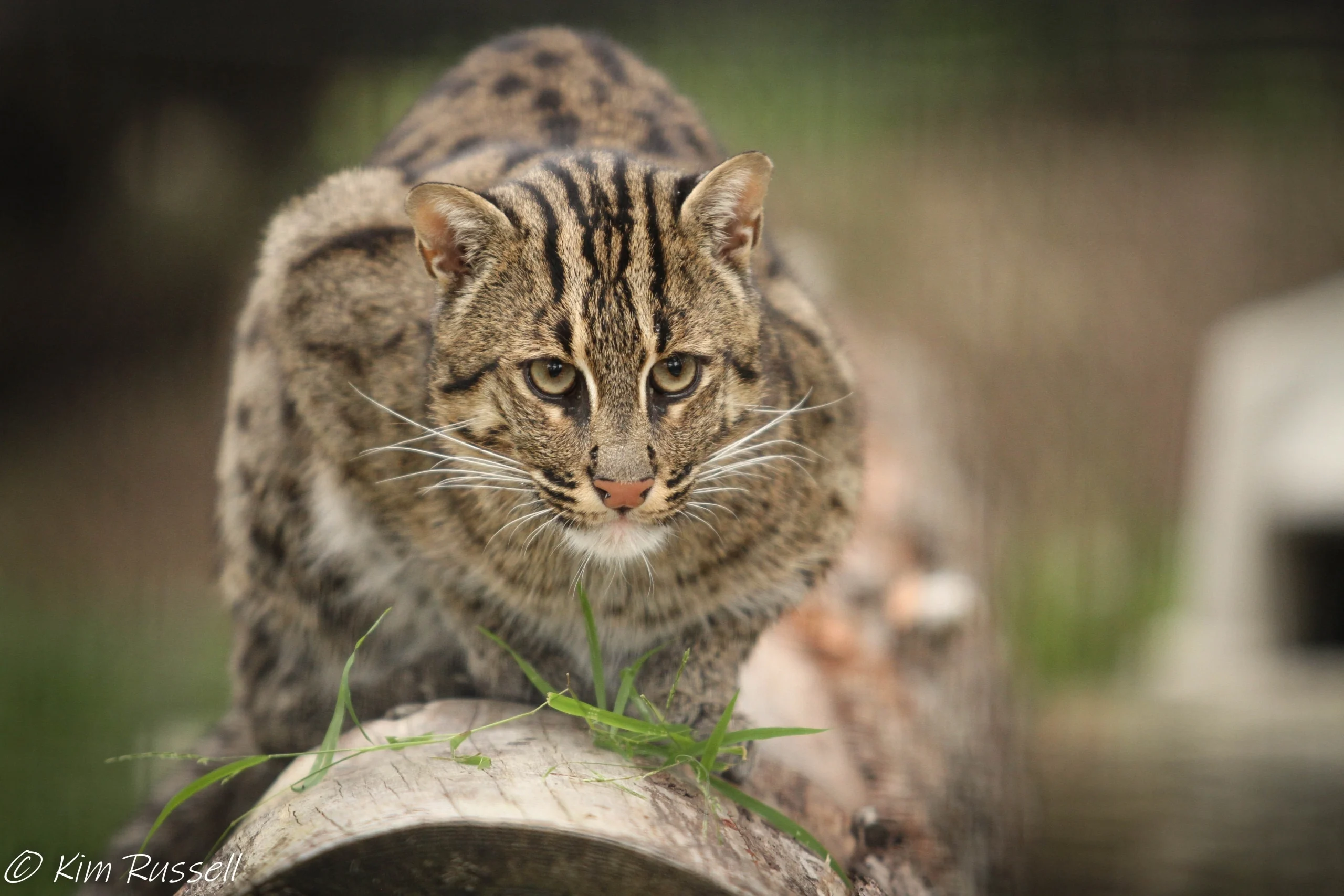
The annual observance of World Wildlife Day, held each year on March 3rd, amplifies the global commitment to celebrating and protecting the planet’s diverse array of species. This year, the theme, "Partnerships for Wildlife Conservation," underscores a critical understanding: the monumental task of safeguarding biodiversity requires collaborative efforts across governments, organizations, communities, and individuals. In this context, the story of River, a six-year-old fishing cat residing at the Hawk Creek Wildlife Center, emerges as a poignant illustration of how individual animals can become powerful ambassadors for their imperiled wild counterparts and how vital partnerships are to their survival.
The Vulnerable Status of the Fishing Cat
The fishing cat, scientifically known as Prionailurus viverrinus, is a medium-sized wild cat native to Southeast Asia and South Asia. Unlike many of its feline relatives, the fishing cat is uniquely adapted to life in wetland habitats, including mangrove swamps, coastal marshes, and riverine forests. Its name is derived from its remarkable ability to hunt fish, often by skillfully swatting them from shallow water with its paws. This specialized hunting technique, coupled with its semi-aquatic lifestyle, makes the fishing cat a vital component of its ecosystem, playing a role in regulating fish populations.
Despite its ecological significance, the fishing cat is facing a severe population decline. The International Union for Conservation of Nature (IUCN) Red List classifies the species as "Vulnerable," a designation that signals a high risk of extinction in the wild. The primary drivers of this decline are habitat loss and degradation, largely attributable to human activities such as deforestation for agriculture, aquaculture, and coastal development. Pollution of waterways and overfishing also contribute to the diminishing availability of their primary food source. Furthermore, fishing cats are often victims of human-wildlife conflict, facing retaliatory killings due to perceived threats to livestock or fisheries, and are sometimes hunted for their meat or skins. The elusive nature of these cats further complicates conservation efforts, making population assessments and direct research exceptionally challenging.
River: An Ambassador for a Species in Peril
River, a charismatic six-year-old fishing cat at the Hawk Creek Wildlife Center, embodies the spirit of the World Wildlife Day theme by serving as a living testament to the plight of her species. As an ambassador animal, River’s presence at the center is far more than a mere exhibition. She plays an instrumental role in raising public awareness and fostering a connection between people and the natural world. For many visitors, River represents their first, and often only, encounter with a fishing cat. This direct interaction ignites curiosity and empathy, prompting individuals to learn about the challenges fishing cats face in their natural habitats. Through educational programs and public presentations, River inspires thousands of people annually to care about fishing cats and to consider tangible ways they can contribute to their conservation. This educational outreach is crucial, as a significant portion of the public remains unaware of the existence of fishing cats, let alone their precarious conservation status.
The Power of Partnerships: Research and Conservation Initiatives
The importance of partnerships in advancing wildlife conservation is vividly demonstrated by the collaboration between the Hawk Creek Wildlife Center and the Fishing Cat Conservancy. The founder of the Fishing Cat Conservancy, a dedicated organization focused on the species’ survival, recently visited Hawk Creek to observe River firsthand. This visit was not simply an academic exchange; it was a critical opportunity for scientific observation. Fishing cats are notoriously reclusive, making field research arduous and data collection scarce. However, by studying ambassador cats like River in a controlled environment, researchers gain invaluable insights into their behavior, physiology, and ecological needs.
The study of River’s movements and her adept fishing techniques provides a unique window into the natural behaviors of the species. Scientists can meticulously document how she utilizes her paws to catch prey, her preferred hunting strategies, and her daily routines. This detailed behavioral data, gathered from ambassador animals, is indispensable for developing effective conservation programs for wild fishing cat populations. Understanding their dietary preferences, their territorial needs, and their social structures can inform habitat restoration efforts, anti-poaching initiatives, and community engagement strategies. The conservancy leverages this knowledge to implement targeted conservation actions, aiming to secure a future for fishing cats in the wild.
The Fishing Cat Conservancy’s Multifaceted Approach
The Fishing Cat Conservancy is at the forefront of a comprehensive conservation strategy for Prionailurus viverrinus. Their work is built upon several key pillars, all of which rely heavily on collaboration and strategic partnerships.
Establishing Nature Preserves
A cornerstone of the Conservancy’s strategy involves the creation and protection of dedicated nature preserves in critical fishing cat habitats. These preserves are designed to provide safe havens where fishing cats can thrive, free from the immediate threats of human encroachment and habitat destruction. Establishing such areas requires extensive land acquisition, careful ecological assessment, and ongoing management to ensure the health and integrity of the ecosystem. Partnerships with local governments, conservation NGOs, and international bodies are essential for securing the necessary funding, expertise, and legal frameworks to establish and maintain these vital sanctuaries.
Landowner Partnerships for Ecosystem Preservation
Recognizing that fishing cat habitats often extend beyond protected areas and into privately owned lands, the Conservancy actively engages in forming partnerships with landowners. This approach is crucial, as human settlements and agricultural lands frequently intersect with the natural range of fishing cats. By working with landowners, the Conservancy aims to promote sustainable land-use practices that are compatible with fishing cat survival. This can involve offering incentives for habitat restoration, implementing wildlife-friendly farming techniques, or establishing corridors that allow for safe passage of wildlife. These collaborations foster a sense of shared responsibility for conservation, transforming potential human-wildlife conflict into opportunities for coexistence. This grassroots approach is vital for creating a mosaic of connected habitats that can support viable fishing cat populations.
Inspiring Change Through Education and Advocacy
Beyond direct conservation actions, the Fishing Cat Conservancy is dedicated to inspiring broader societal change through education and advocacy. This involves raising public awareness about the threats facing fishing cats and the importance of wetland ecosystems. They work to educate local communities about the ecological role of fishing cats and to promote their coexistence with human populations. Advocacy efforts target policymakers to influence legislation and promote conservation-friendly policies. The Conservancy’s online presence, including their website at fishcat.org, serves as a vital platform for disseminating information, sharing research findings, and soliciting support for their initiatives. Each partnership, whether with a local farmer, a government agency, or a global conservation organization, contributes to this overarching goal of inspiring change and securing a future for the fishing cat.
The Broader Implications of World Wildlife Day and Collaborative Conservation
World Wildlife Day serves as an annual reminder of the interconnectedness of all life on Earth and the urgent need for concerted action to protect endangered species. The theme of "Partnerships for Wildlife Conservation" is particularly salient in the face of escalating biodiversity loss. The challenges posed by habitat destruction, climate change, and illegal wildlife trade are too vast for any single entity to tackle alone.
The success of conservation efforts for species like the fishing cat hinges on the ability to forge strong alliances. This includes:
- Intergovernmental Cooperation: Nations must collaborate on transboundary conservation initiatives, sharing data and resources to protect species that migrate across borders.
- Public-Private Partnerships: Collaboration between governments, NGOs, and the private sector can leverage diverse expertise and funding streams for conservation projects.
- Community Engagement: Empowering local communities to become stewards of their natural heritage is crucial for long-term conservation success.
- Scientific Collaboration: Sharing research findings and best practices among scientists globally accelerates the development of effective conservation strategies.
- Individual Action: Public support, through donations, volunteering, and advocating for conservation, plays a vital role in funding and driving these efforts.
The story of River and the work of the Fishing Cat Conservancy highlight the tangible impact of these partnerships. By donating to Hawk Creek Wildlife Center on World Wildlife Day, individuals directly contribute to the support of fishing cat conservation, amplifying the impact of the Conservancy’s work. This demonstrates how even seemingly small actions, when aggregated through collective effort, can have a significant positive effect.
Looking Ahead: A Future for the Fishing Cat
The ongoing efforts by organizations like the Fishing Cat Conservancy, supported by wildlife centers like Hawk Creek and the growing awareness fostered by events like World Wildlife Day, offer a beacon of hope for the future of the fishing cat. The challenges are substantial, and the road ahead requires sustained commitment and innovative approaches. However, by embracing the principle of "Partnerships for Wildlife Conservation," the global community can work together to ensure that species like the fishing cat not only survive but thrive in their natural habitats for generations to come. The meticulous study of ambassador animals like River, coupled with robust conservation strategies and broad-based collaboration, provides a blueprint for safeguarding biodiversity in an increasingly complex world.
The photo credit for this article is Kim Russell.
