
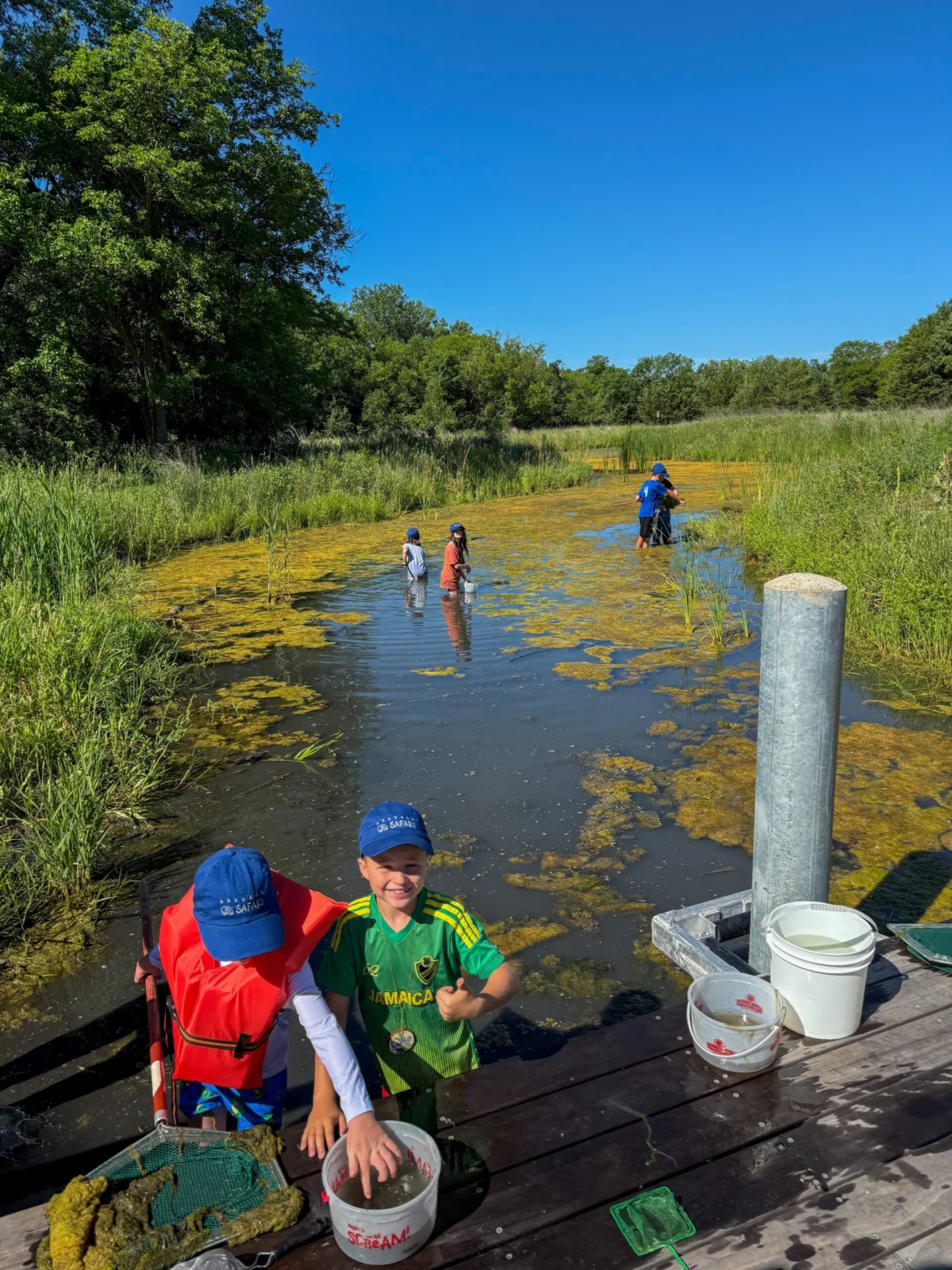
Since its inception, Audubon’s Rowe Sanctuary has been a beacon for environmental education, firmly establishing itself as a vital hub where young people connect with the natural world through immersive, place-based experiences along the iconic Platte River. For decades, the sanctuary’s summer camps have been foundational to its identity, drawing generations of campers to its unique ecosystems and fostering a profound sense of curiosity and connection to nature. This long-standing tradition has not only shaped the camp experience itself but has also cemented Rowe Sanctuary’s reputation as a leader in hands-on, nature-based learning, transforming the lives of thousands of young participants and instilling in them a lifelong appreciation for conservation.
A Legacy Forged in Nature: Rowe Sanctuary’s Enduring Commitment to Youth Engagement
The history of Rowe Sanctuary’s summer camps is deeply interwoven with the sanctuary’s broader mission. Established in 1970 as a critical refuge for migratory birds, particularly the Sandhill Cranes, the sanctuary quickly recognized the imperative of educating future generations about the ecological significance of the Platte River. What began as perhaps more rudimentary nature programs in the late 20th century has evolved into a sophisticated curriculum grounded in exploration, discovery, and inquiry-based learning, designed to immerse young minds directly into the environment. This evolution reflects a growing understanding within environmental education that direct experience is paramount to fostering stewardship. The camps have consistently welcomed young people to the banks of the Platte, offering them unparalleled opportunities to wade into wetlands with dip nets, observe birds in flight with binoculars, and investigate the intricate relationships that define prairie and river ecosystems. It is a common occurrence for Rowe Sanctuary staff to encounter adults who recount their cherished memories of summers spent exploring the sanctuary, many of whom now attribute their early exposure to nature at Rowe as a formative influence on their personal and professional paths.
The Platte River Ecosystem: A Classroom Without Walls
The Platte River, a braided river system stretching across Nebraska, serves as the magnificent backdrop and primary classroom for Rowe Sanctuary’s educational initiatives. Recognized as one of the most vital migratory bird corridors in North America, the Platte is an indispensable stopover for millions of Sandhill Cranes, geese, and ducks during their annual migrations. Beyond its avian spectacles, the river’s associated wetlands and wet meadows support a rich tapestry of biodiversity, including numerous species of fish, amphibians, reptiles, and mammals, alongside unique prairie flora. This complex ecosystem, however, faces significant ecological challenges, including habitat loss, altered flow regimes due and invasive species. These pressures underscore the critical importance of environmental education programs like those at Rowe Sanctuary, which not only highlight the beauty and complexity of the Platte River but also equip young people with the knowledge and motivation to become future conservationists. By directly engaging with these habitats, campers gain a tangible understanding of ecological principles, the interdependence of species, and the delicate balance required for ecosystem health. The opportunity to witness the Platte River’s majesty firsthand, from observing a soaring raptor to identifying aquatic invertebrates, provides an educational experience that textbooks alone cannot replicate.
Evolution of Environmental Education: A Chronology of Discovery
The journey of Rowe Sanctuary’s summer camps spans several decades, marking a continuous adaptation to best practices in environmental education. While specific founding dates for the camps are embedded within the sanctuary’s operational history, the consistent refrain of "generations of campers" points to a program active for at least 30-40 years, likely originating in the late 1980s or early 1990s. Initially, programs may have focused on general nature appreciation, but over time, they have matured into structured, theme-based curricula. The establishment and continuous enhancement of facilities like the Anne Hubbard Education Center have provided state-of-the-art resources, including classrooms, laboratories, and outdoor learning spaces, that complement the natural environment. This center has become the vibrant hub where campers gather, analyze their findings, and reflect on their daily discoveries.
Sanctuary leadership emphasizes that the evolution has been driven by a commitment to fostering critical thinking and scientific literacy. "Our camps have always aimed to do more than just show kids nature; we want them to truly understand it, to question it, and to feel a personal connection to it," stated a representative from Rowe Sanctuary’s education department. "The shift towards more inquiry-based models has been a deliberate one, empowering campers to drive their own learning and develop problem-solving skills essential for addressing future environmental challenges." This pedagogical approach ensures that each summer builds upon the last, with curriculum refinements incorporating new scientific understanding and educational methodologies, keeping the program at the forefront of environmental education.
Inquiry-Based Learning: Fostering Curiosity and Connection
At the philosophical core of Rowe Sanctuary’s summer camps is a deep commitment to inquiry-based learning. This approach moves beyond rote memorization, encouraging campers to ask questions, make observations, and draw their own conclusions about the world around them. It is a dynamic process where curiosity becomes the primary driving force. For instance, a camper might pose a question about why certain birds prefer specific wetland plants; the camp then facilitates an investigation where the camper, equipped with field guides and observation tools, seeks out the answer directly from the environment.
The tangible evidence of this hands-on philosophy is visible on any given camp day: insect guides piled high next to sweep nets, muddy shoes alongside seine nets on the Education patio. These aren’t just props; they are essential tools for scientific exploration. Wading into wetlands with dip nets allows children to collect and identify aquatic invertebrates, providing a direct window into the health of the aquatic ecosystem. Observing birds with binoculars isn’t just about identification; it’s about understanding behavior, habitat use, and the subtle cues of ecological interactions. These direct, sensory experiences transform abstract ecological concepts into vivid, memorable lessons. Campers don’t just learn about nutrient cycling in prairies; they observe the decomposition of plant matter, collect soil samples, and discuss how these processes support life. This direct engagement fosters a deeper understanding and appreciation for scientific methodology, making learning an active and engaging adventure.
Summer 2026 Curriculum: Diverse Pathways to Understanding
For the summer of 2026, Rowe Sanctuary has meticulously crafted a diverse array of camps, each focusing on unique themes designed to cater to varying interests and age groups, while deepening participants’ understanding of the Platte River ecosystem. The curriculum is structured to ensure that each day builds upon the previous, culminating in a comprehensive week of discovery and learning.
Prairie Safari Camps (Grades 2-5): Building Foundational Knowledge
Designed for younger learners currently in grades 2-5, the Prairie Safari camps offer three distinct weeks, allowing participants to explore a variety of topics, from avian biology to creative expression.
-
June 15–19: Birds Week!
This week is a deep dive into the fascinating world of birds. Campers will explore the distinct characteristics that make birds unique, from feather structure and beak morphology to intricate migratory patterns specific to the Platte River region. They will learn about the essential habitat requirements for various avian species, understanding how factors like food sources, water availability, and nesting sites influence bird populations. Through interactive field observations, guided bird walks, and engaging activities, participants will discover the remarkable adaptations that enable birds to thrive in this dynamic environment, from the specialized diets of raptors to the camouflage techniques of ground-nesting species. The camp aims to not only identify local birds but also to understand their ecological roles and the challenges they face. -
June 22–26: Habitats Week!
Focusing on the interconnectedness of life, Habitats Week immerses campers in the Platte River ecosystem’s various components. Participants will literally and figuratively "dive into the wetlands," exploring their crucial role as nurseries for aquatic life and filters for water quality. They will learn about the complex processes of nutrient cycling within the prairies, understanding how plants, animals, and microorganisms interact to maintain a healthy soil ecosystem. A significant component of this week involves discussions and activities centered on conservation, empowering campers to identify ways to help protect the Platte River and its diverse inhabitants for future generations, fostering a sense of responsibility and agency. -
June 29–July 3: Art & Nature Week!
This unique camp week explores the powerful synergy between artistic expression and scientific observation. Nature journaling, a practice of combining written observations with sketches and diagrams, offers a meaningful and introspective way to connect with local ecosystems. Campers will respond to creative prompts, translate their field observations into various art projects using diverse media, and even create works directly from natural materials found within the sanctuary. This week nurtures creativity while sharpening observational skills, demonstrating how art can be a powerful tool for understanding and communicating scientific concepts and personal experiences in nature.
Flying Higher Camp (Grades 5-8): Cultivating Future Conservationists
Targeted at older students, current grades 5-8, the Flying Higher camp offers a more advanced and intensive experience, focusing on the principles and practices of conservation science.
- July 7–10: Scientific Studies Week!
This week provides an unparalleled opportunity for budding scientists to learn how professional conservationists utilize scientific methods to understand and manage prairie and river ecosystems at Rowe. Campers will be introduced to real-world research techniques, including ecological surveys, data collection methodologies, and the analysis of environmental parameters. A highlight of this camp is the emphasis on hands-on research: participants will be guided through the process of designing and carrying out their own short-term experiments throughout the week, fostering critical thinking, problem-solving, and a deeper appreciation for the scientific process. This direct engagement with scientific inquiry aims to inspire the next generation of environmental researchers and conservation leaders.
Impact and Testimonials: Shaping Generations of Stewards
The enduring success of Rowe Sanctuary’s summer camps is best measured by their profound impact on generations of participants. Sanctuary educators consistently note the transformation they witness in campers throughout a single week—from initial hesitation to boundless enthusiasm, from superficial observation to insightful inquiry. "We often see children arrive a bit reserved, perhaps more accustomed to screens than streams," remarked a long-time Rowe Sanctuary educator. "By the end of the week, they are fearlessly exploring, asking complex questions, and showing a genuine passion for the natural world. It’s incredibly rewarding to see that spark ignite."
The legacy of these camps extends far beyond the summer season. Many former campers, now adults, attribute their career paths in environmental science, education, or conservation directly to their early experiences at Rowe. Others, while pursuing different professions, maintain a deep commitment to environmental stewardship in their daily lives. Parents frequently express gratitude for the sanctuary’s programs, highlighting the unique blend of education, outdoor activity, and personal growth their children experience. "It’s more than just a camp; it’s an investment in their future," shared one parent whose child has attended multiple summers. "My child comes home not just with stories, but with a deeper understanding of the world and a newfound confidence." This sentiment underscores the broader societal benefit of such programs, which effectively counter the growing "nature deficit disorder" by reconnecting children with the fundamental rhythms and wonders of the natural environment, fostering resilience, creativity, and a sense of place.
Broader Implications: Safeguarding Natural Heritage Through Education
The summer camps at Rowe Sanctuary are not merely recreational activities; they are a critical component of a larger strategy to safeguard natural heritage. By cultivating a generation of environmentally literate and engaged citizens, these programs directly contribute to the long-term health and sustainability of the Platte River ecosystem and beyond. In an era marked by rapid environmental change and increasing urbanization, the imperative to connect youth with nature has never been greater. Rowe Sanctuary’s approach serves as a compelling model for other environmental education initiatives, demonstrating how immersive, place-based learning can foster a profound sense of ecological literacy and ethical responsibility.
Audubon’s broader mission to protect birds and the places they need, today and tomorrow, finds tangible expression in these camps. The young people who explore the sanctuary today are the future conservation leaders, policymakers, and informed citizens who will advocate for the preservation of critical habitats and biodiversity. The knowledge and values instilled at Rowe Sanctuary are not confined to the camp experience but ripple outwards into families, schools, and communities, creating a broader culture of environmental awareness and action. The sanctuary’s commitment to these educational programs ensures that the legacy of the Platte River, with its breathtaking avian migrations and intricate ecosystems, will continue to inspire and sustain life for generations to come.
Registration Details and Future Outlook
Aspiring young naturalists and scientists are encouraged to register promptly for the Summer 2026 camps. Registration is due by May 26, 2026, offering a concise window for securing a spot in these highly anticipated programs. Detailed information regarding specific camp curricula, daily schedules, and registration procedures can be found on the Audubon’s Rowe Sanctuary website at https://www.audubon.org/rowe/camps. Direct registration can be accessed via the CampDoc platform at https://app.campdoc.com/!/dn/login?r=audubon.
As Rowe Sanctuary looks to the future, its commitment to providing exceptional environmental education remains unwavering. The camps will continue to adapt and innovate, integrating new scientific discoveries and pedagogical approaches while staying true to their core philosophy of hands-on, immersive learning. By investing in the youth of today, Rowe Sanctuary is not just offering summer fun; it is actively shaping the environmental stewards of tomorrow, ensuring that the beauty and complexity of the Platte River ecosystem will be understood, cherished, and protected for generations to come.
