
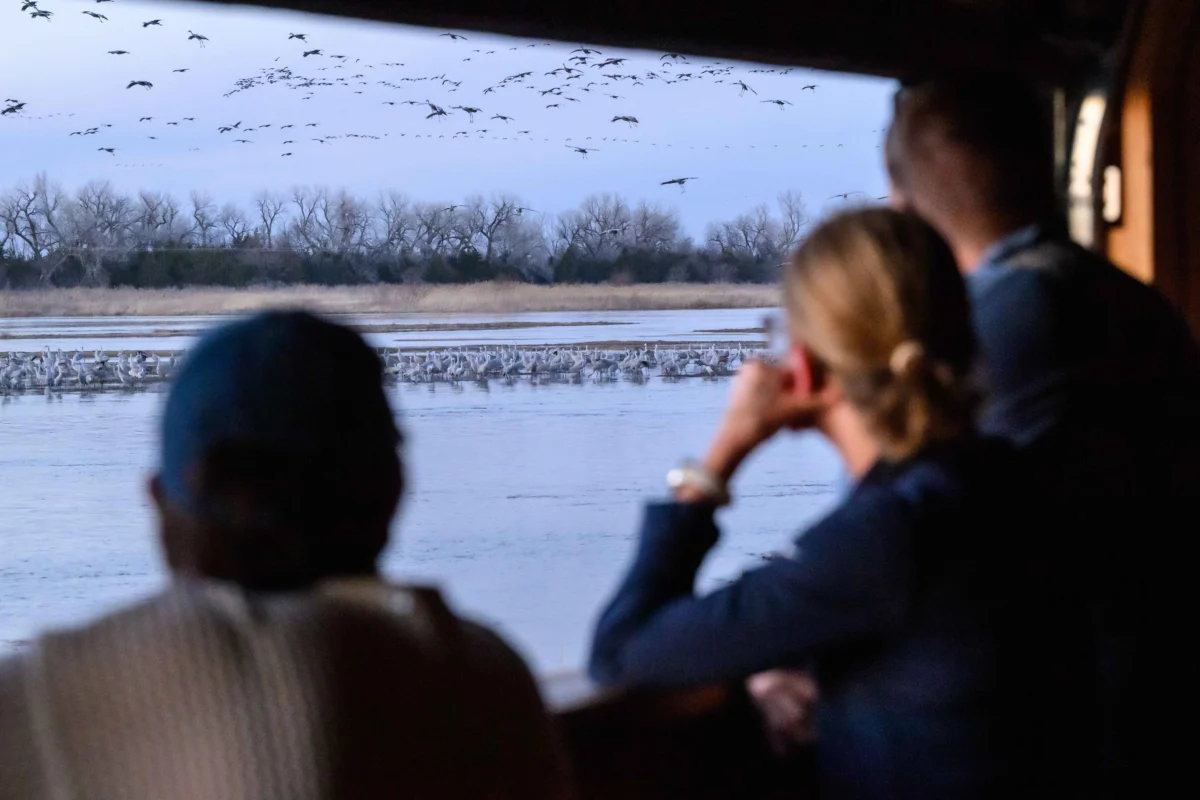
The skies over Rowe Sanctuary have grown noticeably quieter in recent weeks, as the resonant calls of sandhill cranes drift north, marking the close of the spring migration. This annual exodus prompts reflection on "crane season," an intensive and inspiring period that powerfully unites people and highlights the critical ecological role of the Platte River in central Nebraska. This year, the season solidified Rowe Sanctuary’s reputation as a meaningful gathering place for visitors from across the globe, reinforcing its pivotal role in conservation and environmental education.
The Annual Spectacle and Its Enduring Significance
The sandhill crane migration is one of North America’s most spectacular wildlife events, a natural phenomenon that draws hundreds of thousands of these majestic birds to the Platte River each spring. Traveling up to 4,000 miles from their wintering grounds in the southern U.S. and Mexico to nesting sites in Canada, Alaska, and Siberia, the Platte River corridor serves as an indispensable stopover. Its wide, shallow, braided channels provide safe roosting sites, while the surrounding wet meadows and agricultural fields offer abundant food resources, crucial for the cranes to replenish their energy reserves before continuing their arduous journey.
Rowe Sanctuary, managed by Audubon, sits at the heart of this critical 80-mile stretch of the Platte River. Its mission extends beyond mere observation, focusing on the long-term conservation of the Platte River ecosystem and its diverse wildlife. For decades, the Sanctuary has been a beacon for environmental stewardship, playing a vital role in protecting the fragile habitat that supports not only sandhill cranes but also numerous other migratory bird species, including the critically endangered whooping crane. The annual crane season, typically spanning from late February through early April, transforms the quiet Nebraska landscape into a vibrant hub of activity, both avian and human.
A Season of Meticulous Preparation and Engagement
The success of crane season is not spontaneous; it is the culmination of year-round, dedicated effort. Long before the first cranes arrive in late winter, Rowe Sanctuary staff are engaged in extensive habitat management. This work is foundational, often conducted behind the scenes, yet it directly ensures the river system remains healthy and suitable for the cranes’ use. Efforts include maintaining optimal water flow in the braided channels, removing invasive vegetation that encroaches on sandbars, and restoring native prairie habitats. These actions are vital for preserving the open, unobstructed riverine environment that cranes require for security against predators.
As crane season approaches, the focus shifts to visitor readiness. This involves meticulous planning for programming, facility maintenance, and, crucially, the mobilization of a dedicated volunteer force. Volunteers, often returning year after year, undergo training to become knowledgeable guides and educators, ready to welcome and inform the influx of visitors. This synchronized effort ensures that when the cranes descend upon the Platte, the Sanctuary is prepared to offer an unparalleled educational and observational experience.
Record-Breaking Attendance and Global Reach
The 2026 crane season saw Rowe Sanctuary once again welcome an extraordinary number of visitors, underscoring its magnetic appeal. Approximately 18,000 people walked through the Sanctuary’s doors, representing all 50 U.S. states and nearly 20 countries. Nations as diverse as Nepal, Afghanistan, Zambia, and Argentina were represented, highlighting the universal fascination with this natural wonder and the Sanctuary’s growing international prominence.
The narratives shared by visitors reveal the deep personal connections forged at Rowe. Many are repeat visitors, some having made the pilgrimage for decades, citing the profound experience as an annual tradition they "never miss." Others, like an 83-year-old parent whose decade-long dream of seeing the cranes was finally realized, attest to the Sanctuary’s commitment to accessibility, ensuring that the wonder of migration is available to all. These stories illustrate the Sanctuary’s unique capacity to serve as a repository for countless personal memories and aspirations.
A cornerstone of Rowe Sanctuary’s operational success is its corps of dedicated volunteers. This year, more than 100 individuals from 24 states contributed nearly 7,000 hours of service in just two months. These hours translate into countless thoughtful interactions: guiding visitors to optimal viewing blinds, providing educational insights into crane behavior, assisting with logistical needs, and engaging in meaningful conversations centered on the awe of the spring migration. Their commitment is driven by a shared passion for conservation and a desire to connect people with nature.
"Our volunteers are truly the lifeblood of crane season," stated Bill Taddicken, Director of Rowe Sanctuary (inferred statement). "Their dedication not only enhances the visitor experience but also amplifies our conservation message, creating a powerful ripple effect. The passion they bring is infectious, and it’s what makes Rowe Sanctuary such a special place for both our staff and our guests."
Enriching the Experience: Programming and Education
Beyond the breathtaking spectacle of the cranes, Rowe Sanctuary offers a rich tapestry of educational programming designed to deepen visitors’ understanding and appreciation of the ecosystem. In 2026, staff curated a diverse range of programs, events, and classes to meet the palpable curiosity of its audience. Visitor engagement was evident across all offerings, from the creative output of Art Workshops to the rapt attention of Speaker Series attendees, and the delighted squeals of the youngest learners during Family Story Time sessions.
More than 2,000 people participated in these educational opportunities, with over 850 visitors joining daily programs specifically focused on crane behavior, life cycles, and the ecological challenges they face. These programs are vital for translating raw observation into deeper understanding, fostering a sense of stewardship among participants.
A highlight of the season was Braided in Unison, a special event celebrating the Platte River’s unique braided ecosystem. Drawing 250 attendees, the evening featured renowned author Amy Tan in conversation with nature journalist, author, and educator John Muir Laws. Experiencing Nebraska’s cranes for the first time, Tan and Laws shared reflections, insights, and lessons learned during their week along the river. Their dialogue, interspersed with laughter, emotion, and even sketches from their nature journals, provided a unique perspective on the power of nature to inspire art and scientific inquiry. Such thoughtfully designed programs create meaningful opportunities for visitors to learn, stretch their perspectives, and forge a deeper connection with the Platte River and the crane migration.
The Stars of the Show: Avian Wonders
Ultimately, the greatest draw remains the cranes themselves, and in 2026, they delivered a spectacular performance. Early-season viewing was particularly strong, with bird numbers remaining steady and captivating throughout the entire migration period. Crane counts peaked at approximately 400,000 individuals along the surveyed 80-mile stretch of the river. This figure was very close to the 10-year average for those weeks, ensuring excellent and sustained viewing opportunities for all who visited. The consistent numbers underscore the continued health of the migration corridor and the success of ongoing habitat preservation efforts.
This spring also delivered several memorable birding moments, including some exceptionally rare sightings that thrilled both seasoned ornithologists and casual observers. One such event was the appearance of a Common Crane (Grus grus), a species native to Europe and Asia. On exceedingly rare occasions, an individual of this species takes a wrong turn during its Siberian migration, following sandhill cranes down North America’s Central Flyway. Such a sighting is considered a once-in-a-lifetime event for birdwatchers, providing a tangible link to global avian movements.
Later in the season, a leucistic crane was observed in and around Rowe Sanctuary. Leucism, a condition characterized by partial loss of pigmentation, can sometimes lead to confusion with albino birds, which lack all pigment. This striking white or pale-feathered bird provided an excellent, impromptu educational opportunity for staff and volunteers to discuss pigment abnormalities in wildlife, distinguishing it from the critically endangered Whooping Crane, which shares a similar white plumage.
Finally, no recap of crane season would be complete without acknowledging the multiple sightings of Whooping Cranes (Grus americana) at Rowe. With a migratory population numbering roughly 550 individuals, each sighting remains a cause for immense celebration and a powerful reminder of the impact of concerted conservation efforts across their entire flyway. These majestic, federally protected birds are a testament to the ongoing dedication of organizations like Audubon, the International Crane Foundation, and the U.S. Fish and Wildlife Service, whose collaborative work has slowly brought this species back from the brink of extinction.
Beyond the Birds: Habitat and Conservation Foundations
The thriving avian population at Rowe Sanctuary is a direct reflection of continuous, intensive habitat management. The Platte River ecosystem is dynamic and constantly under pressure from human activity, including agricultural demands, water diversion, and the spread of invasive species. Rowe Sanctuary’s year-round conservation work involves a multifaceted approach to maintaining the delicate balance required by the cranes. This includes actively managing water rights and flows to ensure the river maintains its crucial wide, shallow, and braided characteristics, preventing vegetation encroachment that would make roosting sites unsafe.
Furthermore, land stewardship extends to the surrounding wet meadows and native grasslands, which provide vital foraging grounds and buffer zones for the cranes and countless other species. These efforts are not isolated; they are part of a broader, collaborative conservation strategy across the Central Flyway, involving partnerships with landowners, government agencies, and other environmental organizations. The health of the Platte River is intrinsically linked to the success of the entire sandhill crane migration and the survival of the whooping crane.
Economic and Community Impact
The annual crane season generates significant economic benefits for central Nebraska communities. The influx of approximately 18,000 visitors translates into increased revenue for local hotels, restaurants, gas stations, and other small businesses in towns like Kearney and Grand Island. This tourism-driven economic boost provides a vital contribution to rural economies, underscoring the tangible value of preserving natural wonders and supporting ecotourism.
Beyond the economic impact, Rowe Sanctuary serves as a crucial cultural and educational hub. It fosters a sense of community among visitors, volunteers, and local residents, uniting them through a shared appreciation for nature. The global representation among visitors highlights the Sanctuary’s role in promoting international understanding and a collective sense of environmental stewardship, transcending geographical and cultural boundaries.
A Tapestry of Interconnected Efforts
As the last cranes depart, a final reflection reveals how deeply interconnected all facets of Rowe Sanctuary’s work truly are. Much like the braided river itself, the Sanctuary’s efforts are intricately woven together. Robust conservation work directly strengthens the health of the ecosystem, which in turn enhances the educational opportunities for visitors. Education is powerfully supported by the tireless dedication of volunteers, and ultimately, the magnificent birds depend entirely on thoughtful, proactive habitat management. None of these elements stand alone; instead, they form a larger, resilient whole, demonstrating a synergistic model for conservation success.
While this integration is a constant throughout the year, its profound visibility during crane season serves as a powerful reminder of shared purpose. The 2026 season was not merely a collection of numbers but a testament to the enduring appeal of nature, the power of human connection, and the critical importance of protecting the planet’s irreplaceable biodiversity. As the Sanctuary bids farewell to the last remaining cranes each spring, the collective efforts of the people, the preservation of the place, and the shared purpose continue to inspire hope for the future of conservation along the Platte River.
