
Huguenot Memorial Park, a vital ecological cornerstone in Northeast Florida, has successfully implemented adaptive management strategies that dramatically reduced vehicle-related fatalities among beach-nesting birds during the critical 2025 breeding season. This achievement marks a significant turnaround from a challenging 2024 season, demonstrating the power of inter-agency collaboration, scientific monitoring, and flexible conservation tactics in protecting vulnerable coastal wildlife amidst increasing human presence. The park, a renowned haven for thousands of ground-nesting birds, including federally protected species and common coastal residents like Royal Terns and Laughing Gulls, faces the persistent challenge of balancing robust public access with the imperative to safeguard fragile ecosystems.
A Critical Nesting Ground Under Pressure
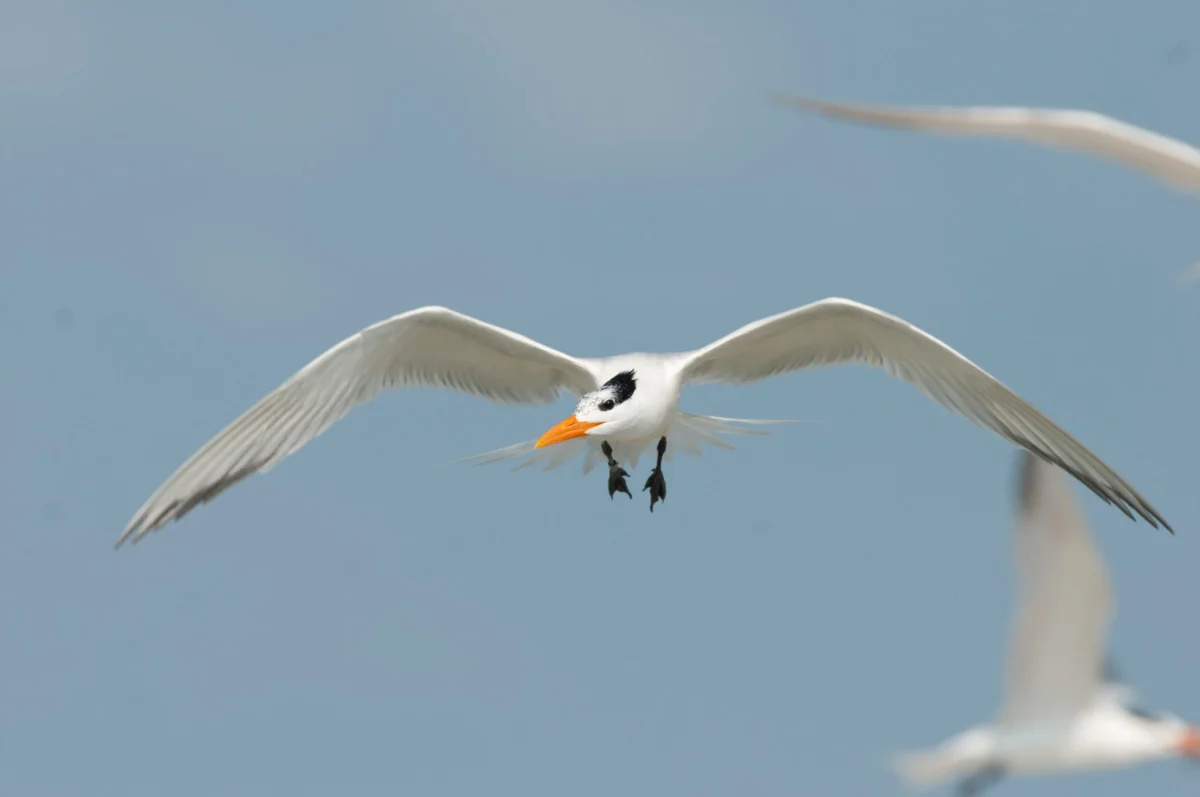
Huguenot Memorial Park, situated at the mouth of the St. Johns River in Jacksonville, Florida, is recognized by the National Audubon Society as an Important Bird Area (IBA) and serves as one of Florida’s most significant nesting sites for a diverse array of shorebirds and seabirds. Its expansive, dynamic beaches, rich intertidal zones, and adjacent dune systems provide ideal conditions for colonial nesters to lay eggs directly on the sand, rear their flightless chicks, and forage for food. Royal Terns ( Thalasseus maximus ), majestic seabirds known for their distinctive orange bills and crested heads, form dense colonies here, often numbering in the thousands. Laughing Gulls ( Leucophaeus atricilla ), with their characteristic calls, also nest in large numbers, contributing to the park’s vibrant avian community. These species, along with others like Least Terns, Black Skimmers, and Wilson’s Plovers, are particularly vulnerable during nesting season, which typically spans from early spring through late summer. Their eggs and chicks are camouflaged against the sand, making them incredibly difficult for beachgoers to spot, especially in areas frequented by vehicles.
The ecological importance of Huguenot Memorial Park extends beyond its role as a nesting site. It acts as a critical stopover for migratory birds along the Atlantic Flyway, contributing to regional biodiversity and ecosystem health. However, its popularity among beachgoers, who often drive and park directly on the sand, creates inherent conflicts between recreation and conservation. Historically, park management has addressed this by designating specific areas, particularly the northern end of the park, as vehicle-free zones during nesting season. These traditional closures, informed by historical nesting patterns, aimed to provide undisturbed habitats for the birds, allowing chicks safe passage from their nests in the dunes to the crucial foraging grounds along the water’s edge.
The 2024 Crisis: A Stark Warning
The year 2024 presented an unforeseen and tragic challenge to this established management paradigm. Contrary to historical trends, the primary nesting colony for Royal Terns and Laughing Gulls shifted significantly southward, establishing itself outside the traditionally designated closed areas. This dramatic relocation placed thousands of vulnerable nests and flightless chicks directly in the path of vehicular traffic. The consequences were immediate and devastating. As birds attempted to move between their dune-side nests and the life-sustaining shoreline, they encountered an active vehicle thoroughfare. Monitors and park staff observed a distressing surge in fatalities, with more than 40 birds perishing due to vehicle strikes.
This tragic season served as a critical wake-up call, highlighting a fundamental limitation in relying solely on static, historic nesting patterns for protective measures. Coastal ecosystems are dynamic, influenced by factors such as shifting sands, predator presence, storm events, and even subtle changes in food availability. Birds, particularly colonial nesters, possess an inherent ability to adapt and relocate their breeding grounds in response to these environmental cues. The 2024 events underscored the urgent need for a more flexible, responsive, and adaptive approach to conservation management, one that could quickly adjust to the unpredictable nature of wildlife behavior. It became clear that a proactive, real-time strategy was necessary to prevent future mass mortality events and ensure the long-term viability of these critical nesting populations.
A Collaborative Turnaround: Adaptive Strategies for 2025
The lessons learned from the devastating 2024 season catalyzed an extraordinary collaborative effort involving multiple stakeholders. The City of Jacksonville, which manages Huguenot Memorial Park, partnered closely with Audubon Florida, the Florida Fish and Wildlife Conservation Commission (FWC), and the Jacksonville Sheriff’s Office (JSO). This multi-agency coalition, operating as the park’s Shorebird Management Team, convened to devise and implement innovative strategies for the 2025 nesting season.
Chris Farrell, Northeast Florida Policy Associate for Audubon, lauded the swift and effective response: "The park staff and city employees deserve huge kudos as they worked on different strategies to help the bird families. They worked with Audubon and employed adjusted management strategies to protect the birds where they decided to nest." This statement underscores the commitment to learning from past challenges and adapting management practices to the birds’ immediate needs rather than rigid historical assumptions.
The cornerstone of the 2025 strategy was a significant expansion and dynamic adjustment of the protected areas. Recognizing that the birds had established new nesting locations south of the traditional closure, the vehicle-restricted zone was extended by approximately 450 feet beyond its usual boundaries. This immediate expansion provided a broader buffer against vehicular traffic, encompassing the newly chosen breeding grounds.
The "Moving Box" Approach: Innovation in Conservation
Beyond merely expanding static closures, a groundbreaking "moving box" approach was introduced, particularly during peak visitor times like weekends. This innovative strategy involved establishing a seasonal, flexible protective perimeter along the dunes that could be physically shifted and reconfigured in real-time as bird and chick movements dictated. This "moving box" was a crucial adaptation, allowing park staff and Audubon volunteers to create temporary safe corridors for flightless chicks migrating from their nests towards the water’s edge. When monitors observed chicks attempting to cross active vehicle zones, the "box" could be extended or repositioned to create an immediate, temporary exclusion zone, stopping traffic and allowing for safe passage.
This dynamic approach required continuous monitoring and rapid deployment of resources. Audubon volunteer stewards played an indispensable role in this effort. These dedicated individuals spent countless hours on the beach, not only safeguarding the birds by observing their movements and alerting park staff but also engaging directly with beach users. Their presence allowed for crucial public education, explaining the importance of the closures, the vulnerability of the birds, and how beachgoers could "share the shore" responsibly. This direct interaction helped foster a sense of shared stewardship among visitors, transforming potential conflicts into opportunities for environmental awareness.
Law enforcement partners from the Jacksonville Sheriff’s Office were also integral to the success of the 2025 season. They actively intervened when needed, stopping vehicle traffic to allow safe passage for chicks, reinforcing closures, and ensuring compliance with park regulations. Their presence provided the necessary authority to enforce the dynamic protective zones, ensuring that the conservation efforts translated into tangible safety for the birds. Furthermore, additional posted areas were rapidly established when flightless chicks were observed venturing outside the designated zones, demonstrating the real-time responsiveness of the management team.
Results and Positive Impact
The efficacy of these adaptive strategies was evident in the dramatically improved outcomes for the nesting birds. Monitors and stewards meticulously recorded the fatalities, and the data presented a stark contrast to the previous year. In 2025, only 17 bird fatalities were attributed to vehicle strikes, a remarkable reduction from the more than 40 recorded in 2024. This 57.5% decrease in mortality is a testament to the success of the collaborative, adaptive management approach.
This positive result highlights several key implications. Firstly, it underscores the critical importance of continuous, on-the-ground monitoring in conservation efforts. Without dedicated observers to identify the shift in nesting patterns in 2024 and track bird movements in 2025, the adaptive strategies would not have been possible. Secondly, it validates the principle of adaptive management – the iterative process of planning, implementing, monitoring, and evaluating to learn from experience and adjust actions to achieve conservation objectives. The ability to pivot from a static closure model to a dynamic, responsive one was the cornerstone of this success. Thirdly, it emphasizes the indispensable role of public engagement and education. The Audubon volunteers, by interacting directly with beachgoers, not only helped enforce protections but also cultivated a greater understanding and appreciation for the park’s wildlife, which is crucial for long-term conservation.
Broader Implications and Lessons Learned
The success at Huguenot Memorial Park in 2025 offers valuable lessons for coastal conservation efforts across Florida and beyond. The "moving box" approach, coupled with enhanced monitoring and robust inter-agency cooperation, presents a replicable model for managing human-wildlife conflicts in dynamic coastal environments. This strategy acknowledges that wildlife does not adhere to human-drawn boundaries and that effective conservation requires flexibility and responsiveness.
The collaboration among Audubon, the City of Jacksonville, FWC, and JSO demonstrates how diverse entities with distinct mandates can unite under a common conservation goal. This integrated approach leverages the strengths of each partner – Audubon’s scientific expertise and volunteer network, the City’s park management and infrastructure, FWC’s wildlife biology and regulatory authority, and JSO’s law enforcement capabilities. Such partnerships are increasingly vital as coastal development and recreational pressures intensify.
Furthermore, the events at Huguenot Memorial Park highlight the ongoing challenges faced by beach-nesting birds globally. Habitat loss due to coastal development, human disturbance (including off-leash pets, drones, and direct intrusion into nesting areas), predation, and the increasing frequency and intensity of severe weather events exacerbated by climate change all contribute to declining populations. Vehicle strikes, while a specific threat, are emblematic of the broader human impact on these sensitive species. The proactive measures taken at Huguenot serve as a beacon of hope, demonstrating that even in highly trafficked areas, effective strategies can significantly mitigate human-induced mortality.
Looking Ahead: Sustaining Success
While the reduction to 17 fatalities in 2025 represents a significant victory, the ultimate goal, as articulated by conservationists, remains zero fatalities. The Shorebird Management Team is committed to continuous improvement. "The 2025 approach will be repeated and refined moving forward," explains Chris Farrell. This commitment to ongoing refinement underscores the adaptive nature of their strategy, ensuring that future conservation efforts will continue to evolve based on new observations and scientific understanding.
The continued cooperation between Audubon, the City of Jacksonville, Florida Fish and Wildlife Conservation Commission, and the Jacksonville Sheriff’s Office, formalized through the park’s Shorebird Management Team, will be crucial for sustaining these positive outcomes. Future refinements may include further technological integration for monitoring, expanded volunteer recruitment and training, enhanced public awareness campaigns, and potentially exploring long-term habitat management solutions to encourage nesting in safer, less disturbed areas. The success of 2025 sets a new standard for beach-nesting bird protection in Florida, proving that with dedication, innovation, and strong partnerships, it is possible for humans and wildlife to share the shore, even in the busiest seasons.
This article originally appeared in the 2025 Coastal Report, a comprehensive document detailing the year’s conservation efforts and outcomes. The full report offers deeper insights into the ecological health of Florida’s coastlines and the ongoing initiatives to protect its diverse wildlife. Readers interested in learning more about these vital conservation efforts are encouraged to review the complete publication.
