
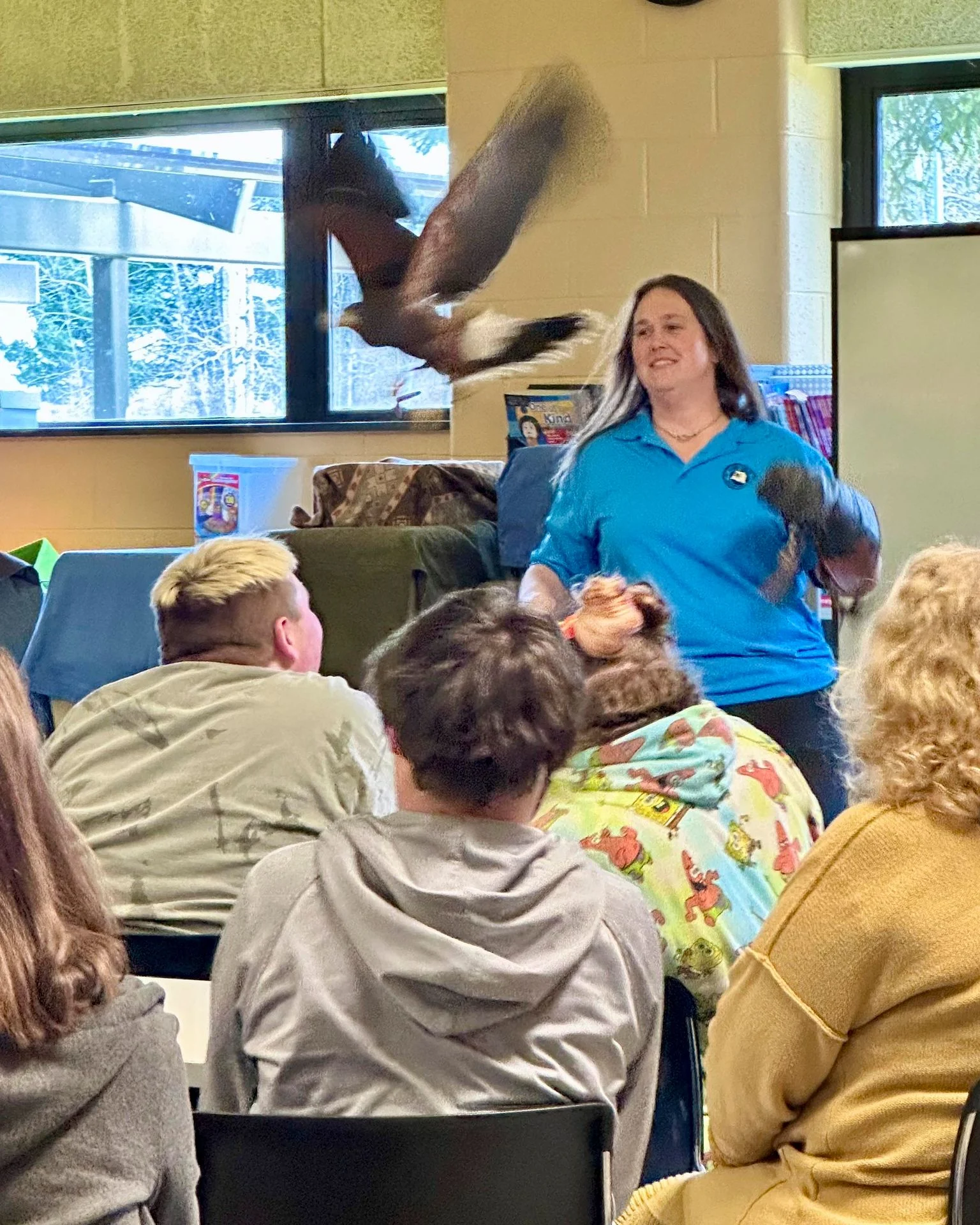
Students at the Hewes Educational Center recently experienced an immersive and unforgettable encounter with the natural world, thanks to an engaging educational program presented by the Hawk Creek Wildlife Center Inc. The visit, which brought a diverse array of native wildlife directly to the students, aimed to foster a deeper understanding and appreciation for local ecosystems and the species that inhabit them. This initiative by Hawk Creek aligns with its overarching mission of fostering compassion, saving species, and restoring ecological balance, demonstrating a commitment to educating the next generation about wildlife conservation.
The educational program at Hewes Educational Center featured a carefully curated selection of animals, including majestic raptors, intriguing mammals, and fascinating reptiles. Wildlife naturalists from Hawk Creek expertly guided the students through the presentations, providing detailed insights into each species’ natural habitat, unique behaviors, and ecological roles. The interactive nature of the program allowed students to observe these creatures up close, transforming abstract concepts about wildlife into tangible learning experiences. A particularly memorable moment for the students was witnessing a raptor, likely a trained educational ambassador from the center, soar directly overhead, a powerful visual demonstration of avian flight and predatory prowess.
Background and Context of the Visit
The Hawk Creek Wildlife Center, a non-profit organization dedicated to wildlife rehabilitation and education, has a long-standing tradition of reaching out to schools and community groups. Their programs are designed to be both informative and inspiring, aiming to spark curiosity and cultivate a sense of stewardship towards wildlife. The visit to Hewes Educational Center is part of a broader outreach strategy to connect urban and suburban students with the natural world, often providing opportunities that they might not otherwise have. This particular engagement underscores the center’s belief that early exposure to wildlife can significantly influence long-term attitudes towards conservation.
The timing of such educational initiatives is crucial. In an era where human development increasingly encroaches upon natural habitats, fostering an understanding of wildlife and its needs from a young age is paramount. Programs like the one delivered by Hawk Creek serve as a vital bridge, educating students about the delicate balance of ecosystems and the interconnectedness of all living things. By bringing live animals into the classroom setting, the center not only educates but also builds empathy and a sense of responsibility among young learners.
The Educational Program in Detail
The naturalists from Hawk Creek are trained professionals who possess extensive knowledge of wildlife biology and behavior. Their presentations are meticulously crafted to be age-appropriate and engaging, ensuring that students of all ages can grasp the complex information being shared. The curriculum typically includes discussions on the importance of biodiversity, the challenges faced by wildlife due to habitat loss and human activity, and practical ways in which individuals can contribute to conservation efforts.

During the Hewes Educational Center visit, the naturalists likely employed a multi-sensory approach. This would have involved visual observation of the animals, auditory learning through the naturalists’ explanations, and potentially tactile experiences with non-sensitive materials related to the animals, such as shed feathers or molted skins. The introduction of various animal classes – raptors, mammals, and snakes – provided a broad spectrum of ecological niches and evolutionary adaptations, allowing students to appreciate the diversity of life.
Raptors: Presentations on raptors, such as hawks, owls, and falcons, often focus on their exceptional eyesight, powerful talons, and aerial hunting techniques. Students learn about their critical role as apex predators in controlling rodent populations and maintaining ecosystem health. The breathtaking sight of a raptor in flight serves as a powerful reminder of the wildness and beauty that still exists within our environments.
Mammals: The inclusion of mammals likely covered a range of local species, highlighting their diverse adaptations for survival, from camouflage to specialized diets. Discussions might have touched upon the importance of preserving habitats for these often charismatic creatures.
Snakes: Reptile presentations, particularly those involving snakes, often aim to dispel common myths and fears. Naturalists would have educated students on the beneficial roles snakes play in pest control and the importance of respecting these often-misunderstood creatures. Understanding their thermoregulation and unique sensory abilities would have been key learning points.
Chronology of the Visit
While a precise timeline was not provided in the source material, a typical educational visit of this nature would likely unfold as follows:
- Morning Arrival: Hawk Creek Wildlife Center’s team, equipped with their animal ambassadors and educational materials, arrives at Hewes Educational Center.
- Introduction and Welcome: A brief welcome by school staff and an introduction to the visiting team and their mission.
- First Presentation Session: The naturalists commence with the first animal presentation, possibly focusing on a specific group like raptors, engaging a particular grade level or group of students.
- Interactive Q&A: Ample time is dedicated for students to ask questions, fostering active participation and clarifying any doubts.
- Second Presentation Session: Subsequent presentations introduce different animal groups, potentially rotating through various classrooms or auditoriums to accommodate all students.
- Hands-on Learning Opportunities: Depending on the program’s design and the animals involved, there might be opportunities for supervised, close-up viewing or learning about animal artifacts.
- Concluding Remarks and Call to Action: The naturalists conclude by summarizing key learning points and encouraging students to consider conservation in their daily lives.
- Departure: The Hawk Creek team departs, leaving behind a potentially lasting impression on the students.
Supporting Data and Broader Impact
Educational programs that bring wildlife into schools have a documented positive impact on student learning and attitudes. Studies have shown that direct encounters with animals can significantly increase children’s knowledge about biology and ecology. Furthermore, these experiences are often credited with fostering a greater sense of empathy and connection to the natural world, which are crucial for developing environmentally conscious citizens.

The Hawk Creek Wildlife Center, by consistently delivering these programs, contributes to a broader societal goal of environmental literacy. Their efforts are vital in counteracting the increasing disconnect many young people experience from nature, especially in urbanized settings. By providing accurate information and fostering positive emotional responses to wildlife, these programs lay the groundwork for future conservation action.
Official Responses and Community Engagement
While no direct quotes from school officials or parents were provided, it can be logically inferred that the visit was met with enthusiasm and appreciation. Schools often seek out such programs to enrich their curriculum and provide students with unique learning opportunities that complement classroom instruction. The positive feedback often received by wildlife centers like Hawk Creek suggests a strong demand for their services within the educational community.
The involvement of a non-profit organization like Hawk Creek Wildlife Center also highlights the importance of community partnerships in education. Such collaborations leverage specialized expertise and resources that may not be available to individual schools, thereby enhancing the quality of educational experiences for students.
Analysis of Implications
The visit by Hawk Creek Wildlife Center to Hewes Educational Center carries several important implications:
- Enhanced Environmental Literacy: The program directly contributes to improving students’ understanding of ecological principles, biodiversity, and the importance of conservation. This foundational knowledge is essential for informed decision-making in the future.
- Development of Empathy and Stewardship: Direct interaction with wildlife can cultivate a sense of empathy and responsibility towards animals and their habitats. This emotional connection is often a powerful motivator for conservation behavior.
- Combating Misinformation: By providing accurate, science-based information, these programs help to dispel myths and misconceptions about wildlife, particularly concerning species like snakes or raptors that are often subject to fear and misunderstanding.
- Inspiration for Future Careers: Such engaging experiences can inspire some students to pursue careers in fields related to wildlife biology, conservation, environmental science, or veterinary medicine.
- Strengthening Community Ties: The partnership between Hawk Creek and Hewes Educational Center exemplifies how community organizations can play a vital role in supporting educational institutions and enriching the learning experiences of students.
The enduring impact of such programs often extends beyond the immediate learning experience. Students who participate in these educational encounters are more likely to retain information and develop a lifelong appreciation for wildlife. This ripple effect can contribute to broader conservation efforts as these students grow into adults who are more aware of and engaged with environmental issues. The commitment of organizations like Hawk Creek Wildlife Center in bringing the wonders of the natural world to young, impressionable minds is a testament to their dedication to fostering a more compassionate and ecologically aware future.
