
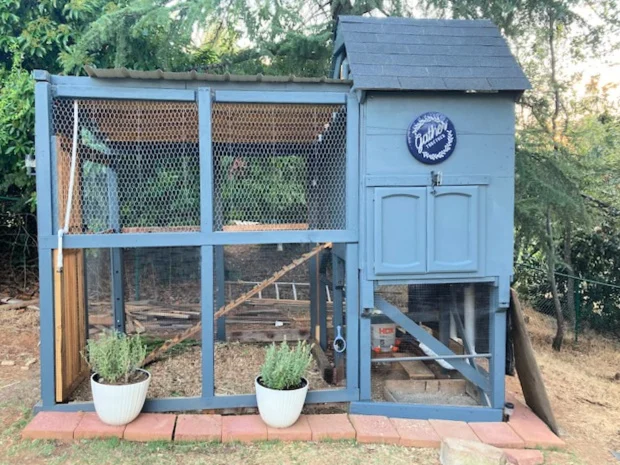
The rising cost of agricultural supplies and the increasing popularity of backyard homesteading have driven a surge in creative, cost-effective solutions for poultry management, as exemplified by a recent case study in Redding, California. For many aspiring poultry owners, the primary barrier to entry is the initial capital investment, specifically the construction or purchase of a chicken coop. Commercial coops designed for a standard flock of six to ten birds can range in price from $800 to over $3,000, depending on materials and predator-proofing features. However, a growing movement of "upcycling"—the process of transforming discarded or secondary materials into products of higher quality—is providing a viable alternative for families looking to secure their own food sources without incurring significant debt.

In Redding, a local family recently completed a comprehensive conversion of an outgrown children’s playhouse into a fully functional "poultry mansion" for a total expenditure of approximately $300. This project serves as a blueprint for the intersection of sustainable living, financial prudence, and community-based resource sharing. By utilizing a combination of salvaged materials, donated supplies, and family labor, the project achieved a level of structural integrity and aesthetic harmony that would typically cost several times the amount spent.
The Economics of Upcycling in Modern Homesteading
The financial landscape for backyard chicken keeping has shifted dramatically over the last five years. Following the supply chain disruptions of 2020 and the subsequent spikes in egg prices due to avian influenza outbreaks and inflation, more households have turned to self-sufficiency. Market analysts observe that while the desire for fresh eggs is high, the "start-up" costs often deter lower-to-middle-income families.

The Redding conversion project highlights how these costs can be mitigated. By starting with an existing structure—a wooden playhouse—the family bypassed the most expensive phase of construction: the framing and foundation. In a standard build, lumber accounts for nearly 60% of the total cost. By repurposing an old playhouse, the family effectively eliminated several hundred dollars in wood costs. Furthermore, the project relied on the "circular economy" of the local community. Neighbors and friends contributed surplus materials, including tin roofing pieces and roof tiles, which are often left over from residential renovations and would otherwise end up in landfills.
Project Chronology and Construction Methodology
The conversion process followed a logical progression that prioritized security, functionality, and aesthetic integration. The timeline of the project suggests a well-coordinated family effort that spanned several weeks.

First, the family identified the structural needs of the flock. Unlike a children’s playhouse, a chicken coop requires specific modifications to ensure the health of the birds. This includes adequate ventilation to prevent respiratory issues, nesting boxes for egg-laying, and roosting bars for sleeping. The Redding family utilized repurposed cabinet doors to create access points for the nesting boxes, a move that experts praise for its ingenuity. Cabinet doors provide a pre-hinged, weather-resistant solution that allows owners to collect eggs from the exterior of the coop without disturbing the birds inside.
Second, the structural integrity was reinforced using salvaged wood and an old closet door. These elements were integrated into the playhouse frame to create a secure environment. Predator proofing is a critical concern in Northern California, where foxes, raccoons, and birds of prey are common. The addition of a tin roof, sourced for free from friends, provided a durable barrier against both the elements and potential predators.

Finally, the project moved into the aesthetic phase. To ensure the new structure did not detract from the property value, the family and their neighbors painted the coop to match the primary residence. This integration of "farm" and "home" is a hallmark of modern suburban homesteading, where the goal is to maintain a clean, organized appearance while producing food.
The Biological Component: Hatching and Brooding
The Redding project was not merely a construction exercise but an educational endeavor in animal husbandry. The family, including children aged 8 to 17, engaged in the complex process of hatching their own chicks. This phase of the project highlights the labor-intensive nature of poultry management.

The family attempted to hatch eight eggs, resulting in two successful Barred Rock chicks. Barred Rocks are a heritage breed known for their hardiness and consistent egg production, making them an ideal choice for a backyard flock. The process of incubation requires precise temperature and humidity control, as well as the manual turning of eggs. Ezra, the 12-year-old son, reportedly turned the eggs three times daily, a task that underscores the commitment required to raise poultry from the embryonic stage.
To manage the newly hatched chicks and additional birds purchased to supplement the flock, the family’s father repurposed a hinged storage box originally used for pool supplies. This "brooder box" served as a controlled environment for the chicks, equipped with a warming plate and a feather duster to simulate the warmth and protection of a mother hen. This use of a Dollar Tree mirror within the brooder is a recognized technique in poultry circles; chicks often find comfort in their own reflections, which can reduce stress and prevent pecking behaviors in small groups.

Supporting Data and Market Trends
The success of the Redding project reflects broader national trends. According to a report by the American Pet Products Association (APPA), backyard chicken ownership has seen a steady increase, with an estimated 10 million U.S. households now keeping birds.
Data from agricultural extension offices suggest that the "payback period"—the time it takes for egg production to offset the cost of the coop and feed—is significantly shortened through DIY builds.

- Commercial Setup: $1,500 (coop) + $200 (birds/feed) = $1,700. At $5.00 per dozen, a family would need to produce 340 dozen eggs to break even.
- Upcycled Setup: $300 (conversion) + $200 (birds/feed) = $500. A family breaks even after just 100 dozen eggs.
For a standard flock of six hens producing roughly 150 dozen eggs per year, the upcycled coop pays for itself in less than nine months, whereas a commercial coop may take over two years to reach a neutral return on investment.
Social and Educational Implications
Beyond the financial metrics, the Redding conversion demonstrates the social impact of community-based farming. The involvement of four children in the building and maintenance of the coop provides a practical education in biology, construction, and responsibility. Experts in child development suggest that "active participation in food production" fosters a sense of agency and environmental stewardship in youth.

The project also catalyzed neighborhood interaction. The donation of materials and the collaborative painting session indicate that backyard farming can strengthen community ties. In an era where digital isolation is a concern, the "coop conversion" served as a tangible point of connection for the Redding neighborhood.
Broader Impact and Future Outlook
The conversion of playhouses and garden sheds into poultry housing represents a shift toward "functional landscaping." As urban and suburban zoning laws continue to relax regarding backyard hens, the demand for affordable housing solutions will likely increase.

However, experts caution that while upcycling is cost-effective, it requires a baseline knowledge of poultry safety. Coops must be "hardware cloth" secure (not just chicken wire) to prevent entry by small predators like weasels. The Redding family’s use of solid cabinet doors and tin roofing aligns with these safety recommendations, providing a blueprint for others to follow.
The implications of this trend extend to waste management. By diverting playhouses, closet doors, and roofing tiles from the waste stream, families are contributing to a more sustainable, circular economy. As the Redding mother noted, the project transformed a disused children’s toy into a "chicken coop mansion," proving that with "elbow grease and scraps," the transition to sustainable living is accessible to those willing to invest time instead of just capital.

Looking ahead, the Redding family plans to expand their flock this spring as their older hens’ production slows. Their experience serves as a compelling argument for the viability of small-scale, DIY agricultural infrastructure. In a world of rising costs, the ability to see a "chicken coop" where others see an "old playhouse" is becoming an essential skill for the modern, budget-conscious homesteader.
