
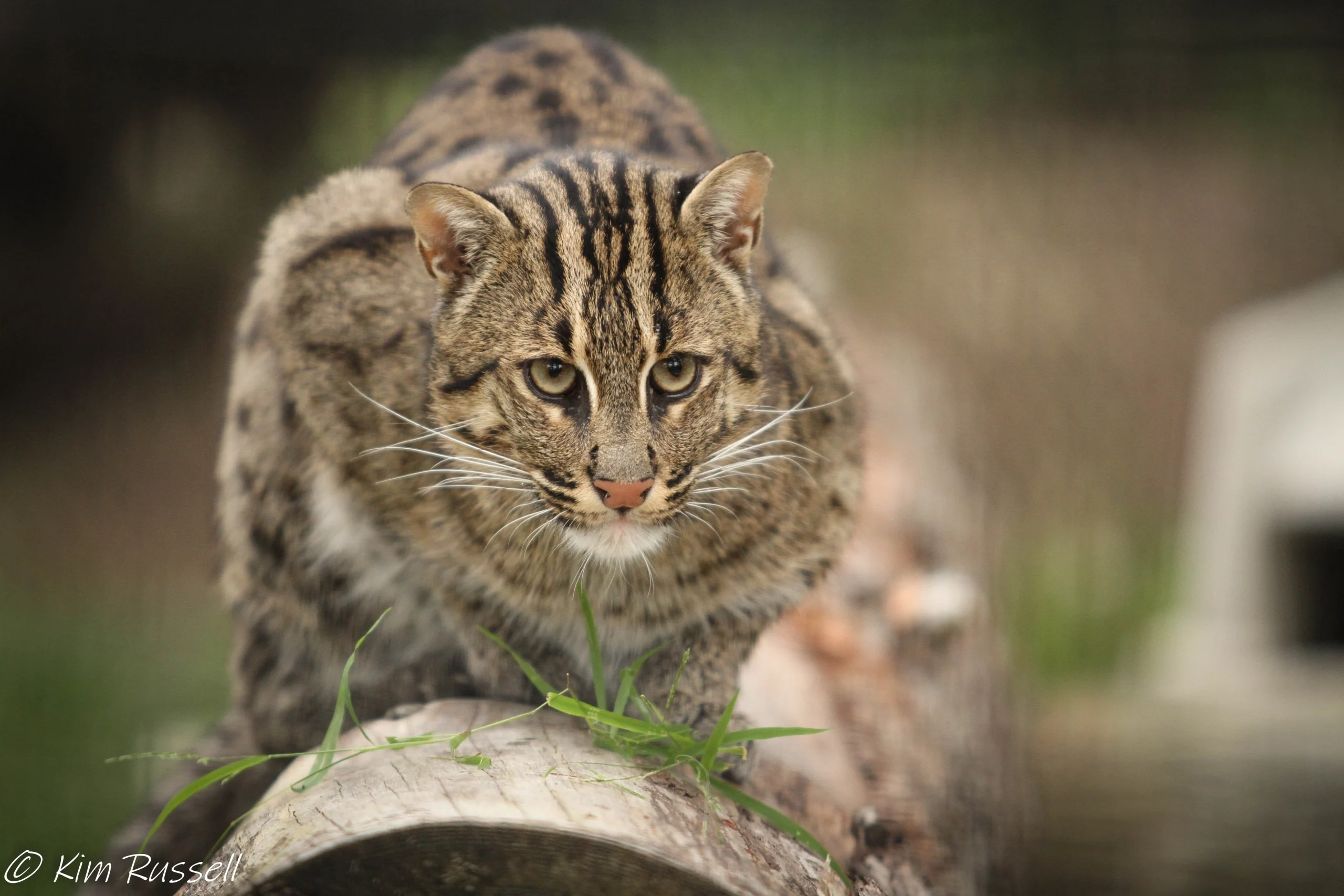
World Wildlife Day, observed annually on March 3rd, has as its central theme for the current year, "Partnerships for Wildlife Conservation." This global observance, established by the United Nations General Assembly in 2013, aims to raise awareness of the world’s endangered species of fauna and flora, and to celebrate the invaluable contributions of various organizations and individuals dedicated to their protection. The choice of "Partnerships" as this year’s theme underscores a critical understanding in the conservation community: that the complex challenges facing biodiversity can only be effectively addressed through collaborative efforts, bridging the gaps between scientific research, public engagement, governmental action, and community involvement.
At the forefront of this year’s theme stands River, a charismatic six-year-old fishing cat residing at the Hawk Creek Wildlife Center. River’s role transcends that of a typical resident; she serves as a vital ambassador animal, tasked with the crucial mission of educating the public about her species and the precarious state of their existence. Fishing cats, scientifically known as Prionailurus viverrinus, are classified as Vulnerable on the International Union for Conservation of Nature (IUCN) Red List. This designation signifies a high risk of extinction in the wild, a grim reality driven by a confluence of escalating threats. Despite their endangered status, fishing cats remain largely unknown to the general public, their unique ecological niche and the challenges they confront in their natural habitats often overlooked. River, through her presence and interactions, provides a tangible connection for thousands of individuals to these often-unseen creatures, fostering empathy and inspiring a commitment to their conservation.
The significance of supporting organizations like Hawk Creek Wildlife Center, particularly on World Wildlife Day, cannot be overstated. Donations made to such institutions on this designated day directly contribute to vital fishing cat conservation initiatives. These funds are instrumental in supporting a range of activities, from habitat preservation and anti-poaching efforts to public awareness campaigns and scientific research. The interconnectedness of these efforts highlights the "Partnerships" theme, as conservation success relies on a multi-pronged approach where financial support is a fundamental pillar.
H2: The Critical Role of Ambassador Animals in Research and Education
The impact of ambassador animals like River extends beyond public awareness; they are indispensable tools in scientific research. The elusive nature of fishing cats in their wild habitats makes direct observation and study exceptionally challenging. This inherent difficulty hinders the collection of crucial data necessary for effective conservation strategies. However, the presence of individuals like River in controlled environments allows researchers to gather invaluable insights.
A compelling example of this is the recent visit of the founder of the Fishing Cat Conservancy to Hawk Creek. This dedicated researcher traveled specifically to observe River. Despite the inherent challenges of studying these naturally shy animals, the opportunity to observe River’s movements and her remarkable fishing techniques, particularly her adept use of her paws to catch prey, provided a unique window into the species’ behavior. Such studies, conducted on ambassador animals, are not merely academic exercises; they are foundational to developing effective conservation programs. By understanding the intricate behaviors, dietary needs, and habitat requirements of individuals like River, scientists can extrapolate this knowledge to inform strategies for protecting their wild counterparts. This symbiotic relationship between captive ambassadors and wild populations exemplifies the innovative approaches required in modern conservation.
The data gathered from studying ambassador cats directly informs the work of organizations like the Fishing Cat Conservancy. Their mission is multifaceted, encompassing the establishment of nature preserves to secure crucial habitats, the formation of strategic partnerships with private landowners to encourage the preservation of ecosystems on their properties, and the overarching goal of inspiring widespread change in public attitudes and governmental policies. The Conservancy’s website, fishcat.org, serves as a central hub for information, offering resources for learning more about fishing cats and their conservation needs, further underscoring the importance of accessible information in fostering a collective commitment to wildlife protection.
H2: The Urgent Need for Fishing Cat Conservation: A Global Perspective
The fishing cat’s vulnerable status on the IUCN Red List is not an arbitrary classification; it is a consequence of significant population declines and ongoing threats. Historically, fishing cats inhabited a much wider geographical range across South and Southeast Asia. However, their populations have experienced a drastic reduction due to habitat loss and degradation, primarily driven by the expansion of human settlements, agricultural development, and the rampant destruction of wetland ecosystems. These wetlands, including mangrove forests, tidal flats, and riverine habitats, are not only essential for fishing cats but also support a rich tapestry of biodiversity.
The fishing cat’s specialized diet, heavily reliant on fish and other aquatic life, makes them particularly susceptible to changes in water quality and availability. Pollution, overfishing, and the damming of rivers disrupt their food sources and alter their hunting grounds. Furthermore, retaliatory killings by local communities, often stemming from perceived conflicts over livestock or fisheries, also contribute to their decline. The lack of public awareness exacerbates these issues, as it limits the political will and public support necessary for robust conservation interventions.
The Fishing Cat Conservancy’s efforts to create nature preserves directly address the critical need for habitat protection. These preserves act as safe havens, offering undisturbed environments where fishing cats can breed, hunt, and thrive. By securing these vital areas, conservationists aim to establish core populations that can serve as sources for potential reintroduction programs or for bolstering existing, fragmented populations.
H3: Partnerships with Landowners: A Cornerstone of Ecosystem Preservation
The initiative to form partnerships with landowners represents a sophisticated and increasingly vital aspect of modern conservation. Recognizing that protected areas alone are insufficient to safeguard species with wide-ranging habitat needs, conservation organizations are actively engaging with individuals and communities who own or manage land within or adjacent to critical fishing cat territories. This collaborative approach acknowledges that private lands often form integral components of larger ecological corridors and habitats.
Through these partnerships, landowners can be incentivized and supported to adopt wildlife-friendly practices. This might include measures such as maintaining or restoring riparian vegetation, reducing the use of harmful pesticides, and implementing sustainable land management techniques that minimize disturbance to wildlife. In return for their stewardship, landowners may receive technical assistance, financial compensation, or recognition for their conservation efforts. This model fosters a sense of shared responsibility and mutual benefit, transforming potential conflicts into opportunities for co-existence. The success of such initiatives hinges on building trust and demonstrating the tangible benefits of conservation, both for wildlife and for the human communities involved.
H3: Inspiring Change: The Power of Education and Advocacy
Beyond habitat preservation and direct conservation actions, inspiring change at a societal level is paramount. The Fishing Cat Conservancy, through its educational outreach and advocacy efforts, aims to cultivate a deeper understanding and appreciation for fishing cats and the broader importance of wetland conservation. This involves engaging with schools, communities, and policymakers to raise awareness about the threats facing these animals and to advocate for stronger environmental policies.
The story of River, the ambassador fishing cat, serves as a powerful testament to the effectiveness of this approach. By providing a face and a personality to an otherwise obscure species, River humanizes the conservation challenge, making it more relatable and emotionally resonant for the public. This emotional connection is often the catalyst for action, motivating individuals to donate, volunteer, or advocate for conservation.
H2: Data and Demographics: Understanding the Scope of the Challenge
While precise population figures for fishing cats are notoriously difficult to ascertain due to their elusive nature and the vastness of their range, estimates suggest a significant decline from historical numbers. In some regions, populations are believed to have dwindled by over 50% in the last decade alone. This alarming trend is reflected in their IUCN status.
The geographical distribution of fishing cats historically spanned from the Indus River in Pakistan eastward to Indonesia. However, their presence is now fragmented and significantly reduced in many of these areas. For instance, in Bangladesh, they are considered critically endangered, with very few confirmed sightings in recent years. In India, while they are more widespread, populations are still under pressure from habitat loss. In Southeast Asia, countries like Thailand, Cambodia, and Vietnam are also experiencing declining fishing cat populations, largely due to the conversion of wetlands for aquaculture and palm oil plantations.
The average litter size for fishing cats is typically between two and three kittens, and their gestation period is around 60 to 70 days. Understanding these reproductive rates is crucial for population viability analyses and for assessing the effectiveness of conservation interventions aimed at increasing breeding success. However, with limited breeding grounds and high mortality rates, particularly among young, the natural recovery of fishing cat populations is severely hampered.
H2: Broader Implications and Future Outlook
The "Partnerships for Wildlife Conservation" theme for World Wildlife Day is particularly pertinent given the interconnected nature of ecological systems. The decline of the fishing cat is not an isolated incident; it is symptomatic of the broader crisis of biodiversity loss, which has far-reaching implications for ecosystem health and human well-being. Wetlands, the primary habitat of fishing cats, play a critical role in providing clean water, mitigating floods, and supporting fisheries that are vital for local economies. Their degradation thus affects not only wildlife but also human communities.
The success of conservation efforts for species like the fishing cat depends on a sustained commitment to collaboration. This includes:
- International Cooperation: Given the transboundary nature of many wildlife populations and habitats, international agreements and collaborative research initiatives are essential.
- Governmental Support: Robust environmental legislation, effective enforcement, and the allocation of adequate resources for conservation are critical.
- Scientific Advancement: Continued research into species ecology, population dynamics, and the effectiveness of conservation techniques is vital.
- Community Engagement: Empowering local communities as stakeholders and partners in conservation is crucial for long-term success.
- Public Awareness and Education: Fostering a global understanding of biodiversity and the threats it faces is fundamental to building the political and social will for action.
The work of institutions like Hawk Creek Wildlife Center and organizations like the Fishing Cat Conservancy, empowered by public support and driven by scientific understanding, exemplifies the kind of multifaceted partnerships needed to secure a future for endangered species. By championing themes like "Partnerships for Wildlife Conservation," World Wildlife Day serves as a crucial reminder that the fate of creatures like River and their wild counterparts rests on our collective ability to work together towards a common goal: a planet where all life can thrive. The ongoing efforts to protect fishing cats, from the ambassadorial role of individuals like River to the strategic land partnerships facilitated by the Fishing Cat Conservancy, offer a beacon of hope, demonstrating that through concerted and collaborative action, even the most vulnerable species can be brought back from the brink.
