
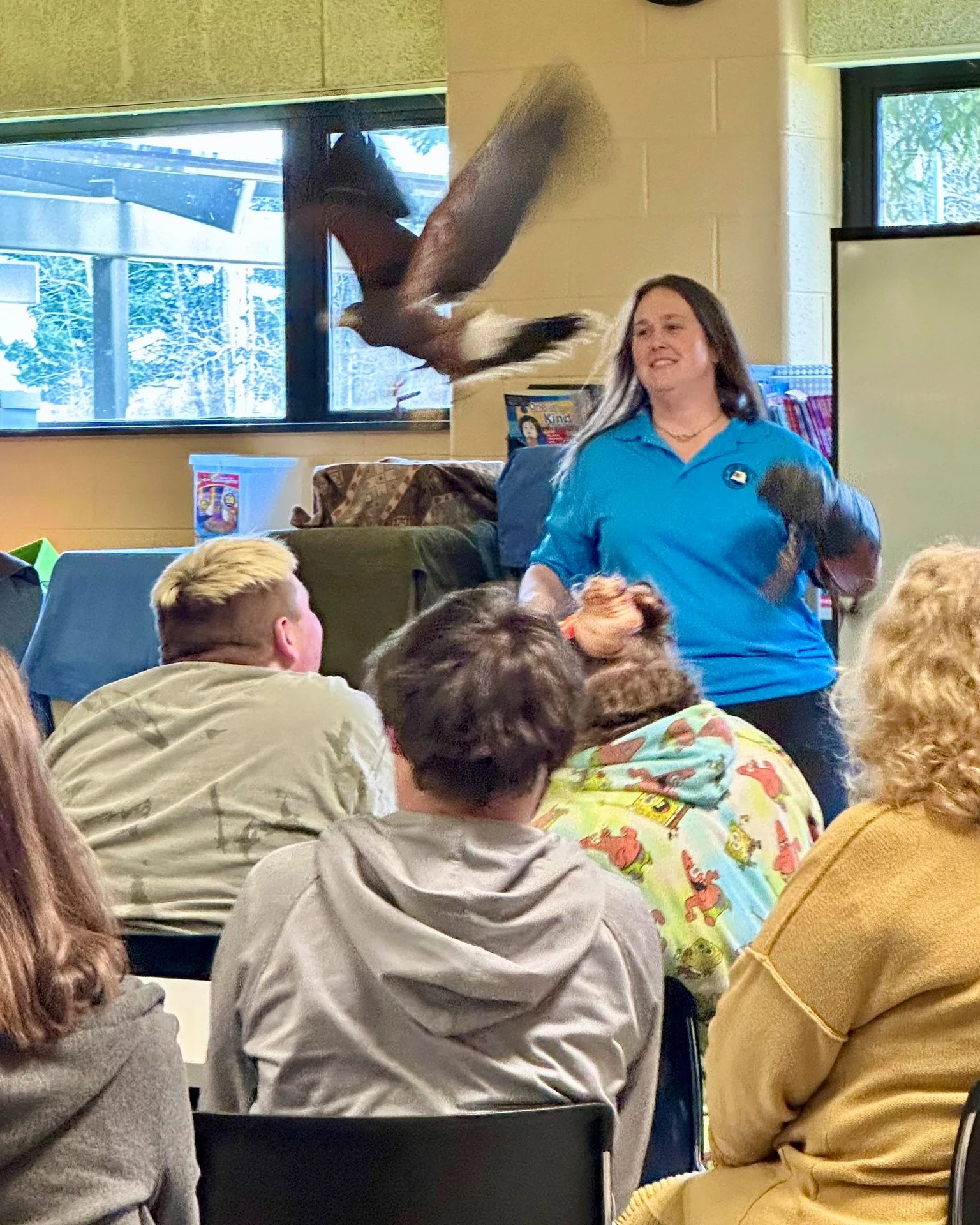
Students at the Hewes Educational Center recently experienced an exhilarating educational encounter as the Hawk Creek Wildlife Center Inc. brought its renowned wildlife education programs directly to their campus. The initiative, designed to illuminate the wonders of the natural world for learners of all ages, featured an engaging presentation by two seasoned wildlife naturalists. These experts introduced the young attendees to a diverse array of native and exotic animals, including majestic raptors, intriguing mammals, and captivating snakes. The core of the program focused on imparting crucial knowledge about each species’ natural habitat, unique behaviors, and the vital ecological roles they play. A particularly memorable moment for the students occurred when a raptor gracefully soared directly overhead, offering a breathtaking, up-close perspective of avian flight.
Fostering Environmental Stewardship Through Hands-On Learning
The visit from the Hawk Creek Wildlife Center underscores a growing trend in educational institutions to integrate experiential learning opportunities that connect students with the natural environment. In an era where digital distractions are pervasive, programs like these serve as crucial antidotes, fostering a deeper appreciation for wildlife and promoting a sense of responsibility towards conservation. The Hewes Educational Center’s decision to host such an event reflects a commitment to providing a well-rounded education that extends beyond traditional classroom settings. By bringing live animals and expert naturalists to the students, the center aims to create lasting impressions and inspire a lifelong interest in biology, ecology, and environmental science.
A Glimpse into the Wild: Program Highlights and Educational Objectives
The educational program delivered by Hawk Creek Wildlife Center is meticulously crafted to be both informative and captivating. The naturalists employ a multi-faceted approach, utilizing visual aids, interactive discussions, and direct observation of the animals to maximize student engagement. The selection of animals for these presentations is strategic, typically including species that are often misunderstood or underappreciated, thereby challenging common misconceptions and highlighting their ecological significance.
For instance, the inclusion of raptors, such as hawks and owls, allows for discussions about their role as apex predators in controlling rodent populations and maintaining ecosystem balance. Similarly, presentations on mammals might focus on their adaptations for survival in various environments, their social structures, and their contributions to seed dispersal or pollination. The inclusion of reptiles, like snakes, often serves to demystify these creatures, educating students about their crucial roles in pest control and their often-gentle nature when not threatened.
The program’s emphasis on natural habitat and behavior aims to equip students with a foundational understanding of ecological principles. By learning where these animals live and how they interact with their surroundings, students begin to grasp the interconnectedness of life and the delicate balance that sustains ecosystems. This knowledge is fundamental to developing an informed perspective on conservation challenges and the importance of protecting biodiversity.
The dramatic moment when a raptor flew directly over the students’ heads was not merely a spectacle; it was a carefully orchestrated educational experience. Such direct encounters, when conducted safely and ethically, can create powerful emotional connections, transforming abstract ecological concepts into tangible, awe-inspiring realities. This visceral experience is far more impactful than any textbook illustration or video presentation, embedding a deeper understanding and appreciation for the animal and its capabilities.

The Role of Wildlife Centers in Modern Education
Hawk Creek Wildlife Center Inc., established with the mission of fostering compassion, saving species, and restoring balance, operates as a vital resource for both wildlife rehabilitation and public education. Such organizations play a critical role in bridging the gap between the general public and the often-complex world of wildlife conservation. Their educational outreach programs are not just about imparting knowledge; they are about cultivating empathy and encouraging active participation in conservation efforts.
According to data from the National Wildlife Federation, educational programs that connect children with nature have been shown to improve cognitive development, enhance physical health, and foster a greater sense of environmental responsibility. Wildlife centers, by providing direct encounters with animals and expert-led discussions, are at the forefront of this movement, offering invaluable learning experiences that can shape future generations of environmental stewards.
The sustained impact of these educational visits extends beyond the immediate experience. Students who participate in such programs are more likely to retain the information, develop positive attitudes towards wildlife, and become advocates for conservation in their communities. This ripple effect is precisely what organizations like Hawk Creek Wildlife Center strive to achieve, aiming to create a more informed and engaged citizenry capable of addressing the pressing environmental challenges of our time.
Background and Context of the Event
While the provided content does not specify the exact date of the visit, the presence of a blog post dated June 2024 suggests a recent event. The Hewes Educational Center, likely a primary or secondary school, is situated within a region where such wildlife education programs can have a significant impact on students’ understanding of local ecosystems. The Hawk Creek Wildlife Center, based on its website information, is dedicated to a comprehensive approach that includes rescuing, rehabilitating, and releasing injured or orphaned wildlife, alongside its extensive educational outreach.
The rationale behind bringing the wildlife center to the school, rather than having students visit the center, is often driven by logistical considerations and the desire to minimize disruption to the animals’ rehabilitation process. Mobile educational units, staffed by experienced naturalists, allow for a controlled and safe introduction of wildlife to various educational settings, maximizing accessibility for students who may not have the opportunity to visit a wildlife center otherwise.
Chronology of the Educational Engagement (Inferred)
Based on the typical structure of such events, a plausible chronology can be inferred:
- Pre-Visit Preparation: Educators at Hewes Educational Center likely coordinated with Hawk Creek Wildlife Center to schedule the program, discussing age groups, specific learning objectives, and logistical requirements. This may have included preparing students with introductory materials about wildlife and conservation.
- Arrival of Naturalists and Animals: On the day of the event, the wildlife naturalists arrived at Hewes Educational Center with a carefully selected group of animals. Safety protocols and appropriate enclosures or handling procedures would have been established prior to their arrival.
- Educational Presentation: The core of the event involved the naturalists delivering their educational program. This would have included introductions to various species, explanations of their habitats and behaviors, and opportunities for students to ask questions. The highlight of the raptor’s flight likely occurred during this segment.
- Interactive Engagement: While not explicitly detailed, such programs often include opportunities for students to observe animals more closely, perhaps through controlled viewing or even supervised, safe interactions with certain species.
- Post-Visit Reinforcement: Following the presentation, educators at Hewes Educational Center would typically follow up with classroom activities to reinforce the lessons learned, perhaps through art projects, writing assignments, or further research into the species encountered.
Supporting Data and Broader Implications
The impact of wildlife education on young minds is supported by a growing body of research. Studies published in journals like Environmental Education Research consistently show that direct experiences with nature lead to increased environmental knowledge, positive attitudes towards conservation, and a greater likelihood of engaging in pro-environmental behaviors later in life.

For example, a 2018 study published in Children, Youth and Environments found that elementary school students who participated in wildlife education programs exhibited a significant increase in their understanding of ecological concepts and a greater desire to protect wildlife. This suggests that the visit from Hawk Creek Wildlife Center is not merely a recreational event but a significant investment in the environmental literacy of the Hewes Educational Center’s student body.
The broader implications of such initiatives are far-reaching. By fostering an early appreciation for wildlife and the environment, these programs contribute to the development of a generation that is better equipped to address complex ecological challenges such as climate change, habitat loss, and species extinction. The success of the Hawk Creek Wildlife Center’s outreach program at Hewes Educational Center serves as a model for other educational institutions looking to enhance their science and environmental education offerings.
Official Responses and Perspectives (Inferred)
While no direct quotes are provided, it is reasonable to infer that both the Hewes Educational Center and Hawk Creek Wildlife Center would express strong satisfaction with the outcome of the event.
From the perspective of the Hewes Educational Center, the visit would be viewed as a highly successful pedagogical tool. Educators would likely praise the naturalists for their expertise, their ability to connect with young audiences, and the invaluable real-world learning experience they provided. Such events contribute directly to the center’s mission of delivering a comprehensive and engaging curriculum that prepares students for future academic and civic engagement.
Hawk Creek Wildlife Center Inc., in its role as an educational outreach provider, would likely view this engagement as a fulfillment of its core mission. Their naturalists would be commended for their dedication to wildlife education and for successfully inspiring a sense of wonder and responsibility in the students. The positive reception from the students and educators would validate the importance of their work in conservation and education.
Analysis of Impact and Future Outlook
The educational visit from Hawk Creek Wildlife Center to Hewes Educational Center represents a successful synergy between conservation organizations and educational institutions. The direct engagement with live animals and expert naturalists offers a unique and powerful learning experience that traditional classroom methods cannot replicate.
The long-term impact of such programs lies in their ability to cultivate a generation of environmentally conscious individuals. By fostering empathy, understanding, and a sense of stewardship from a young age, these initiatives contribute to the broader goals of wildlife conservation and ecological sustainability. As environmental challenges become more pressing, the role of organizations like Hawk Creek Wildlife Center in educating and inspiring future generations will only grow in importance. The success of this particular engagement suggests that similar collaborations will continue to be a vital component of modern environmental education.
