
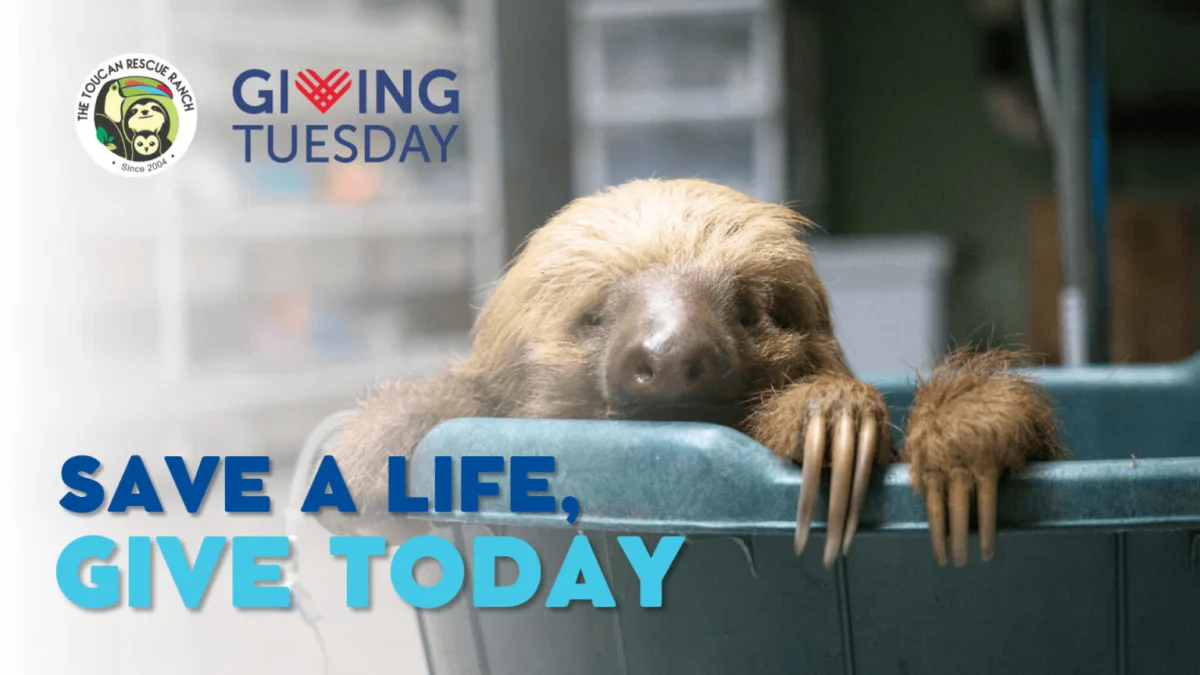
The Toucan Rescue Ranch, a specialized wildlife conservation facility based in Costa Rica, has officially announced its participation in the global Giving Tuesday movement as it faces the most significant operational challenge in its 20-year history. The organization, which operates as a donor-funded nonprofit, reported that the number of wildlife emergencies handled in the first seven months of 2024 has already surpassed the total volume of cases recorded in the entirety of 2023. This surge in animal intakes, primarily driven by human-wildlife conflict, has prompted an urgent appeal for international support to sustain the facility’s rescue, rehabilitation, and rewilding operations.
As a small-scale non-governmental organization (NGO), the Toucan Rescue Ranch (TRR) relies almost exclusively on private donations and the support of global animal welfare advocates. The 2024 Giving Tuesday campaign serves as a critical fiscal milestone for the group, which provides 24-hour veterinary care and long-term rehabilitation for native species including sloths, toucans, owls, and various primates. With the facility currently housing a high density of vulnerable orphans, the organization is seeking to raise $8,000 to cover the rising costs of specialized medical equipment, dietary supplements, and enclosure maintenance necessary to facilitate successful rewilding.
A Record-Breaking Year for Wildlife Intakes
The current year has marked a statistical anomaly for the Toucan Rescue Ranch. According to internal data provided by the organization, the facility treated over 400 vulnerable animals in 2023. However, by July 2024, that number had already been exceeded. If the current trend continues, the ranch is on trajectory to experience its highest volume of wildlife emergencies since its founding in 2004.
This increase in demand is attributed to a variety of environmental and anthropogenic factors. As Costa Rica continues to develop its infrastructure, the overlap between human settlements and wildlife habitats has intensified. The TRR medical team reports that the majority of incoming cases involve severe trauma. These injuries are frequently the result of electrocutions on uninsulated power lines, vehicular collisions on expanding road networks, and the continued pressure of the illegal pet trade.
The organization’s leadership notes that the complexity of these cases has also evolved. While some animals require only short-term observation and stabilization, an increasing number of patients arrive in critical condition, necessitating intensive care, complex surgeries, and months of physical therapy. The financial and labor-intensive nature of these treatments has put a strain on the nonprofit’s resources, making the Giving Tuesday initiative a vital component of their 2024-2025 survival strategy.
The Orphan Crisis and the 41.8% Threshold
One of the most pressing challenges identified by the Toucan Rescue Ranch is the high proportion of orphaned animals currently in their care. Data released by the facility indicates that 41.8% of the animals currently being rehabilitated are orphans. These individuals—often infant sloths or fledgling birds—require a different level of intervention than injured adults.
The care of wildlife orphans is a multi-year commitment. Without a mother to provide nourishment and teach survival skills, the TRR staff must step in to provide specialized milk formulas, temperature-controlled environments, and "rewilding schools" where the animals can learn to forage and navigate their natural habitats. The ultimate goal for these orphans is independence, but the process is costly. The organization emphasizes that every donation contributes directly to the specialized care required to ensure these young animals do not become habituated to humans, which would prevent their eventual release into the wild.
Two Decades of Evolution in Conservation
The Toucan Rescue Ranch was established two decades ago with a focus on avian rescue. Over the past 20 years, it has evolved into a comprehensive wildlife sanctuary and rehabilitation center recognized internationally for its work with sloths and other Costa Rican mammals. This evolution has been marked by a commitment to scientific research and the implementation of advanced rewilding protocols.
Chronologically, the organization has moved from a reactive rescue model to a proactive conservation model. In its early years, the focus was primarily on immediate medical stabilization. Today, the TRR integrates education and community outreach into its mission, working to address the root causes of human-wildlife conflict. By educating local populations on the dangers of the illegal pet trade and advocating for safer infrastructure—such as wildlife bridges and insulated power lines—the ranch aims to reduce the number of animals that require their services in the first place.
Despite these efforts, the immediate need for clinical intervention remains high. The 20-year milestone serves as both a celebration of survival and a sober reminder of the escalating threats facing Costa Rica’s biodiversity. The ranch’s resilience has been tested by economic fluctuations and environmental shifts, yet the current surge in animal intakes represents an unprecedented logistical hurdle.
The Logistics of Giving Tuesday: Financial Impact and Tax Status
Giving Tuesday, observed annually on the Tuesday after Thanksgiving in the United States, has become the world’s largest day of charitable giving. For the Toucan Rescue Ranch, the campaign is not merely about fundraising but about securing the operational budget for the upcoming year. The organization has set a target of $8,000 for this specific drive, a sum that will be allocated toward several key areas of animal care.
While the "What will $8,000 raise?" query was posed to the community, the practical applications of such funds in a wildlife clinic are extensive. In a professional veterinary setting, $8,000 can cover the cost of several months of high-quality, species-specific diets, which are essential for the recovery of malnourished or injured animals. It can also fund diagnostic imaging, such as X-rays and ultrasounds, which are critical for assessing internal injuries in electrocuted wildlife. Furthermore, these funds support the maintenance of pre-release enclosures—large, naturalistic spaces where animals spend their final weeks before being returned to the jungle.
The organization also reminds supporters that all donations to the Toucan Rescue Ranch are tax-deductible. As a registered nonprofit, the TRR provides a transparent financial pathway for donors who wish to see their contributions translated into tangible conservation outcomes. Contributions of all sizes, from $10 to $100 and beyond, are described as instrumental in maintaining the "safe haven" status of the facility.
Rewilding: The Scientific Heart of the Mission
The core philosophy of the Toucan Rescue Ranch is "rewilding." Unlike permanent sanctuaries that house animals for the duration of their lives, TRR operates with the primary objective of returning every patient to the wild. This process is governed by strict protocols to ensure that released animals have a high probability of survival and do not pose a risk to wild populations.
Rewilding involves several stages:
- Rescue and Stabilization: Immediate medical intervention to save the animal’s life.
- Rehabilitation: A period of recovery where the animal regains physical strength and natural behaviors.
- Pre-Release: Moving the animal to a "soft-release" site where it can acclimate to the local climate and diet while still being monitored by biologists.
- Release and Post-Monitoring: The animal is returned to a protected area, often with tracking devices to gather data on the success of the rewilding process.
This scientific approach ensures that the TRR’s work contributes to the broader health of Costa Rica’s ecosystems. By returning healthy, genetically diverse individuals to the wild, the ranch helps maintain the balance of the rainforest, where species like toucans and sloths play vital roles in seed dispersal and nutrient cycling.
Broader Implications for Costa Rican Biodiversity
The work of the Toucan Rescue Ranch has implications that extend far beyond the gates of its facility. Costa Rica is home to approximately 6% of the world’s biodiversity, making it a critical focal point for global conservation efforts. The health of its wildlife is inextricably linked to the country’s economy, which relies heavily on ecotourism.
When wildlife populations are threatened by infrastructure and human encroachment, the entire ecological and economic framework of the region is at risk. Organizations like TRR act as a frontline defense, mitigating the impact of human development on the natural world. The surge in emergencies in 2024 highlights a growing tension between national growth and environmental preservation—a tension that requires the intervention of NGOs to manage.
Industry analysts suggest that the rising number of wildlife injuries in Costa Rica may be a harbinger of larger environmental shifts. As habitats become more fragmented, animals are forced to move through human-dominated landscapes, increasing the frequency of accidents. The data provided by TRR serves as a vital indicator for policymakers and environmentalists regarding the areas where infrastructure improvements, such as "green" transit corridors, are most urgently needed.
Conclusion and Call to Action
As Giving Tuesday approaches, the Toucan Rescue Ranch remains steadfast in its commitment to the "voiceless" creatures of the Costa Rican rainforest. The organization emphasizes that every animal that enters its clinic provides a renewed sense of purpose: to heal, to rehabilitate, and to return. However, the ability to fulfill this purpose is directly tied to the generosity of the global community.
The unprecedented demand for wildlife rescue in 2024 has placed the ranch at a crossroads. With more animals in care than ever before, and nearly half of them being vulnerable orphans, the need for financial support has reached a critical juncture. The $8,000 goal for Giving Tuesday represents more than just a financial target; it represents the survival and future independence of hundreds of animals that have been given a second chance at life.
The Toucan Rescue Ranch invites animal lovers, conservationists, and the general public to join their mission this Giving Tuesday. By contributing to the care and rewilding of Costa Rica’s native species, donors become active participants in the preservation of one of the planet’s most vital biological corridors. In a year of record-breaking challenges, the organization looks toward the collective power of global giving to ensure that the wildlife of Costa Rica continues to thrive for generations to come.
