
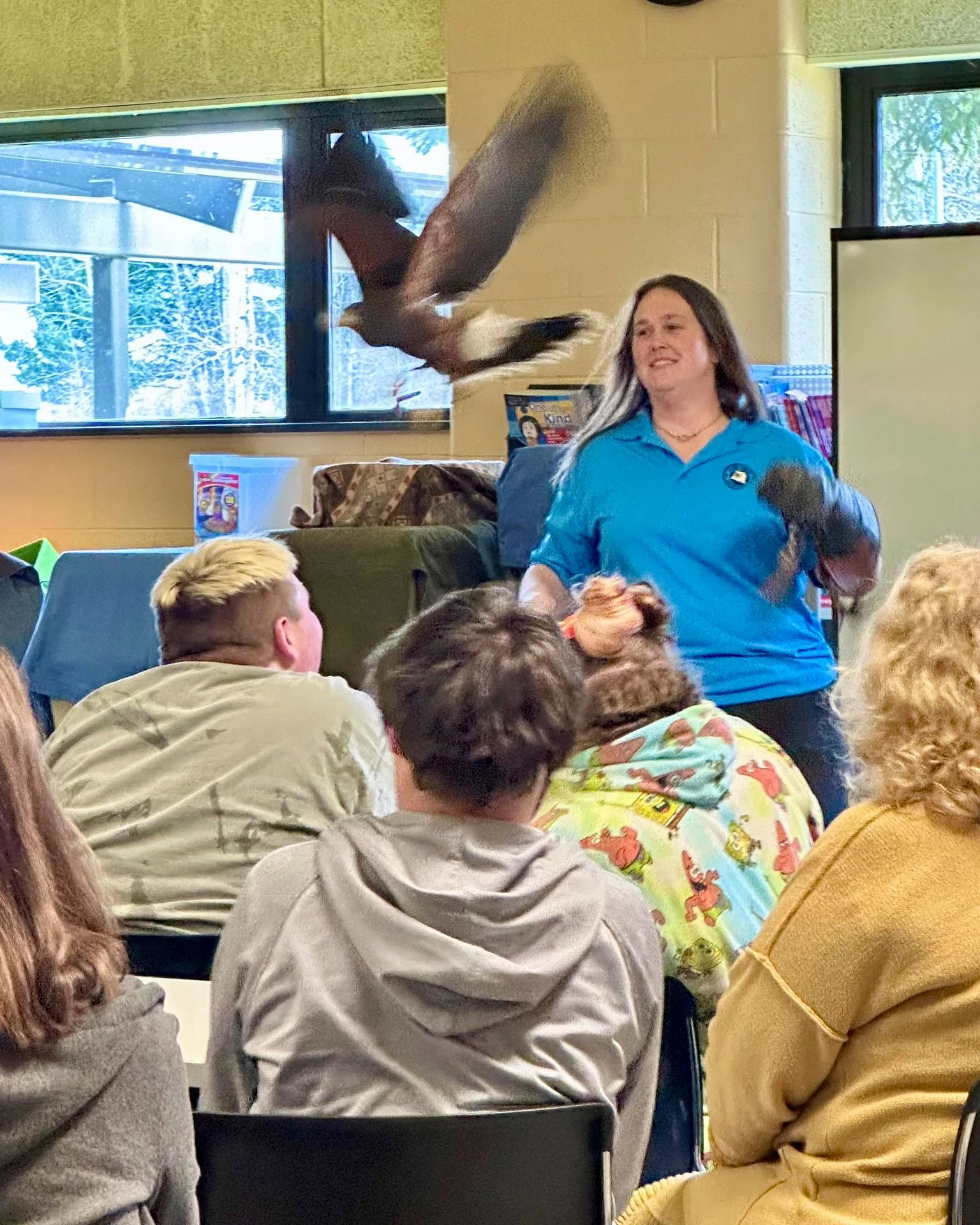
Students at the Hewes Educational Center recently experienced an immersive educational encounter with the natural world, thanks to a captivating visit from the Hawk Creek Wildlife Center Inc. The organization, dedicated to fostering compassion, saving species, and restoring ecological balance, brought a diverse array of wildlife directly to the students, transforming the traditional classroom setting into a dynamic learning environment. This initiative underscores the growing importance of experiential education in connecting young minds with conservation efforts and the intricate web of life.
The program, designed to bring the natural world to life for students of all ages, featured a presentation by two experienced wildlife naturalists. These educators introduced the young attendees to a fascinating collection of animals, including majestic raptors, intriguing mammals, and slithering snakes. The interactive session went beyond mere observation, delving into the natural habitats, unique behaviors, and ecological roles of each species. This approach aims to cultivate a deeper understanding and appreciation for biodiversity, moving beyond abstract concepts to tangible, memorable experiences.
A particularly thrilling moment for the students occurred when a raptor, with its powerful wingspan and keen eyesight, soared directly overhead. Such moments of direct interaction with wildlife can leave a lasting impression, sparking curiosity and a sense of wonder that often translates into a lifelong commitment to environmental stewardship. This direct engagement is a cornerstone of Hawk Creek Wildlife Center’s educational philosophy, recognizing that personal encounters can be powerful catalysts for learning and advocacy.
Background and Mission of Hawk Creek Wildlife Center
Hawk Creek Wildlife Center Inc. is a non-profit organization with a clear and vital mission: to foster compassion, save species, and restore balance within ecosystems. Operating from its base, the center is committed to wildlife rehabilitation, public education, and conservation initiatives. Their educational programs are a critical component of their work, aiming to bridge the gap between human communities and the natural world, particularly in an era where direct encounters with wildlife are becoming increasingly rare for many.
The center’s approach to education is multi-faceted, encompassing live animal presentations, classroom visits, and community outreach events. By bringing rescued and non-releasable animals into educational settings, they provide unique opportunities for students to learn about the challenges facing wildlife, including habitat loss, pollution, and human-wildlife conflict. These encounters are carefully managed to ensure the well-being of the animals and the safety of the participants, while maximizing the educational impact.
The organization’s commitment to "saving species" is not only about rescuing injured or orphaned animals but also about educating the public to prevent future harm. By understanding the needs of different species and the threats they face, individuals can make more informed choices that contribute to their survival. The concept of "restoring balance" speaks to a broader ecological understanding, emphasizing the interconnectedness of all living things and the importance of maintaining healthy ecosystems for the benefit of both wildlife and humanity.

The Educational Program in Action
The visit to Hewes Educational Center was a prime example of Hawk Creek Wildlife Center’s educational programming in action. The naturalists likely employed a carefully curated selection of animals, chosen for their educational value and their ability to engage a young audience. The introduction of raptors, mammals, and snakes would have provided a diverse glimpse into different ecological niches and evolutionary adaptations.
For instance, when presenting raptors, the naturalists would have likely discussed their role as apex predators, their specialized hunting techniques, and the importance of healthy prey populations. The soaring flight of a raptor over the students’ heads would have offered a visceral understanding of their aerial prowess and the freedom of their natural environment. This visual spectacle can be far more impactful than any textbook description.
Mammals, with their familiar forms and behaviors, often resonate deeply with students. Presentations might have highlighted adaptations for survival, such as camouflage, specialized diets, or unique social structures. The inclusion of snakes, often subjects of fear or misunderstanding, presents a valuable opportunity for educators to dispel myths, explain their crucial role in pest control, and showcase the diversity and beauty of these often-maligned creatures. The naturalists would have emphasized the specific adaptations that allow snakes to thrive in their particular habitats.
The educational narrative accompanying these animal encounters would have focused on several key themes:
- Natural History: Detailed information about each animal’s evolutionary history, geographical distribution, and unique biological characteristics.
- Ecological Roles: Explaining how each species fits into its ecosystem, its food web interactions, and its contribution to biodiversity.
- Conservation Status: Discussing the challenges each species faces in the wild, including threats from human activities, and what can be done to protect them.
- Behavioral Adaptations: Illustrating how animals have evolved specific behaviors to survive, reproduce, and interact with their environment.
- Human Impact: Educating students on how human actions can both harm and help wildlife, empowering them to become responsible stewards of the environment.
The Significance of Experiential Learning
The visit by Hawk Creek Wildlife Center exemplifies the power of experiential learning. Traditional classroom instruction, while foundational, can sometimes struggle to convey the full impact and complexity of the natural world. Hands-on, sensory-rich experiences, like those provided by live animal presentations, offer several pedagogical advantages:
- Increased Engagement and Retention: Direct interaction and observation naturally capture students’ attention and lead to deeper understanding and longer-term memory retention. The emotional connection formed during such encounters can be particularly powerful.
- Development of Empathy and Compassion: Witnessing animals up close, learning their stories, and understanding their needs can foster empathy and a sense of responsibility towards other living beings. This is central to Hawk Creek’s mission of "fostering compassion."
- Contextualization of Learning: Abstract concepts such as habitat, adaptation, and conservation become more concrete when linked to real animals. Students can see the tangible results of ecological principles in action.
- Inspiration for Future Careers and Activism: Such experiences can ignite a passion for science, conservation, and environmental careers, inspiring the next generation of researchers, educators, and advocates.
- Dispelling Misconceptions: Particularly with animals like snakes, direct, guided exposure can help to dismantle ingrained fears and misconceptions, replacing them with accurate information and respect.
The presence of a raptor soaring directly over the students’ heads was not just a moment of excitement; it was a powerful demonstration of the animal’s natural behavior in a context that allowed for immediate, awe-inspiring learning. This kind of impactful moment can shift perspectives and create a lasting impression of the wildness and wonder that exists beyond the classroom walls.
Broader Implications for Conservation Education
The work of organizations like Hawk Creek Wildlife Center is crucial in an era of increasing urbanization and digital immersion, where many children have limited direct contact with nature. By bringing wildlife education to schools, they are actively working to:

- Cultivate a Future Generation of Conservationists: Instilling an appreciation for wildlife and the environment from a young age is vital for long-term conservation success. Informed and engaged young people are more likely to support environmental policies and practices as adults.
- Address the "Extinction of Experience": As people become more disconnected from nature, their willingness to protect it can diminish. Experiential programs help to counteract this trend by re-establishing a connection.
- Promote Wildlife Rehabilitation and Rescue Awareness: Educational programs often highlight the work of wildlife rehabilitators, raising awareness about the human-caused threats that lead to animals needing rescue and the importance of responsible human behavior.
- Foster Community Engagement: These visits can also serve as a catalyst for broader community involvement in conservation, encouraging families to learn more and participate in local environmental initiatives.
The success of such programs relies on skilled educators who can convey complex scientific information in an accessible and engaging manner, while also ensuring the safety and welfare of the animals and the students. The fact that Hawk Creek Wildlife Center emphasizes "restoring balance" suggests a holistic approach that looks beyond individual species to the health of entire ecosystems, a perspective that is increasingly recognized as essential in conservation science.
Supporting Data and Analysis
While specific data from this particular visit isn’t provided, general trends in environmental education research highlight the effectiveness of such programs. Studies have consistently shown that outdoor and experiential learning opportunities lead to:
- Improved Academic Performance: Students involved in nature-based learning often exhibit better performance in science, math, and literacy.
- Enhanced Social and Emotional Development: These programs can foster teamwork, problem-solving skills, self-confidence, and a greater sense of environmental responsibility.
- Positive Behavioral Changes: Direct engagement with nature has been linked to reduced stress, improved focus, and a greater willingness to engage in pro-environmental behaviors.
The inclusion of diverse species, from the aerial prowess of raptors to the terrestrial adaptations of mammals and the unique biology of reptiles, ensures that students are exposed to a broad spectrum of evolutionary strategies and ecological roles. This diversity is key to understanding the resilience and complexity of natural systems.
The mention of "restoring balance" by Hawk Creek Wildlife Center is particularly relevant in the current ecological climate. Human activities have significantly disrupted natural balances, leading to biodiversity loss and climate change. Educational initiatives that emphasize ecological interconnectedness and the consequences of imbalance are vital for fostering a more sustainable future. By learning about the specific roles of each animal in its habitat, students gain an appreciation for the delicate equilibrium that sustains life.
Conclusion
The visit by Hawk Creek Wildlife Center to Hewes Educational Center served as a powerful reminder of the critical role that hands-on, engaging education plays in fostering a connection between young people and the natural world. By bringing wildlife directly into the learning environment, the center not only educates but also inspires, cultivating empathy, curiosity, and a sense of responsibility. The soaring raptor, the fascinating mammals, and the intriguing snakes all contributed to an unforgettable learning experience, leaving an indelible mark on the students and reinforcing the vital mission of conservation for generations to come. Organizations like Hawk Creek are indispensable in their efforts to save species, restore ecological balance, and foster a deeper, more compassionate understanding of the planet we share.
