
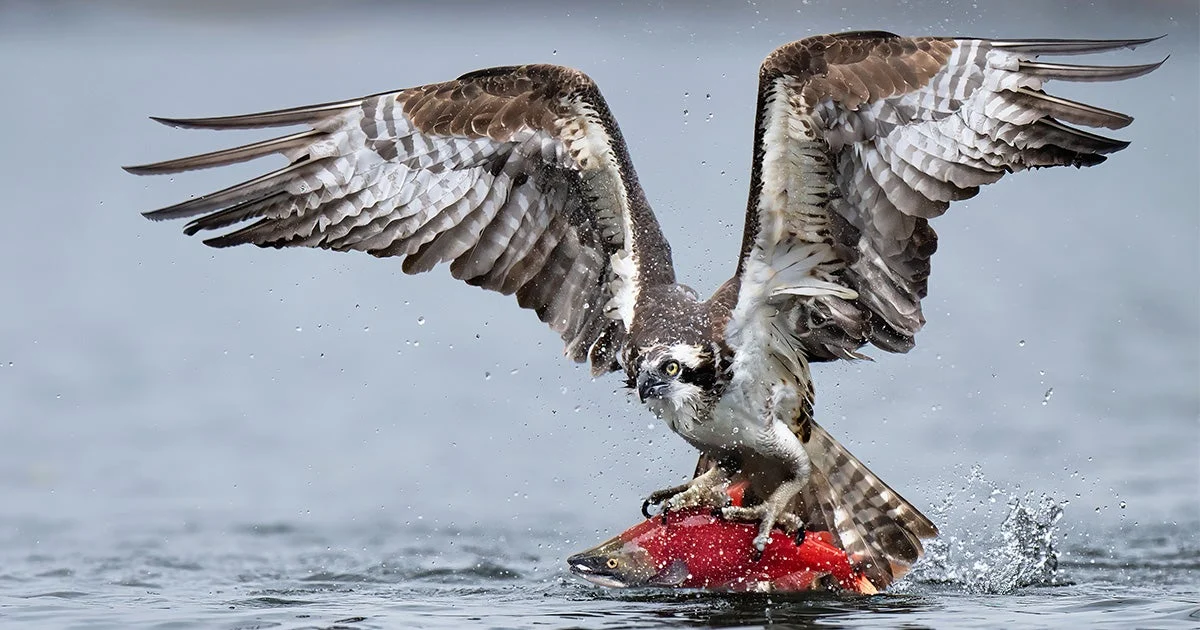
Often hailed as the "sea hawk" for its unparalleled fishing prowess, the Osprey (Pandion haliaetus) is a magnificent raptor whose widespread presence across every continent except Antarctica makes it a unique global ambassador for environmental health. From the remote edges of vast oceans to the tranquil banks of inland rivers and lakes, these birds are instantly recognizable by their striking bright yellow eyes and distinctive M-shaped wingspan in flight. Their existence is inextricably linked to the vitality of aquatic ecosystems, making them a crucial bio-indicator for the health of the planet’s waterways. The story of the Osprey is one of remarkable adaptation, historical peril, and inspiring resilience, reflecting both humanity’s capacity for harm and its potential for profound conservation success.
The Master Anglers of the Avian World
Ospreys are specialists, with fish comprising an astonishing 99 percent of their diet. This singular focus has driven the evolution of a suite of extraordinary adaptations that render them peerless in the avian fishing world. Their vision is exceptionally keen, allowing them to spot piscine prey from considerable heights, sometimes as much as 100 feet above the water’s surface. Once a target is locked, the Osprey executes a spectacular, head-first dive, often plunging several feet below the surface. Just before impact, their long legs are extended forward, equipped with powerful talons designed for maximum grip. To withstand the force of the dive and submersion, Ospreys possess a third eyelid, a nictitating membrane, which acts like a built-in goggle, protecting their eyes. Their nostrils can seal shut, preventing water ingress, and a highly developed preen gland secretes oil that waterproofs their feathers, ensuring their plumage remains functional and not waterlogged.
Beyond the initial catch, the Osprey demonstrates further ingenious adaptations. Their toes are equipped with barbed pads that provide superior traction on slippery fish scales. Uniquely, their outer toe is reversible, allowing it to point either forward or backward, ensuring a tenacious grip on their wriggling quarry. Upon emerging from the water, often with a powerful thrust of their wings, the Osprey instinctively reorients the captured fish head-first. This "aerodynamic position" minimizes wind resistance during flight, making the journey back to a perch or nest more energy-efficient, a critical consideration when carrying a significant meal that can sometimes weigh as much as the bird itself. Studies, including a 2018 analysis of Osprey fishing behavior, have even revealed a tendency for Ospreys to lead with their left foot when using both to secure prey, suggesting a lateralized brain function akin to human handedness, possibly aiding in aerial balance.
A Global Presence: Subspecies and Migratory Patterns
The global distribution of Ospreys is segmented into four recognized subspecies, each with distinct geographical ranges and migratory behaviors. The nominate subspecies, Pandion haliaetus haliaetus, breeds predominantly across Europe and Asia, undertaking impressive seasonal migrations to wintering grounds in Africa and southern Asia. The North American subspecies, Pandion haliaetus carolinensis, breeds extensively across Canada and the United States, from coast to coast. With the exception of some year-round residents in the warmer climes of South Florida, these birds embark on epic southbound migrations, journeying thousands of miles to winter along the Gulf Coast, Central America, and as far south as South America. The remaining two subspecies, Pandion haliaetus ridgwayi in the Caribbean and Pandion haliaetus cristatus found in Australia and its surrounding islands, generally adopt a non-migratory lifestyle, remaining in their bountiful coastal habitats year-round. These migrations are feats of endurance, often involving trans-oceanic flights and requiring significant energy reserves, making them vulnerable to habitat loss and climate-induced changes along their flyways.
Historical Peril and Remarkable Resilience: The DDT Era
The Osprey’s recent history is a poignant narrative of ecological collapse and triumphant recovery, serving as a powerful testament to the impact of human actions. In the mid-20th century, Osprey populations, particularly in North America and Europe, experienced catastrophic declines. This precipitous drop was primarily attributed to the widespread use of dichlorodiphenyltrichloroethane, or DDT, a potent synthetic insecticide introduced in the 1940s. While initially lauded for its effectiveness in controlling agricultural pests and disease-carrying insects, DDT’s persistent nature and bioaccumulation through the food chain proved devastating to top predators.
Ospreys, at the apex of their aquatic food webs, ingested DDT-contaminated fish. The chemical interfered with calcium metabolism, leading to severe thinning of their eggshells. These fragile shells would often crack under the weight of incubating parents, resulting in widespread reproductive failure. By the 1960s, populations in some regions had plummeted by as much as 90%, pushing the species to the brink of extinction. The alarm was raised by pioneering environmentalists like Rachel Carson, whose seminal 1962 book "Silent Spring" exposed the ecological dangers of pesticides like DDT, galvanizing public awareness and initiating the modern environmental movement.
This growing public concern, coupled with mounting scientific evidence, led to a landmark decision. In 1972, the newly formed U.S. Environmental Protection Agency (EPA) banned the use of DDT in the United States. Similar bans followed in many other developed nations. The recovery of the Osprey population following this ban has been one of the most celebrated conservation success stories. Within decades, Osprey numbers rebounded dramatically, with nesting pairs returning to historical territories and expanding into new ones. This recovery underscored the critical importance of informed policy decisions and the remarkable resilience of nature when given a chance to heal.
Modern Challenges: A New Set of Threats
Despite their impressive comeback, Ospreys face a new array of complex threats in the 21st century, primarily stemming from continued human activity and environmental degradation.
-
Declining Prey Base: The Menhaden Crisis: A significant and growing concern for Osprey populations, particularly along the Atlantic Coast of North America, is the decline of key forage fish species, notably the Atlantic Menhaden (Brevoortia tyrannus). Menhaden are small, oily filter feeders that form the backbone of the Atlantic marine food web, serving as a primary food source for a vast array of predators, including Ospreys, Striped Bass, whales, and seabirds. They are also subject to intense commercial fishing pressure, harvested for use in fishmeal, fertilizers, and omega-3 supplements. Overfishing, coupled with the exacerbating effects of climate change—such as ocean warming and acidification impacting menhaden spawning and survival—has led to significant declines in menhaden stocks. For Ospreys, a scarcity of menhaden directly translates to reduced food availability for hungry chicks, leading to lower reproductive success and potentially threatening population stability in affected regions. Conservation organizations, including Audubon, have actively advocated for more sustainable fisheries management practices for menhaden, emphasizing their ecological role over commercial exploitation.
-
Human Infrastructure and Entanglement: As Ospreys have recovered and expanded their range, they increasingly interact with human infrastructure. Their preference for nesting on tall, stable structures often leads them to build nests on utility poles. While providing elevated nesting sites, these locations pose significant risks, including electrocution for the birds and the potential for power outages and fires. Energy companies, recognizing this dual hazard, have implemented mitigation strategies. These include the installation of dedicated artificial nesting platforms on poles adjacent to hazardous sites, often using drones for surveying and public monitoring programs to identify problematic nests. These platforms provide safe alternatives, guiding Ospreys away from live wires.
-
Plastic Pollution in Nests: Another pervasive modern threat is the incorporation of plastic debris into Osprey nests. While Ospreys typically construct their massive nests—which can grow up to 6 feet wide and 13 feet deep over generations—from natural materials like sticks, seaweed, and sod, they increasingly incorporate anthropogenic items. Bags, ribbons, fishing lines, and even discarded toys like Barbie dolls are woven into the nest structure. This plastic pollution poses a direct and grave danger to chicks. Fishing lines, in particular, can wrap tightly around their legs and feet, leading to severe injuries, constriction, gangrene, and ultimately, death or permanent disability. This issue highlights the ubiquitous nature of plastic waste in our environment and its far-reaching consequences for wildlife.
Guardians of the Watershed: Ospreys as Indicator Species
The Osprey’s position at the top of aquatic food chains and its global distribution make it an invaluable indicator species for the health of marine and freshwater ecosystems. A healthy Osprey population generally signifies a healthy fish population, which in turn suggests good water quality and minimal pollution. Conversely, declines in Osprey numbers or reproductive success often serve as an early warning signal of environmental problems, whether it be chemical contamination, habitat degradation, or the collapse of prey species. Their sensitivity to environmental changes makes them biological sentinels, providing critical insights into the broader ecological health of the watersheds and coastlines they inhabit.
Conservation in Action: Human Intervention and Hope
The remarkable comeback of the Osprey post-DDT ban demonstrates that focused conservation efforts can yield significant results. Today, a multifaceted approach is employed to protect these raptors:
- Artificial Nesting Platforms: The widespread provision of artificial nesting platforms, often mounted on poles in suitable habitats, has been instrumental in supporting Osprey recovery. These platforms offer safe, elevated sites, particularly in areas where natural nesting trees are scarce or where Ospreys might otherwise choose hazardous locations like utility poles.
- Community Science and Monitoring: Programs like "Osprey Watch" engage citizen scientists across the globe to monitor nesting Ospreys, track their breeding success, and report observations. This vast network of data collection provides invaluable information to researchers and conservation managers, helping to identify trends, pinpoint problem areas, and assess the effectiveness of conservation strategies.
- Fisheries Management Advocacy: Conservation groups continue to advocate for science-based, sustainable management of forage fish species like Atlantic Menhaden. This involves pressing for catch limits that prioritize the ecological needs of predators over short-term commercial gains.
- Pollution Control: Efforts to reduce plastic pollution, improve waste management, and prevent chemical runoff into waterways directly benefit Ospreys and the fish they rely upon.
Iconic Individuals and Cultural Connections
Beyond their ecological significance, Ospreys have captured the human imagination, inspiring cultural references and fostering individual connections. William Shakespeare, keenly observant of the natural world, recognized the Osprey’s predatory prowess, writing in "Coriolanus": "I think he’ll be to Rome / As is the osprey to the fish, who takes it / By sovereignty of nature." This ancient acknowledgment highlights their enduring reputation as supreme hunters.
The moniker "sea hawk" is widely associated with Ospreys, yet ironically, the NFL team Seattle Seahawks does not feature an Osprey as its mascot. Instead, their live mascot is Taima, an Augur Hawk, a species native to Africa.
Perhaps the most beloved individual Osprey is Iris, an almost 30-year-old female residing in Montana’s Clark Fork River watershed. Tracked by scientists since 1999, Iris holds the title of the oldest known Osprey in the world, far exceeding the species’ average lifespan of 15 to 20 years. Her long life and successful rearing of over 20 offspring make her a living legend and a symbol of resilience. Her daily life, from her return to her nest each spring to her fishing expeditions, is broadcast via a 24/7 live stream, captivating a global audience and fostering a deeper appreciation for these magnificent birds. Iris embodies the enduring spirit of the Osprey and serves as a powerful, tangible link between humans and the wild.
Osprey nests also become microcosms of avian life. Due to their immense size and durability, they often become desirable real estate for other bird species. Bald Eagles, Canada Geese, or Great Horned Owls may usurp an Osprey nest early in the spring, before the original owners return from migration. Even when Ospreys are in residence, smaller species like House Sparrows, Common Grackles, and European Starlings will often tuck their own nests into the voluminous sides of an occupied Osprey structure, creating a bustling avian apartment complex.
Looking Ahead: Sustaining the Osprey’s Future
The Osprey’s journey, from the brink of extinction to a remarkable resurgence, stands as a powerful narrative of environmental awareness and the efficacy of targeted conservation. However, the new generation of threats—from declining prey populations and pervasive plastic pollution to the complex impacts of climate change—underscore that the fight for their future is far from over. The ongoing vitality of Osprey populations will continue to depend on human action: sustainable resource management, responsible waste disposal, proactive mitigation of human-wildlife conflicts, and robust community science initiatives. By safeguarding the Osprey, humanity not only protects a magnificent species but also champions the health of the very aquatic ecosystems that sustain all life on Earth. Their continued presence, soaring above our waterways with a fish clutched firmly in their talons, remains a hopeful indicator of a world where nature and humanity can coexist and thrive.
