
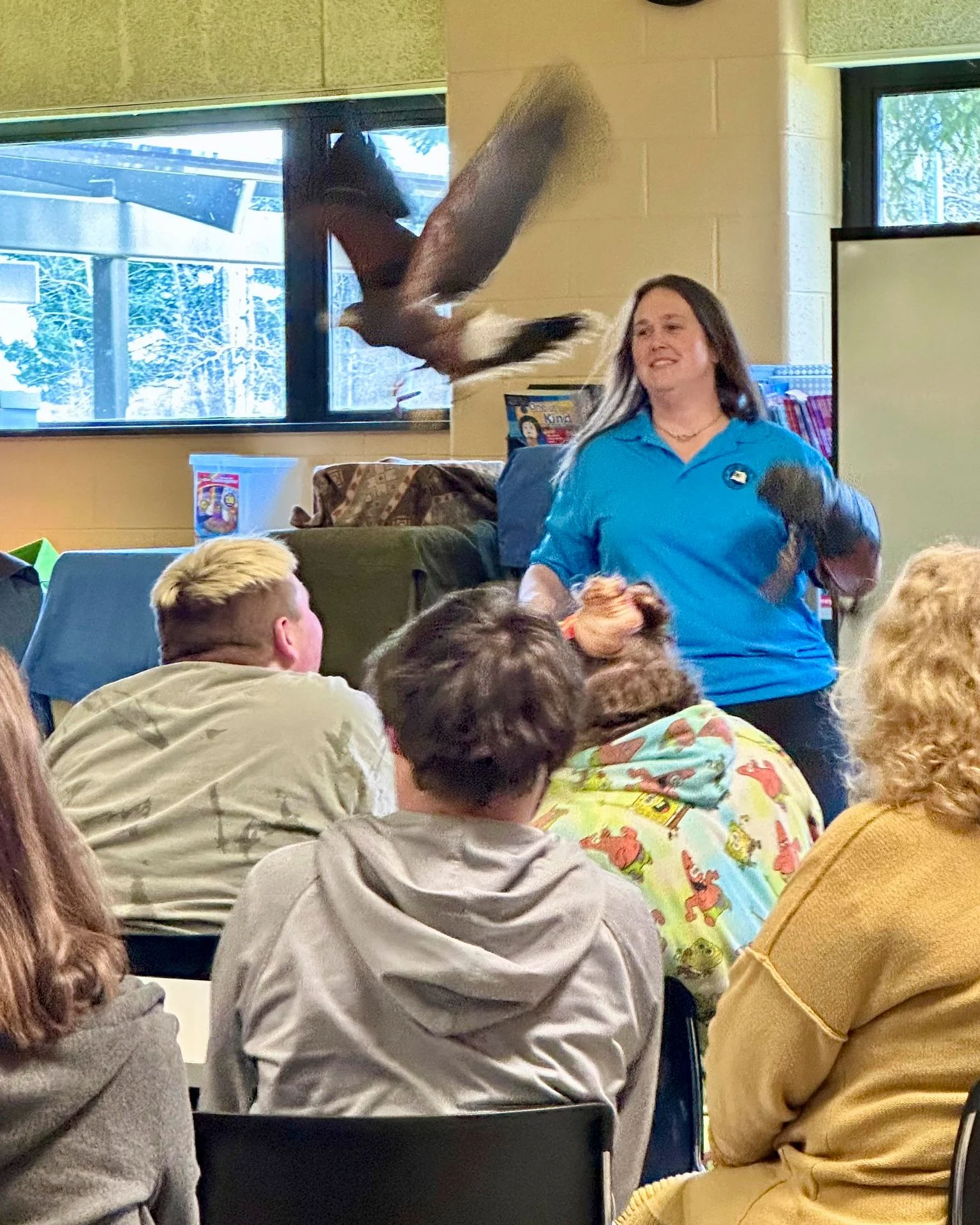
Students at the Hewes Educational Center were recently treated to an extraordinary educational experience as the Hawk Creek Wildlife Center Inc. brought a diverse collection of wildlife directly to their campus. This immersive program, designed to foster a deeper understanding and appreciation of the natural world, offered students a unique opportunity to observe and learn about various species, including raptors, mammals, and snakes, in an engaging and memorable setting. The visit underscored Hawk Creek Wildlife Center’s commitment to its mission of fostering compassion, saving species, and restoring balance through impactful educational outreach.
The core of the visit involved two seasoned wildlife naturalists from Hawk Creek, who presented a carefully curated selection of animals to the students. These naturalists are adept at translating complex ecological concepts into accessible and exciting lessons for young minds. Their presentations typically delve into the natural habitats, behaviors, and conservation status of each animal, emphasizing the interconnectedness of ecosystems. For the students at Hewes Educational Center, this meant more than just seeing exotic creatures; it was an introduction to the vital roles these animals play in their respective environments.
A particularly thrilling moment, as reported, was when a raptor, with impressive grace and power, soared directly over the students’ heads. Such an event serves as a powerful visual reminder of the majesty and agility of these avian predators. It’s moments like these that can spark a lifelong passion for wildlife conservation and environmental stewardship. The raw, immediate experience of witnessing a bird of prey in flight, so close yet so wild, is profoundly different from viewing images or videos. It connects the students to the animal on a visceral level, fostering a sense of awe and respect.
The Educational Imperative: Bridging the Gap Between Classrooms and the Wild
Educational programs offered by organizations like Hawk Creek Wildlife Center are increasingly vital in an era where direct contact with nature is often limited for urban and suburban youth. These programs serve as a crucial bridge, bringing the wonders of the natural world into educational institutions, thereby enriching the curriculum and providing tangible learning experiences. The Hewes Educational Center’s initiative to host such a visit aligns with a broader educational trend that emphasizes experiential learning and the development of environmental literacy.
According to the National Wildlife Federation, outdoor education and wildlife-focused programs can significantly improve students’ academic performance, social-emotional development, and environmental attitudes. By interacting with live animals, students gain a deeper understanding of biological concepts, such as adaptation, predator-prey relationships, and habitat requirements, in a way that textbooks alone cannot convey. The presence of skilled naturalists further enhances this learning by providing expert insights and answering student questions in real-time, fostering a dynamic and responsive educational environment.

A Glimpse into Hawk Creek Wildlife Center’s Mission and Operations
Hawk Creek Wildlife Center, based in western New York, has been dedicated to wildlife rehabilitation, conservation, and education for many years. Their work encompasses rescuing injured and orphaned wildlife, providing necessary medical care, and, when possible, returning these animals to their natural habitats. For those animals that cannot be released due to permanent injuries or other factors, the center provides a permanent sanctuary, ensuring they live out their lives with dignity and care.
The educational programs are a cornerstone of their conservation efforts. By bringing their animal ambassadors into schools and community events, they aim to educate the public about the challenges facing wildlife, including habitat loss, pollution, and human-wildlife conflict. The center’s philosophy, as encapsulated by their motto "Fostering Compassion, Saving Species, Restoring Balance," permeates all their activities, from rehabilitation to outreach. This particular visit to the Hewes Educational Center exemplifies this commitment, extending their reach and impact beyond their physical facility.
The Unforgettable Raptor Encounter: A Symbol of Natural Majesty
The highlight of the visit, the raptor’s flight directly over the students, is more than just a memorable moment; it’s a powerful educational tool. Raptors, such as hawks, owls, and falcons, are apex predators and crucial indicators of ecosystem health. Their presence signifies a balanced and healthy environment. When students witness their aerial prowess firsthand, they gain an immediate appreciation for the intricate adaptations that allow these birds to thrive.
Data from wildlife conservation organizations consistently show that direct encounters with wildlife can significantly increase empathy and a sense of responsibility towards environmental protection. A study published in the Journal of Environmental Education found that interactive wildlife programs led to a measurable increase in students’ pro-conservation attitudes and behaviors. The raptor’s flight, therefore, serves as a potent catalyst for such positive shifts in perception and engagement.
Broader Implications: Cultivating Future Environmental Stewards
The impact of such educational initiatives extends far beyond the immediate learning experience of the students. By engaging young minds with wildlife, Hawk Creek Wildlife Center is investing in the future of conservation. These students, exposed to the wonders and vulnerabilities of the natural world, are more likely to grow into adults who champion environmental causes, make informed decisions about conservation, and contribute to sustainable practices.
The success of programs like these also highlights the importance of community partnerships between educational institutions and wildlife organizations. Such collaborations create synergistic opportunities, allowing schools to offer enriching experiences that might otherwise be inaccessible, while enabling wildlife centers to amplify their educational mission and conservation message. The Hewes Educational Center’s decision to host Hawk Creek is a testament to the recognition of this symbiotic relationship and its profound value.

Furthermore, the inclusion of various animal types—raptors, mammals, and snakes—ensures a broad educational scope. Each group presents unique ecological roles and conservation challenges. Discussing mammals might involve topics like habitat fragmentation and human encroachment, while exploring snakes can address common misconceptions and highlight their importance in controlling pest populations. This multifaceted approach ensures students develop a holistic understanding of biodiversity.
The Role of Wildlife Centers in Modern Conservation
In the 21st century, the role of wildlife centers has evolved from simple animal rescue to comprehensive conservation hubs. They act as frontline responders to wildlife crises, centers for scientific research, and, crucially, as educators. The data on species decline and habitat degradation underscores the urgency of their work. Organizations like Hawk Creek are not just caring for individual animals; they are working to preserve entire species and ecosystems.
Their educational programs are particularly vital in combating the effects of misinformation and apathy towards wildlife. By presenting factual information in an engaging manner, they demystify wildlife, dispel myths, and build a foundation of knowledge that can lead to informed action. The visit to Hewes Educational Center is a small but significant step in this larger effort to cultivate a generation that understands, values, and actively protects the natural world.
The inherent value of such an event lies in its ability to create lasting impressions. The memory of a hawk soaring overhead, the feel of a snake’s scales (if applicable and safe to do so), or the gentle gaze of a rescued mammal can inspire a lifelong connection to nature. This connection is the bedrock of effective conservation. As the world grapples with escalating environmental challenges, the seeds of awareness and compassion planted through these educational encounters are more critical than ever. The Hawk Creek Wildlife Center’s visit to the Hewes Educational Center stands as a shining example of how proactive educational outreach can contribute to a more sustainable and harmonious future for both humans and wildlife. The dedication of educators and wildlife professionals in orchestrating such events is an investment in a healthier planet for generations to come.
