
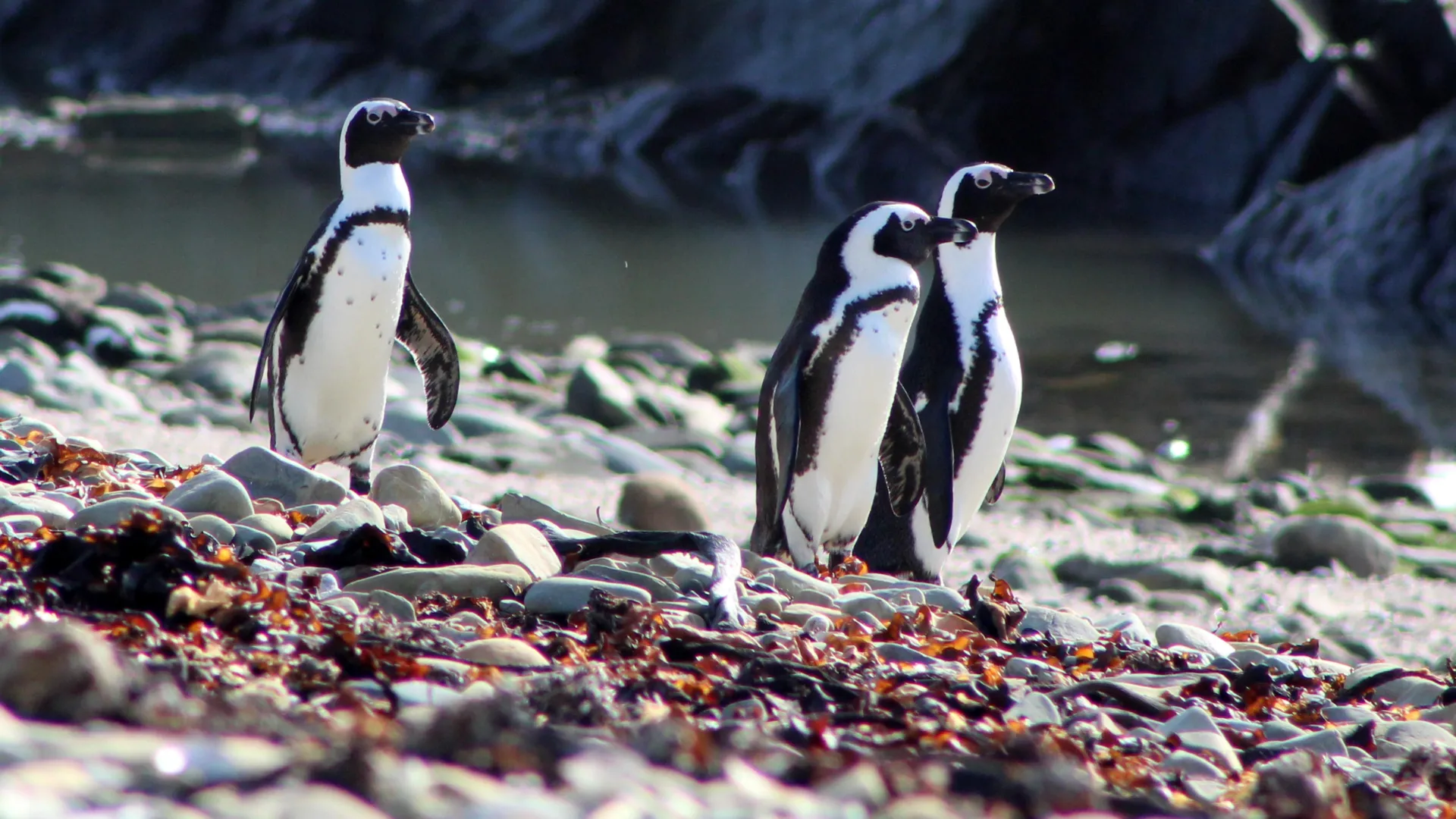
Understanding the Escalating Crisis for African Penguins
The African penguin population has suffered a catastrophic decline, with numbers plummeting by nearly 80% over the past three decades. This dramatic reduction has propelled the species from Vulnerable to Critically Endangered on the IUCN Red List, signaling an urgent need for effective conservation interventions. A primary driver of this decline is the escalating competition with commercial fisheries for essential prey species, particularly sardines (Sardinops sagax) and anchovies (Engraulis encrasicolus). These small, schooling fish form the cornerstone of the African penguin’s diet, providing the vital energy needed for survival and successful reproduction.
Commercial fisheries targeting these pelagic fish in South African waters predominantly employ purse-seine nets. This highly efficient fishing method involves encircling an entire school of fish with a large wall of netting, which is then drawn closed at the bottom, much like a drawstring purse. While economically vital for coastal communities, the scale and efficiency of purse-seine operations can lead to significant localized depletion of fish stocks, directly competing with marine predators like penguins that rely on these same resources.
Dr. Jacqueline Glencross, lead author of the study and a researcher at the Scottish Oceans Institute at the University of St Andrews, articulated the core motivation behind the research. "Our objective was to develop a more robust methodology to assess the potential impact on penguins when fishing activities occur in their vicinity," Dr. Glencross explained. "It’s not enough to simply identify where overlap happens; we need to understand how many individual birds are potentially compromised by these interactions to inform more targeted conservation strategies."
The Innovative "Overlap Intensity" Metric
The study’s most significant methodological contribution is the introduction of "overlap intensity." Traditional ecological research often focuses on spatial overlap, mapping where different species or activities coincide geographically. However, this new metric goes a crucial step further by incorporating population-level data, estimating the proportion of a predator population that is actively exposed to or influenced by a particular human activity. For the African penguin, this means calculating the percentage of the foraging population that is simultaneously operating in areas where commercial fishing vessels are also present. This allows conservation managers to move beyond simple presence/absence data to a more nuanced understanding of the scale of impact.
The research team meticulously analyzed tracking data collected from African penguins breeding at two pivotal colonies: Robben Island and Dassen Island, both located off the coast of South Africa. These islands are historical strongholds for the species and critical breeding sites. Collaborators from the University of Exeter, the South African Department of Forestry, Fisheries and the Environment (DFFE), and BirdLife South Africa provided essential expertise and data, underscoring the collaborative nature of contemporary conservation science.
Dramatic Increases in Overlap During Prey Scarcity
The analysis yielded stark and concerning results, revealing a dramatic surge in overlap intensity during years characterized by low fish biomass. For instance, in 2016, a year notoriously marked by severe scarcity of sardine and anchovy stocks in the Benguela ecosystem, approximately 20% of the tracked penguins were observed foraging in the exact same regions as active commercial fishing vessels. This figure represents a substantial proportion of the breeding population, highlighting a critical period of heightened vulnerability. In sharp contrast, during years when fish stocks were more robust and abundant, the overlap intensity plummeted to around 4%.
These findings unequivocally demonstrate that the competition between African penguins and commercial fisheries intensifies significantly under conditions of limited prey availability. Such periods of resource scarcity are particularly perilous for penguins, especially during the demanding chick-rearing season. During this critical phase, adult penguins must make frequent and efficient foraging trips to collect sufficient food for their rapidly growing chicks. Increased competition with fisheries not only forces penguins to expend more energy searching for food but can also reduce their foraging success, potentially leading to chick starvation and reduced breeding success – factors that directly contribute to population decline.
The Benguela Upwelling System, where these interactions unfold, is one of the most productive marine ecosystems globally. However, it is also highly dynamic and subject to natural fluctuations in oceanographic conditions, which can impact fish availability. Alongside these natural cycles, anthropogenic pressures, including climate change and historical overfishing, have further destabilized prey populations, exacerbating the challenges faced by top predators like the African penguin.
A New Tool for Adaptive Conservation and Fishery Management
The development and application of the "overlap intensity" metric provide a powerful new tool for ecological risk assessment and ecosystem-based fishery management. By quantifying the extent of interaction at a population level, researchers and managers can better identify specific areas and periods where penguins are most at risk from fishing activities. This data-driven approach moves beyond static management strategies, enabling the implementation of more dynamic and responsive conservation measures.
The findings strongly advocate for the development of dynamic marine protected areas (MPAs) or fishing closures. Unlike traditional, fixed MPAs, dynamic closures can adapt in real-time to shifts in predator and prey distribution, as well as fishing effort. For example, if monitoring data indicate a localized scarcity of fish and a concurrent increase in penguin foraging activity in a particular area, a temporary fishing closure could be enacted to alleviate competition during that critical period. This adaptive approach acknowledges the fluid nature of marine ecosystems and the need for flexible management responses.
Furthermore, the study’s insights can inform more effective spatial planning for fisheries, helping to delineate zones where fishing pressure should be reduced or prohibited, especially around sensitive breeding colonies during crucial life stages. This integration of ecological data into fishery management frameworks is essential for fostering sustainable practices that balance economic interests with biodiversity conservation.
Legal Battles and Policy Shifts in South Africa
The plight of the African penguin has recently captured significant public and legal attention in South Africa, leading to a landmark court case that challenged the adequacy of existing fishing restrictions near breeding sites. For years, conservation organizations, including BirdLife South Africa and the Southern African Foundation for the Conservation of Coastal Birds (SANCCOB), have advocated for more robust and biologically meaningful no-fishing zones around penguin colonies, citing compelling scientific evidence of competition for food.
The legal action brought by these organizations against the South African government highlighted a perceived lack of meaningful regulatory action to protect the penguins’ food supply. This protracted legal battle underscored the growing tension between the conservation imperative and the economic realities of the fishing industry.
Earlier this year, a significant breakthrough was achieved when conservation organizations and representatives from the fishing industry reached a high court agreement. This agreement formally acknowledged the critical need for fishery closures around African penguin colonies, marking a pivotal moment in the species’ conservation efforts. Following this decision, the South African government, specifically the Department of Forestry, Fisheries and the Environment, reinstated and updated several biologically meaningful no-fishing zones. Crucially, these new or expanded closures included areas around Robben Island, one of the primary colonies central to the St Andrews study.
Dr. Glencross emphasized the direct relevance of their research to these policy changes. "This research provides clear scientific justification for why those closures are not just beneficial, but absolutely necessary," she stated. "Our data pinpointed previously unprotected areas with high overlap intensity as precisely where the penguins were most at risk, thereby validating the strategic placement of these new protective measures." The scientific evidence provided by the study served to bolster the arguments for these closures, transforming abstract conservation goals into data-backed policy decisions.
Broader Implications and Future Outlook
The findings from the University of St Andrews study carry implications far beyond the specific case of African penguins in South Africa. The "overlap intensity" metric offers a transferable framework that could be applied to other marine predator-prey systems globally, particularly where endangered species compete with human activities for limited resources. From seabirds and marine mammals vying for fish stocks with commercial fisheries to migratory species encountering shipping lanes or energy infrastructure, this metric provides a more refined method for assessing and mitigating ecological conflict.
For the African penguin, the future remains precarious, but the recent legal victory and the implementation of updated fishing closures offer a glimmer of hope. However, these measures are just one piece of a complex conservation puzzle. The species continues to face myriad threats, including:
- Climate Change: Warming ocean temperatures and altered current patterns can impact the distribution and abundance of prey fish, pushing them out of traditional penguin foraging grounds.
- Oil Spills: South Africa’s busy shipping lanes pose a constant threat of oil spills, which can devastate penguin populations through direct mortality, reduced foraging ability, and compromised waterproofing of feathers.
- Habitat Degradation: Nesting habitats on islands are vulnerable to erosion, human disturbance, and the impacts of guano harvesting (which historically removed vital nesting material).
- Disease: Outbreaks of avian diseases can rapidly spread through dense penguin colonies, posing a significant threat.
- Predation: Terrestrial predators, introduced to islands, can prey on eggs and chicks, further impacting reproductive success.
Effective conservation of the African penguin will require a multi-faceted approach that integrates scientific research, adaptive management strategies, robust policy frameworks, and continued collaboration between governments, conservation organizations, the fishing industry, and local communities. The St Andrews study underscores the critical importance of understanding and mitigating direct competition for food, particularly during periods of environmental stress. As global marine ecosystems face increasing pressures, the innovative tools and insights provided by this research will be instrumental in guiding efforts to protect vulnerable species and ensure the long-term health of our oceans. The ongoing monitoring of the effectiveness of the new fishing closures, combined with continued research into penguin foraging ecology and prey dynamics, will be crucial in determining the ultimate success of these vital conservation initiatives.