
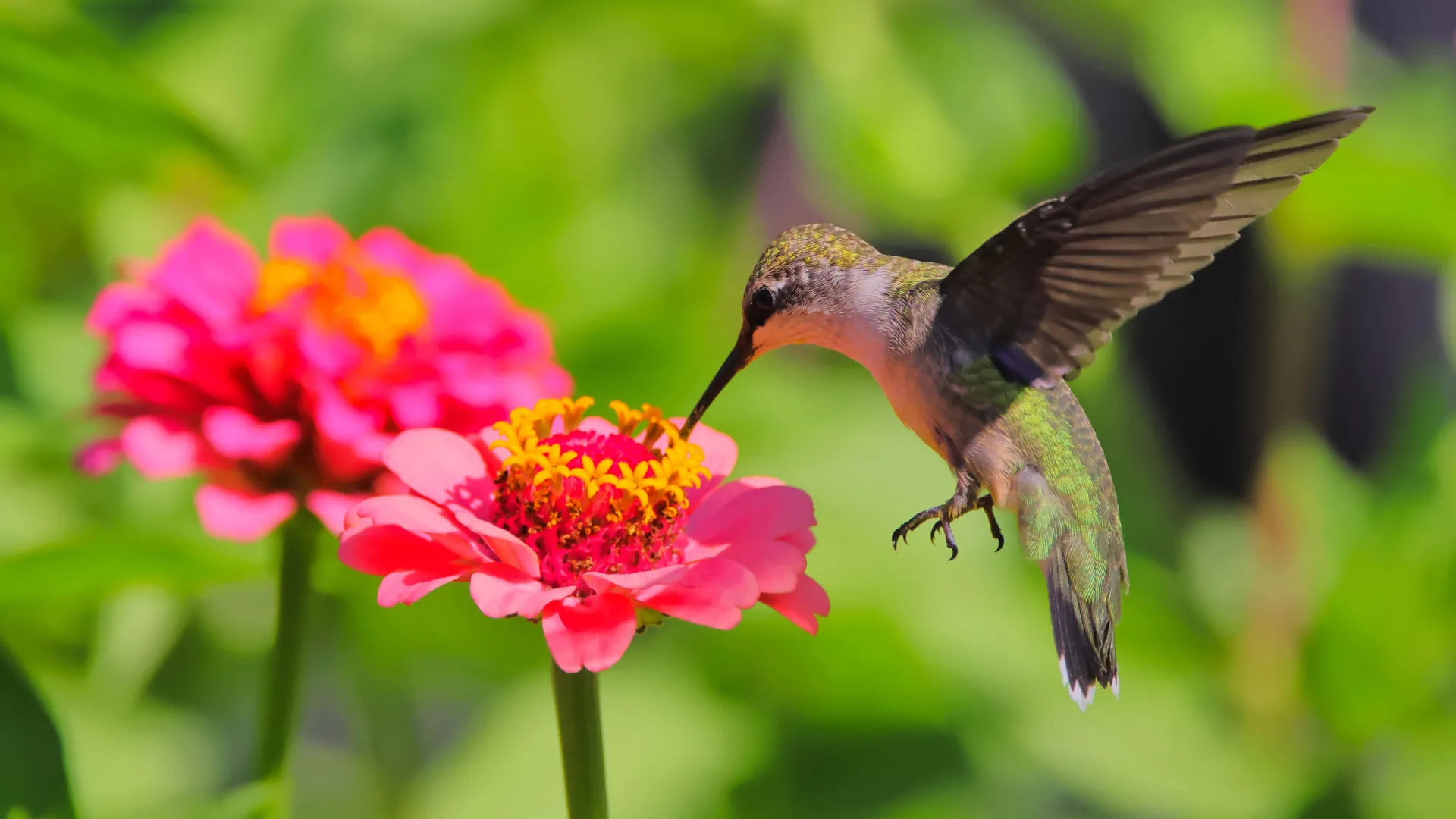
As the delicate dance of pollination unfolds across global ecosystems, a surprising discovery has emerged from the natural world. Bees, hummingbirds, and other vital pollinators, while diligently moving from flower to flower, feeding on life-sustaining nectar and facilitating plant reproduction, are also regularly ingesting small, yet significant, amounts of alcohol. This revelation, stemming from a comprehensive survey conducted by biologists at the University of California, Berkeley, adds a fascinating, albeit subtle, layer to our understanding of plant-pollinator interactions and the broader evolutionary relationship between animals and dietary ethanol.
Unveiling the Nectar’s Secret Composition
The groundbreaking study, the first large-scale survey of its kind to investigate alcohol content in floral nectar, meticulously analyzed samples from a diverse array of plant species. Researchers detected ethanol in at least one sample from 26 of the 29 plant species examined, indicating a widespread phenomenon rather than an isolated occurrence. While most nectar samples contained only trace amounts of ethanol, a testament to the ubiquitous presence of yeast fermenting sugars in natural environments, one particular sample registered a notable 0.056% ethanol by weight. To put this into perspective for human consumption, this concentration is approximately 1/10 proof, a relatively low but detectable level.
Yeast, microscopic fungi omnipresent in soil, air, and on plant surfaces, are natural fermenters. When nectar, rich in various sugars like sucrose, fructose, and glucose, is exposed to yeast, anaerobic respiration can occur, converting these sugars into ethanol and carbon dioxide. This process is particularly efficient in warm, humid conditions where nectar might sit for extended periods, or in flowers with structures that trap nectar, creating micro-environments conducive to fermentation. The Berkeley team’s findings suggest that this natural biochemical process is a routine occurrence in floral nectaries, leading to a constant, low-level exposure of pollinators to alcohol.
A Daily Dose: Pollinators’ Regular Alcohol Intake
Despite the seemingly minuscule concentrations, the cumulative intake for pollinators can be substantial. Nectar serves as the primary energy source for many species, and their feeding habits are prodigious. Hummingbirds, for instance, are known for their incredibly high metabolic rates, often consuming nectar equivalent to between 50% and 150% of their body weight each day to fuel their rapid wing beats and active lifestyles.
Based on these intense feeding patterns, the researchers made compelling estimations regarding the daily alcohol intake for these tiny, high-energy birds. An Anna’s hummingbird (Calypte anna), a common sight along the Pacific coast of North America, is estimated to consume roughly 0.2 grams of ethanol per kilogram of body weight daily. This figure, surprisingly, is comparable to the amount of alcohol a human would ingest from a single standard alcoholic drink. A "standard drink" in many countries is defined as containing approximately 14 grams of pure alcohol, equating to about 0.14 grams per kilogram of body weight for an average 150-pound (68 kg) person. This comparison highlights the biological significance of even low concentrations of ethanol when consumed by animals with exceptionally high energy demands and rapid intake rates.
The study, published on March 25 in Royal Society Open Science, was led by a collaborative team from UC Berkeley, including doctoral student Aleksey Maro, postdoctoral fellow Ammon Corl, and professors of integrative biology Robert Dudley, Rauri Bowie, and Jimmy McGuire. Their work sheds new light on the often-overlooked chemical complexities of floral nectar and its potential influence on pollinator physiology and behavior.
Beyond Intoxication: Subtle Behavioral and Physiological Effects
Despite this regular and comparatively significant alcohol intake, bees and birds do not appear to exhibit overt signs of intoxication. The key lies in their feeding strategy and metabolic efficiency. Pollinators consume the alcohol gradually throughout the day, rather than in a single large dose, allowing their bodies to process it continuously. As Aleksey Maro aptly put it, "Hummingbirds are like little furnaces. They burn through everything really quick, so you don’t expect anything to accumulate in their bloodstream." This high metabolic rate likely enables rapid detoxification, preventing the buildup of ethanol to intoxicating levels.
Earlier investigations by the same Berkeley team provided further insights into pollinator alcohol tolerance. Their work demonstrated that hummingbirds would readily drink sugar water containing up to 1% alcohol by volume. However, their preference shifted noticeably when concentrations exceeded this threshold, with birds beginning to avoid nectar solutions with higher alcohol content. This suggests an evolved mechanism for detecting and regulating alcohol intake, potentially to avoid the debilitating effects of intoxication, which could impair their foraging efficiency, flight capabilities, or increase their vulnerability to predators.
Professor Robert Dudley, a leading expert in the biomechanics of animal flight and physiology, emphasized the potential for subtle, non-intoxicating effects. "There may be other kinds of effects specific to the foraging biology of the species in question that could be beneficial," Dudley stated. He speculated on the role of ethanol beyond a simple "buzz," suggesting it might act as a signaling molecule or possess appetitive properties. "They’re burning it so fast, I’m guessing that they probably aren’t suffering inebriating effects. But it may also have other consequences for their behavior."
Indeed, nectar is not merely a sugary solution; it is a complex chemical cocktail. Beyond ethanol, it often contains other secondary compounds, such as nicotine and caffeine, which are known to influence animal behavior. The presence of ethanol adds another layer to this chemical complexity, potentially modulating pollinator preferences, foraging efficiency, or even their memory of rewarding flowers.
Tracing the Evidence: Earlier Experiments and Metabolic Clues
The current survey builds upon a foundation of previous research from the Berkeley lab, which has systematically explored the interactions between pollinators and dietary ethanol. One significant earlier experiment involved setting up feeders outside Professor Dudley’s office, offering Anna’s hummingbirds sugar water with varying alcohol concentrations. These observations confirmed that the hummingbirds were largely indifferent to low alcohol concentrations (below 1% by volume). However, a distinct behavioral change was noted when the concentration reached 2%; the birds visited these feeders approximately half as often, reinforcing the idea of a self-regulating mechanism. "Somehow they are metering their intake, so maybe zero to 1% is a more likely concentration that they would find in the wild than anything higher," Dudley concluded.
Further physiological evidence supporting the routine ingestion and metabolism of alcohol by birds came from a study led by former graduate student Cynthia Wang-Claypool. Her research revealed the presence of ethyl glucuronide in the feathers of birds, including Anna’s hummingbirds. Ethyl glucuronide is a direct byproduct of ethanol metabolism, a biomarker commonly used in human toxicology to indicate alcohol consumption. Its detection in avian feathers provides compelling proof that these birds not only ingest alcohol but also process it through metabolic pathways similar to those found in mammals, including humans. This discovery is pivotal, as Ammon Corl explained: "The laboratory experiment was showing that yes, they will drink ethanol in their nectar, though they have some aversion to it if it gets too high. The feathers are saying that, yes, they will metabolize it. And then this study is saying that ethanol is actually pretty widespread in the nectar they consume." Together, these findings paint a comprehensive picture of a widespread phenomenon with clear physiological underpinnings.
A Spectrum of Consumption: Comparing Across the Animal Kingdom
To contextualize the alcohol intake of pollinators, the research team employed an enzymatic assay to accurately measure ethanol levels, then estimated daily alcohol intake for several nectar-feeding species based on their caloric needs and known feeding behaviors. Given the limitations of detailed feeding data for all species, they focused primarily on two hummingbird species (including the Anna’s hummingbird) and three species of sunbirds. Sunbirds, found predominantly in Africa and Asia, occupy an ecological niche analogous to hummingbirds in the Americas, feeding on nectar from plants such as the honeybush (Melianthus major) in South Africa.
The comparative analysis extended beyond birds, encompassing other animals known to consume fermented substances in their diets. The researchers compared the daily ethanol intake of nectar-feeding birds with that of the European honeybee, the pen-tailed tree shrew (known for its high intake of naturally fermented palm nectar), fruit-eating chimpanzees, and humans consuming one standard drink per day (0.14 g/kg/day).
The pen-tailed tree shrew (Ptilocercus lowii) emerged as the champion of daily alcohol intake, consuming an astonishing 1.4 g/kg/day. This small mammal, native to Southeast Asia, feeds almost exclusively on the naturally fermented nectar of the bertam palm, which can have alcohol concentrations as high as 3.8%. At the other end of the spectrum, the European honeybee exhibited the lowest intake among the surveyed animals, at approximately 0.05 g/kg/day. Nectar-feeding birds, including hummingbirds and sunbirds, fell into a similar intermediate range, consuming about 0.19 to 0.27 g/kg/day when feeding on native flowers. This places their daily intake within a similar order of magnitude to that of humans who consume one standard alcoholic drink daily.
Interestingly, the feeder experiments involving Anna’s hummingbirds suggested that these birds might ingest even more alcohol (approximately 0.30 g/kg/day) from fermented sugar water offered in human-provided feeders than from natural nectar. This could be due to higher, albeit still sub-intoxicating, concentrations in feeder solutions, or a lack of other deterrent compounds found in natural nectar. This observation raises questions about the potential impact of artificial feeders on pollinator physiology and behavior.
Evolutionary Adaptations and Unanswered Questions
This fascinating research is an integral part of a broader, five-year National Science Foundation (NSF) project. The overarching goal of this extensive initiative is to collect comprehensive genetic data from hummingbirds and sunbirds to unravel the mysteries of how these diverse species adapt to a variety of challenging environments and specialized food sources. This includes adaptations to high altitudes, metabolizing sugar-rich diets, and, crucially, coping with the frequent consumption of fermented nectar. The project aims to provide a holistic understanding of the evolutionary pressures and physiological responses that have shaped these remarkable avian groups.
The implications of these findings extend far beyond the specific species studied, suggesting a universal principle in the natural world. "These studies suggest that there may be a broad range of physiological adaptations across the animal kingdom to the ubiquity of dietary ethanol," Professor Dudley noted. He emphasized that the responses observed in humans, often associated with negative health and behavioral consequences, may not be representative of all primates or, indeed, of all animals generally.
This perspective challenges anthropocentric views of alcohol consumption, positing that many species have evolved unique detoxification pathways or harness other nutritional effects of ethanol that remain poorly understood. For pollinators, whose lives revolve around constant foraging, chronic, low-level exposure to ethanol from their primary food source is a daily reality. "That’s the interesting thing — this is chronic through the course of the day, but that’s a lifetime exposure post-weaning," Dudley explained. This long-term, consistent exposure suggests the potential for profound evolutionary adaptations, both physiological and behavioral, to manage and potentially benefit from dietary alcohol. The study thus underscores that "the comparative biology of ethanol ingestion deserves further study," opening new avenues for research into animal metabolism, behavior, and the co-evolutionary dynamics between plants and their essential pollinators.
The Broader Ecological Tapestry
The discovery of widespread alcohol in nectar enriches our understanding of the intricate ecological relationships that underpin biodiversity. It highlights that the floral reward offered by plants is far more complex than a simple sugar solution. The subtle chemical nuances, including ethanol, may play roles in attracting specific pollinators, deterring others, or even influencing pollinator fidelity to particular plant species. For pollinators, the ability to metabolize and even tolerate these compounds could be a significant evolutionary advantage, allowing them to exploit a broader range of floral resources.
This research also serves as a poignant reminder of the pervasive nature of fermentation in the environment. From rotting fruit that attracts frugivores to the very nectar sustaining pollinators, alcohol is a natural component of many wild diets. Understanding how different species have adapted to this ubiquitous dietary ethanol offers critical insights into the resilience and adaptability of life on Earth. Future research, building on the foundation laid by the UC Berkeley team, will undoubtedly delve deeper into the genetic, physiological, and behavioral consequences of this hidden buzz, further unraveling the complex and often surprising tapestry of the natural world.