
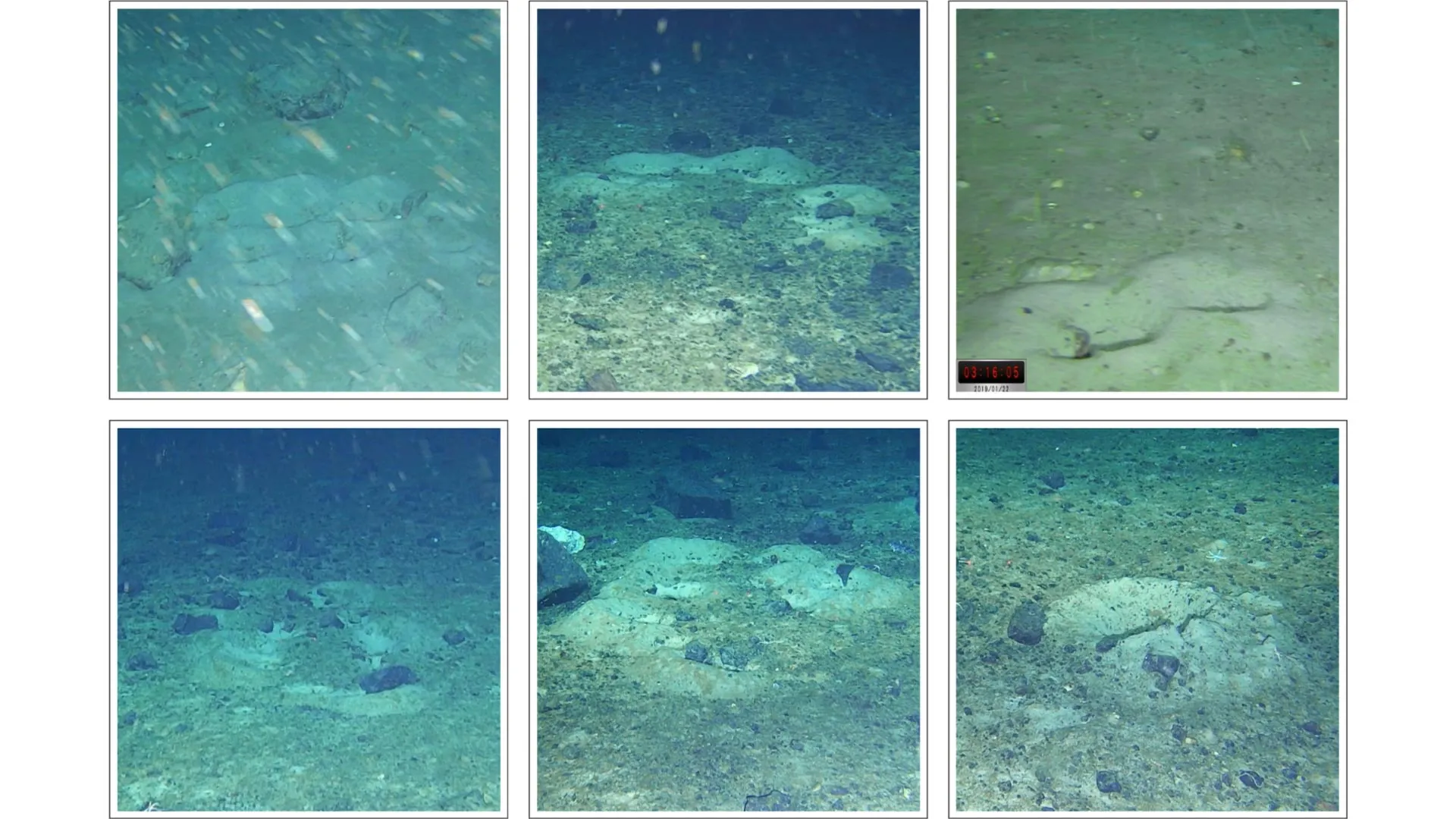
In a monumental discovery that rewrites our understanding of polar marine ecosystems, an international team of researchers has uncovered vast, organized fields of fish nests in a previously inaccessible section of Antarctica’s western Weddell Sea. This extraordinary find, made in an area once entombed beneath 200 meters of solid ice, reveals a thriving, meticulously maintained deep-sea nursery, meticulously arranged in striking patterns across the seafloor. The revelation not only provides unprecedented insights into the life cycles of Antarctic fish but also underscores the profound ecological significance of this remote polar region, bolstering arguments for its urgent designation as a Marine Protected Area.
The opportunity for this groundbreaking discovery arose following a significant environmental event: the calving of the colossal A68 iceberg from the Larsen C Ice Shelf in July 2017. This massive iceberg, measuring approximately 5,800 square kilometers—an area comparable to the size of the U.S. state of Delaware or twice that of Luxembourg—created a new, albeit temporary, window into a part of the ocean floor that had been sealed off from direct observation for millennia. Prior to this event, the overlying ice shelf acted as an impenetrable barrier, preserving a hidden world beneath.
Unveiling the Architects of the Deep
Using an advanced remotely operated vehicle (ROV) during the Weddell Sea Expedition of 2019, scientists descended into these newly exposed waters. What they encountered on the seafloor defied all expectations: more than a thousand circular nests, each roughly 75 centimeters in diameter, meticulously swept clean of the plankton debris and diatom detritus that blanketed the surrounding sediment. These individual nests, observed across a vast expanse, created an astonishing landscape of geometric order, transforming the ocean floor into an underwater garden of life.
The architects of these intricate structures were identified as a species of Antarctic rockcod, specifically the yellowfin notie (scientific name: Lindbergichthys nudifrons). These fish, belonging to the notothenioid suborder, are incredibly well-adapted to the frigid waters of the Southern Ocean, often possessing antifreeze proteins in their blood to prevent ice crystal formation. Each circular nest observed was likely tended by a parent fish, vigilantly guarding its precious clutch of eggs from potential predators, a common parental care strategy among many fish species, but rarely observed at such scale in the deep polar waters.
The arrangement of the nests themselves provided fascinating insights into the species’ collective survival strategies. The observations revealed dense groupings of nests, alongside more solitary ones located along the perimeter. This pattern is believed to illustrate the "selfish herd" concept, a behavioral ecology theory where individuals in the center of a group gain protection from predators at the expense of those on the edges. The solitary nests, often larger, are thought to belong to more dominant or stronger fish capable of defending their territory independently. This intricate balance of cooperation and competition within the colony significantly enhances the entire population’s chances of survival and successful reproduction. The clean sand depressions, starkly contrasted against the surrounding layer of phytoplankton detritus, provided undeniable evidence of continuous maintenance by the parent fish.
The Weddell Sea Expedition 2019: A Dual Mandate
The Weddell Sea Expedition, aboard the South African polar research vessel SA Agulhas II, was a multidisciplinary scientific endeavor with two ambitious primary objectives. Firstly, it aimed to conduct a wide-ranging scientific survey in the waters around the newly exposed region of the Larsen C Ice Shelf, studying the physical, chemical, and biological oceanography of an area previously inaccessible. Secondly, it sought to locate the legendary wreck of Sir Ernest Shackleton’s ship, the Endurance, which was crushed by sea ice and sank in 1915 during his ill-fated Imperial Trans-Antarctic Expedition.
Scientists on board were particularly focused on understanding the vital role played by Antarctica’s floating ice shelves. These massive extensions of land-based ice act as crucial buttresses, slowing the flow of glaciers from the continent’s interior into the ocean. When these ice shelves thin, fracture, or disintegrate, that stabilizing effect diminishes or disappears entirely, allowing land ice to accelerate its movement into the ocean, contributing directly to global sea-level rise. The calving of iceberg A68, therefore, presented a rare and invaluable scientific opportunity to study a part of the seabed that had been completely sealed off for thousands of years, offering a real-time glimpse into how the region was responding to such a dramatic environmental transformation.
Navigating the Frozen Labyrinth: Technology and Resilience
The expedition faced immense challenges, primarily from the formidable, dense sea ice that characterizes the Weddell Sea. This very pack ice was responsible for crushing Shackleton’s Endurance over a century earlier. The research team deployed cutting-edge autonomous underwater vehicles (AUVs) for broad-scale mapping and survey work, alongside the more precise remotely operated vehicle (ROV) for detailed visual inspections and sample collection. Despite their advanced technology and expertise, the pack ice proved too challenging in 2019, ultimately preventing the team from locating the Endurance on that expedition.
However, the experience gained in maneuvering through these extreme conditions and operating sophisticated underwater technology under such duress proved invaluable. The insights and operational methodologies developed during the 2019 expedition paved the way for the subsequent Endurance22 expedition. In a remarkable feat of exploration and engineering, the Endurance22 team successfully located the remarkably preserved wreck of the Endurance in March 2022, resting at a depth of 3,008 meters below the surface, an achievement that captivated the world.
A Broader Antarctic Context: Climate Change and Ice Shelf Dynamics
The discovery of these fish nests cannot be viewed in isolation from the broader context of accelerating climate change and its profound impact on the Antarctic continent. The Larsen C Ice Shelf, from which A68 broke, is one of several major ice shelves on the Antarctic Peninsula. Its neighbors, Larsen A and Larsen B, underwent dramatic and rapid disintegration events in 1995 and 2002, respectively. The collapse of Larsen B, in particular, saw an area of 3,250 square kilometers disintegrate in just 35 days, a process that stunned glaciologists and climate scientists. These events led to a significant acceleration of glaciers that fed into them, underscoring the critical role ice shelves play in regulating ice flow from the continent.
The Weddell Sea itself is a vast and ecologically critical region, forming a major embayment of the Southern Ocean. It is characterized by deep ocean trenches, abyssal plains, and a vibrant, unique ecosystem adapted to extreme cold and seasonal ice cover. Changes in sea ice extent, ocean temperatures, and the stability of ice shelves directly influence the physical and biological processes within this environment, from primary productivity in the water column to the stability of benthic communities like the newly discovered fish nurseries. The opening of new areas of the seafloor due to ice shelf collapse provides a natural laboratory to observe ecological colonization and adaptation in real-time, offering crucial data for climate models and conservation strategies.
Ecological Significance: A Vulnerable Marine Ecosystem
This discovery holds far more than mere academic interest; it provides compelling evidence that the region represents a Vulnerable Marine Ecosystem (VME). VMEs are defined by the UN Food and Agriculture Organization (FAO) as fragile, unique, or rare habitats that are susceptible to degradation from human activities. They are crucial for maintaining biodiversity and ecosystem function. The presence of such a large, active, and apparently stable breeding colony of fish signifies a vital habitat that supports a significant portion of Antarctic biodiversity, acting as a critical nursery ground for a species that forms part of the region’s food web.
The finding significantly strengthens earlier scientific studies, including research by Purser et al. (2022), which also identified extensive fish breeding colonies in the Weddell Sea, specifically focusing on the icefish Neopagetopsis ionah. The combined evidence from these discoveries points to the Weddell Sea as a globally significant hotspot for fish reproduction, supporting populations of species that are foundational to the Antarctic marine food web, upon which iconic wildlife such as penguins, seals, and whales ultimately depend.
The Call for Conservation: Designating a Marine Protected Area
The cumulative weight of these findings profoundly strengthens the case for designating the Weddell Sea as a Marine Protected Area (MPA). The Commission for the Conservation of Antarctic Marine Living Resources (CCAMLR), an international body responsible for managing the Southern Ocean’s marine ecosystem, has long considered proposals for an MPA in the Weddell Sea. Such a designation would place restrictions on human activities, particularly commercial fishing, in order to safeguard the region’s unique and fragile biodiversity.
Protecting this vast area would help preserve not only its charismatic wildlife but, crucially, also the hidden nurseries and benthic communities that underpin the entire Antarctic food web. The discovery of the yellowfin notie breeding colony adds a new, compelling layer of urgency to these conservation efforts. It reveals an ecosystem far more complex and vital than previously understood, one that has adapted over millennia to thrive beneath the ice and now faces new pressures from a rapidly changing climate.
Leading scientists involved in these expeditions have emphasized the unparalleled nature of the discovery. Dr. Autun Purser, a deep-sea biologist at the Alfred Wegener Institute and lead author of related research, described the scale and density of the nests as "unprecedented," highlighting the importance of understanding and protecting such critical breeding grounds. Conservation organizations globally are expected to leverage this discovery to intensify their advocacy for the Weddell Sea MPA, framing it as a crucial step in global efforts to protect the last pristine wildernesses on Earth.
Future Research and Monitoring
The discovery marks the beginning, not the end, of scientific inquiry into this remarkable deep-sea ecosystem. Future research will focus on understanding the long-term viability of these colonies, their genetic connectivity, and their susceptibility to ongoing environmental changes, including ocean warming, acidification, and further ice shelf retreat. Continued monitoring using advanced autonomous underwater vehicles and ROVs will be essential to track the health and dynamics of these vulnerable populations. Scientists also hope to investigate the full extent of these colonies and whether similar, undiscovered nurseries exist beneath other parts of Antarctica’s vast ice shelves.
The extraordinary find in the western Weddell Sea serves as a powerful reminder of the vast, unexplored depths of our planet and the incredible resilience of life in its most extreme environments. It underscores humanity’s ongoing responsibility to protect these fragile ecosystems, ensuring that such wonders continue to thrive for generations to come.