
As North America grappled with a series of severe winter storms characterized by ice and record-breaking snowfall in February 2026, an international expedition of naturalists and ornithologists successfully completed a ten-day survey of the biological corridors spanning Belize and northern Guatemala. The expedition, which concluded on March 3, 2026, documented a total of 252 avian species, highlighting the region’s critical role as a sanctuary for both resident tropical birds and Neotropical migrants. Led by a specialized team from Eagle-Eye Tours and supported by three prominent local experts—all coincidentally sharing the name Mike or its Spanish equivalent, Miguel—the journey provided a comprehensive look at the intersection of sustainable tourism, Mayan archaeology, and high-altitude biodiversity.

Sustainable Practices and Early Avian Observations at Jade Jungle
The expedition commenced in the dense broadleaf forests of Belize at Jade Jungle, a remote lodge positioned at the terminus of a primary access road. The facility serves as a model for the burgeoning sustainable tourism sector in Central America. For modern eco-tourists, the selection of lodging is increasingly predicated on environmental impact. Jade Jungle’s infrastructure utilizes a hydroponic system for fresh produce and an innovative water heating system powered by the combustion of Cohune tree seeds. These seeds, harvested from the forest floor, provide a renewable energy source that minimizes the carbon footprint of the facility while maintaining high standards of luxury for international visitors.
During the initial phase of the survey, the group focused on the understory and mid-canopy species. Under the guidance of local expert Mike (Mike #1), the team identified three distinct species of Trogons: the Slaty-tailed Trogon (Trogon massena), the Black-headed Trogon (Trogon melanocephalus), and the Gartered Trogon (Trogon caligatus). These birds, known for their iridescent plumage and sedentary behavior, were observed in unusually high frequency near the lodge perimeters.

A significant highlight of the early days was the observation of lekking behavior among Manakins. Both White-collared (Manacus candei) and Red-capped Manakins (Ceratopipila mentalis) were documented within 100 meters of the lodge. The "lek" is a communal display area where males perform complex acrobatic maneuvers and vocalizations to attract females. This behavior is a cornerstone of tropical ornithological study, and the proximity of these displays to human infrastructure underscores the success of the lodge’s habitat preservation efforts.
Geopolitical Context and the Border Transition
The transition from Belize to Guatemala provided a stark contrast in both demographics and historical narrative. The group was transported by Neil, a Belizean driver whose expertise extended beyond logistics into the realm of regional history and geopolitics. During the 150-kilometer transit, Neil provided a detailed account of the long-standing territorial and cultural complexities between Belize, a nation of approximately 400,000 people, and its larger neighbor, Guatemala, which boasts a population of 19 million.

The border crossing at Melchor de Mencos served as a focal point for discussing the "Belize-Guatemala dispute," a centuries-old territorial claim that has seen renewed diplomatic efforts in recent years. Neil’s logistical efficiency—including the pre-ordering of meals and strategic timing of border protocols—allowed the group to maximize field time, a critical factor in high-stakes birding expeditions where lighting and temperature windows are narrow.
Tikal: A Convergence of Archaeology and Ornithology
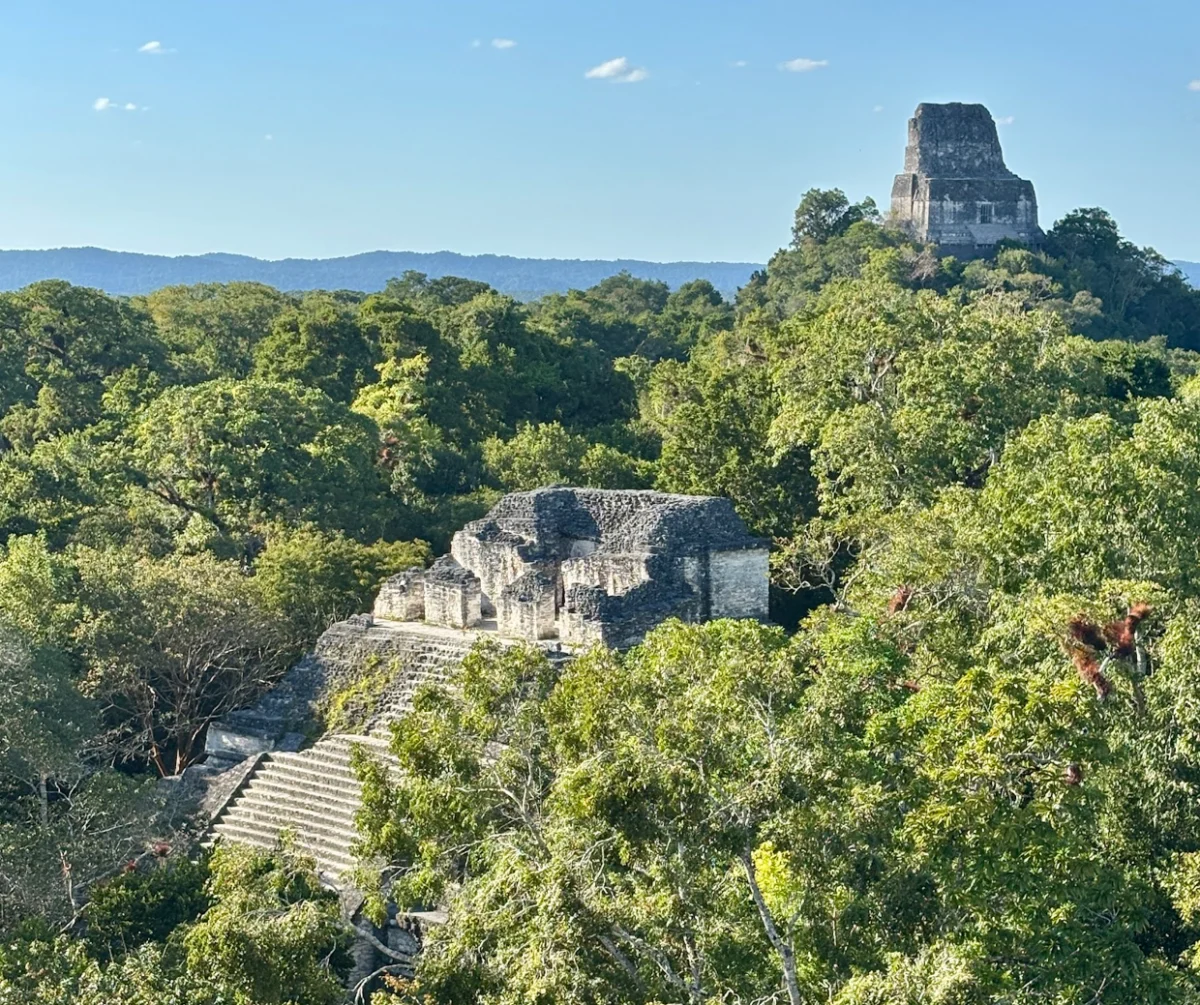
Upon entering Guatemala, the focus shifted to Tikal National Park, a UNESCO World Heritage site and one of the most powerful kingdoms of the ancient Maya. The expedition was joined by Miguel Antonio (Miguel #2), a 67-year-old guide of direct Mayan descent. Miguel provided a narrative that bridged the gap between the archaeological ruins and the living ecosystem that has reclaimed them.

Tikal’s landscape is dominated by massive limestone pyramids, including Temple IV, which stands at approximately 70 meters. The group ascended a 140-step wooden staircase to reach the summit, providing a vantage point above the forest canopy. From this height, the team conducted "canopy counts," observing "blizzards" of passerines. These mixed-species flocks represented a unique ecological phenomenon where North American migrants, such as the Hooded Warbler (Setophaga citrina) and American Redstart (Setophaga ruticilla), intermingled with resident tropical species.
The taxonomic diversity recorded at Tikal included several species with highly specialized niches:

- Fawn-throated Foliage-gleaner (Automolus cervinigularis)
- White-whiskered Puffbird (Malacoptila panamensis)
- Stub-tailed Spadebill (Platyrinchus cancrominus)
- Tawny-winged Woodcreeper (Dendrocincla anabatina)
The historical atmosphere of the site was palpable as the group navigated the sun-drenched acropolis. Miguel Antonio detailed the grim history of the Classic Period (200–900 AD), describing the warfare between Tikal and its rivals, Caracol and Calakmul (often referenced alongside Chichen Itza). The archaeological record of Tikal includes sophisticated rainwater collection systems and cisterns, which were essential for sustaining a population of nearly 100,000 people in a karst environment without permanent rivers.
The highlight of the Tikal survey occurred near Temple IV, where the team sighted the Orange-breasted Falcon (Falco deiroleucus). This species is a high-priority find for ornithologists due to its rarity and its preference for nesting on high cliffs or ancient Mayan temples. The falcon’s presence is an indicator of a healthy, intact forest ecosystem capable of providing a diverse prey base of smaller birds and bats.

Wetland Ecology at Crooked Tree Wildlife Sanctuary
The final leg of the journey saw the group return to Belize to visit the Crooked Tree Wildlife Sanctuary. Established in 1984 by the Belize Audubon Society, the sanctuary protects a vast network of inland lagoons and marshes that are vital for water birds.
Under the guidance of Mike #3, the team conducted a three-hour sunrise boat survey of the lagoon. This single excursion yielded 62 species, demonstrating the immense biological productivity of the Belizean wetlands. The survey recorded several "mega-fauna" of the avian world, most notably the Jabiru (Jabiru mycteria). Standing up to five feet tall with a wingspan of nine feet, the Jabiru is the largest flying bird in the Americas and a symbol of conservation success in Belize.

Other notable aquatic species documented included:
- Agami Heron (Agamia agami): A secretive, brilliantly colored heron often described as the most beautiful of its family.
- Sungrebe (Heliornis fulica): A cryptic bird with lobed feet, rarely seen due to its preference for overhanging vegetation.
- Boat-billed Heron (Cochlearius cochlearius): A nocturnal heron with a distinctively wide, scoop-like bill.
- American Pygmy Kingfisher (Chloroceryle aenea): The smallest of the four kingfisher species seen, no larger than a sparrow.
Analysis of the 2026 Expedition Data
The recording of 252 species over ten days represents a significant data point for the eBird database, a global citizen-science project managed by the Cornell Lab of Ornithology. The 2026 expedition’s results indicate that despite global climate fluctuations, the Mesoamerican Biological Corridor remains a robust habitat for migratory birds.

The success of the trip also underscores the economic viability of "birding tourism." In Belize, tourism accounts for approximately 40% of the GDP. By targeting high-value, low-impact travelers interested in ornithology, the region can generate the revenue necessary to fund forest rangers and habitat restoration projects. The interaction between the three "Mikes"—local guides with deep indigenous and ecological knowledge—illustrates the professionalization of the guiding industry in Central America, which is a key component of sustainable development.
Broader Implications for Regional Conservation
The 2026 survey highlights two critical conservation themes. First, the importance of "buffer zones" around archaeological sites like Tikal. Because these sites are protected by federal law, they serve as de facto wildlife preserves, protecting old-growth forests that would otherwise be at risk from agricultural expansion.

Second, the expedition emphasizes the necessity of international cooperation. Birds do not recognize the border between Belize and Guatemala. The movement of species between the wetlands of Crooked Tree and the jungles of the Petén department necessitates a unified approach to conservation. As the expedition concluded, the participants noted that the "blizzard of birds" they witnessed was a direct result of decades of conservation work by local communities and international NGOs.
The 252 species documented in February 2026 will serve as a baseline for future surveys, providing critical information on species distribution and population health in one of the world’s most biodiverse regions. For the naturalists involved, the journey was more than a retreat from the northern winter; it was a rigorous documentation of an ecosystem that continues to thrive at the intersection of ancient history and modern environmentalism.