
Forests stand as indispensable pillars in sustaining all life on Earth, forming complex ecosystems that host over 80% of terrestrial biodiversity, a staggering figure that includes three-quarters of all bird species globally. Beyond being vital sanctuaries for wildlife, these critical ecosystems are fundamental to human survival and well-being, providing essential services such as the production of oxygen, the purification of water, and acting as crucial carbon sinks indispensable for mitigating climate change. Furthermore, forests are the bedrock of livelihoods for approximately 1.6 billion people worldwide, offering food, fuel, medicine, and economic opportunities.
Despite their profound importance, the world’s forests are facing unprecedented threats, with alarming rates of deforestation continuing unabated. Annually, an estimated 10 million hectares of forest are lost—an area roughly the size of Iceland—due to a complex interplay of factors including unsustainable logging practices, the relentless expansion of agriculture, burgeoning urbanization, and the escalating impacts of climate change. This relentless destruction not only jeopardizes countless species but also destabilizes global climate patterns and undermines the resilience of human communities. Against this backdrop, the International Day of Forests, observed annually on March 21st, serves as a critical reminder of the urgent need for heightened awareness and concerted action to protect and restore these vital natural assets. This year, the focus intensifies on the groundbreaking conservation efforts spearheaded by various partners across Africa, showcasing innovative, community-led approaches that are making a tangible difference on the ground.
The Global Imperative for Forest Protection
The United Nations General Assembly proclaimed March 21st as the International Day of Forests in 2012, aiming to raise awareness of the importance of all types of forests and trees outside forests. Each year, countries are encouraged to undertake local, national, and international efforts to organize activities involving forests and trees, such as tree-planting campaigns. The overarching goal is to highlight the multifaceted benefits that forests provide, from ecological stability to economic prosperity and cultural heritage. The theme often revolves around "Forests and Sustainable Production and Consumption" or similar topics, emphasizing the need for sustainable management practices.
The urgency of this mission is underscored by reports from organizations like the Food and Agriculture Organization (FAO) of the United Nations. The FAO’s Global Forest Resources Assessment (FRA) 2020 indicated that while the rate of deforestation has decreased in some regions, it remains critically high globally, particularly in Africa and South America. The primary drivers of deforestation in tropical regions are often linked to large-scale commercial agriculture, followed by local subsistence agriculture. Logging for timber and pulp, mining, and infrastructure development also contribute significantly. The loss of forest cover has cascading effects, exacerbating soil erosion, reducing water quality, increasing the frequency and intensity of natural disasters like floods and droughts, and releasing vast amounts of stored carbon into the atmosphere, thereby accelerating global warming. Protecting and restoring forests is not merely an environmental endeavor; it is a fundamental strategy for achieving the United Nations Sustainable Development Goals, particularly those related to climate action, life on land, poverty eradication, and clean water.
Rwanda: Restoring Busaga, Securing a Future for the Hooded Vulture

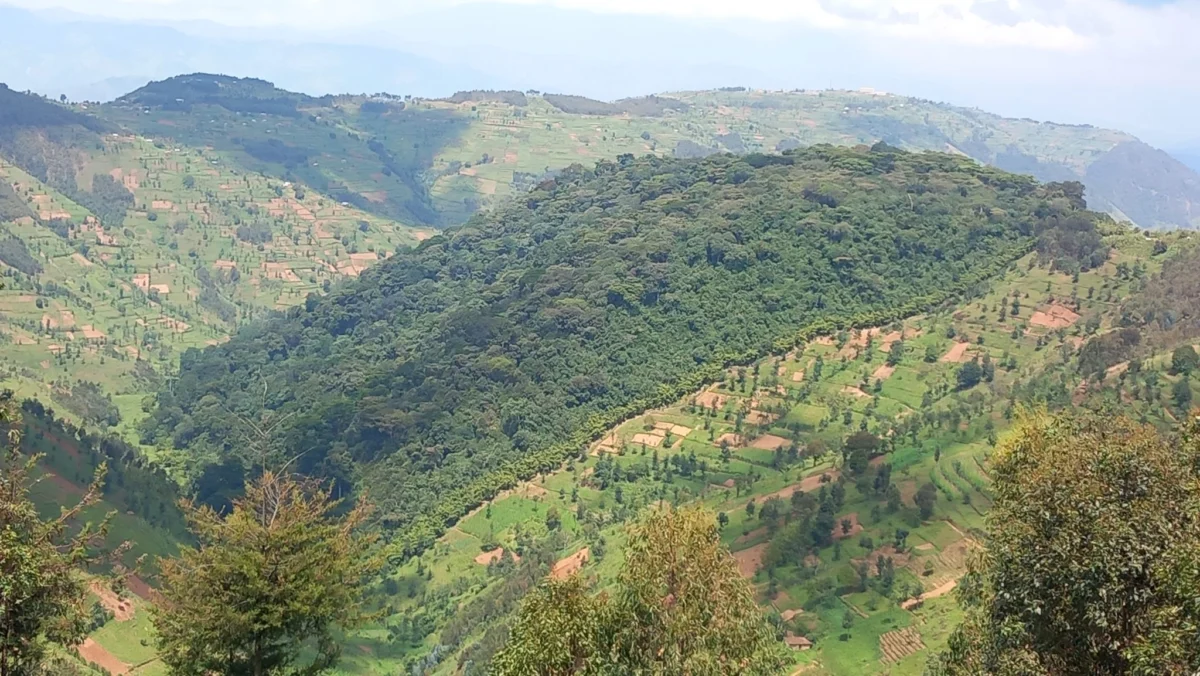
In the heart of Rwanda’s Southern Province, specifically in Muhanga District, a critical conservation battle is being waged to protect and restore the Busaga Forest. Spanning approximately 152 hectares, this montane rainforest is a vital ecological stronghold, with efforts led by Nature Rwanda, a dedicated local partner. The significance of Busaga extends far beyond its modest size, as it represents the sole known breeding site in Rwanda for the Hooded Vulture ( Necrosyrtes monachus), a species classified as Critically Endangered on the IUCN Red List. The dire status of this scavenger bird highlights the immense pressures facing many African raptors, primarily due to habitat loss, poisoning (often accidental, from carcasses tainted with pesticides), and illegal wildlife trade. The Hooded Vulture plays an indispensable role in its ecosystem by cleaning up carcasses, preventing the spread of diseases, and maintaining ecological balance.
The recognition of Busaga Forest’s global importance was formalized in 2025 when it was designated as a Key Biodiversity Area (KBA). This international classification, a testament to the concerted efforts of Nature Rwanda and its partners, places Busaga firmly on the global conservation map, providing a robust foundation for local and national decision-makers to enact stronger protective measures. However, legal recognition alone is often insufficient to halt degradation when local communities, living in close proximity to the forest, depend on its resources for their daily survival. The intricate relationship between human needs and environmental protection necessitates innovative solutions that address both.
To tackle this challenge holistically, Nature Rwanda, with crucial support from BirdLife International through its Forest Impact Accelerator (FIA) program, launched a transformative community-led restoration initiative in October 2025. This project is meticulously designed to restore and protect Busaga Forest while simultaneously empowering women and youth within the surrounding communities. The underlying premise is both simple and powerful: conservation efforts are most durable and effective when intrinsically linked with sustainable livelihood development. Under this pioneering project, 343 farmer households are beneficiaries of a strategic intervention, receiving 10,000 high-quality avocado trees. These trees are being planted across 30 hectares of degraded farmland adjacent to the Busaga Forest. This agroforestry approach offers a multitude of benefits: the trees actively restore degraded land, significantly reduce pressure on the forest’s natural resources by providing alternative income and resources, enrich the soil, and generate vital household income through fruit production. To date, 7,500 trees have already been planted, a clear demonstration of the active stewardship and commitment exhibited by the local communities, who are evolving from passive observers to active guardians of the landscapes they call home.
Erneste Twagirimana, a local farmer from Muyebe Village and a beneficiary of the FIA Project, encapsulates the sentiment of change: "This project is changing our lives. For so long, the forest and our farms felt like they were in competition. Now we see that by taking care of the land by planting these avocado trees, improving our soils, we are also taking care of the forest itself. We expect better nutrition for our families, better harvests, income, and healthier soils. This is what we have been waiting for." His words underscore the profound shift in perspective, moving from a paradigm of resource conflict to one of symbiotic co-existence and mutual benefit. The Busaga initiative exemplifies how empowering local communities with sustainable economic alternatives can be the most effective strategy for long-term conservation success.
Uganda: Women at the Forefront of Conservation in Echuya Landscape
Further west, in Uganda’s southwestern region, the Echuya Central Forest Reserve stands as another critical montane forest ecosystem. Spanning approximately 3,400 hectares, this unique forest is a treasure trove of biodiversity and a lifeline for surrounding communities. It provides essential ecosystem services such as water regulation, climate stabilization, and a wealth of natural resources that sustain local livelihoods. Echuya is also a crucial habitat for the globally threatened Grauer’s Rush Warbler ( Bradypterus graueri), a shy, elusive bird endemic to the Albertine Rift montane forests, making its conservation particularly significant.
Despite its ecological importance, the Echuya landscape is under severe and escalating pressure. Agricultural expansion, driven by a growing population and the need for food security, encroaches upon forest boundaries. The demand for fuelwood, a primary energy source for many rural households, leads to unsustainable harvesting. These factors create a delicate and often precarious balance between the immediate livelihood needs of the local populace and the imperative of long-term conservation. Recognizing the pivotal role that women play in household resource management and community decision-making, BirdLife Partner NatureUganda has launched the AfricElle Project, specifically titled "Women as Champions for Biodiversity, Agroforestry and Nature Conservation around Protected Areas of Africa."

The AfricElle Project, supported by the Nature and Biodiversity Conservation Union (NABU) – BirdLife’s partner in Germany – is a multi-country initiative spanning six African nations: Kenya, Côte d’Ivoire, Tanzania, Burkina Faso, Ghana, and Uganda. Its core philosophy is rooted in the belief that empowered women can become exceptionally powerful agents of conservation and sustainable landscape management. Loy Natukunda, AfricElle Project Officer at NatureUganda, articulates this vision: "When women are empowered with knowledge, leadership skills, and sustainable livelihood opportunities, they become custodians of the forests that sustain their communities." This approach acknowledges the often-underestimated role of women in environmental stewardship and seeks to elevate their influence.
Under the project, six community women’s groups have been actively engaged, with over 150 women receiving comprehensive training. This training covers essential skills such as leadership, communication, and gender equality, alongside crucial awareness of gender-based violence, fostering a holistic approach to empowerment. From these groups, five women champions have been identified and are undergoing mentorship to further hone their abilities to mobilize their communities, advocate for sustainable practices, and raise awareness about the critical importance of protecting forest resources. The project has also focused on diversifying livelihoods through practical skills training. Annet Akandinda, a woman champion from Karengyere Village, shares her transformation: "I used to be afraid of bees, but after the apiary trainings, I now feel confident to take up beekeeping. Visiting Kenyan members inspired me even more—seeing how beeswax can be turned into Vaseline showed me the possibilities of adding value to our products." This testimony highlights the tangible impact of skill development and cross-cultural exchange, fostering not only economic independence but also a deeper connection to nature. By providing alternative, sustainable income sources like beekeeping and avocado farming, the project reduces reliance on forest resources, thereby alleviating pressure on the Echuya ecosystem and promoting resilience within the communities.
Guinea: Protecting Pic de Fon Amidst Development Pressures
In southeastern Guinea, the Pic de Fon Protected Forest, encompassing approximately 26,000 hectares within the strategically significant Simandou region, represents one of Guinea’s primary biodiversity hotspots. This ecologically rich ecosystem is a sanctuary for critical habitats and numerous threatened and endemic species, including the Critically Endangered Hooded Vulture ( Necrosyrtes monachus)—a species whose plight is echoed across the continent—and the Black-headed Rufous-warbler ( Bathmocercus cerviniventris), another species of conservation concern. The immense biodiversity significance of Pic de Fon grants this protected area a central role in national conservation policies, yet it faces formidable challenges.
The Pic de Fon Protected Forest is under considerable threat from a confluence of factors, including agricultural expansion, recurrent bushfires, unsustainable resource exploitation, population growth, the pervasive impacts of climate change, and, most notably, the pressures from extensive mining activities. The Simandou region is globally renowned for its vast deposits of high-grade iron ore, attracting significant international mining interest and investment. This presents a complex dilemma for conservationists and policymakers: how to balance economic development, which is crucial for a developing nation like Guinea, with the imperative of protecting irreplaceable natural heritage.
Since 2025, conservation efforts at Pic de Fon have been substantially strengthened through the implementation of the 2025–2030 Development and Management Plan (PAG). This ambitious plan is supported by the global mining giant Rio Tinto, and jointly implemented by BirdLife International, Guinée Écologie (a local partner), and the N’Zérékoré Forestry Center. This multi-stakeholder partnership reflects a growing recognition of shared responsibility in conservation, even in complex industrial landscapes. A robust framework and a dedicated Project Management Unit (PMU) have been established, significantly improving coordination among all key partners. Monitoring and surveillance activities have been intensified, utilizing advanced tools such as the SMART system (Spatial Monitoring And Reporting Tool). This technology-driven approach, combined with regular patrols, enabled the identification of 37 sites of suspicious activity in October 2025 alone, leading to targeted enforcement actions and demonstrating the effectiveness of proactive management. Concurrently, scientific research on priority species has been initiated with international partners, aiming to deepen understanding of the ecosystem and inform future conservation strategies.
Crucially, the involvement of local communities forms an essential pillar of these conservation efforts. Through the Community Acceleration Plan and extensive consultations conducted across 18 villages surrounding the forest, a total of 468 participants, including 135 women, were mobilized. These community engagement actions have been vital in identifying potential beneficiaries for alternative livelihood programs, strengthening local dialogue between communities and conservation authorities, and preparing the groundwork for the establishment of effective community governance mechanisms. This participatory approach acknowledges that sustainable conservation cannot be imposed from above but must be cultivated from within, ensuring that local populations have a stake in the long-term health of the forest. The Pic de Fon initiative illustrates the intricate challenges and collaborative solutions required to protect biodiversity in regions grappling with significant industrial development.

Broader Implications and a Call for Collective Action
The conservation stories from Busaga, Echuya, and Pic de Fon collectively paint a vivid picture of the diverse challenges and innovative solutions emerging from Africa’s frontlines. These efforts underscore a fundamental truth: forests are not merely ecosystems; they are lifelines for people, nature, and our shared global future. The recurring themes across these successful initiatives are clear: lasting conservation is achieved when communities are empowered as active participants, when multi-stakeholder partnerships are forged and strengthened, and when nature’s intrinsic value is recognized as essential, rather than optional.
The experiences in Rwanda highlight the power of integrating livelihood development with species protection, demonstrating how economic incentives can drive ecological restoration. Uganda’s AfricElle Project powerfully illustrates the transformative potential of empowering women, recognizing their critical role in household resource management and community leadership to foster sustainable practices. In Guinea, the Pic de Fon project exemplifies the complex but vital task of balancing economic development with biodiversity protection, showcasing how collaborative governance and advanced monitoring can safeguard critical habitats even in resource-rich regions.
As threats to forests continue to escalate globally, fueled by climate change, population growth, and unsustainable resource consumption, so too must the scale and ambition of our collective action. These African case studies provide compelling evidence that locally led, globally supported initiatives are not only possible but also profoundly impactful. They offer replicable models for integrating socio-economic development with environmental stewardship, creating a virtuous cycle where healthy ecosystems support thriving communities, and vice versa.
George Illebo, Africa Forests Programme Coordinator at BirdLife International, eloquently summarizes this vision: "I have seen it time and again across Africa: When forests thrive, communities thrive. Through community-led restoration, sustainable forest businesses, and ecotourism initiatives, our BirdLife partners are demonstrating that when local people are in the driver’s seat, forests recover, incomes rise, and local economies build real resilience. This should give us impetus to protect and conserve our forests." His statement serves as a powerful call to action, urging continued investment in these proven strategies and reaffirming the belief that by empowering those closest to nature, we can secure a more sustainable and equitable future for all. The fight for Africa’s forests is a fight for the planet, a testament to the enduring power of partnership and the unwavering spirit of local communities.