
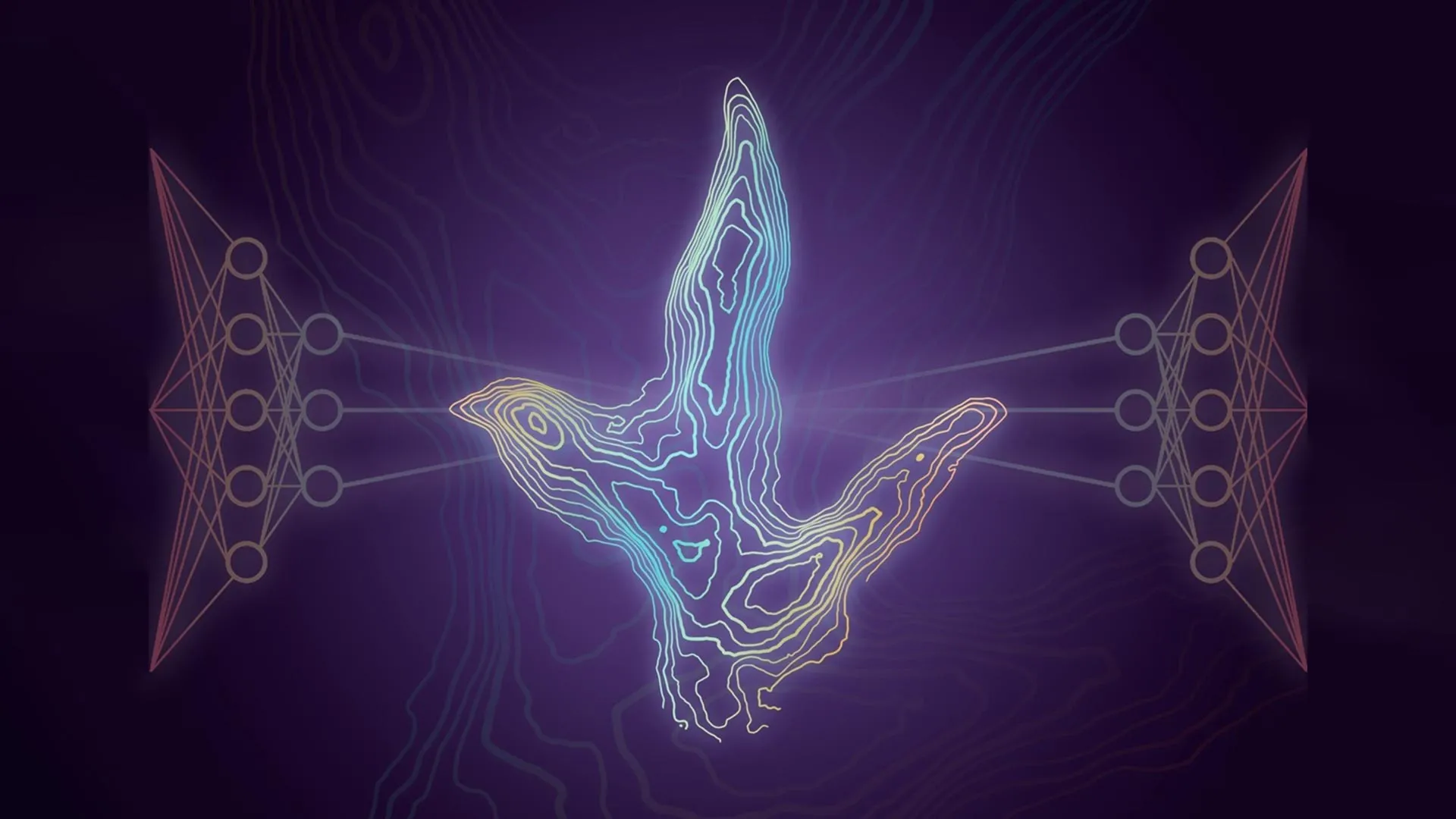
A groundbreaking new application, powered by sophisticated artificial intelligence (AI), is poised to fundamentally transform how scientists and the public identify dinosaur footprints, or ichnofossils, left behind millions of years ago. This innovative technology, detailed in a recent study, promises to unravel long-standing mysteries surrounding ancient tracks that have historically presented significant challenges to paleontological researchers. The DinoTracker app offers an unprecedented level of accessibility and analytical power, moving beyond traditional, often subjective, methods of identification.
For centuries, the study of ancient footprints, a specialized field known as ichnology, has captivated scientists. Paleontologists have meticulously examined these fossilized impressions, often engaging in vigorous debates over the identities of the creatures that produced them. Some tracks are clearly indicative of formidable carnivorous theropods, known for their sharp claws and bipedal gait, while others suggest the presence of massive herbivorous sauropods or agile ornithopods. Yet, a significant number of tracks have remained enigmatic, their creators hotly contested, with some even leading to speculation about the involvement of early bird species. The inherent difficulty stems from the fact that footprints are not direct skeletal remains; they are transient impressions subject to myriad environmental factors at the time of their creation and during their subsequent fossilization.
The Enduring Challenge of Ichnology
The challenge in interpreting fossilized footprints is multifaceted. Unlike skeletal fossils, which offer direct anatomical evidence, tracks are indirect indicators of an animal’s morphology, locomotion, and behavior. A single dinosaur species could produce a variety of track morphologies depending on the substrate (mud, sand, silt), the animal’s speed, its gait, and even subtle individual variations in foot anatomy. Furthermore, post-depositional processes—such as erosion, compaction, and diagenesis—can significantly alter the original shape of a track, leading to misinterpretations or obscuring critical diagnostic features. This phenomenon, known as taphonomy, is a major hurdle in ichnological research.
Historically, paleontologists have relied on comparative anatomy, expert intuition, and manually compiled databases to classify ichnofossils. These traditional approaches, while yielding valuable insights, are inherently susceptible to bias. When a track’s identity was uncertain or disputed, the expert’s subjective interpretation often played a significant role, sometimes leading to prolonged scientific disagreements. The concept of "ichnotaxa" – classifying footprints by their morphology rather than definitively linking them to a known skeletal species – arose precisely because of this difficulty. While useful for organizing diverse track types, it also highlighted the limitations in directly connecting tracks to their makers.
DinoTracker: Turning Photos into Instant Analysis
The new DinoTracker app represents a significant leap forward, democratizing access to complex paleontological analysis. With this mobile application, researchers, amateur enthusiasts, and even curious members of the public can simply upload a photograph or drawing of a footprint using their smartphone. The app then leverages its advanced AI algorithms to provide an immediate, data-driven analysis. It meticulously evaluates the shape, structure, and subtle morphological nuances of the track to estimate with remarkable precision which type of dinosaur likely created it. This instant feedback loop dramatically accelerates the identification process, moving beyond the laborious and time-consuming methods of the past.
The core of this revolutionary technology lies in its sophisticated computational framework. To address the problem of inherent bias and the difficulties of track interpretation, a dedicated research team embarked on an ambitious project. Led by the Helmholtz-Zentrum research centre in Berlin, in collaboration with the University of Edinburgh, the team developed cutting-edge algorithms that enable computers to independently "learn" and recognize the intricate variations in dinosaur footprint shapes. This self-learning capability is a hallmark of modern AI, allowing the system to identify patterns and correlations that might be too subtle or complex for human observation alone.
The AI’s Training Regimen: Real and Simulated Data
The robustness of the AI system is a direct result of its comprehensive training. The model was rigorously trained on a vast dataset comprising nearly 2,000 real fossil footprints collected from various sites around the world. These genuine ichnofossils provided the foundational truth for the AI to learn from. However, recognizing the limitations of relying solely on naturally occurring, often altered, tracks, the researchers augmented this dataset with millions of additional simulated examples.
These synthetic footprints were not merely random variations; they were meticulously designed to reflect realistic changes that occur during the preservation process. Factors such as compression from overlying sediment, erosion of track edges, and displacement of substrate material—all common taphonomic processes—were incorporated into the simulated data. By training on such a diverse and realistic dataset, the AI developed an unparalleled ability to recognize the diagnostic features of tracks even when they are partially degraded or distorted, a common challenge in real-world ichnology. This innovative approach of combining real-world scarcity with simulated abundance is a powerful strategy in AI development, allowing the model to achieve a level of generalization and accuracy that would be impossible with real data alone.
Unpacking the AI’s Analytical Prowess
The AI model was designed to identify and interpret eight key morphological features that distinguish one footprint from another. These features include:
- Toe Spread: The angular divergence between individual digits, often indicative of the foot’s structure and the animal’s gait.
- Heel Position: The location and prominence of the heel impression, which varies significantly between bipedal and quadrupedal dinosaurs.
- Surface Area Contact: The total area of the foot that made contact with the ground, providing clues about the animal’s weight distribution and foot morphology.
- Weight Distribution: How pressure was exerted across different parts of the foot, offering insights into locomotion and posture.
- Digit Proportions: The relative lengths and widths of individual toes.
- Claw Impressions: The presence, shape, and orientation of claw marks, crucial for distinguishing between different predatory and herbivorous groups.
- Overall Track Shape: The general outline, including features like "V" or "U" shaped heels, or the presence of pads.
- Depth and Relief: The three-dimensional characteristics of the impression, influenced by substrate consistency and animal weight.
By meticulously analyzing these parameters, the system constructs a detailed "morphological profile" for each new footprint. It then compares this profile with its extensive knowledge base of known fossil examples, employing complex pattern recognition algorithms to predict with high confidence which dinosaur most likely made the tracks.
Validation and Remarkable Accuracy
The rigorous validation of the DinoTracker algorithm yielded impressive results. When tested against a diverse array of footprints, the AI system matched the classifications made by human experts approximately 90 percent of the time. This high level of agreement is particularly significant given the long-standing difficulties and controversies in ichnological identification. The algorithm’s accuracy held even for species whose tracks are considered notoriously challenging or have been subjects of prolonged scientific debate, underscoring its potential to provide objective, data-driven insights where human consensus has been elusive. This 90% accuracy rate represents a substantial improvement over previous computational methods and sets a new benchmark for automated ichnofossil analysis.
Unexpected Links: Reshaping Avian Evolution
One of the most profound and unexpected findings generated by the AI system emerged from its analysis of tracks dating back more than 200 million years, placing them squarely in the Triassic period. The AI detected striking and consistent similarities between certain dinosaur footprints from this era and the feet of both extinct and modern bird species. This discovery challenges conventional wisdom regarding the timeline of avian evolution.
For decades, the feathered dinosaur Archaeopteryx, dating back approximately 150 million years to the Late Jurassic, has been widely considered the earliest definitive bird. This new AI-driven analysis, however, suggests a potentially much earlier emergence of bird-like feet. According to the research team, this could imply that the evolutionary lineage leading to modern birds diverged and developed distinct foot morphologies tens of millions of years earlier than previously believed. Such a finding would necessitate a significant re-evaluation of the evolutionary tree of avians and their dinosaurian ancestors.
Alternatively, the researchers cautiously suggest another possibility: that some early dinosaur species, unrelated to the direct lineage of birds, simply happened to evolve feet that converged in form with those of early birds due to similar ecological pressures or biomechanical requirements. While this would still be a fascinating instance of convergent evolution, the implication of earlier avian emergence remains a compelling hypothesis that warrants extensive further investigation, potentially involving re-examination of other fossil evidence with AI tools.
New Clues from Scotland’s Ancient Lagoons
Beyond its implications for avian evolution, the DinoTracker system also offered compelling new insights into some of the most mysterious fossil footprints found on the Isle of Skye in Scotland. These enigmatic tracks were formed approximately 170 million years ago, during the Middle Jurassic period, on the muddy edge of an ancient lagoon. For decades, these particular footprints have puzzled scientists, defying definitive classification and sparking numerous theories about their creators.
The AI’s detailed analysis suggests a groundbreaking conclusion: these footprints may have been left by some of the oldest known relatives of duck-billed dinosaurs, scientifically known as hadrosaurs. Hadrosaurs were a highly successful and diverse group of herbivorous dinosaurs that flourished during the Late Cretaceous period, renowned for their distinctive dental batteries and often elaborate crests. Finding their earliest relatives in the Middle Jurassic of Scotland would make these among the earliest examples of this globally significant dinosaur group identified anywhere in the world. This discovery not only extends the known temporal range of hadrosaur evolution but also provides crucial information about their early geographical distribution and morphological development. It paints a picture of Scotland as a key locale for early dinosaur diversification, adding to its already rich paleontological heritage.
Opening Paleontology to Everyone: The Dawn of Citizen Science
The researchers emphasize that this new technology extends far beyond purely academic applications. It creates unprecedented opportunities to deepen our understanding of how dinosaurs lived, moved, and interacted with their ancient environments across the Earth. More significantly, it offers the public a unique and accessible chance to actively participate in fossil research. By empowering citizen scientists to analyze footprints themselves, the DinoTracker app has the potential to democratize paleontology, transforming casual fossil hunting into a collaborative scientific endeavor. Imagine enthusiasts in remote locations uploading photos of newly discovered tracks, contributing valuable data to a global scientific effort. This paradigm shift could lead to a dramatic increase in the rate of discovery and analysis of ichnofossils worldwide.
Official Responses and Broader Implications
The study, which was published in the prestigious journal PNAS, received critical funding from a consortium of institutions including the innovations pool of the BMBF-Project: Data-X, the Helmholtz project ROCK-IT, the Helmholtz-AI project NorMImag, the National Geographic Society, and the Leverhulme Trust. This multi-institutional support underscores the significance and interdisciplinary nature of the research.
Dr. Gregor Hartmann of the Helmholtz-Zentrum research centre, a key figure in the project, expressed profound optimism regarding the tool’s utility. "Our method provides an unbiased way to recognize variation in footprints and test hypotheses about their makers," Dr. Hartmann stated. "It’s an excellent tool for research, education, and even fieldwork. The objective, data-driven insights it provides will help resolve long-standing debates and accelerate new discoveries." His statement highlights the AI’s capacity to bring objectivity to a field often characterized by subjective interpretation, making it a valuable asset across the entire spectrum of paleontological work.
Professor Steve Brusatte, Personal Chair of Palaeontology and Evolution at the School of GeoSciences, University of Edinburgh, echoed this sentiment, emphasizing the transformative potential. "This study is an exciting contribution for paleontology and an objective, data-driven way to classify dinosaur footprints – something that has stumped experts for over a century," Professor Brusatte remarked. "It opens up exciting new possibilities for understanding how these incredible animals lived and moved, and when major groups like birds first evolved. This computer network might have identified the world’s oldest birds, which I think is a fantastic and fruitful use for AI." Professor Brusatte’s comments underscore the monumental impact of resolving a century-old challenge and the profound implications for evolutionary biology, particularly in the realm of avian origins.
The implications of the DinoTracker app extend far beyond specific discoveries. It heralds a new era in ichnology, shifting the discipline towards more robust, quantifiable, and reproducible analyses. The integration of AI into paleontological research could pave the way for similar tools in other areas of fossil study, such as the identification of fossilized plants, microfossils, or even complex trace fossils like burrows. This technology not only enhances scientific rigor but also fosters a broader engagement with the natural world, allowing anyone with a smartphone to contribute to the grand tapestry of scientific discovery. As AI continues to evolve, its application in understanding Earth’s deep past promises to unlock mysteries we are only just beginning to comprehend.