
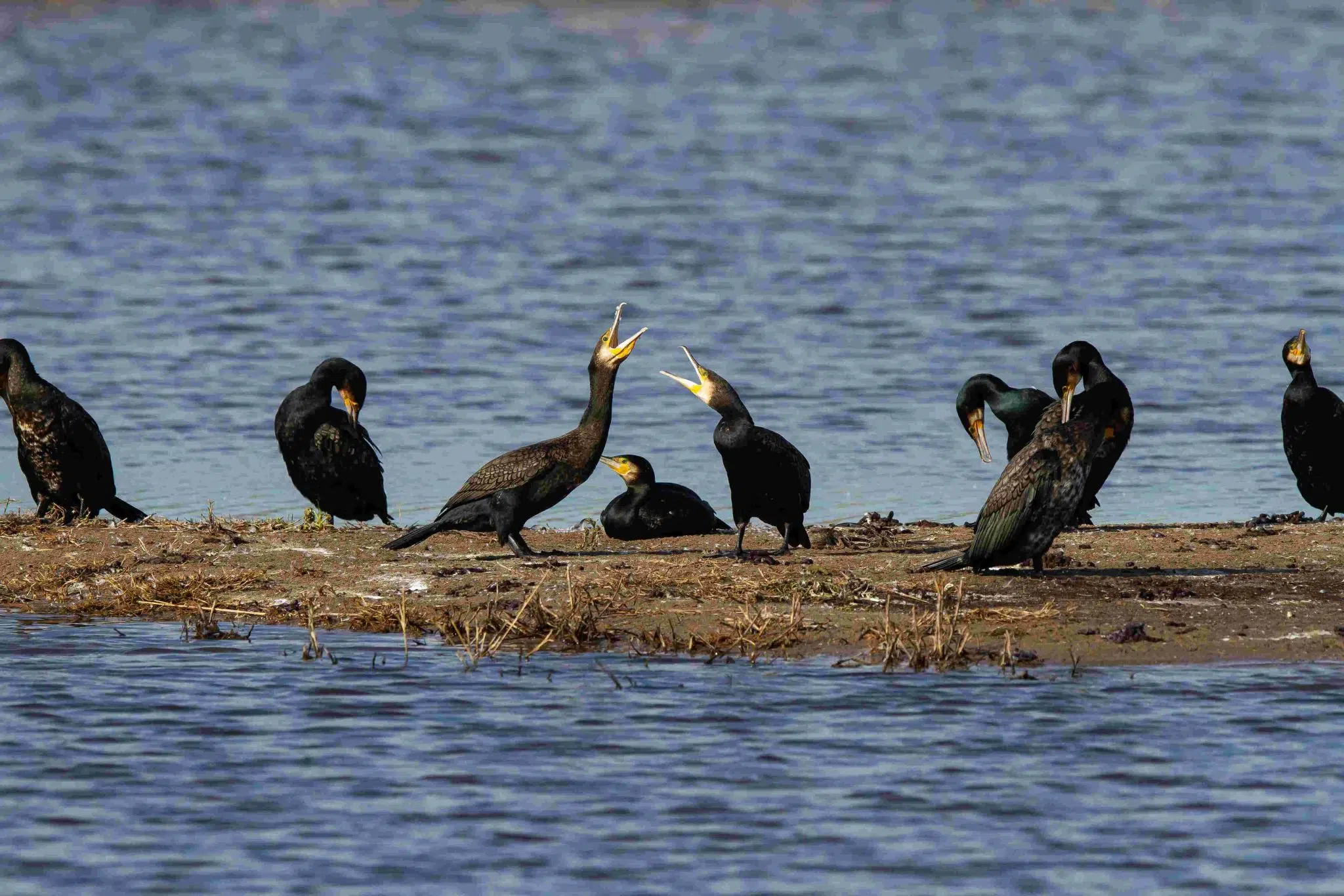
Al Siniyah Island, located east of the city of Umm Al Quwain in the United Arab Emirates, stands as a testament to the intricate balance between rich biodiversity and profound historical significance. This vital coastal habitat, stretching approximately eight kilometres in length and separated from the mainland by the Umm Al Quwain Creek, is one of the largest islands in the Emirate of Umm Al Quwain. Characterised by its flat terrain and diverse vegetation, including extensive mangrove stands, resilient Ghaf trees, and seasonal shrubs, the island’s ecological importance is further underscored by its designation as a Key Biodiversity Area (KBA). However, this invaluable sanctuary, which supports one of the largest breeding colonies of the Vulnerable Socotra Cormorant, alongside dugongs, green turtles, and a multitude of migratory birds, is currently facing escalating pressures from both natural predation and anthropogenic factors. Continued protection and vigilant monitoring are essential to safeguard its unique natural and cultural legacy.
A Geographical and Ecological Marvel in the Arabian Gulf
Al Siniyah Island’s unique geographical position and diverse ecosystems make it a critical hub for shallow marine habitats within the Arabian Gulf. Its surrounding waters host expansive seagrass meadows, vital salt flats, and dynamic coastal wetlands. These interconnected habitats are not merely picturesque landscapes but are fundamental to the survival of numerous marine species, many of which hold national and regional significance.
Seagrass meadows, often referred to as the "lungs of the sea," are among the most productive ecosystems in the Arabian Gulf. They serve as crucial nurseries and feeding grounds for countless fish species, providing both food and shelter. For iconic marine fauna, these meadows are indispensable. Green turtles, for instance, rely heavily on seagrass as a primary food source, making Al Siniyah a vital foraging area. Furthermore, the island’s waters are a primary feeding habitat for dugongs, gentle marine mammals that depend almost entirely on seagrass for sustenance. The UAE is home to the world’s second-largest dugong population after Australia, underscoring the regional importance of undisturbed seagrass beds like those surrounding Al Siniyah. The health of these fragile ecosystems is a direct indicator of the overall well-being of the wider marine environment, playing a crucial role in nutrient cycling, sediment stabilisation, and carbon sequestration.
Beyond its marine wealth, the island’s terrestrial and intertidal zones are equally diverse. Mangrove forests, primarily composed of grey mangroves (Avicennia marina), form dense thickets along the creek and sheltered coastlines. These mangroves are critical coastal protectors, stabilising shorelines against erosion, acting as natural storm barriers, and providing vital breeding and nursery grounds for fish, crustaceans, and insects, which in turn support the island’s bird populations. The Ghaf tree (Prosopis cineraria), a drought-tolerant species native to the Arabian Peninsula, also dots the island, offering shade and habitat. Seasonal shrubs provide additional cover and food sources for terrestrial wildlife, demonstrating the island’s capacity to support life even in arid conditions.
The Jewel of Avian Biodiversity: The Socotra Cormorant
Al Siniyah Island’s designation as a Key Biodiversity Area (KBA) by BirdLife International and its partners highlights its exceptional value, particularly for seabirds. It is globally recognised as one of the most important seabird sites in the Arabian Gulf, hosting large breeding colonies and serving as a crucial stopover for dozens of migratory seabird and waterbird species annually.
The island is perhaps most celebrated as a stronghold for the Socotra Cormorant (Phalacrocorax nigrogularis), a tropical and regionally endemic seabird species classified as Vulnerable on the IUCN Red List. This species, found exclusively in the Arabian Gulf and surrounding waters, faces significant threats across its range due to habitat loss, oil pollution, and human disturbance. Al Siniyah Island supports one of the species’ largest breeding colonies, benefiting from improved shaded areas and an abundant food supply in the surrounding shallow waters. Modern bird monitoring techniques have been instrumental in tracking the population dynamics of this critical species on the island.
Historical data underscores the growth and significance of this colony. A study published in Waterbirds in 2012 reported approximately 15,500 breeding pairs of Socotra Cormorants on Al Siniyah during the breeding season. Subsequent research, including the Breeding Population Biology study published in 2017, provided even more encouraging figures, estimating around 28,000 breeding pairs in 2011, with numbers increasing significantly to more than 41,000 pairs by 2014. This consistent growth, observed through rigorous scientific methods, highlights the island’s exceptional suitability as a breeding ground and its pivotal role in the global conservation strategy for this vulnerable species. The large, dense colonies of Socotra Cormorants are a breathtaking sight, a testament to the rich marine productivity of the Arabian Gulf and the relatively undisturbed nature of the island’s breeding sites.
A Crucial Stopover on the African-Eurasian Flyway
Beyond its resident and regionally breeding populations, Al Siniyah Island plays a crucial role in global bird migration, serving as an important stopover point on the African-Eurasian Flyway. This vast aerial highway links breeding grounds in Europe and Asia with wintering areas in Africa, and islands like Al Siniyah provide indispensable safe havens for millions of birds undertaking arduous journeys. Here, migratory birds find essential habitats to rest, refuel, and recover before continuing their long flights. The island’s diverse wetlands and coastal areas offer a rich buffet of food resources, from fish and crustaceans to insects and plant matter, catering to a wide array of dietary needs.
The island also attracts and supports several other protected avian species. The White-cheeked Tern (Sterna repressa), classified as Near Threatened, breeds in sandy colonies, often in close proximity to cormorant sites, highlighting the interconnectedness of these species’ habitat needs. The Sooty Gull (Larus hemprichii), a resident of coasts and mudflats, contributes to the island’s avian diversity. The Crab-plover (Dromas ardeola), also listed as Near Threatened, relies heavily on the island’s tidal areas, probing mud and sand for molluscs and crustaceans. Additionally, Grey Herons and Glossy Ibises are seasonal visitors, utilising the island’s mangroves and coastal wetlands for feeding and roosting. The presence of such a variety of species, each with specific habitat requirements, underscores the ecological health and complexity of Al Siniyah Island.
Terrestrial Ecosystems and Unique Wildlife
While famed for its marine and avian life, Al Siniyah Island also supports a unique terrestrial ecosystem. The island is predominantly covered by semi-desert coastal habitats, featuring salt- and drought-tolerant plants along its creeks and wetlands. This vegetation, including various grasses and shrubs, plays a key role in supporting local wildlife by offering natural habitats, shade, and protection, especially for bird colonies during the breeding season. Furthermore, these plants are crucial for stabilising sand dunes and preventing coastal erosion, protecting the island’s delicate topography.

The island is home to unique animal populations adapted to its arid environment. The Arabian subspecies of Red Fox (Vulpes vulpes arabica) is present, an indigenous predator that, while native, poses a significant challenge to ground-nesting birds. Arabian Sand Gazelles (Gazella marica), known for their resilience in desert landscapes, also roam the island, relying on its vegetation for food and shelter. A variety of reptiles, including lizards and agamas, thrive in the warm, sandy conditions. Coastal crustaceans and various species of crabs are abundant in the intertidal zones, contributing to the island’s intricate food web. All these species rely on the rich and varied natural habitats provided by Al Siniyah.
Echoes of Antiquity: Al Siniyah’s Archaeological Legacy
Adding another layer of significance to its natural wealth, Al Siniyah Island holds substantial historical and cultural value, serving as a rare archaeological treasure trove. The island contains approximately 65 archaeological sites, offering a tangible link to ancient civilisations and early human settlements in the region. These sites include graves, shell middens, and towers, providing invaluable insights into the lives, customs, and resource utilisation of past inhabitants.
Perhaps most notably, the island is home to a church and a monastery dating back to the seventh century AD. These structures are crucial remnants of an early Christian community that thrived in the Arabian Gulf long before the advent of Islam. Their discovery provides critical evidence of the diverse religious and cultural landscape of the pre-Islamic and early Islamic periods in the region, challenging traditional narratives and highlighting the Gulf’s historical role as a crossroads of civilisations and trade routes. The presence of such well-preserved archaeological sites alongside a thriving natural ecosystem makes Al Siniyah Island a truly unique location, where natural history and human history are deeply intertwined. The shell middens, for instance, are not just piles of discarded shells but provide detailed records of ancient diets, fishing practices, and environmental conditions over centuries. The towers likely served defensive or navigational purposes, hinting at the strategic importance of the island in ancient maritime networks.
Mounting Threats to an Irreplaceable Haven
Despite its protected status and immense value, Al Siniyah Island’s delicate ecosystems and vulnerable populations face a growing array of threats. These challenges jeopardise its biodiversity and underscore the urgent need for sustained conservation efforts.
One of the most immediate and significant threats to the Socotra Cormorant colony is predation by the native Arabian Red Fox. While foxes are an integral part of the island’s natural ecosystem, their opportunistic predation on the cormorants, especially during the breeding season, has devastating demographic consequences. A study published in Wildlife Biology in 2018 utilised camera traps to monitor 24 foxes on the island and revealed a startling finding: 80% of their diet during the cormorant breeding season consisted of Socotra Cormorants and their eggs. The study estimated that foxes killed more than 3,500 cormorants in a single breeding season, a staggering number for a vulnerable species. This intense predation pressure can significantly reduce breeding success and, if unchecked, could lead to a decline in the colony’s population. Managing this threat requires careful consideration, as the fox is a native species, necessitating non-lethal and ecologically sound management strategies to balance predator-prey dynamics.
Beyond natural predation, Al Siniyah Island’s ecosystems are increasingly threatened by human-induced pressures, a common plight for many islands in the Arabian Peninsula.
- Urban and Tourism Development: The rapid urbanisation and ambitious tourism development plans in the region pose direct threats. Infrastructure development (roads, resorts, jetties) can lead to direct habitat loss, fragmentation, and degradation. Increased human presence and recreational activities can cause significant disturbance to sensitive nesting sites, especially for ground-nesting birds, leading to nest abandonment or reduced breeding success. Light pollution from nearby developments can disorient migratory birds and hatchling turtles, impacting their survival.
- Climate Change: The long-term impacts of climate change represent an existential threat. Rising sea levels could inundate vital coastal habitats such as mangroves and salt flats, altering intertidal zones and affecting the food sources for many species. Increased sea surface temperatures can lead to coral bleaching in the wider Gulf, impacting the marine food web that supports cormorants and other marine life. More frequent and intense extreme weather events, such as storms, can directly destroy nests, displace populations, and accelerate coastal erosion, further degrading critical habitats.
- Human Activities: Unregulated human activities, including illegal fishing, boating, and waste dumping, also contribute to environmental degradation. Fishing gear can entangle marine animals like dugongs and turtles. Boat traffic can disturb feeding and resting areas, while plastic pollution and other waste can harm wildlife through ingestion or entanglement. These cumulative pressures threaten the delicate ecological balance of Al Siniyah Island.
Concerted Conservation Efforts and Future Resilience
Recognising the multifaceted threats, the continued protection and monitoring of Al Siniyah Island are essential to preserve its unique ecological and cultural value. Effective conservation requires a multi-pronged approach that integrates scientific research, robust regulatory frameworks, and collaborative action.
Continuous monitoring efforts are paramount. This includes regular surveys of bird populations, particularly the Socotra Cormorant, using modern techniques such as drone imagery and satellite tagging to track movements and breeding success. Monitoring of marine species like dugongs and green turtles, along with seagrass health, is equally crucial. Data gathered from these monitoring activities provides vital information for adaptive management strategies.
Enforcing national regulatory frameworks for high-standards Environmental Impact Assessments (EIAs) is critical for any proposed development in or around the island. These assessments must be stringent, ensuring that potential impacts on critical habitats and sensitive species are thoroughly evaluated and mitigated. Regulations on human activities, such as controlling access to sensitive nesting areas, limiting boating speeds, and managing waste, are also essential to minimise disturbance and pollution. The designation of Al Siniyah as a Key Biodiversity Area (KBA) provides an international framework for its protection, aligning national efforts with global conservation targets.
BirdLife Middle East is actively engaged in safeguarding these unique ecosystems through its strategic initiative for the protection and sustainability of coastal wetlands in the Arabian Peninsula. This initiative focuses on strengthening scientific research to better understand the ecological dynamics of these habitats, documenting biodiversity, and identifying the most pressing threats. This foundational work paves the way for the development and implementation of effective protection and restoration plans for vulnerable areas. Furthermore, the initiative actively promotes collaboration between governments, non-governmental organisations (NGOs), and adherence to international agreements (such as the Ramsar Convention for Wetlands of International Importance and the Convention on Migratory Species). The aim is to ensure sustainable actions that address unregulated urban growth, mitigate the impacts of climate change and industrial pollution, and protect biodiversity in a manner that also respects and enhances local cultures, ultimately strengthening ecosystem resilience.
A Shared Vision for Al Siniyah
The future of Al Siniyah Island, with its invaluable natural heritage and ancient archaeological sites, hinges on a collective commitment to its preservation. Protecting this irreplaceable sanctuary is a shared responsibility that requires coordinated efforts from all stakeholders, including government agencies, environmental organisations, local communities, and the private sector. By working together, implementing scientifically informed management plans, and fostering a deep appreciation for its unique ecological and cultural significance, Al Siniyah Island can continue to thrive as a major site of biodiversity for the Vulnerable Socotra Cormorant, countless seabirds, and other migratory species, serving as a beacon of conservation in the Arabian Gulf and the wider Middle East for generations to come. The long-term vision must ensure that sustainable development practices are prioritised, and that the island’s pristine environment remains undisturbed, allowing both nature and history to flourish.