
The groundbreaking findings, published on February 10 in the prestigious journal Nature Communications, underscore the pervasive and insidious nature of avian malaria, which was detected at an alarming 63 of 64 locations tested statewide. These sites encompassed a diverse array of forest ecosystems, from wet lowland forests to higher-elevation native habitats, and included areas with vastly different mixes of bird species, both native and introduced. This near-ubiquitous presence of the disease, caused by the generalist parasite Plasmodium relictum, is a critical factor in understanding the precipitous declines and outright extinctions of Hawaiʻi’s iconic native honeycreepers.
The Devastating Reach of Avian Malaria
For decades, avian malaria has waged a silent war against Hawaiʻi’s unique avifauna, a battle exacerbated by the archipelago’s isolated evolutionary history and the introduction of non-native species. The latest research provides compelling evidence that the disease is not reliant on a few specific "superspreader" bird species but rather can be maintained by a broad spectrum of avian hosts. This revelation significantly complicates conservation efforts and elevates the urgency of comprehensive mosquito control measures.
Christa M. Seidl, the mosquito research and control coordinator for the Maui Forest Bird Recovery Project, who conducted this pivotal research as part of her PhD at the University of California, Santa Cruz, emphasized the gravity of the situation. "Avian malaria has taken a devastating toll on Hawaiʻi’s native forest birds, and this study shows why the disease has been so difficult to contain," Seidl stated. "When so many bird species can quietly sustain transmission, it narrows the options for protecting native birds and makes mosquito control not just helpful, but essential." Her words highlight the complex ecological web that now supports the parasite’s lifecycle, making eradication or even significant reduction a monumental challenge.
A Silent Epidemic: Understanding Plasmodium relictum
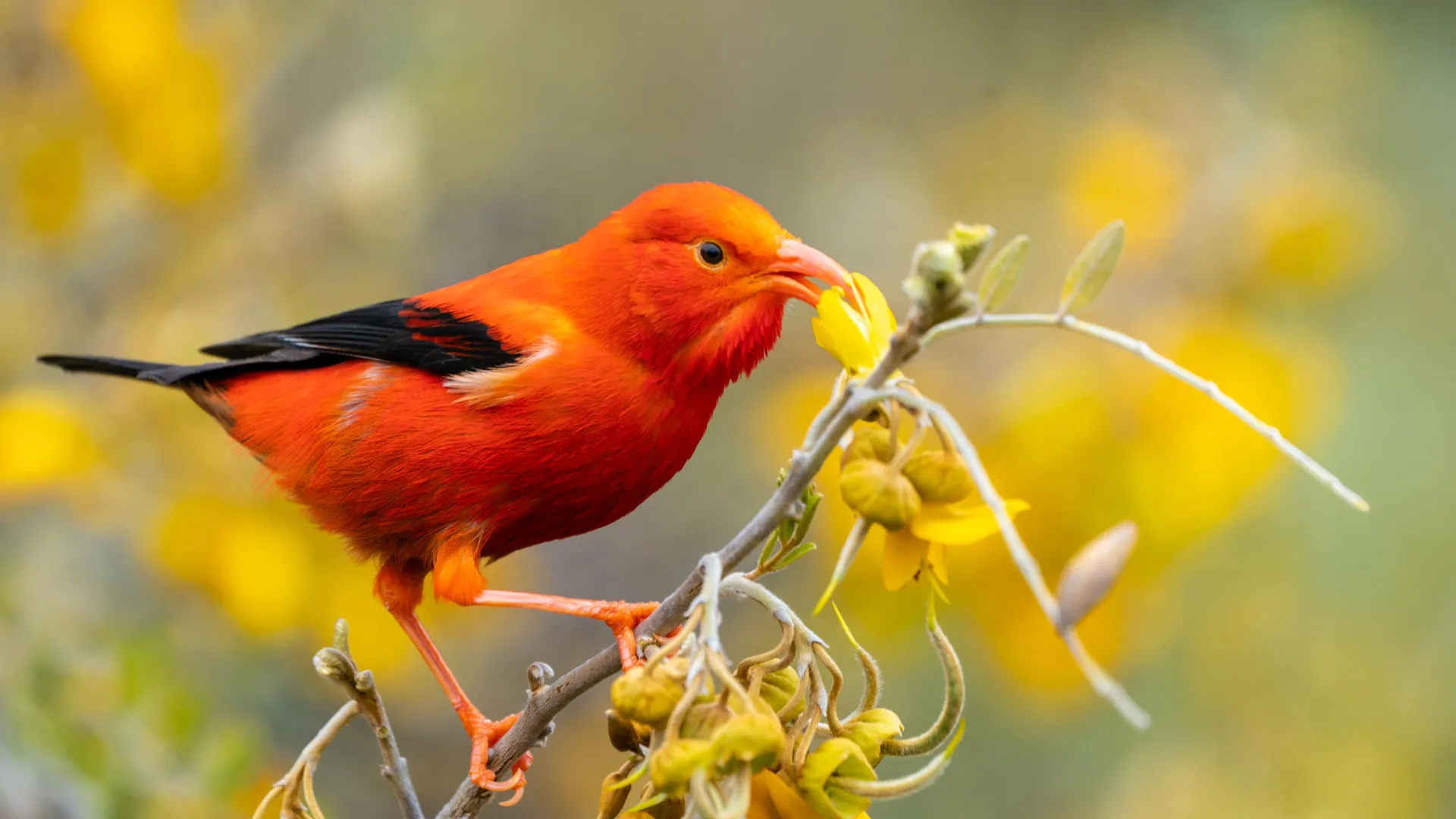
Avian malaria operates by attacking the red blood cells of infected birds, leading to a cascade of debilitating effects that can include anemia, organ failure, reduced survival rates, and ultimately, death in many susceptible species. For Hawaiʻi’s native birds, particularly the honeycreepers, the consequences have been catastrophic. Studies have shown that the ʻIʻiwi, also known as the scarlet honeycreeper (Drepanis coccinea), a vibrant and culturally significant species, faces an approximately 90 percent mortality rate if infected. This staggering figure illustrates the profound vulnerability of these species, which evolved in the absence of such pathogens and thus lack natural resistance. The ʻAkikiki (Oreomystis bairdi), a honeycreeper endemic to Kauaʻi, is now considered functionally extinct in the wild, with avian malaria being identified as the primary driver of its demise. Its dwindling population, once numbering in the hundreds, has plummeted to perhaps fewer than five individuals, rendering its future precarious.
Historically, many infectious diseases are understood to rely on a limited number of host species to maintain their spread within an ecosystem. However, this new research definitively demonstrates that avian malaria in Hawaiʻi operates under a different, far more pervasive dynamic. The study reveals that a vast majority of forest birds in Hawaiʻi, irrespective of whether they are native species or introduced counterparts, possess at least a moderate capability to infect southern house mosquitoes (Culex quinquefasciatus), the primary vector for the disease across the islands. Crucially, the research found that even birds harboring very small, almost undetectable amounts of the parasite were capable of transmitting it to mosquitoes. This implies that a wide range of avian communities, even those seemingly less impacted, can actively contribute to ongoing transmission, transforming virtually any mosquito-inhabited forest into a potential disease reservoir.
Seidl further elaborated on this critical interaction, noting, "We often understandably think first of the birds when we think of avian malaria, but the parasite needs mosquitoes to reproduce and our work highlights just how good it has gotten at infecting them through many different birds." This perspective shifts the focus beyond just the avian hosts to the intricate host-vector-parasite relationship, emphasizing the mosquito’s central, indispensable role in the disease cycle.
Hawaiʻi’s Unique Avifauna: The Plight of the Honeycreepers
To fully grasp the tragedy unfolding in Hawaiʻi, one must understand the extraordinary evolutionary history of its native birds. The Hawaiian honeycreepers, a subfamily of passerine birds (Drepanidinae), represent one of the most spectacular examples of adaptive radiation in the animal kingdom. Descended from a single ancestral finch species that arrived in the archipelago millions of years ago, these birds diversified into more than 50 known species, each exquisitely adapted to specific ecological niches. Their beaks, for instance, evolved into an astonishing array of shapes and sizes, from the delicate, curved bill of the ‘I’iwi, perfectly suited for sipping nectar from native lobeliads, to the powerful, nut-cracking beak of the now-extinct koa-finch.
This unparalleled biodiversity, however, came with a profound vulnerability. Evolving in isolation, these birds faced no significant mammalian predators or mosquito-borne diseases. Consequently, they possess little to no natural immunity to pathogens like Plasmodium relictum. The arrival of foreign species shattered this delicate balance. Of the original honeycreeper species, at least 33 are already extinct, with many more critically endangered. Avian malaria is now considered the single greatest threat to the survival of the remaining 17 species, pushing several to the brink. Species like the Kiwikiu (Maui Parrotbill) and ʻAkekeʻe (Kauaʻi ʻAkepa) are hanging on by a thread, their populations fragmented and constantly under pressure from the upward march of mosquitoes.
The Vector: Culex quinquefasciatus and its Arrival
The story of avian malaria in Hawaiʻi is inextricably linked to the introduction of the southern house mosquito, Culex quinquefasciatus. This non-native species first arrived in the islands around 1826 or 1827, likely aboard whaling ships from the Americas. It found Hawaiʻi’s warm, wet climate and abundant standing water an ideal breeding ground. Within decades, it had spread throughout the lowland and mid-elevation forests of all the main Hawaiian islands.
The parasite Plasmodium relictum itself is believed to have arrived later, carried by introduced bird species, such as common mynas, house finches, and various passerines from Asia and North America, which were brought to Hawaiʻi starting in the mid-19th century. These introduced birds often carry the parasite with minimal symptoms, acting as asymptomatic carriers and efficient reservoirs for the disease. Once the mosquito vector and the parasite were established, the stage was set for the unfolding ecological disaster. The native birds, lacking any evolved defenses, became highly susceptible to the disease transmitted by the abundant Culex mosquitoes.
The Study’s Methodology and Unsettling Revelations
To arrive at their stark conclusions, researchers undertook an extensive and rigorous study. They examined blood samples from more than 4,000 birds across the four largest Hawaiian islands: Kauaʻi, Oʻahu, Maui, and Hawaiʻi Island. These field data, collected from a vast geographical and ecological range, were then meticulously paired with sophisticated laboratory experiments. In these controlled settings, researchers directly measured how readily mosquitoes became infected after feeding on birds that had naturally contracted avian malaria in the wild.
The results from this comprehensive approach were unsettling. The study found that native and introduced birds often exhibited similar levels of infectiousness to mosquitoes. This finding dispels any notion that introduced bird species are solely responsible for maintaining the disease’s spread. Instead, it underscores that both groups contribute significantly to the propagation of Plasmodium relictum, meaning that even efforts to manage introduced bird populations might not fully address the transmission problem if native birds are also acting as effective reservoirs. The sheer number of potential hosts, regardless of their origin, ensures a robust and self-sustaining cycle of infection.
Chronic Infections: Fueling the Endemic Cycle
One of the most critical discoveries of the study pertains to the duration and nature of infections in birds. The researchers found compelling evidence that birds can harbor chronic infections for extended periods, often lasting for months or even years. During this protracted phase, birds may appear only mildly infected, displaying few to no overt symptoms of illness. However, even in this subclinical state, they remain fully capable of passing the parasite to feeding mosquitoes.
The implications of this chronic, low-level infectiousness are profound. The researchers estimate that this long-lasting, low-to-moderate infectious stage accounts for the vast majority of avian malaria transmission statewide. This means that even if a bird survives the acute phase of infection, it can continue to act as a source of infection for an extended period, silently perpetuating the disease cycle within the ecosystem. This phenomenon makes detection and intervention incredibly difficult, as seemingly healthy birds can still pose a significant threat to their susceptible counterparts.
Climate Change: Erasing the Last Refuges
The pervasive ability of Plasmodium relictum to infect and be transmitted by many different bird species largely explains why avian malaria has become so widespread across the Hawaiian archipelago. The study’s findings suggest that very few mosquito-infested habitats remain free of transmission risk. Compounding this already dire situation is the relentless march of climate change. Warming global temperatures are directly impacting Hawaiʻi’s ecosystems, allowing mosquitoes and avian malaria to expand their range into higher elevation areas that once served as critical refuges for vulnerable native birds.
Historically, the cooler temperatures at higher elevations limited the development and reproduction of Culex quinquefasciatus, as well as the parasite’s maturation within the mosquito vector. This created natural "thermal barriers" where native honeycreepers could thrive relatively free from the disease. However, as average temperatures rise, these thermal barriers are eroding. Mosquitoes are now being found at increasingly higher altitudes, bringing avian malaria into the last remaining strongholds of species like the Kiwikiu on Maui and the ʻAkepa on Hawaiʻi Island. Without these vital cool-weather sanctuaries, these highly susceptible birds face an existential threat, with nowhere left to escape the disease. Projections indicate that within decades, if current trends continue, virtually all remaining high-elevation forest bird habitats will become suitable for year-round mosquito transmission.
Conservation in Crisis: The ‘Birds, Not Mosquitoes’ Initiative
The urgency of the situation has galvanized a broad coalition of stakeholders under the banner of "Birds, Not Mosquitoes." This collaborative initiative brings together academic institutions, state and federal agencies, non-profit organizations, and industry partners, all working to advance and implement effective mosquito control strategies in support of Hawaiian bird conservation. The Maui Forest Bird Recovery Project, where Seidl serves, is a key member of this critical alliance, operating under the Pacific Cooperative Studies Unit in the College of Natural Sciences.
One of the most promising and actively pursued strategies by the Birds, Not Mosquitoes coalition is the Incompatible Insect Technique (IIT), utilizing naturally occurring Wolbachia bacteria. This method involves releasing male mosquitoes infected with a specific strain of Wolbachia that is incompatible with the Wolbachia strains found in wild female mosquitoes. When these incompatible males mate with wild females, the eggs fail to hatch, effectively reducing the mosquito population without the use of harmful pesticides. This technique, which is species-specific and self-limiting, offers a targeted and environmentally sound approach to controlling Culex quinquefasciatus. Trials and environmental assessments for this innovative approach are underway, representing a beacon of hope in a challenging conservation landscape. Other research avenues include exploring gene drive technologies, though these are typically further off in terms of deployment due to ethical and ecological considerations.
Broader Implications for Island Biogeography and Conservation
The Hawaiian avian malaria crisis is not just a local ecological disaster; it serves as a stark warning and a critical case study for island biogeography and global conservation efforts. Islands, by their very nature, are biodiversity hotspots, often harboring unique species that have evolved in isolation, making them exceptionally vulnerable to invasive species and novel pathogens. The lessons learned from Hawaiʻi’s struggle against avian malaria are invaluable for understanding and addressing similar threats in other isolated ecosystems around the world.
The fight to save Hawaiʻi’s honeycreepers underscores the complex interplay of human activity, climate change, and disease ecology. It highlights the profound impact of even seemingly minor introductions, like a mosquito on a ship, when they disrupt millions of years of evolutionary equilibrium. The ongoing efforts in Hawaiʻi represent a desperate, last-ditch attempt to preserve a living legacy of evolution and biodiversity. The cost of inaction is not merely the loss of a few bird species but the unraveling of entire ecosystems and the extinction of irreplaceable components of Earth’s natural heritage.
All birds in the study were captured and handled by trained ornithologists under strict state and federal permits, ensuring ethical treatment and adherence to scientific protocols. The research represents a monumental effort to gather the data necessary to inform critical conservation decisions.
Looking Ahead: The Urgent Need for Action
The study’s comprehensive findings paint a grim picture of widespread transmission and escalating threats, but they also provide the scientific foundation necessary for targeted and effective conservation interventions. The revelation that nearly all forest bird species can transmit avian malaria makes broad-scale mosquito control not merely an option but an imperative. The traditional approach of creating small, isolated mosquito-free zones is unlikely to succeed when the entire landscape acts as a reservoir.
The future of Hawaiʻi’s honeycreepers, and indeed much of its unique forest biodiversity, hinges on the rapid and successful deployment of innovative mosquito control technologies. Without a significant reduction in mosquito populations and the associated transmission of avian malaria, the trajectory for many of these irreplaceable species remains one of continued decline, ultimately leading to extinction. The scientific community, government agencies, and conservation organizations are united in this urgent cause, understanding that the time for decisive action is now, before Hawaiʻi’s forests fall silent forever.