
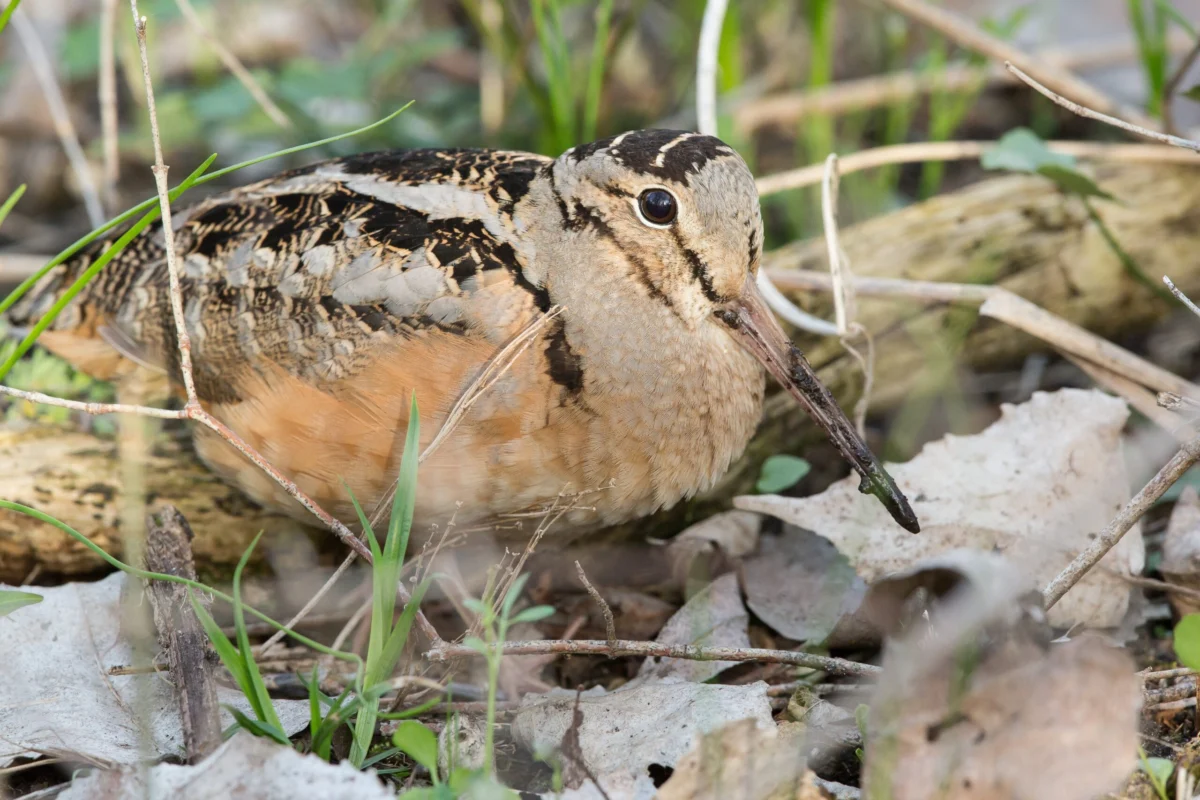
The distinctive "peent, peent" call of the male American Woodcock, an iconic auditory marker of the transition from winter to spring, has resonated through the evenings at the Greenwich Audubon Center, signaling a profound ecological success. These unique shorebirds, known for their elaborate courtship displays, are not only present but are actively nesting and breeding on the center’s property, a testament to the efficacy of targeted land stewardship and the integration of traditional ecological knowledge. This recent observation underscores the positive impact of habitat restoration efforts and provides crucial insights into the health of the local ecosystem.
A Symphony of Spring: The American Woodcock’s Return
For careful listeners, the evening air in early spring carries the unmistakable sounds of the American Woodcock (Scolopax minor). While often mistaken for a typical woodland bird, the woodcock is, in fact, a member of the sandpiper family, a shorebird that has adapted to an entirely terrestrial existence. Its striking appearance—large eyes set high on its head, a long, flexible bill perfectly suited for probing soft earth for earthworms, and cryptic brown plumage—allows it to blend seamlessly into its preferred habitats. The male’s courtship ritual is a spectacular aerial ballet, beginning with the ground-based "peent" call, followed by a spiraling ascent into the twilight sky. As it climbs, air rushing through modified primary feathers creates a melodically whistling "twitter," culminating in a series of chirping notes before the bird plummets back to earth, only to repeat the display. This captivating performance is a vital component of their breeding cycle, and its consistent presence at the Greenwich Audubon Center indicates a robust and thriving population.
The Greenwich Audubon Center has a long history of monitoring these fascinating birds, with observations recorded at the site since at least 2003. However, the current year’s concentrated sightings in specific, recently managed areas offer particularly encouraging data. These observations provide a tangible measure of success for the center’s strategic land management initiatives, demonstrating that their efforts are directly benefiting a species that is increasingly challenged by habitat loss across its range.
The Unique Habitat Needs of a Woodland Shorebird
American Woodcocks are singular among their shorebird relatives for their specific habitat requirements. Unlike coastal species that frequent beaches and wetlands, woodcocks thrive in a mosaic of early successional habitats. They require dense, young forest stands and shrub thickets for nesting and foraging, offering concealment from predators and a rich supply of invertebrates, primarily earthworms. Crucially, their elaborate aerial courtship displays necessitate access to nearby open spaces, such as meadows or forest clearings, which provide the necessary airspace for their spiraling flights. This specific combination of dense cover and open display grounds makes their habitat needs complex and often at odds with typical forest maturation processes.
Across much of their eastern North American range, American Woodcock populations have faced significant declines. Data from the U.S. Fish and Wildlife Service’s American Woodcock Singing-ground Survey, which monitors breeding populations, has indicated a long-term downward trend, particularly in the Eastern Management Region. This decline is largely attributed to the loss and fragmentation of their preferred early successional habitats. As forests mature, they often lose the dense understory and shrubby areas that woodcocks depend on. Furthermore, historical land use changes, including the cessation of agricultural practices that once created open fields and young woodlands, have contributed to this habitat scarcity. Consequently, the American Woodcock is listed as a Species of Greatest Conservation Need in several states, highlighting the urgency of targeted conservation efforts.
Fortunately for the woodcocks and other wildlife, the Greenwich Audubon Center has proactively addressed these challenges through strategic land stewardship on its main sanctuary property. The center’s management philosophy has focused on creating and maintaining precisely the diverse habitat structures these birds require, providing a sanctuary where they can flourish.
Chronology of Restoration and Observation
The recent success can be directly linked to transformative management projects undertaken in two key areas of the Main Sanctuary property: the Siwanoy Forest Plot and the eastern woodland boundary of the North Field meadow. These areas, now vibrant with woodcock activity, represent a convergence of thoughtful planning, ecological science, and traditional wisdom.
The Siwanoy Forest Plot: A Model of Indigenous Land Management
The Siwanoy Forest Plot, established in 2023, stands as a beacon of collaborative conservation. This project was conceived and implemented in partnership with members of the Siwanoy Tribal Nation, serving as a demonstration site for indigenous land management techniques and emphasizing the critical importance of plant biodiversity. The collaboration moved beyond mere consultation, integrating deep-rooted traditional ecological knowledge (TEK) into modern conservation practices.
The project focused on restoring a parcel of land that was formerly heavily degraded by invasive species, particularly non-native vines that choked out native vegetation and diminished ecological value. Staff from the Greenwich Audubon Center, alongside members of their Eco-Leadership Corps, embarked on a significant restoration effort. In 2023, they meticulously planted 53 native trees, carefully selected for their ecological benefits and suitability to the local ecosystem. Concurrently, nearly an acre of native meadow habitat was seeded, introducing a rich diversity of wildflowers and grasses that support a wide array of pollinators and other invertebrates, including the earthworms vital to the woodcock’s diet. This holistic approach transformed what was once an ecological wasteland into a vibrant young forest stand interspersed with meadow, providing the complex structural diversity essential for woodcocks.
Ms. Eleanor Vance, Director of Conservation at the Greenwich Audubon Center, commented on the significance of this collaboration: "Our partnership with the Siwanoy Tribal Nation has been transformative. Their traditional ecological knowledge offers invaluable insights into sustainable land stewardship that respects and enhances natural processes. The Siwanoy Forest Plot is not just about planting trees; it’s about re-establishing a reciprocal relationship with the land, and seeing the woodcocks utilizing this area so quickly is incredibly rewarding."
Mr. Joseph Little Bear, a representative from the Siwanoy Tribal Nation involved in the project, echoed this sentiment: "For generations, our people have understood the importance of caring for the land, not just using it. We see the success here with the woodcocks as a validation of that traditional wisdom. It shows that by working with nature, by fostering biodiversity, and by learning from the past, we can heal these spaces for all living things."
North Field Meadow: The Art of "Edge Softening"
The restoration along the eastern woodland boundary of the North Field meadow took a different, yet equally effective, approach. This project, initiated in late 2024 and completed in early 2025, employed a technique known as "edge softening." Forest edges, where woodlands meet open fields, are critical transition zones that provide diverse microhabitats. However, human-created edges are often abrupt and lack the gradual transition of natural ecotones, making them less valuable ecologically.
"Edge softening" involves a strategic intervention designed to promote the development of a transitional young forest and shrubland. At the North Field meadow, this involved carefully thinning the existing canopy of mature trees along the boundary. This selective removal of some larger trees allows more sunlight to reach the forest floor, stimulating the growth of native understory plants, shrubs, and saplings. Simultaneously, an intensive effort was made to remove a variety of invasive species that typically dominate disturbed edges, such as Japanese barberry, Oriental bittersweet, and multi-flora rose. These invasive plants outcompete native flora, reduce biodiversity, and offer little nutritional or structural value to native wildlife.
The process relies heavily on natural regeneration once invasive competition is removed and light conditions are optimized. This gradual development creates a mosaic of habitat structures—from open field to dense shrubland to young forest and finally mature woodland—providing the ideal blend of cover, foraging areas, and display grounds that American Woodcocks rely on.
Dr. Liam O’Connell, a wildlife ecologist consulting for the Audubon Center, explained the ecological rationale: "Edge softening is a powerful technique because it mimics natural disturbance regimes that would historically create these valuable transitional habitats. By thinning the canopy and removing invasives, we’re essentially jump-starting ecological succession, creating the dense, brushy cover and open pockets that species like the woodcock need for their entire life cycle. It’s a precise intervention that yields broad ecological benefits."
Indicator Species: A ‘Job Well Done’ Message
The rapid utilization of both the Siwanoy Forest Plot and the North Field meadow by courting American Woodcocks provides powerful evidence that the Greenwich Audubon Center’s land stewardship strategies are yielding tangible, positive effects on the health of its ecosystem. The fact that woodcocks are using these specific sites so soon after their transformation is a strong indicator of success.
American Woodcocks are widely recognized as "indicator species." The concept of an indicator species posits that the presence, absence, or abundance of a particular species can serve as a biological gauge for the overall health and quality of an ecosystem. Because woodcocks have very specific habitat requirements—a blend of young forest and open ground—their flourishing presence at the center directly reflects the success in creating and maintaining these critical early successional habitats. Their thriving population here suggests that the land is capable of supporting a broader array of biodiversity dependent on similar conditions.
Furthermore, this success highlights the profound and enduring legacy of indigenous land management. The integration of traditional ecological knowledge (TEK) into modern conservation frameworks, as demonstrated by the collaboration with the Siwanoy Tribal Nation, offers a powerful model for land stewardship. TEK often emphasizes long-term perspectives, holistic ecosystem health, and a deep understanding of species interactions, principles that are increasingly recognized as vital for effective conservation in an era of rapid environmental change. The woodcocks’ calls are, in essence, these birds telling the center and its partners, "job well done."
Broader Implications and Future Outlook
The success at the Greenwich Audubon Center carries significant implications beyond its property boundaries. It serves as a compelling case study for other conservation organizations, landowners, and land managers facing similar challenges in preserving early successional habitats.
- Model for Conservation: The center’s dual approach—integrating TEK and employing targeted ecological restoration techniques like edge softening—provides a replicable model for effective habitat creation and enhancement. This success demonstrates that even relatively small-scale, localized efforts can have a significant positive impact on vulnerable species.
- Validation of TEK: The immediate positive response from the woodcocks to the Siwanoy Forest Plot project powerfully validates the efficacy and wisdom embedded within indigenous land management practices. It reinforces the argument for greater inclusion of traditional knowledge in contemporary conservation strategies.
- Ecosystem Resilience: By restoring diverse habitats, the center is not only benefiting American Woodcocks but also countless other species that rely on young forests and shrublands, including many songbirds, small mammals, and insects. This diversification enhances overall ecosystem resilience and biodiversity.
- Public Engagement and Education: The tangible success of the woodcock project offers a compelling narrative for public engagement. It provides an opportunity to educate visitors about the importance of different habitat types, the challenges faced by specific species, and the value of conservation efforts. Citizen science initiatives, such as tracking woodcock displays, can further involve the community in monitoring and appreciating these birds.
- Adaptive Management: The ongoing monitoring of woodcock populations at the center will allow for adaptive management strategies. As ecological conditions change, or as more data becomes available, the center can adjust its stewardship practices to ensure continued success and to optimize habitat for a wider range of species.
The return of the American Woodcock to breed and nest at the Greenwich Audubon Center is more than just a seasonal occurrence; it is a profound affirmation of dedicated conservation work. It signifies a thriving ecosystem, a successful integration of diverse ecological knowledge, and a hopeful outlook for the future of early successional habitats. As the "peent, peent" calls continue to echo through the Connecticut evenings, they serve as a living testament to the power of thoughtful stewardship and the enduring resilience of nature when given the chance to flourish.