
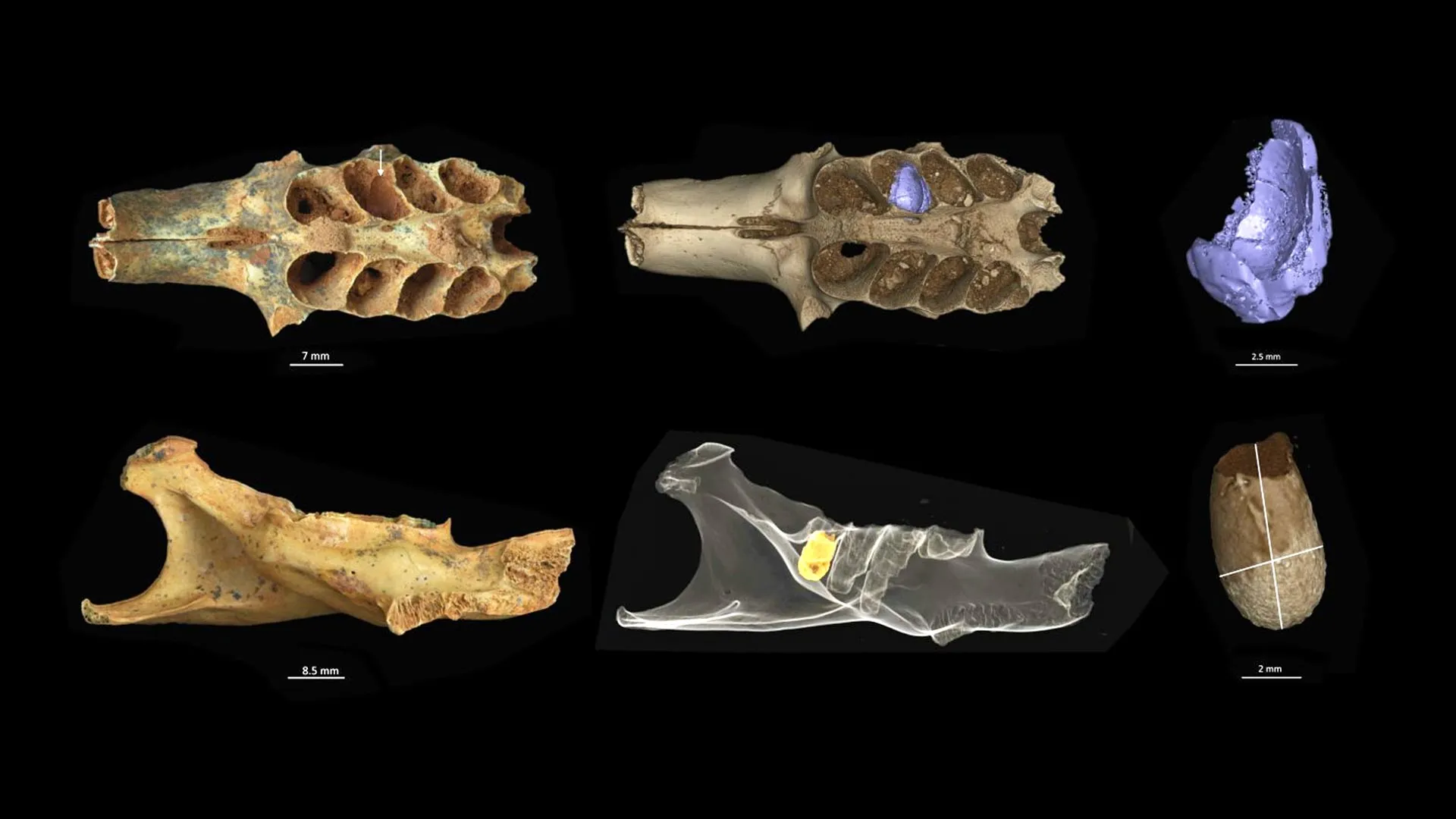
A giant barn owl, a type of rodent called a hutia, and a burrowing bee entered a cave. Only two of them left. The one that stayed behind, unable to fly, left an indelible mark on scientific understanding, offering a glimpse into an extraordinary chapter of ancient life in the Caribbean. This fascinating ecological interplay, spanning thousands of years, unfolded on the island of Hispaniola, providing paleontologists with an unprecedented record of interspecies adaptation.
Hispaniola’s Ancient Ecosystem: A Predator, Prey, and a Unique Niche
Thousands of years ago, Hispaniola, one of the Greater Antilles, harbored a vibrant and unique ecosystem. Central to this ancient world were creatures like the giant barn owl (Tyto ostologa), a formidable avian predator whose impressive size, potentially reaching up to a meter in height, made it an apex hunter in its domain. These owls, unlike their modern counterparts, possessed robust limbs and powerful talons, suggesting a more terrestrial hunting style in addition to aerial prowess. Their diet was diverse, but a staple was the hutia, a group of large, endemic rodents found across the Caribbean. These herbivores, varying in size, played a crucial role in the island’s food web, serving as primary prey for many predators.
The specific cave, known as Cueva de Mono in the southern Dominican Republic, served as a long-term roost and feeding site for generations of these giant barn owls. Over centuries, these magnificent birds repeatedly brought their catches, predominantly hutias, back to the same cavern to feed their young. The meals concluded, the remains of countless unlucky rodents—bones, teeth, and other skeletal fragments—were scattered across the cave floor, gradually becoming encased in the accumulating sediments. This accumulation of skeletal material created a unique paleontological repository, a time capsule of the island’s past fauna.
Much later, after the reign of the giant barn owls had waned and the hutia populations had shifted, a new, much smaller inhabitant arrived: a burrowing bee. This insect, seeking a suitable location to construct its nest, found itself in a challenging environment. The surrounding landscape of Hispaniola is characterized by karst topography—a rugged terrain formed by the dissolution of soluble bedrock, primarily limestone. Karst landscapes are notorious for their lack of stable, deep soils on the surface, making it difficult for burrowing insects to find suitable nesting grounds. However, the caves themselves, acting as natural traps, collected fine, clay-rich silt washed in from the surface. Within these deposits, among the debris of ages, the bee began to dig.
The Unveiling of a Unique Behavior: Bees in Fossilized Bones
The bee’s quest for a nest cavity led it to an astonishing discovery, one that would only be fully appreciated millennia later by human researchers. As it burrowed into the soft, silty sediments within the cave, it encountered the fossilized remains of the hutia. Specifically, the bee found the hollow spaces where the hutia’s teeth had once been rooted within its jawbone – the alveoli. Although the original teeth had long since fallen out or disintegrated, these small, natural sockets remained intact and empty. Crucially, their size and shape proved to be an almost perfect match for the bee’s nesting requirements. This accidental encounter marked the beginning of an unprecedented natural phenomenon: bees utilizing pre-existing fossil cavities as ready-made nurseries.
Over geological timescales, more bees followed suit, demonstrating an ingenious adaptation to their challenging environment. Instead of expending energy digging new tunnels in potentially unsuitable material, they repurposed these natural cavities within the fossilized bones. This behavior, a testament to life’s remarkable adaptability, created a unique ichnofossil record – trace fossils representing the activity of an organism, in this case, the nests themselves. Long after the giant owls, the hutias, and even these ancient bees had vanished, their interwoven story lay preserved in stone, waiting to be unearthed.
A Careful Observation Leads to a Groundbreaking Discovery
The discovery of these fossilized bee nests might have easily been overlooked, a testament to the importance of meticulous observation in paleontological excavation. Lazaro Viñola Lopez, then a doctoral student at the Florida Museum of Natural History, was meticulously excavating fossils from Cueva de Mono. Standard practice in fossil preparation often involves cleaning all sediment out of cavities like alveoli to better preserve and study the bone itself. However, Viñola Lopez’s keen eye and specific interest in the hutia species, which was rarely found in such abundance elsewhere on the island, led him to deviate from routine.
"Usually, when collecting fossils, you get all the sediment out of the alveoli while cleaning the specimen," Viñola Lopez recounted, highlighting the potential for this subtle but significant evidence to be discarded. His focused research on the thousands of hutia fossils from Cueva de Mono, which clearly indicated its role as a long-term feeding site for the giant barn owls, made him approach each specimen with extra care.
Instead of immediately cleaning the fossils, he inspected them closely. One particular cavity stood out. Its inner surface was unusually smooth, strikingly different from the rough, porous texture of the surrounding bone. This anomaly piqued his curiosity, triggering a memory from a previous field expedition.
Mistaken Identity: Unraveling the True Architects
Viñola Lopez recalled a similar observation from 2014 while collecting dinosaur fossils in Montana, where he and his colleagues had encountered wasp cocoons mixed within fossil material. His initial assumption was that the same explanation applied here: "I’d seen something similar in Montana when I was collecting dinosaur fossils in 2014," he stated. He initially believed he had found fossilized wasp nests, an interesting but not entirely unprecedented discovery. He even mused, "it would be nice to write a short paper reporting the occurrence of these wasp nests in the mandibles."
He shared his initial thoughts with his colleague Mitchell Riegler, also a doctoral student at the museum. Riegler, initially focused on his own research, was not immediately swayed. "I was like, Lazaro, that’s a niche project, and I have a lot of other things to do," he admitted, reflecting the typical pressures of academic research. The idea remained on the back burner until Riegler took on a challenge from a former advisor: to write a scientific paper within a week. This playful academic exercise, where "He and I played this game back and forth in which we tried to write a paper in a week," provided the impetus to revisit Viñola Lopez’s intriguing find.
As the team delved deeper into the literature, particularly research on ichnofossils—trace evidence of past life such as footprints, burrows, or nests—a critical discrepancy emerged. Wasp nests typically feature rough internal walls, constructed from chewed plant material and saliva. However, the structures within the hutia fossils were distinctly smooth. This crucial detail sparked a re-evaluation. Bees, particularly certain species of solitary burrowing bees, are known to line their nests with a waxy, waterproof secretion, creating a polished, almost glazed interior. This characteristic difference provided the definitive clue, revealing the true identity of the ancient nest builders. They had not been studying wasps after all, but bees.
A Rare and Unprecedented Behavior: Redefining Ecological Adaptation
This correction dramatically elevated the significance of the discovery. While isolated instances of burrowing bees nesting within caves have been documented, this particular finding from Cueva de Mono stood out as truly unprecedented. There is only one other known case globally of burrowing bees nesting inside a cave, and critically, no prior record existed of bees utilizing pre-existing fossil structures as nesting sites without significantly altering them. Previous reports have described bees drilling into human bones for nesting, but never simply occupying natural cavities like the alveoli of fossilized jaws. The passive occupation and minimal alteration of these ancient bone structures highlighted an extraordinary level of opportunistic adaptation.
Realizing the profound importance of their findings, the researchers prudently slowed down their process and expanded the scope of their study. They sought expertise from specialists in modern bee behavior and ecology, and conducted an exhaustive review of scientific literature. Viñola Lopez also returned to Cueva de Mono to conduct further geological examinations of the cave’s stratigraphy, aiming to better understand the chronological context of the fossil layers and the bee nests within them. This meticulous approach underscored the scientific rigor applied to validating such a unique discovery.
The study also brought to light a concerning aspect of paleontological research: the constant threat to invaluable sites. At one point, Cueva de Mono faced a serious danger when an attempt was made to develop the surrounding land, with plans to convert the ancient cave into a septic tank. Although local conservation efforts and the intervention of authorities ultimately halted the destructive plan, the incident spurred the research team into immediate action. "We had to go on a rescue mission and get as many fossils out as possible, and we got a lot of them," Viñola Lopez recalled, emphasizing the urgency and dedication required to preserve these irreplaceable records of Earth’s history.
Nests Found in Multiple Fossil Types: A Broader Pattern of Adaptation
The final comprehensive study, published in the prestigious Proceedings of the Royal Society B, provided a detailed reconstruction of Cueva de Mono’s geological and biological history, firmly establishing the unusual nesting behavior of these ancient bees. The scope of this phenomenon was not limited to hutia jaws alone. The researchers uncovered evidence of bee nests in a variety of fossilized bone structures, suggesting a broader pattern of opportunistic resource utilization.
In one remarkable instance, a nest was discovered nestled within the pulp cavity of a sloth tooth. This particular find added another layer of paleoecological intrigue, as tree sloths were once native to the Caribbean islands, only to disappear after the arrival of humans, likely due to hunting and habitat alteration. Another nest was identified inside a hutia vertebra, ingeniously placed within the space that once housed the spinal cord. These diverse locations demonstrated the bees’ flexibility and their ability to exploit various pre-existing hollows within the rich osteological debris of the cave.
Advanced imaging techniques, specifically CT (Computed Tomography) scans, played a crucial role in revealing the intricate details of these ancient nests without damaging the fragile fossils. These scans provided a non-invasive, three-dimensional view of the internal structures, confirming the presence of the smooth, waxy lining characteristic of bee nests. Furthermore, the CT scans unveiled an even more fascinating aspect: some cavities contained multiple layers of nests. This indicated that rather than digging new tunnels, certain bees had reused existing ones if they were found empty, a highly efficient form of resource recycling. In one extraordinary example, six individual nests were discovered stacked meticulously within a single alveolus, arranged one inside another, reminiscent of Russian nesting dolls. This sequential reuse further highlighted the selective pressures driving this unique nesting strategy.
Why Bees Moved Into the Cave: The Karst Landscape’s Influence
The study also offered a compelling ecological explanation for this unusual behavior, linking it directly to the geology of the region. As previously noted, the surrounding landscape of Hispaniola is predominantly karst, a terrain characterized by soluble limestone bedrock. This geological formation creates a distinctive environment: sharp, jagged limestone outcrops dominate the surface, and critically, the porous nature of the rock means that any topsoil that does accumulate is often thin and quickly eroded or washed away into subterranean channels and caves.
"The area we were collecting in is karst, so it’s made of sharp, edgy limestone, and it’s lost all of its natural soils," Riegler explained, vividly recalling his personal experience: "I actually fell on it at one point, so I can tell you all about it." This challenging surface environment presents significant obstacles for burrowing insects that typically require stable, soft soil to construct their nests.
However, the very process that denudes the surface of soil also enriches the caves. Any soil that does accumulate on the surface is frequently transported by water into the intricate cave systems, where it settles and creates pockets of fine, clay-rich sediment. These subterranean deposits, insulated from the harsh surface conditions and offering stable moisture levels, may have provided some of the only viable nesting conditions for burrowing bees in the entire region. The abundance of fossilized bones within these cave sediments then offered an additional, ready-made structural advantage, transforming the refuse of ancient predators into vital nurseries for a new generation of life. This remarkable co-option of a paleontological legacy illustrates a profound example of ecological opportunism driven by environmental constraints.
Broader Implications for Paleoecology and Evolutionary Biology
This discovery from Cueva de Mono carries significant implications for our understanding of paleoecology, evolutionary biology, and the intricate relationships between species across vast timescales. It provides a rare and tangible link between vertebrate and invertebrate life in deep time, showcasing how the remnants of one group can become crucial resources for another. Such inter-kingdom interactions are often difficult to reconstruct from the fossil record, making this finding particularly valuable.
The study underscores the power of careful observation and interdisciplinary collaboration in scientific research. The initial misidentification as wasp nests highlights how preconceived notions can sometimes obscure novel discoveries, and how rigorous re-evaluation, informed by diverse expertise, is essential for accurate scientific interpretation. The integration of geological context, fossil analysis, and modern entomological knowledge was key to unraveling this complex story.
Furthermore, the discovery adds to our understanding of the resilience and adaptability of life. In an environment where typical nesting substrates were scarce, these ancient bees demonstrated an innovative solution, exploiting an unusual and abundant resource. This behavior, driven by ecological necessity, offers a compelling case study for niche exploitation and evolutionary pressure. It also prompts questions about how widespread such behaviors might have been in other karst regions or similar challenging environments throughout Earth’s history.
The Enduring Legacy of Cueva de Mono: A Cave Full of Stories Still to Tell
The researchers are continuing their work, studying other fossils recovered from Cueva de Mono. The sheer volume and diversity of material from this site suggest that additional findings are expected to be unveiled in future publications, promising even more insights into Hispaniola’s ancient past. The cave, once a hunting ground and feeding station for giant owls, then a nursery for ingenious bees, continues to yield its secrets, offering an unparalleled window into an ancient world.
The work from Cueva de Mono, published in the Proceedings of the Royal Society B, stands as a remarkable example of how life can adapt in unexpected and ingenious ways. It illustrates how the seemingly disparate elements of an ecosystem—a formidable predator, its prey, and a tiny insect—can become intricately linked across millennia. In this unique instance, a cave filled with the skeletal remains of past meals became a critical shelter and a foundation for the survival of a completely different kind of inhabitant, enriching our understanding of the dynamic and endlessly surprising tapestry of life on Earth.