
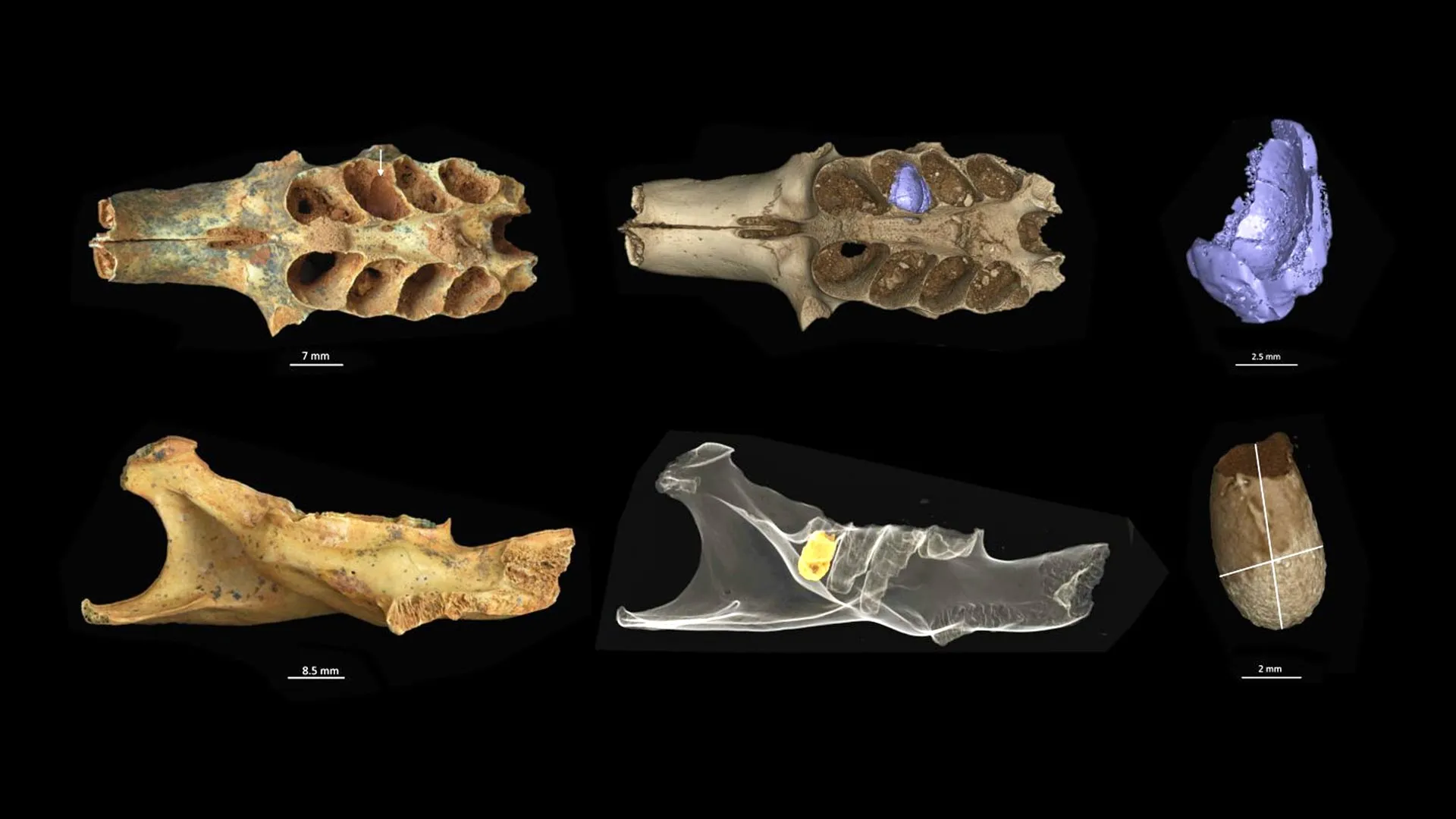
Thousands of years ago, on the rugged Caribbean island of Hispaniola, a remarkable ecological drama unfolded, leaving an indelible mark now uncovered by modern science. The initial scene featured a giant barn owl, a native rodent known as a hutia, and, much later, a burrowing bee. This sequence of events, spanning millennia, culminated in a discovery that reshapes our understanding of ancient insect behavior and taphonomy – the study of how organisms decay and become fossilized. The unique find, documented within the Cueva de Mono in the southern Dominican Republic, showcases an unprecedented instance of bees utilizing the fossilized remains of other animals as ready-made nesting sites, specifically the empty tooth sockets and other natural cavities within bones.
A Glimpse into Ancient Hispaniola: A Paleontological Riddle Unraveled
The narrative begins with a predator-prey interaction common in Hispaniola’s prehistoric past. A formidable giant barn owl, a species likely much larger than its modern counterparts, soared through the ancient skies. These apex predators were key components of the island’s ecosystem, preying on various endemic fauna, including hutias. Hutias, a diverse group of large, robust rodents native to the Caribbean, would have been a significant food source. On this particular occasion, the owl, having successfully hunted a hutia, carried its catch back to its roost within a cave – a common practice for these birds, which often return to the same location over generations to feed their young.
The meal, a vital act of survival for the owl and its brood, concluded, leaving behind the skeletal remains of the unlucky hutia scattered across the cave floor. Over subsequent centuries, geological processes took hold. Fine, clay-rich silt, carried by water or wind, gradually accumulated within the darker, undisturbed recesses of the cave, slowly encasing and preserving the scattered bones. It was into this ancient tableau, long after the owl and hutia had passed into the fossil record, that a new protagonist arrived: a burrowing bee. This bee, seeking a suitable location to construct its nest, found an unlikely but perfectly adapted solution within the very remnants of the past.
The Unfolding of Time: From Predator’s Den to Insect Nursery
The cave, Cueva de Mono, served as a natural repository, not only for the discarded meals of giant barn owls but also for a rich paleontological record. These ancient owls, often referred to as ‘fossil accumulators,’ inadvertently created a treasure trove for future paleontologists by consistently bringing prey to the same site. The sheer volume of hutia remains within Cueva de Mono suggests it was a long-term feeding station, accumulating thousands of individual fossils over countless generations of owls. This continuous deposition, coupled with the cave’s stable environment, provided ideal conditions for the preservation of these remains.
As millennia passed, the hutia bones became increasingly fossilized, embedded within layers of fine sediment. Eventually, a burrowing bee, characteristic of many solitary bee species, began its instinctual search for a nesting site. These bees typically excavate tunnels in soft soil, creating individual cells for their eggs, which they provision with pollen and nectar. However, Hispaniola’s unique karst topography, characterized by sharp, eroded limestone, offers limited stable soil suitable for such activity. This environmental constraint likely drove the bee to explore less conventional options within the cave’s debris.
It was during this exploration that the bee encountered the fossilized remains of the hutia. Specifically, it found the empty tooth sockets, or alveoli, in the hutia’s jaw. These hollow spaces, perfectly sized and protected, offered an ideal, pre-fabricated chamber for a nest. The bee required minimal, if any, modification to these natural cavities, coating their interior with a waxy, waterproof secretion – a common practice for many bee species – to create a smooth, secure cell for its offspring. This marked the beginning of an extraordinary symbiotic relationship between ancient death and new life, preserved in stone. Over time, more bees followed, recognizing the efficiency of these ready-made cavities within fossilized bones, turning the remnants of an ancient feast into a vibrant, albeit tiny, nursery.
A Meticulous Eye: The Discovery of Fossilized Nests
The discovery of these unique nests might have easily been overlooked, a testament to the importance of meticulous observation in scientific fieldwork. Lazaro Viñola Lopez, then a doctoral student at the Florida Museum of Natural History, was excavating fossils in Cueva de Mono. His primary focus was on a particular species of hutia, which was unusually abundant in this cave compared to other sites on the island. The sheer quantity of hutia fossils – thousands – underscored the cave’s significance as a long-term owl feeding ground.
Traditional paleontological practice often involves cleaning sediment out of fossil cavities during preparation to better examine the bone structure. However, Viñola Lopez, driven by a keen curiosity and perhaps an intuition for the unusual, decided against immediate cleaning. "Usually, when collecting fossils, you get all the sediment out of the alveoli while cleaning the specimen," he noted. Instead, he inspected the fossils closely before preparation. It was during this careful examination that one cavity within a hutia jawbone stood out. Its inner surface was remarkably smooth, a stark contrast to the rough, porous texture of bone, suggesting something other than natural bone structure. This subtle difference was the first clue to an entirely new dimension of the cave’s ancient history.
The Scientific Process: From Wasp Suspicions to Bee Revelation
Viñola Lopez recalled a similar observation from a previous expedition. In 2014, while collecting dinosaur fossils in Montana, he and his colleagues had found fossilized wasp cocoons mixed with the geological material. His initial assumption, therefore, was that the smooth-walled structures in the hutia jaws were also wasp nests. He even considered drafting a short paper to report this occurrence, believing it would be a novel, albeit niche, finding.
He shared his preliminary idea with his colleague, Mitchell Riegler, another doctoral student at the Florida Museum. Riegler, initially focused on his own research, was not immediately swayed. "I was like, Lazaro, that’s a niche project, and I have a lot of other things to do," Riegler recounted. The intriguing idea remained on hold until Riegler took on a challenge from a former advisor: to write a scientific paper within a week. This playful academic exercise prompted Riegler to revisit Viñola Lopez’s observation.
The collaborative effort began with the working hypothesis that they were documenting wasp nests. However, as they delved deeper into the scientific literature, particularly research on ichnofossils – trace fossils that record the activity of ancient life, such as footprints, burrows, or nests – inconsistencies began to emerge. Wasp nests, particularly those of burrowing species, are typically constructed from chewed plant material mixed with saliva, resulting in a rough, textured inner wall. The structures found within the hutia fossils, however, were distinctly smooth. This critical detail led them to a re-evaluation. Bees, particularly many solitary burrowing species, are known to line their nest cells with a waxy, waterproof secretion, creating a polished, often iridescent interior. This distinct characteristic was the breakthrough they needed. The smooth walls pointed unequivocally to bees, not wasps, as the ancient architects of these fossilized nests. This correction elevated the discovery from an interesting but minor observation to a truly significant paleontological finding.
Unearthing Unprecedented Behavior: A Unique Ecological Adaptation
The identification of bees as the nest builders made the discovery far more profound than initially conceived. While there are isolated reports of burrowing bees nesting within caves, and even instances of bees drilling into human bones, the behavior observed in Cueva de Mono is unprecedented. This is the first known case where bees have utilized pre-existing fossil structures – specifically the natural cavities within bones – as nesting sites without significantly altering them through excavation or modification. This passive occupation of ready-made biological architecture represents an exceptional example of ecological opportunism and adaptation.
Realizing the immense importance of their findings, Viñola Lopez and Riegler slowed their pace, expanding the scope of their study. They consulted with leading experts in modern bee biology and reviewed an extensive body of scientific literature, ensuring their conclusions were robust and well-supported. Viñola Lopez also revisited Cueva de Mono, conducting a more thorough examination of its geological stratigraphy to establish a precise timeline for the deposition of the fossils and the subsequent bee activity. The meticulous nature of this expanded research was crucial for validating the uniqueness of their discovery.
Environmental Pressures: Why the Cave Became a Bee Haven
The study also provided a compelling explanation for this unusual nesting behavior, rooted in Hispaniola’s distinctive geology. The surrounding landscape is characterized by karst topography, a type of terrain formed from the dissolution of soluble rocks like limestone. Karst regions are typically rugged, with sharp, irregular surfaces and a notable lack of stable, deep soil. Riegler vividly recounted his own experience with the challenging terrain: "The area we were collecting in is karst, so it’s made of sharp, edgy limestone, and it’s lost all of its natural soils. I actually fell on it at one point, so I can tell you all about it."
This scarcity of suitable soil on the surface created a significant challenge for burrowing bees, whose survival depends on finding stable ground for their nests. However, rain and erosion on the surface continually wash sediment into the numerous caves and sinkholes characteristic of karst regions. Within the protected environment of Cueva de Mono, these fine, clay-rich sediments accumulated, creating pockets of relatively soft, stable material. These cave deposits, along with the fortuitously abundant fossilized bones containing natural cavities, likely represented some of the only viable nesting conditions for burrowing bees in the immediate region. The cave, therefore, transformed from merely an owl’s feeding ground into a crucial refuge and nesting haven for a completely different kind of inhabitant, driven by environmental necessity.
Beyond Hutia Jaws: A Multitude of Fossilized Homes
The comprehensive study revealed that the bees’ nesting activities were not confined solely to hutia jawbones. Their opportunistic behavior extended to other types of fossilized remains found within the cave, demonstrating a broader pattern of adaptation. In one notable instance, a bee nest was discovered within the pulp cavity of a sloth tooth. Tree sloths, including giant ground sloths, once roamed the Caribbean islands, representing a part of the extinct megafauna that disappeared after human arrival. Finding a bee nest within such a large and ancient tooth further underscored the bees’ adaptability.
Another discovery involved a nest nestled within a hutia vertebra, specifically in the space that once housed the spinal cord. These diverse locations indicate that the bees were not selective about the type of bone, but rather sought any available, appropriately sized, and protected cavity. Advanced imaging techniques, such as CT scans, provided even more granular detail, revealing that some cavities contained multiple layers of nests. This suggests that certain bee species reused existing tunnels and cells if they were found empty, an efficient strategy that saved them the energy of excavating new ones. In a particularly striking example, six distinct nests were found stacked one inside another within a single alveolus, arranged almost like Russian nesting dolls, showcasing the remarkable density and longevity of this nesting tradition.
Broader Implications: Rewriting Taphonomic and Ecological Narratives
The findings, published in the prestigious Proceedings of the Royal Society B, carry significant implications for multiple scientific disciplines. For taphonomy, the study fundamentally alters our understanding of post-mortem processes. It introduces a new biological agent – burrowing bees – capable of interacting with and modifying the fossilization pathway in an unprecedented way. The discovery highlights that the taphonomic record is not merely a product of physical and chemical processes but can also reflect complex ecological interactions that span vast stretches of time.
Ecologically, this research paints a more intricate and complete picture of ancient Caribbean ecosystems. It reveals a previously unknown interspecies relationship, demonstrating how environmental pressures can drive organisms to adopt highly unusual behaviors. The adaptability of these ancient bees, utilizing the skeletal remnants of other species, showcases the resilience and ingenuity of life in challenging environments. Furthermore, the presence of these nests provides a rare form of ichnofossil evidence, offering direct insights into the behavior of extinct or ancient insect populations that would otherwise be lost to time.
The "rescue mission" mentioned by Viñola Lopez, undertaken when the cave faced the threat of being converted into a septic tank, underscores another crucial implication: the urgent need for conservation of paleontological sites. Such sites are invaluable archives of Earth’s history, and their destruction means the permanent loss of unique data that can provide profound insights into past life, climate, and ecological dynamics. The rapid recovery of thousands of fossils during this period ensured that this extraordinary story could still be told.
The Cave’s Continuing Legacy: Future Discoveries Await
The researchers are continuing their intensive study of the vast collection of fossils recovered from Cueva de Mono. The abundance of material from this single site promises further revelations about the ancient fauna of Hispaniola, the predatory habits of giant barn owls, and potentially more unique interspecies interactions. Additional findings are expected to be unveiled in future publications, continually enriching our understanding of this fascinating paleontological window into the past.
This remarkable discovery serves as a powerful reminder of how life can adapt in unexpected and ingenious ways. A cave, once a site of predation and death, became an unwitting sanctuary, filled with the scattered remains of ancient meals that would eventually serve as the foundation for new life. It is a profound illustration of the interconnectedness of all life, past and present, and the endless stories that the Earth’s ancient archives still hold, waiting for the patient and observant eye to uncover them.