
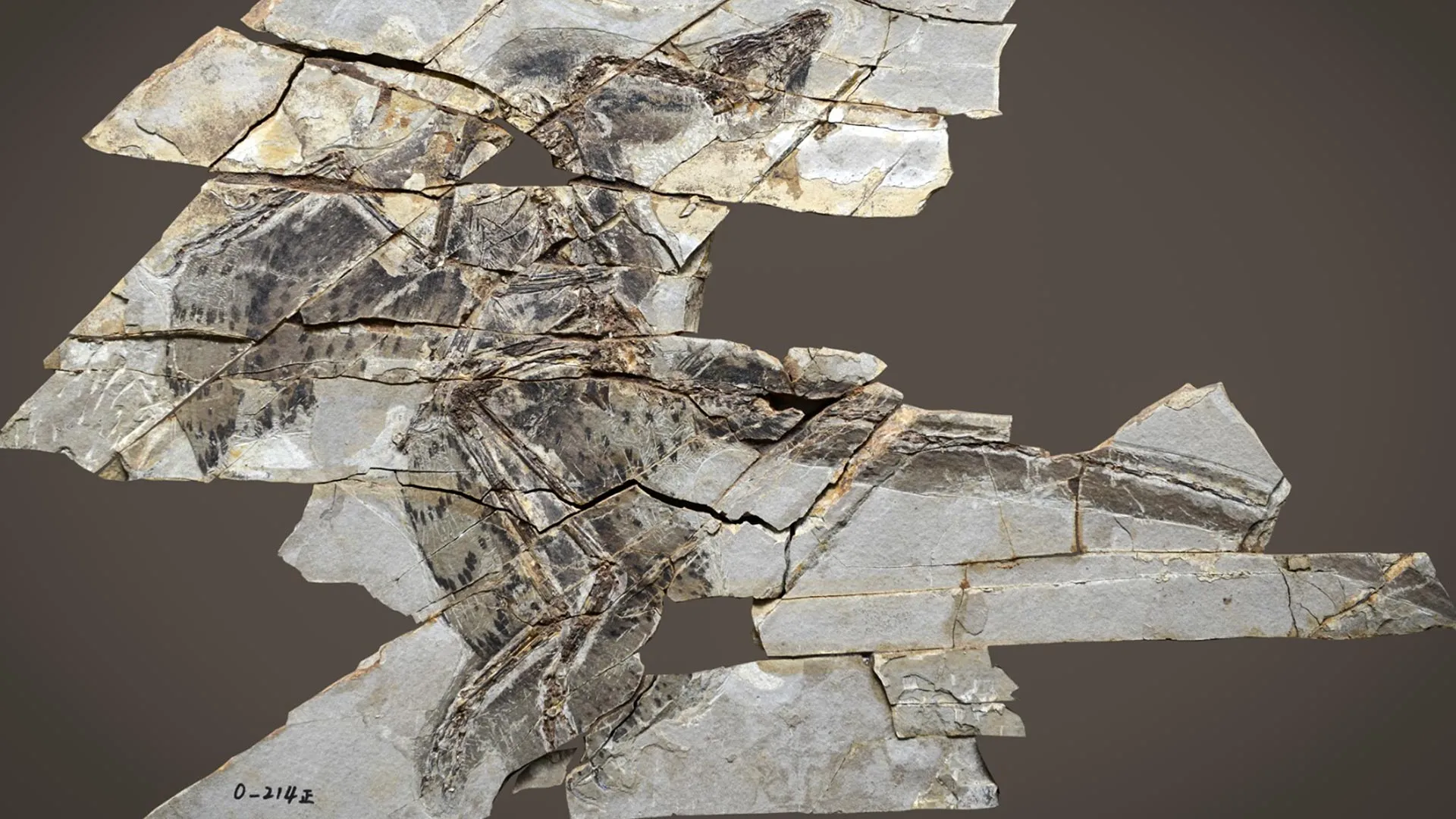
A groundbreaking new study, spearheaded by researchers from Tel Aviv University, has unveiled compelling evidence that some feathered dinosaurs, despite possessing intricate plumage, had already shed their ability to fly millions of years before the demise of their kind. This extraordinary finding, based on the meticulous analysis of exceptionally preserved fossils, challenges long-held assumptions about the linear progression of flight in avian evolution, suggesting a far more complex and dynamic interplay of adaptation, gain, and loss of this remarkable ability. As the research team articulates, "Feather molting seems like a small technical detail — but when examined in fossils, it can change everything we thought about the origins of flight, highlighting how complex and diverse wing evolution truly was." This revelation not only offers a rare glimpse into the lives of animals from approximately 160 million years ago but also significantly recontextualizes our understanding of how flight emerged and evolved in both dinosaurs and their modern bird descendants.
The Core Discovery: Flightless Feathered Dinosaurs
The study, led by Dr. Yosef Kiat from the School of Zoology and the Steinhardt Museum of Natural History at Tel Aviv University, in collaboration with international partners from China and the United States, meticulously examined rare fossils with astonishingly intact feathers. Published in the prestigious journal Communications Biology by Nature Portfolio, the research zeroes in on a crucial detail: the molting patterns of these ancient creatures. The conclusion points to a surprising reality: these feathered dinosaurs, specifically specimens of Anchiornis, were incapable of powered flight. This discovery holds immense significance, prompting a reevaluation of the evolutionary narrative of flight, suggesting it was not a one-way street but rather a convoluted journey involving both acquisition and subsequent loss of aerial capabilities in various lineages.
Unveiling Ancient Secrets: The Jehol Biota and Exceptional Preservation
The nine fossils central to this study originate from eastern China, a region renowned globally for its unparalleled fossil beds, collectively known as the Jehol Biota. This geological formation, dating back to the Early Cretaceous period (roughly 133 to 120 million years ago), though the specific Anchiornis specimens analyzed are from older Jurassic strata (approximately 160 million years ago), is famous for its exquisite preservation of soft tissues, including feathers, skin, and even internal organs. The unique geological conditions—often involving rapid burial in fine-grained volcanic ash following eruptions—created an anaerobic environment that minimized decomposition, allowing for the fossilization of delicate structures typically lost to time.
It is within these remarkable conditions that the Anchiornis fossils were found, offering not just skeletal remains but also a detailed record of their plumage. What makes these particular specimens exceptionally rare is the preservation of original coloration, attributed to the fossilized remnants of melanosomes—pigment-containing organelles. Each specimen showcased wing feathers that were predominantly white, strikingly adorned with a distinct black spot at the tip. This level of detail is extraordinary, enabling researchers to move beyond mere morphology to infer functional traits and even behaviors of creatures that roamed the Earth millions of years ago. The Jehol Biota has previously yielded a treasure trove of feathered dinosaurs, early birds, mammals, and other fauna and flora, fundamentally reshaping paleontological understanding of the Mesozoic Era.
The Evolutionary Journey of Feathers and Flight: A Broader Context
To fully appreciate the implications of the Anchiornis findings, it’s essential to understand the broader evolutionary timeline of feathers and flight. Dr. Kiat, an ornithologist specializing in feathers, explains that dinosaurs diverged from other reptiles approximately 240 million years ago, during the Triassic period. Relatively soon thereafter, on an evolutionary timescale, many dinosaur species began to develop feathers. Initially, these structures were likely not for flight but served other crucial functions, such as insulation against temperature fluctuations, display for mating rituals, or even sensing the environment. This multi-functional origin hypothesis for feathers is a widely accepted concept in paleontology.
Around 175 million years ago, during the Middle Jurassic period, a significant group of feathered dinosaurs emerged: the Pennaraptora. This clade includes numerous feathered non-avian dinosaurs such as oviraptorosaurs, dromaeosaurids (like Velociraptor), and troodontids, alongside the earliest birds. These animals are considered the direct ancestors of modern birds and represent the only dinosaur lineage that survived the catastrophic mass extinction event at the end of the Mesozoic era, approximately 66 million years ago. For decades, the prevailing scientific consensus has been that Pennaraptora evolved feathers primarily for the purpose of flight, with subsequent diversification leading to the vast array of avian species we see today. However, the new study on Anchiornis suggests that this evolutionary trajectory was far from linear. Environmental pressures, shifts in ecological niches, or even the development of alternative survival strategies may have led some species, which perhaps possessed rudimentary flight capabilities, to lose this ability over time. This phenomenon, known as secondary flightlessness, is observed in many modern birds, such as ostriches, emus, penguins, and kiwis, which are undeniably birds but have adapted to terrestrial or aquatic lifestyles where flight offers no significant advantage, or even becomes a hindrance.
Decoding Molting Patterns: A Window into Avian Mechanics
The ingenuity of Dr. Kiat’s research lies in its focus on feather molting patterns—a seemingly minor biological process that, upon deeper examination, reveals profound insights into an animal’s functional capabilities. Feathers are complex, protein-based structures that grow for approximately two to three weeks. Once they reach their full size, they detach from the nourishing blood vessels that supplied them during growth, effectively becoming "dead" material. Over time, these feathers naturally wear out due to environmental exposure, physical activity, and stress. To maintain their structural integrity and aerodynamic efficiency, birds periodically shed and replace old feathers with new ones in a process called molting.
Crucially, the pattern of molting is highly indicative of a bird’s reliance on flight. Birds that are dependent on flight for survival—whether for hunting, escaping predators, or migration—cannot afford to lose significant portions of their flight surfaces simultaneously. Therefore, they typically exhibit an orderly, gradual, and often symmetrical molting process. This ensures that the bird maintains sufficient lift and balance, allowing it to continue flying effectively even while new feathers are growing in. For example, many flying birds molt their primary flight feathers one or two at a time from each wing, often in a symmetrical fashion to preserve aerodynamic stability.
In stark contrast, birds that do not rely on flight for their daily existence, such as ostriches or penguins, exhibit a much more random and irregular molting pattern. Since their survival does not hinge on maintaining constant aerodynamic efficiency, there is no evolutionary pressure to ensure symmetrical or gradual feather replacement. They might shed multiple feathers from various parts of their wings or body at once, without a discernible order. This difference in molting strategy forms the cornerstone of Dr. Kiat’s methodology for inferring flight ability in extinct species.
The Case of Anchiornis: Evidence for Lost Flight
Applying this detailed understanding of molting to the Anchiornis fossils, Dr. Kiat and his team made a critical observation. The preserved coloration of the feathers, particularly the distinct black spots at the tips, became an invaluable marker. By examining the fossilized wings, researchers identified a continuous line of these black spots along the wing edges. More importantly, they also spotted developing feathers whose black spots were noticeably out of alignment with the continuous line, clearly indicating that these new feathers were still in various stages of growth and had not yet reached their full size or position.
A detailed analysis of these growth patterns, combined with the spatial distribution of shed and developing feathers, revealed an irregular molting pattern. There was no evidence of the systematic, symmetrical, and gradual feather replacement characteristic of flying birds. Instead, the team observed a haphazard shedding and growth, consistent with what is seen in modern flightless birds.
Dr. Kiat concluded, "Based on my familiarity with modern birds, I identified a molting pattern indicating that these dinosaurs were probably flightless. This is a rare and especially exciting finding: the preserved coloration of the feathers gave us a unique opportunity to identify a functional trait of these ancient creatures—not only the body structure preserved in fossils of skeletons and bones." This meticulous analysis moved beyond skeletal morphology, offering an unprecedented look into the functional biology of an extinct animal based on the microstructure and growth patterns of its integumentary structures.
Implications for Avian Evolution: A Non-Linear Path
The discovery that Anchiornis was likely flightless despite its feathered wings profoundly impacts our understanding of the origins and evolution of flight. For decades, the narrative of avian evolution often depicted a relatively straightforward progression from ground-dwelling dinosaurs to feathered gliders, and then to fully powered flyers. However, the Anchiornis study, alongside other recent findings, paints a much more intricate picture.
"Feather molting seems like a small technical detail," Dr. Kiat reiterates, "but when examined in fossils, it can change everything we thought about the origins of flight. Anchiornis now joins the list of dinosaurs that were covered in feathers but not capable of flight, highlighting how complex and diverse wing evolution truly was." This suggests that the development of flight was not a single, unidirectional evolutionary event, but rather a process involving multiple experimental lineages. Some might have evolved rudimentary flight or gliding abilities, only to lose them later as their environment or lifestyle changed, while others may have refined these abilities, eventually leading to the successful avian lineage.
This concept of "evolutionary reversal" or "secondary flightlessness" is not new in biology, but its application to such an early feathered dinosaur fundamentally reshapes the phylogenetic tree of flight. It implies that the presence of feathers and even wing-like structures does not automatically equate to flight capability. Feathers could have evolved for insulation, display, or even as aids for climbing or running before being co-opted for aerodynamics. The Anchiornis case suggests that even after developing structures seemingly adapted for flight, some species either never fully achieved it or lost it, indicating a dynamic interplay between form, function, and environmental pressures.
Expert Perspectives and Future Research
The findings are expected to resonate widely within the paleontological and ornithological communities. Other experts in the field are likely to view this study as a significant step forward in understanding the nuances of avian evolution. Dr. Stephen Brusatte, a renowned paleontologist at the University of Edinburgh, for instance, has often emphasized the mosaic nature of evolution, where traits evolve at different rates and for different purposes. This study provides strong empirical evidence for such a complex, non-linear trajectory for flight.
The research opens several avenues for future investigation. Paleontologists may now focus more intently on subtle functional traits in fossils, looking beyond mere skeletal morphology. Further studies could involve:
- Comparative Molting Analysis: Applying similar techniques to other feathered dinosaur fossils to build a broader understanding of flight capabilities across different lineages.
- Aerodynamic Modeling: Integrating these findings with biomechanical models to simulate the flight potential (or lack thereof) of various feathered dinosaurs, considering factors like wing loading, muscle attachment, and bone density.
- Ecological Context: Investigating the paleoenvironments of these flightless feathered dinosaurs to understand what ecological pressures might have favored the loss of flight or prevented its full development. For instance, an abundance of ground-based food sources or the absence of large arboreal predators could reduce the selective advantage of flight.
- Molecular Paleontology: While challenging, advancements in molecular analysis might one day allow for even deeper insights into the genetic underpinnings of feather development and flight-related genes in ancient organisms.
Conclusion: A Richer Tapestry of Life’s Evolution
The discovery concerning Anchiornis is more than just an interesting detail about an ancient creature; it’s a testament to the intricate and often unpredictable nature of evolution. By meticulously analyzing the almost imperceptible patterns of feather molting, Dr. Kiat and his team have unlocked a secret about an animal that lived 160 million years ago, revealing that the journey to the skies was not a simple ascent but a complex, multi-branched path with many experiments, successes, and evolutionary reversals. This research enriches our understanding of life’s history, reminding us that evolution is a tapestry woven with countless threads, where traits can be gained, lost, and repurposed in astonishing ways, continually challenging our preconceived notions about the progression of life on Earth. The flight of birds, one of nature’s most iconic achievements, now appears as a triumph born from a far more diverse and experimental evolutionary saga than previously imagined.