
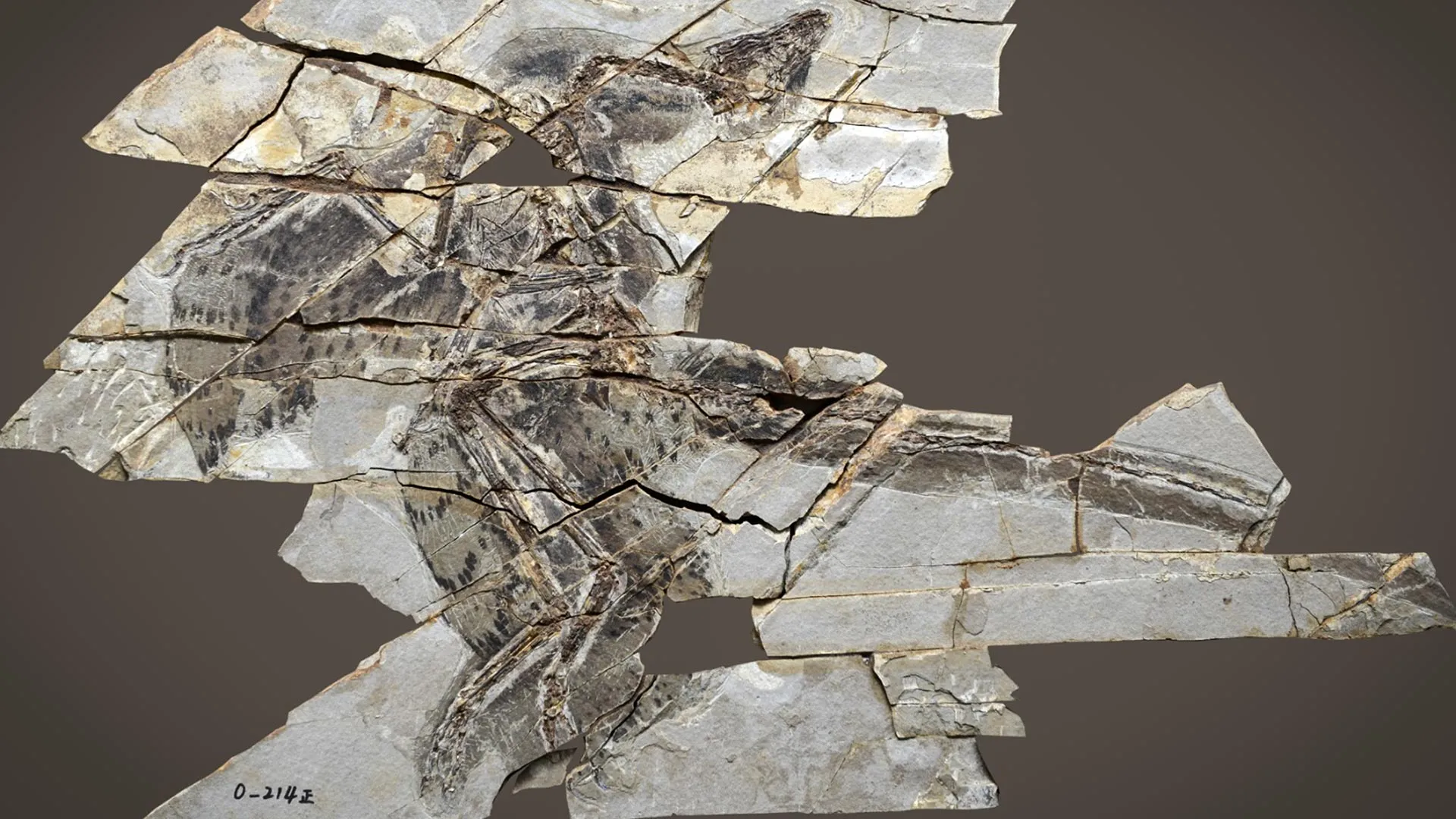
A groundbreaking new study, spearheaded by researchers from Tel Aviv University’s School of Zoology and the Steinhardt Museum of Natural History, has uncovered compelling evidence suggesting that some feathered dinosaurs had already relinquished the capacity for flight, offering a profound re-evaluation of avian evolution. Analyzing exceptionally preserved fossils with intact feathers, the international research team identified distinct molting patterns in the Late Jurassic dinosaur Anchiornis, indicating a terrestrial lifestyle despite its prominent plumage. This discovery not only provides an unprecedented window into animal life approximately 160 million years ago but also significantly complicates the long-held narrative of flight development in both dinosaurs and modern birds. Dr. Yosef Kiat, an ornithologist and the study’s lead researcher, alongside collaborators from institutions in China and the United States, articulated the broad significance of their findings, published in the prestigious journal Communications Biology by Nature Portfolio, stating, "Feather molting seems like a small technical detail — but when examined in fossils, it can change everything we thought about the origins of flight, highlighting how complex and diverse wing evolution truly was." This revelation fundamentally alters perceptions, suggesting that flight evolution was not a linear progression but a multifaceted journey where abilities could be gained and subsequently lost, mirroring the evolutionary trajectories observed in modern flightless birds.
The Enigmatic Anchiornis: A Glimpse into the Late Jurassic
The focus of this pivotal research centered on nine remarkable fossils of Anchiornis huxleyi, unearthed from the rich paleontological deposits of eastern China. Anchiornis, a small paravian dinosaur belonging to the Pennaraptora group, lived during the Late Jurassic period, approximately 160 million years ago. Roughly the size of a modern crow, this feathered creature possessed long wings on both its forelimbs and hindlimbs, as well as a fan-shaped tail, making it one of the earliest known examples of a feathered dinosaur with such extensive plumage. Its discovery in the early 2000s generated considerable excitement within the scientific community, as it further cemented the evolutionary link between dinosaurs and birds. The Jehol Biota, where these fossils were found, is renowned globally for its exceptional preservation of soft tissues, including feathers, skin, and even internal organs, due to unique volcanic ashfall events that rapidly entombed organisms, minimizing decomposition. This extraordinary fossilization process allowed for the preservation not only of the intricate feather structures but, crucially, their original coloration, a rare occurrence that provided the researchers with an invaluable dataset. Previous studies on Anchiornis have utilized these pigmentary details to reconstruct its full body coloration, revealing a striking pattern of black and white striped wings, a dark body, and a reddish-brown crest. Each specimen examined in the current study displayed wing feathers that were predominantly white, tipped with a distinctive black spot, a detail that proved critical to the new analysis.
Feathers: More Than Just for Flight
The evolutionary timeline of feathers is a complex and fascinating story. Dinosaurs diverged from other reptilian lineages around 240 million years ago during the Triassic period. Relatively soon thereafter, on an evolutionary timescale, many species began to develop feathers. These lightweight, protein-based structures, primarily composed of keratin, are far more versatile than commonly perceived. While famously associated with flight, feathers initially evolved for a range of other crucial functions, including thermal regulation (insulation), camouflage, and display for mating rituals or territorial defense. The development of protofeathers, simple filamentous structures, predates the sophisticated, branching feathers seen in later dinosaurs and birds. Around 175 million years ago, during the Middle Jurassic, a specialized group of feathered dinosaurs known as Pennaraptora emerged. This clade includes the ancestors of modern birds and other famous feathered dinosaurs such as Microraptor and Archaeopteryx. Pennaraptorans are particularly significant because they represent the only dinosaur lineage to survive the catastrophic mass extinction event at the end of the Mesozoic era, approximately 66 million years ago, ultimately diversifying into the myriad bird species we see today. Scientists have long hypothesized that the sophisticated, asymmetrical feathers characteristic of flight evolved within this group, enabling the transition from gliding to powered flight. However, the new findings on Anchiornis introduce a crucial nuance, suggesting that while feathers were indeed a hallmark of this lineage, the ability to fly was not uniformly maintained across all species, nor was it necessarily a permanent evolutionary acquisition. The environmental pressures and selective forces acting upon different species could have led to the loss of flight, much like in modern flightless birds such as ostriches, emus, penguins, and kiwis, which evolved from flying ancestors but adapted to terrestrial or aquatic niches where flight became energetically costly or unnecessary.
The Science of Molting: Unlocking Ancient Secrets
A key innovation of this research lies in its novel application of molting patterns as a diagnostic tool for assessing flight capability in extinct animals. Dr. Kiat, whose expertise as an ornithologist includes extensive study of feather biology, elaborates on the intricate process of feather growth and replacement. Feathers are epidermal outgrowths that, once fully grown, become "dead" structures, similar to hair or fingernails. They grow rapidly over a period of two to three weeks, nourished by a rich blood supply at their base. Upon reaching their full size, this blood supply recedes, and the feather detaches from the living tissue. Over time, these non-living structures inevitably wear out from environmental exposure and mechanical stress. To maintain their integrity and functionality, feathers are periodically shed and replaced by new ones in a meticulously regulated physiological process known as molting.
The pattern of molting, as Dr. Kiat explains, tells an "important story" about an animal’s lifestyle, particularly its reliance on flight. In modern birds that depend heavily on flight for survival, foraging, or predator evasion, molting is an exquisitely orderly and gradual process. This strategic replacement of feathers ensures that the bird maintains symmetrical lift and balance, allowing it to continue flying effectively throughout the molting period. For instance, primary flight feathers are often replaced one or two at a time on each wing, in a mirrored sequence, to minimize any temporary impairment to aerodynamic efficiency. Such "symmetrical molting" is a critical adaptation for maintaining aerial agility and avoiding predation. In stark contrast, birds that have lost the ability to fly exhibit a far more random, irregular, or even simultaneous molting pattern. Since they do not rely on aerodynamic integrity for survival, there is no evolutionary pressure to maintain perfectly balanced wings during feather replacement. Flightless birds might shed many feathers at once, or in an asymmetrical fashion, without suffering a significant disadvantage. Consequently, deciphering the molting pattern preserved in ancient fossils offers a powerful, albeit previously underutilized, proxy for inferring flight capabilities.
Irregular Molting: Evidence for Flightlessness in Anchiornis
The breakthrough in this study stemmed from the exceptional preservation of Anchiornis feathers, particularly their distinct coloration. The continuous line of black spots along the wing edges of the fossilized feathers allowed researchers to precisely track their growth and replacement. Critically, the team observed developing feathers whose black spots were notably out of alignment with the existing, fully grown feathers, indicating that they were in different stages of growth and replacement. A detailed, painstaking analysis of these patterns across the nine specimens revealed a molting sequence that was distinctly irregular and asynchronous, rather than the orderly, symmetrical molting expected of a creature capable of sustained powered flight. This finding strongly suggests that Anchiornis was not maintaining the aerodynamic symmetry crucial for aerial locomotion.
Dr. Kiat concluded, "Based on my familiarity with modern birds, I identified a molting pattern indicating that these dinosaurs were probably flightless. This is a rare and especially exciting finding: the preserved coloration of the feathers gave us a unique opportunity to identify a functional trait of these ancient creatures — not only the body structure preserved in fossils of skeletons and bones." This meticulous examination of micro-details, typically overlooked or impossible to discern in less perfectly preserved fossils, allowed the researchers to move beyond mere anatomical inference to a functional interpretation of a key biological process. It represents a significant methodological advance in paleontology, demonstrating how subtle clues can unlock profound insights into the behavior and capabilities of extinct organisms.
Broader Implications for Avian Evolution
The revelation that Anchiornis, a dinosaur with extensive and well-developed feathers, was likely flightless carries profound implications for our understanding of avian evolution. For decades, the origin of bird flight has been a subject of intense scientific debate, primarily revolving around two competing hypotheses: the "trees down" (arboreal) theory, which posits that flight evolved from gliding ancestors descending from trees, and the "ground up" (cursorial) theory, suggesting that flight evolved from bipedal runners flapping their forelimbs for propulsion. The discovery of numerous feathered dinosaurs, many of which were small and arboreal, initially seemed to lend strong support to the arboreal hypothesis. However, the case of Anchiornis introduces a layer of complexity not previously fully appreciated.
This study suggests that the development of flight throughout the evolution of dinosaurs and birds was far more intricate and non-linear than previously believed. It challenges the assumption that the presence of well-formed, modern-looking feathers automatically equates to flight capability. Instead, it supports a scenario where flight abilities might have developed independently in different lineages, been refined, and then subsequently lost in certain species due to changing ecological pressures or adaptive advantages of a terrestrial existence. This phenomenon, known as secondary flightlessness, is well-documented in modern birds, from the iconic ostrich adapted to savanna life to the aquatic penguin. The finding in Anchiornis pushes the timeline for secondary flightlessness much further back into the Mesozoic era, suggesting that this evolutionary pathway was established much earlier than previously thought within the dinosaur-bird transition.
The Complex Tapestry of Flight Development
The re-evaluation of Anchiornis as a flightless feathered dinosaur adds another crucial piece to the intricate puzzle of how birds came to dominate the skies. It underscores the idea that feathers evolved first for non-flight purposes – insulation, display, or even rudimentary gliding – before being co-opted and refined for powered flight. The existence of species like Anchiornis suggests a rich experimental phase in dinosaur evolution, where various forms of feathered locomotion were explored. Some lineages may have achieved basic flight or gliding, only for subsequent generations to revert to a terrestrial lifestyle if it offered a greater selective advantage in their specific environment. For example, a small feathered dinosaur might have initially used its wings for short glides between trees, but if its niche shifted to ground-dwelling insectivory in an environment with few predators, the metabolic cost of maintaining flight muscles and perfect wing symmetry during molting might have become disadvantageous.
This finding encourages paleontologists to adopt a more nuanced perspective when interpreting the fossil record of feathered dinosaurs. Instead of assuming a direct, progressive march towards flight, researchers must now consider the full spectrum of evolutionary possibilities, including the acquisition, modification, and loss of complex traits. It implies that the "origins of flight" might not be a single event but rather a series of interconnected evolutionary experiments, some leading to sustained flight, others to specialized forms of locomotion, and still others to secondary flightlessness.
Future Directions in Paleontology
The methodological innovation of using molting patterns to infer flight capability opens exciting new avenues for future paleontological research. Researchers can now re-examine other exceptionally preserved feathered dinosaur fossils, particularly those from the Jehol Biota and similar Lagerstätten (sites of exceptional fossil preservation), for similar clues. Applying this detailed analysis to other paravian dinosaurs could further refine the evolutionary tree of flight and pinpoint more precisely when and where sustained flight truly emerged and where it was independently lost. Moreover, this study highlights the immense value of interdisciplinary research, combining the deep-time perspective of paleontology with the detailed biological understanding of modern ornithology.
Dr. Kiat’s concluding remarks resonate with the broader scientific community’s quest for deeper understanding: "Feather molting seems like a small technical detail — but when examined in fossils, it can change everything we thought about the origins of flight. Anchiornis now joins the list of dinosaurs that were covered in feathers but not capable of flight, highlighting how complex and diverse wing evolution truly was." This study serves as a powerful reminder that the evolutionary story of life on Earth is rarely simple or straightforward; it is a sprawling, often surprising narrative of adaptation, diversification, and occasional reversion, continually illuminated by new discoveries from the ancient past. The journey of flight, from its earliest reptilian stirrings to the majestic birds soaring today, continues to reveal itself as one of nature’s most intricate and captivating tales.