
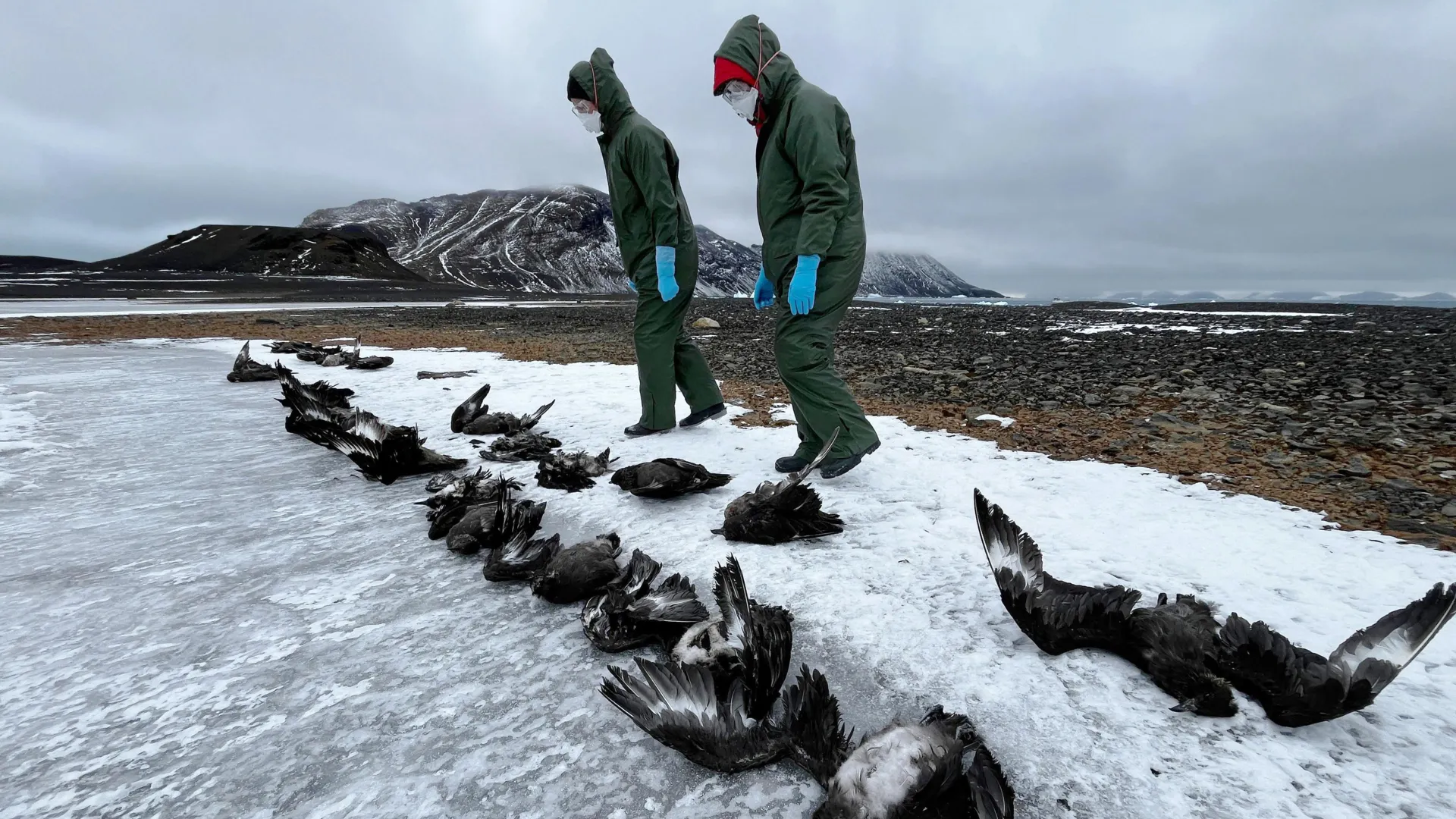
More than 50 skuas, robust seabirds inhabiting the polar and subpolar regions, succumbed to the highly pathogenic avian influenza (HPAI) virus H5N1 during the austral summers of 2023 and 2024. This devastating event marks the first confirmed large-scale wildlife die-off attributed to the H5N1 virus on the Antarctic continent, signaling a concerning breach of the continent’s previously isolated ecosystem. The critical findings stem from a collaborative study spearheaded by Erasmus MC in The Netherlands and the University of California, Davis, with their research recently published in the prestigious journal Scientific Reports. This discovery has sent ripples of concern through the scientific and conservation communities, highlighting the escalating global reach of a virus that has wreaked havoc on poultry and wildlife across the world.
Skuas, often described as the "hawks of the sea," are large, brown seabirds closely related to gulls, yet possessing a more predatory and scavenging nature. Their ecological role is vital, acting as natural clean-up crews by consuming carrion and playing a significant part in the nutrient cycling of the fragile Antarctic environment. However, it is precisely this essential scavenging behavior that researchers believe may have tragically amplified their vulnerability, increasing both their risk of contracting the H5N1 virus and inadvertently facilitating its dissemination across the remote Antarctic landscape. This paradox underscores the complex challenges in managing disease outbreaks in wild populations, where natural behaviors can become vectors for contagion.
Prior to these definitive findings, the presence of H5N1 in Antarctica had been detected earlier in 2024, with scientists identifying the virus in a kelp gull and two skuas found deceased in January and February. While these initial detections were alarming, they did not conclusively establish H5N1 as the direct cause of death. The recent study, however, provides the irrefutable evidence that scientists had been seeking. "We knew there were animals with the infection, but this is the first study to show they died of the viral infection," affirmed co-senior author Ralph Vanstreels, a distinguished wildlife veterinarian with the UC Davis One Health Institute within the Weill School of Veterinary Medicine. He emphasized the crucial distinction, noting, "It’s an important distinction in the early days of an outbreak," underscoring the necessity of confirmed causality for effective disease management and understanding.
A Global Scourge Reaches the Seventh Continent: The Trajectory of H5N1
The H5N1 virus, first identified in 1996 on a domestic goose farm in Southeast China, has embarked on a relentless global odyssey. For several years, it circulated largely unchecked within domestic poultry populations, evolving and gaining virulence. Its subsequent spillover into wild bird populations marked a critical turning point, transforming a regional agricultural threat into a global ecological crisis. From its Asian origins, H5N1 systematically spread across continents, devastating bird populations in Europe, the Middle East, and Africa, before making its perilous journey across the Atlantic to North and South America. By early 2024, the highly adaptable pathogen had completed its circumnavigation of the globe, finally breaching the formidable natural defenses of Antarctica.
This particular strain of H5N1, characterized by its high pathogenicity and ability to jump between species, has left a trail of destruction in its wake. Globally, it has been responsible for the culling or deaths of over 400 million poultry, causing immense economic losses and threatening food security. Beyond avian species, the virus has demonstrated a concerning capacity for zoonotic transmission, infecting a wide array of mammals including dairy cows, mink, foxes, bears, and otters. In a particularly devastating episode preceding its arrival in Antarctica, the same H5N1 strain caused massive mortality events among elephant seals and sea lions along the coastlines of Argentina and other South American nations, underscoring its potential to impact entire marine ecosystems. The implications for human health also remain a serious concern; of the approximately 1,000 reported human cases worldwide, roughly half have proven fatal, highlighting the virus’s severe pathogenic potential in humans.
Corresponding senior author Thijs Kuiken, a professor at Erasmus MC, lamented the global community’s initial failure to contain the virus. "We let the virus slip out through our fingers when it first emerged in the poultry industry," he stated. "Once it got into wild bird populations, we lost ability to control this virus. Now it’s established in wild bird populations in all the continental regions of the world except Oceania." This stark assessment underscores the profound challenge of managing a pathogen that has become endemic in migratory bird populations, which act as natural, long-distance vectors.
The HPAI Australis Expedition: Uncovering the Antarctic Impact
The confirmation of H5N1 as the cause of death for Antarctic skuas was the result of the dedicated HPAI Australis Expedition, a scientific mission launched in March 2024. The timing of the expedition was strategic, occurring shortly after the breeding season for skuas and penguins, a period when population densities are high and young, naive birds are present. The research team meticulously traversed 10 sites across the South Shetland Islands, the northern Weddell Sea, and the Antarctic Peninsula – regions known for their rich biodiversity and significant seabird and marine mammal colonies.
During their intensive fieldwork, the scientists adopted a rigorous protocol: whenever sick or deceased animals were encountered, comprehensive tissue and environmental samples were collected. Crucially, necropsies were performed to ascertain the precise cause of death. The expedition initially examined the remains of various iconic Antarctic species, including gentoo penguins, Adélie penguins, and Antarctic fur seals. However, despite these investigations, H5N1 was not identified as the primary cause of mortality in these species during this specific survey.
As the expedition progressed, a clear pattern began to emerge. "As the expedition progressed, it became obvious quickly that skuas were a major victim," observed Dr. Vanstreels, reflecting on the unfolding situation. The virus was definitively detected in skuas at three distinct geographical locations: Hope Bay, Devil Island, and most alarmingly, Beak Island. It was at Beak Island where the scale of the die-off became starkly apparent, with a significant number of south polar skuas succumbing to the disease. First author Matteo Iervolino, a Ph.D. candidate at Erasmus MC in Rotterdam, described the profound impact: "We diagnosed high pathogenicity avian influenza as the cause of death for nearly all of the dead skuas we found at Beak Island. There, I could really see with my eyes the impact this virus can have on these populations."
The visible symptoms of H5N1 infection in the affected skuas painted a grim picture of suffering. Dr. Vanstreels characterized the situation as a "crisis in animal suffering," detailing how the virus primarily attacks the brain, leading to severe neurological manifestations. Infected birds exhibited distressing signs such as twisted necks, unusual body stretching, disorientation, and impaired motor skills. Observers reported birds walking or swimming in circles, crashing into objects, or even tragically falling out of the air. These clinical signs are consistent with the neurological damage caused by HPAI viruses, which can lead to profound behavioral changes and ultimately, death. The researchers underscored a critical, often overlooked dimension: human activity, they stressed, played a pivotal role in the initial emergence and global dissemination of the virus and remains equally crucial in limiting its continued spread.
Ecological Vulnerability and Broader Implications for Antarctic Wildlife
The arrival of H5N1 in Antarctica represents a profound new threat to an ecosystem already grappling with a multitude of stressors. Antarctic wildlife populations face severe challenges, including the pervasive impacts of climate change, which manifests through melting ice, ocean acidification, and altered food webs. Growing tourism, while regulated, introduces potential pathways for pathogen introduction. Invasive species, overfishing, and persistent pollution further compound the pressures on these delicate and often specialized species. The addition of a highly virulent pathogen like H5N1 adds an unprecedented layer of complexity and risk to their survival.
One significant complication in assessing the true ecological impact of this H5N1 outbreak is the paucity of current population data for skuas. The last comprehensive census of Antarctic skuas dates back to the 1980s, at which time researchers estimated approximately 800 breeding pairs across the continent. Without updated, robust population numbers, accurately quantifying the significance of the loss of 50 or more birds becomes incredibly challenging. While 50 may appear a relatively small number in isolation, it could represent a substantial percentage of localized breeding populations, particularly if the virus continues to spread unchecked. "Everything points toward this virus spreading further," warned Professor Kuiken, emphasizing the critical need for vigilance. "If nobody is watching, we won’t know what is happening."
The risk extends far beyond skuas. Antarctica is home to immense colonies of penguins and seals, species that often aggregate in dense populations during breeding seasons, creating ideal conditions for rapid pathogen transmission. While the HPAI Australis Expedition did not confirm H5N1 as the cause of death in penguins or seals during their specific survey, the documented impact on marine mammals in South America serves as a dire warning. The potential for the virus to jump to these other iconic Antarctic species, particularly those already facing population declines due to environmental changes, poses an existential threat to the continent’s biodiversity.
Calls for Enhanced Surveillance and International Cooperation
In light of these alarming findings, the study strongly advocates for significantly enhanced surveillance and monitoring efforts across Antarctica. Such measures are deemed essential to track the virus’s spread, identify affected populations, and implement any possible mitigation strategies. This necessitates a coordinated international response, as the continent’s unique political status and the global nature of migratory bird movements demand collaborative action. Strengthening biosecurity protocols for all visitors to Antarctica – whether scientists, tourists, or support staff – is paramount to minimize the risk of further pathogen introduction or inadvertent spread.
The HPAI Australis Expedition received crucial funding from the International Association of Antarctica Tour Operators (IAATO) and Ocean Expeditions, underscoring the role of diverse stakeholders in supporting vital scientific research in this remote region. Further support was provided by the European Union, Consejo Superior de Investigaciones Científicas (CSIC), and PTI Global Health. This collaborative funding model highlights the recognition within the international community of the urgent need to understand and address emerging threats to the Antarctic environment.
The confirmed H5N1 die-off in Antarctic skuas serves as a stark wake-up call, shattering the illusion of the continent’s complete isolation from global disease dynamics. It underscores the interconnectedness of global ecosystems and the far-reaching consequences of human-influenced pathogen emergence. As the H5N1 virus continues its relentless march across the planet, the need for sustained research, robust monitoring, and proactive international cooperation in Antarctica has never been more critical to safeguard its unique and irreplaceable wildlife heritage. The battle against this global pathogen has truly reached the ends of the Earth, demanding unwavering attention and concerted action from the scientific community and policymakers alike.